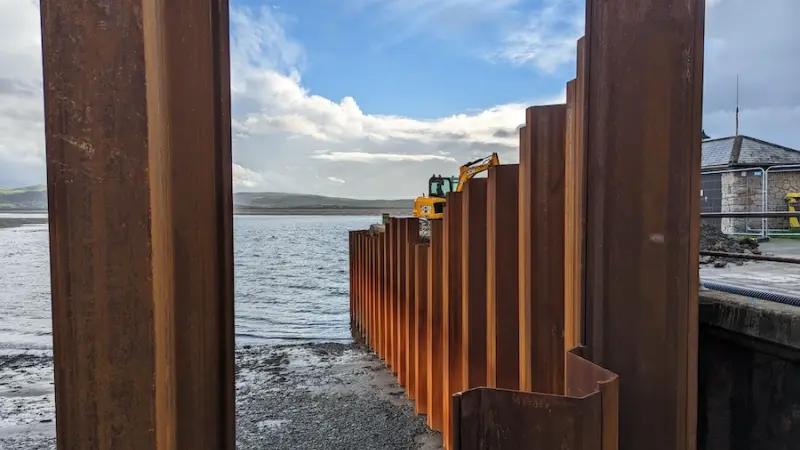
Construction projects often face challenges from unstable soil, groundwater, and limited working space. Without proper support, excavation areas can become unsafe and coastal structures can suffer from erosion.
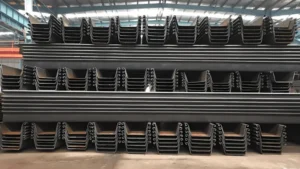
Steel sheet piling creates a continuous retaining system by connecting interlocking steel sections in the ground. It helps control soil movement, resist water pressure, and provide stable support for civil and marine construction projects.
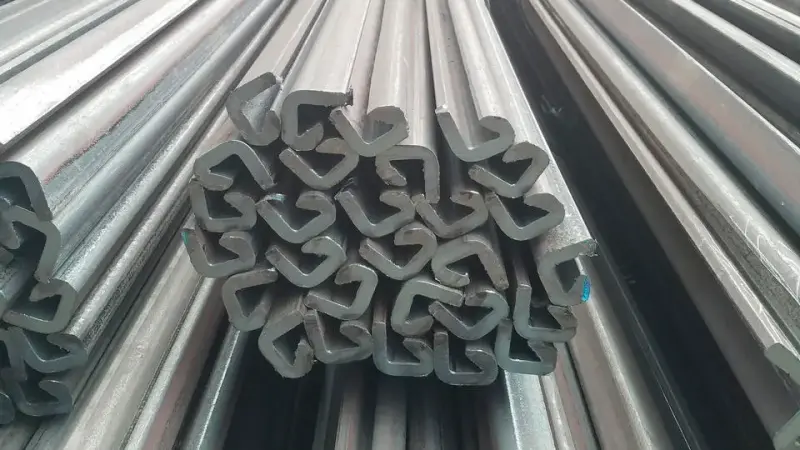
I have worked with many contractors and distributors who use piling systems for different engineering projects. I find that many customers understand the product itself but do not fully understand how the system works. The performance of a retaining structure depends on design, soil conditions, installation methods, and the correct selection of materials.
In this article, I will explain how piling systems work, why engineers use them in civil and marine projects, and what factors affect their performance.
What is the rule of thumb for sheet piling?
Many engineers need to decide the correct depth and size before starting a retaining project. A wrong design can cause excessive movement, higher costs, and construction risks.
The general rule of thumb for sheet piling is that the embedded depth should be enough to balance active soil pressure, water pressure, and external loads. Engineers usually consider soil conditions, wall height, and project requirements before deciding the final design.
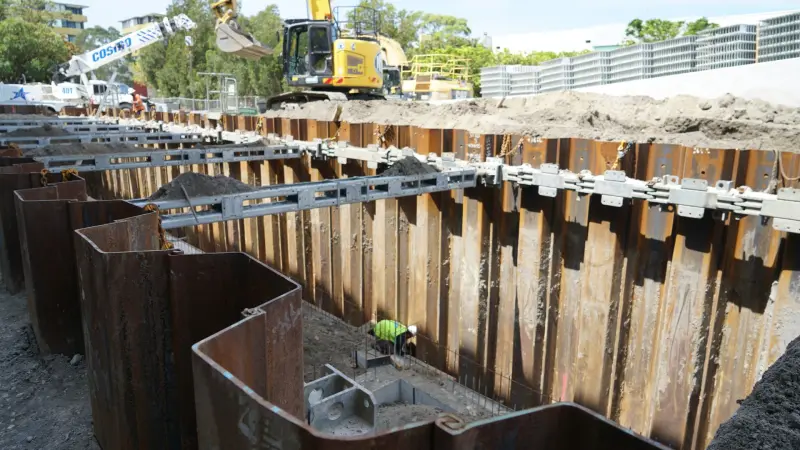
Basic principles behind piling design
The purpose of a retaining system is to resist horizontal forces.
Unlike foundation systems that mainly support vertical loads, retaining walls work against forces that push from the side.
These forces usually come from:
| Load Type | Source |
|---|---|
| Earth pressure | Surrounding soil |
| Water pressure | Groundwater or marine water |
| Surcharge load | Vehicles, buildings, and equipment |
| Wave force | Coastal environments |
| Construction load | Temporary site activities |
The embedded section of the pile transfers these forces into the surrounding soil.
The soil below the ground provides passive resistance. This resistance helps prevent the wall from moving forward.
Factors affecting embedment depth
I always explain to customers that there is no universal depth that works for every project.
The required depth depends on several conditions.
| Factor | Influence |
|---|---|
| Wall height | Higher walls usually require deeper installation |
| Soil type | Weak soil needs stronger support |
| Water level | Higher pressure increases design requirements |
| Load condition | Additional loads require stronger systems |
| Project purpose | Temporary and permanent designs are different |
For example, a small excavation project in stable soil may use shorter sections. A flood protection project near a river may require deeper installation because water pressure changes constantly.
Typical design approach
Engineers usually follow several steps when designing a piling system.
The basic process includes:
- Reviewing the soil investigation report.
- Calculating lateral earth pressure.
- Checking groundwater conditions.
- Selecting suitable pile profiles.
- Determining required embedment depth.
- Confirming installation methods.
The calculation process normally considers both the visible wall height and the underground support section.
A retaining wall cannot work only because the steel section is strong. The interaction between steel and soil is equally important.
Common depth considerations
Although every project requires engineering calculations, contractors often use general experience as an early reference.
| Project Type | General Consideration |
|---|---|
| Temporary excavation | Moderate embedment |
| Deep excavation | Greater underground support |
| River protection | Deeper installation for stability |
| Marine structures | Increased depth due to water forces |
| Flood control systems | Designed for changing water levels |
These values are only preliminary references.
The final design should always follow engineering requirements.
Why soil conditions matter
Soil is one of the most important factors in piling design.
Different soils create different levels of resistance.
| Soil Type | Typical Behavior |
|---|---|
| Dense sand | Provides strong resistance |
| Loose sand | Provides lower resistance |
| Clay | Depends on strength and moisture |
| Soft soil | Requires deeper support |
For example, a pile installed in dense soil may achieve stability at a shorter depth compared with the same pile installed in soft clay.
This is why professional projects usually require soil testing before construction.
Influence of water conditions
Water changes the design requirements significantly.
Marine and river projects usually face additional challenges because water creates pressure on both sides of the structure.
Engineers consider:
- Tide changes
- Flood levels
- Groundwater movement
- Wave impact
- Soil erosion
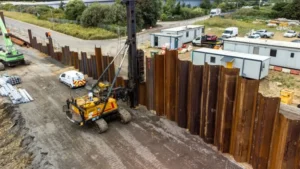
In our Southeast Asia riverbank protection project, the contractor used hot rolled U-shaped sheet piles to build a stable river protection wall. The piles were driven into the riverbank to create a continuous barrier. The interlocking connection helped control soil movement and reduced erosion risks during changing water conditions.
Water pressure is one of the most important factors in marine construction. Engineers need to consider both normal water conditions and extreme events such as storms or flooding.
Choosing the right profile
The pile profile also affects the required design.
Common profiles include:
| Profile | Main Advantage |
|---|---|
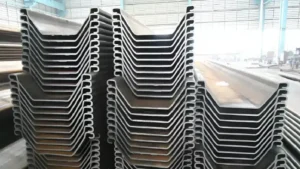
| U-shaped section | Balanced strength and easy installation |
| Z-shaped section | Higher bending performance |
| Flat section | Suitable for special wall systems |
| Custom profiles | Designed for specific projects |
A stronger profile may reduce the required number of supporting elements.
However, I always recommend customers focus on the total engineering solution instead of selecting the largest section.
For example, Z-shaped sheet piles are often selected for projects requiring higher structural efficiency because the profile provides improved bending performance and better material utilization.
Installation method and depth control
The installation method also affects final performance.
Common installation methods include:
- Vibratory driving
- Impact hammer driving
- Hydraulic pressing
During installation, workers must monitor:
- Vertical alignment
- Interlock connection
- Driving resistance
- Final penetration depth
Poor installation can reduce the performance of even high-quality materials.
The installation process is especially important for deep excavation projects because incorrect alignment or insufficient penetration can affect the stability of the entire retaining system.
Temporary and permanent projects
The rule of thumb is also different for temporary and permanent structures.
Temporary projects usually focus on:
- Fast installation
- Cost control
- Easy removal
Permanent structures focus on:
- Long service life
- Corrosion protection
- Structural reliability
Examples of permanent applications include:
- Coastal protection
- Flood defense walls
- Port structures
- River stabilization systems
Permanent sheet pile walls usually require more detailed engineering evaluation because they need to maintain performance for many years under changing environmental conditions.
My insight
From my experience, the correct piling design is not only about choosing a stronger product. Engineers need to match the pile type, depth, soil condition, and project environment together.
A suitable solution can improve safety and reduce unnecessary construction costs.
What are the disadvantages of sheet piling?
Steel sheet piling is widely used in civil and marine construction because it provides fast installation, strong retaining performance, and flexible project solutions. However, I also explain to customers that every construction method has limitations.
The main disadvantages of sheet piling include higher initial material costs, installation noise, equipment requirements, corrosion risks, and dependence on soil conditions. Proper design and material selection can reduce these challenges.
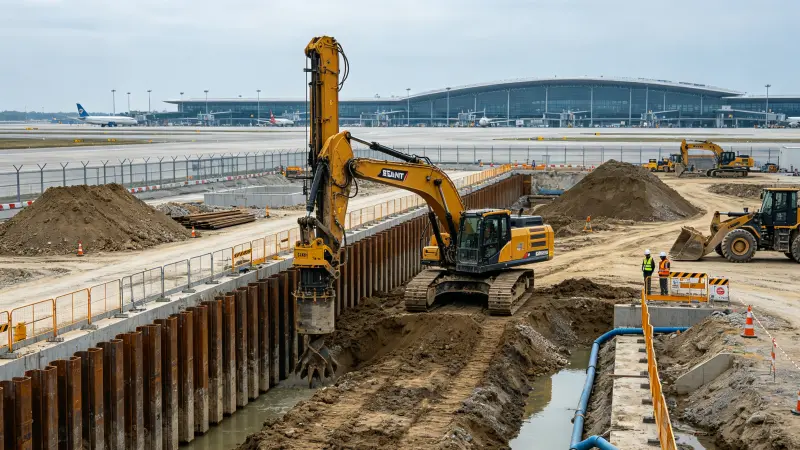
Understanding the limitations of piling systems
When contractors choose a retaining system, they usually compare different solutions based on project conditions.
Steel sheet piling has many advantages, but engineers need to understand its limitations before making a decision.
The main disadvantages include:
| Disadvantage | Explanation |
|---|---|
| Initial cost | Steel materials and installation equipment require investment |
| Installation noise | Driving methods can create vibration and noise |
| Soil limitations | Some soil conditions make installation difficult |
| Corrosion risk | Untreated steel can be affected by aggressive environments |
| Equipment requirements | Large projects need professional machinery |
I believe understanding these disadvantages helps customers choose the correct solution instead of only focusing on the product price.
Higher initial investment
One common concern is the cost of steel sheet piling.
Compared with some traditional retaining methods, steel sheet piles may require a higher upfront budget.
The total cost includes:
| Cost Item | Description |
|---|---|
| Steel material | Cost of pile sections |
| Transportation | Delivery from factory to project site |
| Installation | Equipment and labor costs |
| Engineering | Design and calculation services |
| Protection | Coating or corrosion protection |
However, the initial cost does not always represent the final project value.
Steel sheet piles can often be reused in temporary projects. They can also provide long service life when engineers select suitable grades and protection methods.
For example, a contractor may use temporary sheet piles for excavation support and remove them after completing underground construction. This flexibility can reduce long-term project expenses.
Noise and vibration during installation
Installation noise is another limitation.
Most steel sheet piles are installed by driving them into the ground.
Common methods include:
| Method | Feature |
|---|---|
| Vibratory hammer | Faster installation with lower impact force |
| Impact hammer | Strong driving force for difficult soil |
| Hydraulic press | Lower noise and vibration |
Traditional impact driving can create vibration that may affect nearby structures.
This issue is important in urban areas.
Projects near:
- Residential buildings
- Hospitals
- Historical structures
- Underground utilities
may require special installation methods.
Contractors often use vibration monitoring equipment to control the impact on surrounding areas.
For sensitive locations, hydraulic pressing methods can be considered because they reduce noise and vibration compared with traditional impact installation.
Corrosion problems in harsh environments
Steel is strong, but it can corrode when exposed to water and chemicals.
This issue is especially important in:
- Marine environments
- Coastal projects
- Wastewater facilities
- Industrial areas
Saltwater contains chloride ions that accelerate corrosion.
Engineers usually consider several protection methods:
| Protection Method | Application |
|---|---|
| Protective coating | Reduces direct contact with corrosive elements |
| Cathodic protection | Controls electrochemical corrosion |
| Increased steel thickness | Provides additional corrosion allowance |
| Stainless or special steel grades | Used for demanding environments |
For marine projects, corrosion protection is a key part of design.
A good material selection can significantly extend the service life of a retaining structure.
The use of suitable steel grades and protective systems helps improve long-term performance, especially in aggressive environments.
Installation challenges in difficult soil
Soil conditions directly affect installation performance.
Some ground conditions create problems during driving.
| Soil Condition | Possible Problem |
|---|---|
| Hard rock layers | Difficult penetration |
| Dense gravel | Higher driving resistance |
| Soft soil | Greater movement risk |
| Underground obstacles | Installation delays |
Before installation, engineers usually review geological reports.
If contractors ignore soil conditions, they may face:
- Equipment damage
- Slow installation speed
- Increased construction costs
I always recommend customers check local soil information before selecting pile specifications.
The selection of correct sheet pile specifications should consider soil strength, wall height, and project requirements.
Limited application in some projects
Steel sheet piles are excellent for retaining walls, flood control, and marine structures.
However, they are not suitable for every situation.
For example, some projects may require:
- Deep foundation support
- Heavy vertical load capacity
- Large building foundations
In these cases, other pile systems may provide better performance.
The selection depends on the purpose of the structure.
A sheet pile wall mainly resists horizontal forces. It is not designed to replace every type of foundation pile.
Appearance concerns
In some public projects, appearance can become a consideration.
Exposed steel sheet piles may not match architectural requirements.
Examples include:
- Waterfront parks
- Urban landscape projects
- Tourist areas
Engineers may use additional treatments such as:
- Concrete covering
- Decorative panels
- Special coatings
These solutions improve appearance but may increase project costs.
Maintenance requirements
Permanent structures require inspection and maintenance.
Although steel sheet piles can last for decades, engineers still need to check:
- Surface corrosion
- Joint conditions
- Wall movement
- Water leakage
Regular inspection helps identify problems before they become serious.
A maintenance plan is especially important for marine structures because environmental conditions can change over time.
Comparing advantages and disadvantages
I usually suggest customers compare the complete project value instead of only looking at limitations.
| Factor | Advantage | Disadvantage |
|---|---|---|
| Installation | Fast construction | Requires special equipment |
| Strength | High bending resistance | Design must match loads |
| Reuse | Possible in temporary projects | Removal may need extra work |
| Durability | Long service life with protection | Corrosion needs attention |
| Application | Suitable for many projects | Not ideal for every foundation |
My insight
In my opinion, the disadvantages of steel sheet piles are manageable when engineers understand project conditions.
Most problems come from incorrect design, poor installation planning, or unsuitable material selection.
A professional solution should balance cost, performance, and service life instead of choosing based only on the lowest price.
What is the marine piling method?
Marine construction creates some of the most difficult conditions for foundation and retaining systems.
Engineers need solutions that can work under water pressure, wave impact, changing tides, and unstable coastal soil.
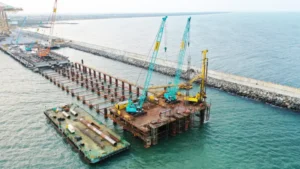
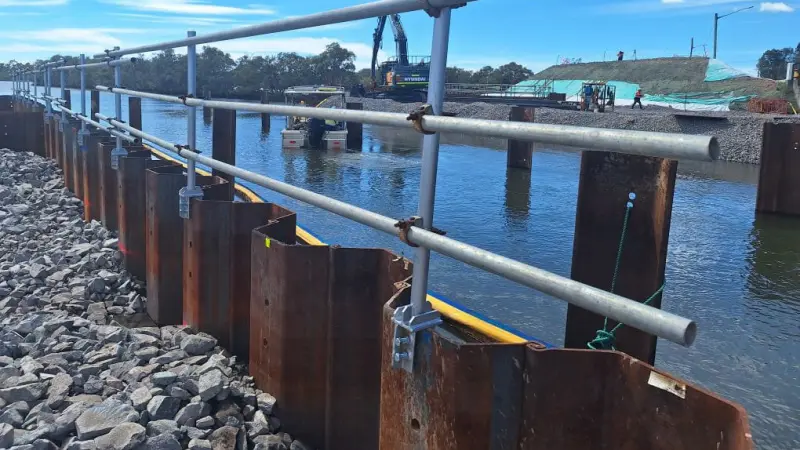
The marine piling method uses specialized equipment to install piles into seabed or coastal soil. Steel sheet piles are commonly driven or pressed into the ground to create retaining walls, seawalls, cofferdams, and erosion protection structures.
Understanding marine piling systems
Marine piling is different from normal land construction because the working environment is more complex.
Marine projects usually involve water, soft soil, and strong environmental forces.
Common marine applications include:
| Application | Purpose |
|---|---|
| Seawalls | Protect coastal areas from waves |
| Port construction | Support docks and harbor structures |
| River protection | Prevent erosion and flooding |
| Cofferdams | Create dry working areas |
| Waterfront foundations | Provide stable support near water |
I have seen many contractors choose steel sheet piles for marine projects because the installation process is flexible and the system can create a continuous barrier.
The interlocking connection allows individual pile sections to connect together.
This connection forms a strong wall that can resist soil movement and control water flow.
Main marine piling methods
Different projects require different installation methods.
The most common marine piling methods include:
| Method | Description | Suitable Application |
|---|---|---|
| Vibratory driving | Uses vibration to reduce soil resistance | Riverbanks, ports, coastal walls |
| Impact driving | Uses hammer force for difficult ground | Hard soil conditions |
| Hydraulic pressing | Pushes piles with lower vibration | Sensitive urban areas |
| Jack-up installation | Uses floating platforms for offshore work | Deep water projects |
The contractor selects the method based on:
- Soil conditions
- Water depth
- Environmental restrictions
- Project schedule
- Required pile depth
Vibratory hammer installation
Vibratory installation is one of the most common methods for steel sheet piles.
The equipment creates vertical vibration that reduces friction between the pile and surrounding soil.
The process usually includes:
- Positioning the pile at the correct location.
- Connecting the pile to the vibratory hammer.
- Driving the pile into the ground.
- Checking vertical alignment.
- Continuing installation until reaching the required depth.
This method provides several benefits:
| Benefit | Explanation |
|---|---|
| Faster installation | Reduces construction time |
| Lower impact | Creates less noise than impact driving |
| Efficient operation | Requires fewer workers |
| Suitable for many soils | Works well in sand and soft clay |
However, engineers still need to monitor vibration because nearby structures may be affected.
Cofferdam construction method
A cofferdam is a temporary structure that allows workers to create a dry construction area.
Steel sheet piles are often used to build cofferdams.
The basic process includes:
- Installing sheet piles around the working area.
- Connecting the piles through interlocks.
- Pumping water out from the enclosed area.
- Completing construction work inside the dry space.
Cofferdams are commonly used for:
- Bridge foundation construction
- Pier installation
- Dam repair
- Marine maintenance work
The watertight connection between sheet pile sections is important because it reduces water leakage.
Steel sheet piles used in cofferdam construction provide temporary protection by separating the working area from surrounding water.
Seawall and flood protection applications
Marine piling is widely used for coastal protection.
Many coastal areas face problems from:
- Rising water levels
- Storm waves
- Coastal erosion
- Flood events
Steel sheet piles create a strong barrier that helps protect land and infrastructure.
In our Southeast Asia riverbank protection project, the contractor used hot rolled U-shaped steel sheet piles to build a flood control structure.
The piles were installed along the riverbank to create a continuous retaining wall.
The strong interlocking system improved soil stability and reduced erosion.
The contractor used vibratory piling equipment, which helped complete installation efficiently while maintaining the project schedule.
Soil conditions in marine projects
Marine soil conditions often create challenges.
The seabed may contain:
- Soft clay
- Loose sand
- Organic soil
- Mixed layers
Each soil type affects installation differently.
| Soil Type | Installation Consideration |
|---|---|
| Soft clay | Requires careful control to avoid movement |
| Sand | Usually allows efficient driving |
| Gravel | May increase resistance |
| Rock | May require special equipment |
Engineers normally conduct soil investigations before selecting piling methods.
A soil report helps determine:
- Required pile length
- Driving equipment
- Installation difficulty
- Structural design
Water control and sealing performance
One important feature of marine piling is water control.
Steel sheet piles connect through specially designed interlocks.
These connections create a continuous wall.
The sealing performance depends on:
| Factor | Effect |
|---|---|
| Interlock quality | Improves connection strength |
| Installation accuracy | Reduces gaps between piles |
| Soil pressure | Influences wall movement |
| Water condition | Affects leakage risk |
For projects requiring higher water resistance, engineers may add sealing materials to improve performance.
Marine piling equipment
Marine projects often require special equipment.
Common equipment includes:
| Equipment | Function |
|---|---|
| Vibratory hammer | Drives sheet piles |
| Crane | Positions pile sections |
| Barge | Supports offshore installation |
| Survey equipment | Controls alignment |
| Excavation equipment | Supports construction work |
The equipment selection depends on project scale.
Large port projects usually require floating platforms and heavy machinery.
Small river projects may use land-based equipment.
Environmental considerations
Marine construction must consider environmental impact.
Contractors usually control:
- Noise levels
- Water pollution
- Sediment disturbance
- Marine ecosystem impact
Some projects require special approval before construction begins.
Engineers may select low-noise installation methods when working near sensitive areas.
Why steel sheet piles are popular in marine construction
Steel sheet piles provide several benefits for marine projects.
| Feature | Benefit |
|---|---|
| High strength | Resists soil and water pressure |
| Interlocking system | Creates continuous walls |
| Fast installation | Reduces project time |
| Flexible design | Suitable for many applications |
| Long service life | Supports permanent structures |
These advantages make steel sheet piles a common choice for ports, seawalls, and flood protection systems.
My insight
From my experience, marine piling success depends on more than choosing strong steel.
The contractor must understand water conditions, soil behavior, and installation methods.
A good piling solution combines the right product with the right construction process.
How does a sheet pile work?
Many people know steel sheet piles as a construction material, but they do not always understand how the complete system works.
A sheet pile wall is not only a steel structure placed into the ground. It is an engineering system that works together with surrounding soil to resist different forces.
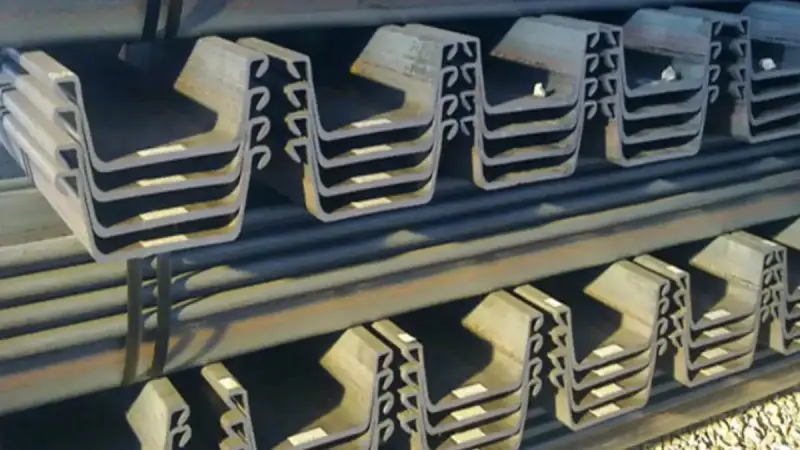
A sheet pile works by transferring lateral loads from soil and water pressure into the surrounding ground through embedded steel sections. The interlocking connections create a continuous wall that provides stability, separation, and water control.
The basic working principle of steel sheet piles
A steel sheet pile system works through the interaction between steel strength and soil resistance.
The steel section provides structural strength.
The surrounding soil provides support.
When soil pushes against the wall, the sheet pile transfers the pressure downward through the embedded section.
The soil below the excavation level creates passive resistance that helps keep the wall stable.
The working process can be explained in three steps:
| Step | Working Principle |
|---|---|
| 1 | Soil and water create pressure against the wall |
| 2 | Steel sheet piles transfer the force through the pile body |
| 3 | Surrounding soil provides resistance and maintains stability |
The pile does not work alone.
The performance depends on the combination of:
- Steel strength
- Pile profile
- Embedment depth
- Soil conditions
- Installation quality
This is why engineers always analyze the complete project condition before selecting a pile specification.
How interlocking connections improve performance
One of the most important features of steel sheet piles is the interlocking system.
Each pile section has specially designed edges that connect with the next section.
After installation, multiple sections form one continuous wall.
The interlock provides several functions:
| Function | Description |
|---|---|
| Connection | Joins individual piles together |
| Alignment | Keeps the wall straight during installation |
| Load transfer | Allows forces to move between sections |
| Water control | Reduces gaps between pile sections |
For example, a single steel plate cannot provide the same performance as a connected sheet pile wall.
The interlocking system allows the entire structure to work together.
This design makes steel sheet piles suitable for:
- Excavation support
- Riverbank protection
- Port construction
- Flood control systems
- Marine retaining walls
My insight
From my experience working with contractors and steel buyers, I believe the most important part of a sheet pile project is matching the whole system.
The pile profile, steel grade, soil condition, and installation method must work together.
A strong product with the wrong design cannot achieve the expected performance.
Conclusion
Steel sheet piles work by combining steel strength and soil resistance to create stable retaining and marine structures.