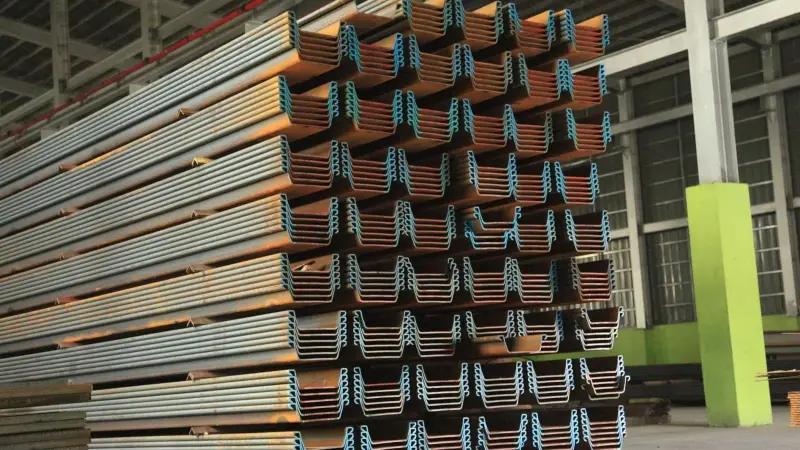
Steel sheet piles play an important role in modern civil engineering projects. Many contractors use them for excavation support, flood protection, retaining walls, and marine structures. However, many buyers still do not fully understand how steel sheet piles work and why engineers choose them.
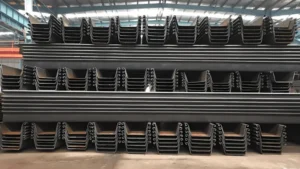
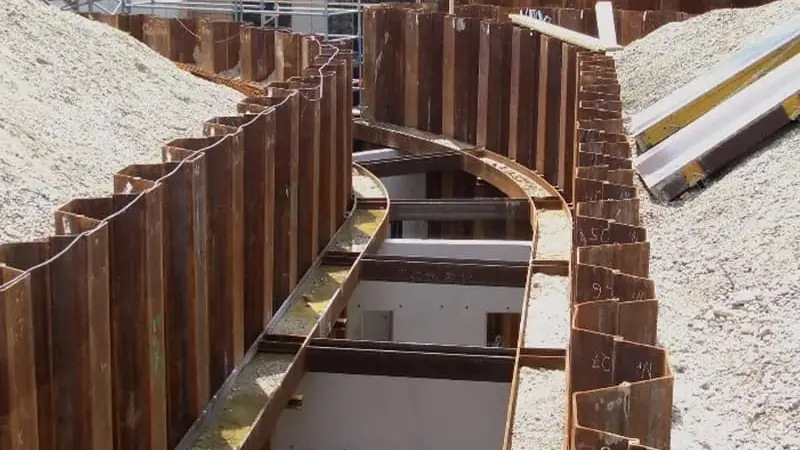
Steel sheet piles are interlocking steel sections driven into the ground to create a continuous retaining wall. They resist soil pressure, control water flow, and provide stable support for construction and infrastructure projects.
I have worked with many customers who purchase steel sheet piles for different projects. I find that the most common questions are not only about price but also about structure, function, and selection. A correct understanding of sheet piles helps contractors choose the right product and avoid unnecessary project risks.
In this article, I will explain how steel sheet piles function, what role piles play in structural engineering, and why different types of steel piles are used for different applications.
What is the function of sheet piles?
Many construction projects face problems caused by unstable soil, groundwater, or limited working space. Without proper support, excavation areas can collapse and nearby structures can become unsafe.
The main function of sheet piles is to create a strong retaining barrier that supports soil, controls water, and improves construction safety. Steel sheet piles are widely used in retaining walls, cofferdams, flood protection systems, and deep excavation projects.
Why do engineers use sheet piles?
Engineers use sheet piles because they provide both structural support and construction efficiency.
A sheet pile wall works by transferring horizontal pressure from soil and water into the embedded steel sections and surrounding ground.
The main functions include:
| Function | Description |
|---|---|
| Soil retention | Prevents soil movement during excavation |
| Water control | Reduces groundwater flow and protects construction areas |
| Structural support | Resists lateral pressure from soil and external loads |
| Flood protection | Creates barriers against river and coastal water |
| Temporary support | Provides safe excavation conditions |
| Permanent structure | Forms long-term retaining walls |
I often explain to customers that sheet piles do not work like traditional foundation piles. Their main purpose is not to carry vertical building loads. Their main purpose is to resist horizontal forces.
Soil retention and excavation support
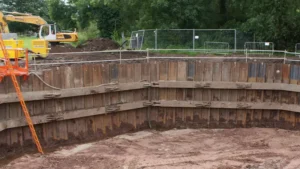
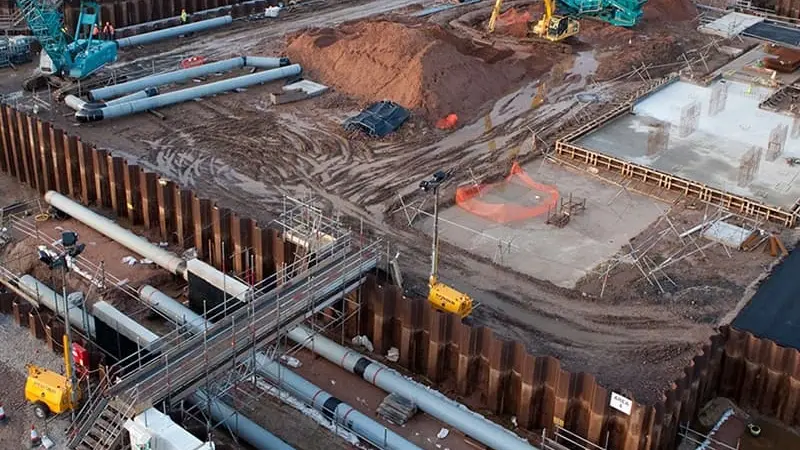
One of the most common uses of steel sheet piles is excavation support.
When contractors dig below ground level, the surrounding soil creates pressure toward the excavation area. This pressure increases as the excavation becomes deeper.
Without support, the soil may move inward and cause:
- Ground settlement
- Equipment damage
- Safety problems
- Structural movement
- Project delays
Steel sheet piles create a rigid wall around the excavation area. The interlocking system connects each pile section together and forms a continuous barrier.
| Excavation Condition | Recommended Solution |
|---|---|
| Shallow excavation | Light sheet piles |
| Deep excavation | High strength sheet piles |
| Wet soil condition | Sheet piles with water control |
| Limited construction space | Vertical sheet pile walls |
For example, underground parking projects, subway construction, and bridge foundations often require sheet pile walls before excavation begins.
Water control function
Another important function of sheet piles is controlling water.
Many construction projects are located near:
- Rivers
- Ports
- Coastal areas
- Canals
- Underground water zones
Water can create additional pressure on structures. It can also make soil unstable.
Steel sheet piles help reduce these problems because the connected sections create a barrier between water and the construction area.
Common applications include:
| Project | Purpose |
|---|---|
| Riverbank protection | Prevent erosion and flooding |
| Port construction | Support marine structures |
| Cofferdams | Create dry working areas |
| Flood walls | Control water movement |
| Canal projects | Stabilize waterways |
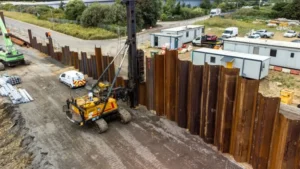
In our Southeast Asia riverbank protection project, we supplied hot rolled U-shaped steel sheet piles for flood control and soil stabilization. The contractor installed the piles along the river edge to create a strong retaining structure. The interlocking system improved water control and helped protect the riverbank from erosion.
Steel Sheet Piles Explained: Structure, Function, and Engineering Benefits
Load resistance function
Although sheet piles mainly resist horizontal forces, they still need strong structural performance.
The loads acting on sheet pile walls may include:
| Load Type | Source |
|---|---|
| Earth pressure | Surrounding soil |
| Water pressure | Groundwater and rivers |
| Surcharge load | Vehicles and nearby buildings |
| Wave load | Marine environments |
| Construction load | Equipment operation |
The sheet pile profile affects its ability to resist these loads.
Z-shaped sheet piles usually provide higher section modulus and bending resistance. U-shaped sheet piles provide balanced strength and easier installation.
The structural performance of different sheet pile profiles depends on factors such as steel grade, thickness, pile length, and installation method. Engineers normally select the suitable profile based on project conditions, including soil type, excavation depth, and expected loading conditions.
For example, projects with high lateral pressure may require stronger profiles with higher bending capacity. In marine applications, designers also consider wave impact and long-term environmental conditions.
Temporary and permanent applications
Some customers ask me whether steel sheet piles are only temporary products.
The answer is no.
Steel sheet piles can be used for both temporary and permanent structures.
Temporary applications include:
- Excavation support
- Construction pits
- Temporary cofferdams
Permanent applications include:
- River protection walls
- Port structures
- Flood defense systems
- Permanent retaining walls
The design requirements are different.
Temporary projects usually focus on installation speed and cost control.
Permanent projects usually focus on corrosion resistance, structural strength, and service life.
For permanent applications, engineers often consider additional protection methods such as coatings, corrosion allowance, and material selection. In aggressive environments like seawater areas, choosing suitable steel materials is important for improving durability.
Why steel sheet piles are popular in engineering
I believe steel sheet piles remain popular because they solve several construction problems at the same time.
Their main advantages include:
| Advantage | Benefit |
|---|---|
| High strength | Handles large lateral pressure |
| Fast installation | Reduces construction time |
| Reusable options | Suitable for temporary projects |
| Flexible design | Fits different project conditions |
| Good interlocking | Creates continuous walls |
| Long service life | Suitable for permanent structures |
Compared with traditional concrete retaining walls, steel sheet piles usually require less construction space and can be installed faster.
One reason contractors prefer steel sheet piling is the efficient installation process. The piles can be driven into different ground conditions using vibration equipment or hydraulic pressing systems. This makes them suitable for urban construction projects where space and construction time are limited.
Another advantage is flexibility. Contractors can select different profiles, lengths, and thicknesses based on project requirements. Common options include Z-shaped sheet piles, U-shaped sheet piles, and cold formed sheet pile systems.
Engineering applications of steel sheet piles
Steel sheet piles are used in many infrastructure projects around the world.
Common applications include:
| Application | Engineering Purpose |
|---|---|
| Deep excavation | Provides temporary and permanent earth support |
| Marine construction | Protects waterfront structures |
| Flood protection | Controls water movement and reduces erosion |
| Bridge construction | Supports foundation excavation |
| Underground projects | Stabilizes construction areas |
| Port development | Creates strong coastal structures |
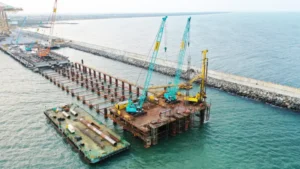
In marine engineering, steel sheet piles are especially important because they provide both soil retention and water control. They are commonly installed for quay walls, seawalls, and other coastal protection structures.
For river and flood control projects, sheet piles help prevent soil erosion and improve the stability of riverbanks. Their interlocking design creates a continuous wall that reduces water penetration and protects surrounding land.
Factors affecting steel sheet pile selection
When customers ask me how to select the right sheet pile, I usually explain that price should not be the only consideration.
The correct selection depends on several factors:
| Selection Factor | Influence |
|---|---|
| Soil condition | Determines required strength and embedment depth |
| Water level | Affects water pressure and corrosion risk |
| Excavation depth | Determines pile length and profile |
| Project duration | Influences temporary or permanent selection |
| Environmental conditions | Affects material protection requirements |
| Installation method | Determines suitable pile design |
For example, a river protection project may require different sheet piles compared with an underground excavation project. The same product cannot fit every situation.
Engineers usually evaluate soil investigation reports, load conditions, and construction requirements before selecting the final sheet pile specification.
Importance of steel grade and specifications
The material quality of sheet piles directly affects project performance.
Different projects may require different steel grades depending on strength requirements and environmental conditions.
Common considerations include:
- Yield strength
- Tensile strength
- Thickness
- Pile length
- Profile shape
- Surface treatment
For example, EN 10248 steel sheet piles are widely used in European projects because this standard defines requirements for hot rolled steel sheet piles.
In international projects, buyers often request specific standards such as ASTM, EN, or JIS specifications. Choosing the correct specification helps ensure that the product matches engineering requirements and project approvals.
Steel Sheet Piles Explained: Structure, Function, and Engineering Benefits
Installation methods and construction considerations
The installation method is another important factor that affects steel sheet pile performance.
Different site conditions require different installation approaches.
Common installation methods include:
| Installation Method | Application |
|---|---|
| Vibratory driving | Fast installation for common soil conditions |
| Impact driving | Suitable for harder ground conditions |
| Hydraulic pressing | Used in areas with strict noise and vibration control |
| Extracting and reuse | Common for temporary projects |
Before installation, engineers usually evaluate ground conditions, surrounding structures, and environmental requirements.
For example, in urban areas, excessive vibration may affect nearby buildings. In this situation, hydraulic pressing or low-vibration installation methods may be preferred.
Proper installation is important because the final performance of a sheet pile wall depends not only on the steel quality but also on installation accuracy.
Problems such as incorrect alignment, insufficient embedment depth, or damaged interlocks may reduce wall stability and water resistance.
Corrosion protection for steel sheet piles
Corrosion is an important consideration for long-term steel sheet pile applications.
Steel sheet piles used in rivers, ports, and coastal environments are exposed to moisture, oxygen, and salt conditions. Without proper protection, corrosion may reduce the service life of the structure.
Common corrosion protection methods include:
| Protection Method | Purpose |
|---|---|
| Protective coating | Creates a barrier against corrosion |
| Increased steel thickness | Provides additional corrosion allowance |
| Cathodic protection | Reduces electrochemical corrosion |
| Material selection | Improves resistance in harsh environments |
For marine projects, corrosion resistance is usually one of the first factors considered by engineers.
A correct combination of steel grade, coating system, and maintenance plan can significantly improve the service life of permanent sheet pile structures.
Difference between steel sheet piles and traditional piles
Many customers ask me about the difference between sheet piles and foundation piles.
Although both are called piles, their functions are different.
| Product Type | Main Function |
|---|---|
| Steel sheet piles | Resist horizontal pressure and retain soil |
| Foundation piles | Transfer vertical building loads to deeper soil layers |
| H piles | Support heavy structural loads |
| Pipe piles | Provide deep foundation support |
Steel sheet piles mainly work as retaining systems. They create walls that control soil movement and water flow.
Foundation piles, however, are designed to carry vertical loads from buildings, bridges, and other structures.
Understanding this difference helps buyers select the correct steel product for their projects.
Future development of steel sheet pile engineering
With the development of modern construction technology, steel sheet piles continue to improve.
Engineers are focusing on:
- Higher strength steel materials
- More durable corrosion protection
- Faster installation methods
- Environment-friendly construction solutions
- Better recycling performance
Steel sheet piles already have an advantage in sustainability because many temporary sheet piles can be extracted and reused in other projects.
This feature reduces material waste and helps contractors control project costs.
In large infrastructure projects, the combination of strength, flexibility, and recyclability makes steel sheet piles an important solution for modern engineering.
How to choose the right steel sheet pile supplier
From my experience working with international buyers, choosing the right supplier is as important as choosing the right product.
A reliable supplier should provide:
| Supplier Capability | Importance |
|---|---|
| Complete specifications | Helps match project requirements |
| Quality inspection | Ensures product reliability |
| Custom sizes | Supports different engineering designs |
| Export experience | Reduces communication problems |
| Technical support | Helps with product selection |
Many buyers only compare prices between suppliers. However, the lowest price does not always mean the best choice.
A professional supplier should understand project requirements and recommend suitable profiles, lengths, and steel grades.
For example, a supplier with experience in marine projects can provide better suggestions for port construction, seawalls, and coastal protection applications.
My insight
From my experience working with international buyers, I find that many customers focus on the steel price first. However, the function of sheet piles is more important than the initial cost.
Choosing the correct sheet pile type based on soil conditions, water environment, and project requirements can reduce risks and improve the overall project value.
A suitable sheet pile solution can help contractors improve construction efficiency, reduce maintenance problems, and achieve better long-term performance.
For buyers, understanding the engineering purpose behind the product is the first step toward making the right purchasing decision.
What is a pile in structural engineering?
Many people hear the word "pile" in construction and think it only means a steel or concrete column driven into the ground. However, a pile has a more specific meaning in structural engineering. Engineers use piles as deep foundation elements to transfer loads from structures into stronger soil layers below the ground.
A pile is a long structural element installed into the ground to transfer vertical or horizontal loads from a structure to stable soil or rock. Piles are commonly made from steel, concrete, or timber and are used for foundations, retaining systems, and ground support.
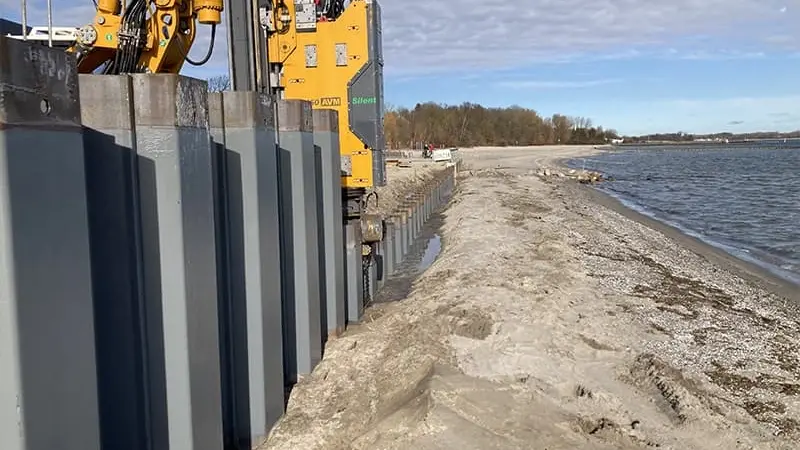
I often explain to customers that steel sheet piles and foundation piles have different purposes. Both are installed into the ground, but they solve different engineering problems. Foundation piles mainly support buildings and structures from vertical loads. Steel sheet piles mainly support soil and water pressure from horizontal loads.
The basic function of piles
In structural engineering, piles are used when the surface soil cannot provide enough support for a structure.
Normal shallow foundations work well when strong soil exists near the surface. However, many projects face difficult ground conditions, such as:
- Soft clay
- Loose sand
- Weak soil layers
- High groundwater areas
- Coastal environments
In these conditions, engineers use piles to reach deeper and stronger soil layers.
A pile transfers loads through different mechanisms.
| Load Transfer Method | Explanation |
|---|---|
| End bearing | The pile transfers loads through its bottom tip into strong soil or rock |
| Skin friction | The pile transfers loads through friction between the pile surface and surrounding soil |
| Combined support | The pile uses both end bearing and skin friction |
The design method depends on soil conditions, pile material, and project requirements.
Engineers normally evaluate end bearing capacity and skin friction when designing pile foundation systems. These factors influence how effectively the pile transfers structural loads into surrounding soil layers.
Types of loads carried by piles
Piles can resist different types of forces.
The main loads include:
| Load Type | Description |
|---|---|
| Vertical compression load | Weight from buildings and structures |
| Tensile load | Pulling forces caused by uplift or wind |
| Lateral load | Horizontal forces from soil, water, or waves |
| Dynamic load | Forces from traffic, machines, or vibration |
Different pile designs are selected according to these loads.
For example:
- Building foundations mainly require vertical load support.
- Bridge foundations require vertical and lateral resistance.
- Marine structures require strong resistance against water and wave forces.
- Retaining walls require resistance against soil movement.
The required load capacity depends on structure weight, soil properties, and environmental conditions.
Difference between foundation piles and sheet piles
Many customers ask me about the difference between normal piles and steel sheet piles.
Although both products are installed into the ground, their engineering roles are different.
| Feature | Foundation Piles | Steel Sheet Piles |
|---|---|---|
| Main purpose | Support structures | Retain soil and water |
| Main load | Vertical load | Horizontal pressure |
| Installation | Individual piles | Connected continuous wall |
| Typical materials | Concrete, steel, timber | Steel |
| Common applications | Buildings, bridges | Excavation, flood control, ports |
Foundation piles carry the weight of structures.
Steel sheet piles create barriers that control soil and water movement.
Steel sheet piles are mainly used as retaining wall systems. They resist lateral pressure and create continuous barriers for excavation and water control projects.
How piles work in deep foundations
Deep foundation systems use piles when shallow foundations are not suitable.
The process usually includes:
- Engineers study soil conditions.
- Engineers calculate required load capacity.
- Workers install piles into the ground.
- The structure connects with the pile system.
- Loads transfer through the piles into deeper soil layers.
The pile length depends on:
| Factor | Influence |
|---|---|
| Soil strength | Stronger soil may require shorter piles |
| Building weight | Heavier structures need stronger piles |
| Groundwater | Water affects stability |
| Environmental conditions | Marine areas require special consideration |
Engineers normally use soil investigation reports before selecting pile dimensions.
The required pile dimensions depend on soil conditions, structural loads, and project requirements. Correct pile design helps improve foundation stability and reduces construction risks.
Steel piles in structural engineering
Steel piles are widely used because steel provides high strength and good installation performance.
Common steel pile applications include:
- Bridge foundations
- Industrial buildings
- Marine structures
- Temporary supports
- Heavy equipment foundations
Steel piles have several advantages:
| Advantage | Benefit |
|---|---|
| High strength-to-weight ratio | Handles large loads with less material |
| Easy transportation | Convenient for large projects |
| Fast installation | Reduces construction time |
| Flexible length | Suitable for different depths |
Steel piles are often selected for projects that require reliable structural performance and efficient construction methods.
For example, bridge foundations often use steel pile systems because they can provide strong support under complex loading conditions. In industrial and infrastructure projects, steel piles are also widely used because they can be manufactured in different lengths and specifications.
However, engineers must consider corrosion protection when steel piles are used in aggressive environments.
Projects located near oceans, rivers, and coastal areas require additional attention because moisture and salt exposure can accelerate steel corrosion. Engineers may apply corrosion protection methods such as protective coatings, increased material thickness, and maintenance plans.
Relationship between piles and sheet pile walls
Steel sheet piles are a special type of steel pile system.
They are not designed mainly as foundation supports. They create connected walls that resist lateral forces.
A sheet pile wall works through:
- Embedment depth
- Soil resistance
- Interlocking connections
- Section strength
- Anchoring systems
For example, a river protection project uses sheet piles to prevent soil erosion. The piles are driven into the riverbank and connected together to create a stable barrier.
The surrounding soil supports the embedded section while the steel profile resists bending.
The performance of sheet pile walls depends on several engineering factors, including soil conditions, water pressure, pile profile, and installation quality.
Engineers evaluate lateral earth pressure when designing retaining systems because soil pressure is one of the main forces acting on sheet pile structures.
Why engineers choose steel sheet piles
I have worked with many contractors who select steel sheet piles because they need a practical solution for difficult construction environments.
Steel sheet piles provide:
- Fast installation
- Strong retaining ability
- Water control performance
- Flexible construction methods
- Long-term structural stability
They are especially useful where space is limited because the wall can be installed vertically without requiring large excavation areas.
In urban construction projects, contractors often choose sheet pile systems because they can provide effective excavation support while reducing the required working area.
Common applications include:
- Underground construction
- Bridge foundation excavation
- Riverbank protection
- Port development
- Flood defense projects
For marine structures, steel sheet piles provide reliable resistance against water pressure, wave impact, and soil movement. Their interlocking design creates a continuous wall that improves stability in challenging environments.
Engineering considerations for sheet pile selection
When selecting steel sheet piles, engineers normally consider several important factors.
These factors include:
| Selection Factor | Influence |
|---|---|
| Soil condition | Determines required strength and wall stability |
| Water pressure | Affects structural loading |
| Excavation depth | Determines required pile length |
| Project duration | Influences temporary or permanent design |
| Environmental conditions | Affects material protection requirements |
Different projects require different sheet pile solutions.
For example, a temporary excavation project may focus on installation speed and cost efficiency. A permanent marine structure may require higher corrosion resistance and stronger structural performance.
The correct selection of sheet pile specifications helps contractors achieve better project safety and reduce future maintenance costs.
Installation methods for steel piles and sheet piles
The installation method directly affects the final performance of pile systems.
Common installation methods include:
| Installation Method | Application |
|---|---|
| Vibratory driving | Fast installation in common soil conditions |
| Impact driving | Suitable for stronger ground conditions |
| Hydraulic pressing | Used where vibration control is required |
| Extraction and reuse | Common for temporary applications |
Before installation, engineers evaluate soil conditions, nearby structures, and environmental restrictions.
For example, construction projects in cities often need low-vibration installation methods to reduce the impact on surrounding buildings.
Proper installation ensures that piles reach the required depth and maintain structural performance.
Problems such as damaged interlocks, incorrect alignment, or insufficient penetration depth can reduce the effectiveness of sheet pile walls.
Importance of soil conditions in pile design
Soil conditions are one of the most important factors in pile engineering.
Different soil types affect pile performance in different ways.
| Soil Type | Engineering Influence |
|---|---|
| Clay soil | May require consideration of settlement and friction resistance |
| Sandy soil | Provides different resistance characteristics |
| Rock layers | Can provide strong end bearing support |
| Soft soil | May require deeper pile installation |
Engineers usually conduct geological investigations before designing pile systems.
Soil investigation helps determine:
- Required pile length
- Suitable pile type
- Expected load capacity
- Installation method
- Long-term stability
A correct understanding of ground conditions helps avoid design problems and improves construction efficiency.
Steel sheet pile walls in practical engineering projects
Steel sheet pile walls are widely used in projects where soil stability and water control are critical.
Typical applications include:
| Application | Engineering Purpose |
|---|---|
| Excavation support | Prevents soil collapse during construction |
| Flood control | Protects areas from water movement |
| River protection | Reduces erosion and improves bank stability |
| Port construction | Supports waterfront structures |
| Temporary cofferdams | Creates dry working areas |
In these projects, the connection between each pile section is very important.
The interlocking connection between sheet piles creates a continuous wall structure. This design allows the system to resist soil pressure and control water movement more effectively.
Long-term performance of pile systems
The service life of pile systems depends on material quality, environmental conditions, and maintenance requirements.
For steel piles and sheet piles, important factors include:
- Steel grade
- Wall thickness
- Installation quality
- Corrosion protection
- Environmental exposure
Projects in aggressive environments require additional design considerations.
For example, coastal structures are exposed to seawater and changing water levels. Engineers must consider corrosion resistance and long-term durability when selecting materials.
A well-designed pile system can provide stable performance for many years and reduce future repair requirements.
Choosing the correct pile solution
From my experience working with international buyers, I find that selecting the correct pile type is more important than simply comparing prices.
Before purchasing, contractors should understand:
- The purpose of the pile system
- Expected loads
- Soil conditions
- Water environment
- Project duration
- Installation requirements
Foundation piles and sheet piles solve different engineering problems.
Foundation piles transfer structural loads into deeper soil layers.
Steel sheet piles create retaining systems that control soil and water movement.
Choosing the correct solution helps reduce construction risks and improves project efficiency.
My insight
From my experience, understanding the difference between piles and sheet piles is very important before selecting a product. A foundation pile supports a structure, while a sheet pile supports the surrounding ground.
Choosing the wrong type can increase project cost and create unnecessary engineering problems.
For buyers, the best approach is not only to compare steel prices but also to consider engineering requirements, application conditions, and long-term performance.
A suitable pile solution can improve construction safety, reduce maintenance costs, and provide better value throughout the project life cycle.
What is a pile in structural engineering?
Many people hear the word "pile" in construction and think it only means a steel or concrete column driven into the ground. However, a pile has a more specific meaning in structural engineering. Engineers use piles as deep foundation elements to transfer loads from structures into stronger soil layers below the ground.
A pile is a long structural element installed into the ground to transfer vertical or horizontal loads from a structure to stable soil or rock. Piles are commonly made from steel, concrete, or timber and are used for foundations, retaining systems, and ground support.
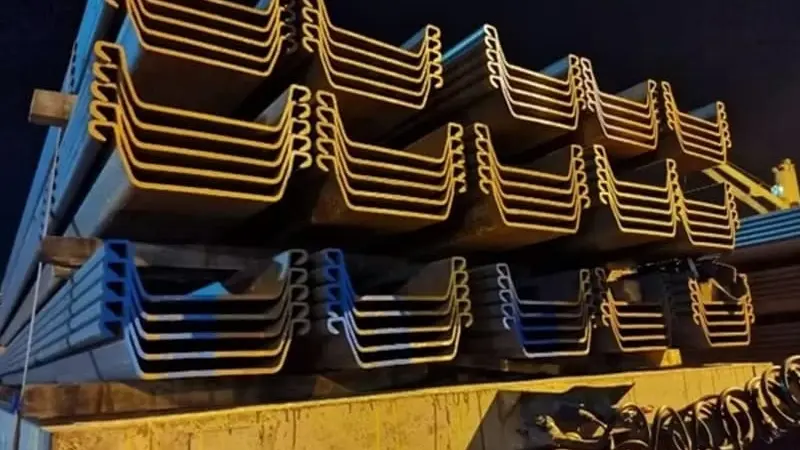
I often explain to customers that steel sheet piles and foundation piles have different purposes. Both are installed into the ground, but they solve different engineering problems. Foundation piles mainly support buildings and structures from vertical loads. Steel sheet piles mainly support soil and water pressure from horizontal loads.
The basic function of piles
In structural engineering, piles are used when the surface soil cannot provide enough support for a structure.
Normal shallow foundations work well when strong soil exists near the surface. However, many projects face difficult ground conditions, such as:
- Soft clay
- Loose sand
- Weak soil layers
- High groundwater areas
- Coastal environments
In these conditions, engineers use piles to reach deeper and stronger soil layers.
A pile transfers loads through different mechanisms.
| Load Transfer Method | Explanation |
|---|---|
| End bearing | The pile transfers loads through its bottom tip into strong soil or rock |
| Skin friction | The pile transfers loads through friction between the pile surface and surrounding soil |
| Combined support | The pile uses both end bearing and skin friction |
The design method depends on soil conditions, pile material, and project requirements.
Engineers normally evaluate end bearing capacity and skin friction when designing pile foundation systems. These factors influence how effectively the pile transfers structural loads into surrounding soil layers.
Types of loads carried by piles
Piles can resist different types of forces.
The main loads include:
| Load Type | Description |
|---|---|
| Vertical compression load | Weight from buildings and structures |
| Tensile load | Pulling forces caused by uplift or wind |
| Lateral load | Horizontal forces from soil, water, or waves |
| Dynamic load | Forces from traffic, machines, or vibration |
Different pile designs are selected according to these loads.
For example:
- Building foundations mainly require vertical load support.
- Bridge foundations require vertical and lateral resistance.
- Marine structures require strong resistance against water and wave forces.
- Retaining walls require resistance against soil movement.
The required load capacity depends on structure weight, soil properties, and environmental conditions.
Difference between foundation piles and sheet piles
Many customers ask me about the difference between normal piles and steel sheet piles.
Although both products are installed into the ground, their engineering roles are different.
| Feature | Foundation Piles | Steel Sheet Piles |
|---|---|---|
| Main purpose | Support structures | Retain soil and water |
| Main load | Vertical load | Horizontal pressure |
| Installation | Individual piles | Connected continuous wall |
| Typical materials | Concrete, steel, timber | Steel |
| Common applications | Buildings, bridges | Excavation, flood control, ports |
Foundation piles carry the weight of structures.
Steel sheet piles create barriers that control soil and water movement.
Steel sheet piles are mainly used as retaining wall systems. They resist lateral pressure and create continuous barriers for excavation and water control projects.
How piles work in deep foundations
Deep foundation systems use piles when shallow foundations are not suitable.
The process usually includes:
- Engineers study soil conditions.
- Engineers calculate required load capacity.
- Workers install piles into the ground.
- The structure connects with the pile system.
- Loads transfer through the piles into deeper soil layers.
The pile length depends on:
| Factor | Influence |
|---|---|
| Soil strength | Stronger soil may require shorter piles |
| Building weight | Heavier structures need stronger piles |
| Groundwater | Water affects stability |
| Environmental conditions | Marine areas require special consideration |
Engineers normally use soil investigation reports before selecting pile dimensions.
The required pile dimensions depend on soil conditions, structural loads, and project requirements. Correct pile design helps improve foundation stability and reduces construction risks.
Steel piles in structural engineering
Steel piles are widely used because steel provides high strength and good installation performance.
Common steel pile applications include:
- Bridge foundations
- Industrial buildings
- Marine structures
- Temporary supports
- Heavy equipment foundations
Steel piles have several advantages:
| Advantage | Benefit |
|---|---|
| High strength-to-weight ratio | Handles large loads with less material |
| Easy transportation | Convenient for large projects |
| Fast installation | Reduces construction time |
| Flexible length | Suitable for different depths |
Steel piles are often selected for projects that require reliable structural performance and efficient construction methods.
For example, bridge foundations often use steel pile systems because they can provide strong support under complex loading conditions. In industrial and infrastructure projects, steel piles are also widely used because they can be manufactured in different lengths and specifications.
However, engineers must consider corrosion protection when steel piles are used in aggressive environments.
Projects located near oceans, rivers, and coastal areas require additional attention because moisture and salt exposure can accelerate steel corrosion. Engineers may apply corrosion protection methods such as protective coatings, increased material thickness, and maintenance plans.
Relationship between piles and sheet pile walls
Steel sheet piles are a special type of steel pile system.
They are not designed mainly as foundation supports. They create connected walls that resist lateral forces.
A sheet pile wall works through:
- Embedment depth
- Soil resistance
- Interlocking connections
- Section strength
- Anchoring systems
For example, a river protection project uses sheet piles to prevent soil erosion. The piles are driven into the riverbank and connected together to create a stable barrier.
The surrounding soil supports the embedded section while the steel profile resists bending.
The performance of sheet pile walls depends on several engineering factors, including soil conditions, water pressure, pile profile, and installation quality.
Engineers evaluate lateral earth pressure when designing retaining systems because soil pressure is one of the main forces acting on sheet pile structures.
Why engineers choose steel sheet piles
I have worked with many contractors who select steel sheet piles because they need a practical solution for difficult construction environments.
Steel sheet piles provide:
- Fast installation
- Strong retaining ability
- Water control performance
- Flexible construction methods
- Long-term structural stability
They are especially useful where space is limited because the wall can be installed vertically without requiring large excavation areas.
In urban construction projects, contractors often choose sheet pile systems because they can provide effective excavation support while reducing the required working area.
Common applications include:
- Underground construction
- Bridge foundation excavation
- Riverbank protection
- Port development
- Flood defense projects
For marine structures, steel sheet piles provide reliable resistance against water pressure, wave impact, and soil movement. Their interlocking design creates a continuous wall that improves stability in challenging environments.
Engineering considerations for sheet pile selection
When selecting steel sheet piles, engineers normally consider several important factors.
These factors include:
| Selection Factor | Influence |
|---|---|
| Soil condition | Determines required strength and wall stability |
| Water pressure | Affects structural loading |
| Excavation depth | Determines required pile length |
| Project duration | Influences temporary or permanent design |
| Environmental conditions | Affects material protection requirements |
Different projects require different sheet pile solutions.
For example, a temporary excavation project may focus on installation speed and cost efficiency. A permanent marine structure may require higher corrosion resistance and stronger structural performance.
The correct selection of sheet pile specifications helps contractors achieve better project safety and reduce future maintenance costs.
Installation methods for steel piles and sheet piles
The installation method directly affects the final performance of pile systems.
Common installation methods include:
| Installation Method | Application |
|---|---|
| Vibratory driving | Fast installation in common soil conditions |
| Impact driving | Suitable for stronger ground conditions |
| Hydraulic pressing | Used where vibration control is required |
| Extraction and reuse | Common for temporary applications |
Before installation, engineers evaluate soil conditions, nearby structures, and environmental restrictions.
For example, construction projects in cities often need low-vibration installation methods to reduce the impact on surrounding buildings.
Proper installation ensures that piles reach the required depth and maintain structural performance.
Problems such as damaged interlocks, incorrect alignment, or insufficient penetration depth can reduce the effectiveness of sheet pile walls.
Importance of soil conditions in pile design
Soil conditions are one of the most important factors in pile engineering.
Different soil types affect pile performance in different ways.
| Soil Type | Engineering Influence |
|---|---|
| Clay soil | May require consideration of settlement and friction resistance |
| Sandy soil | Provides different resistance characteristics |
| Rock layers | Can provide strong end bearing support |
| Soft soil | May require deeper pile installation |
Engineers usually conduct geological investigations before designing pile systems.
Soil investigation helps determine:
- Required pile length
- Suitable pile type
- Expected load capacity
- Installation method
- Long-term stability
A correct understanding of ground conditions helps avoid design problems and improves construction efficiency.
Steel sheet pile walls in practical engineering projects
Steel sheet pile walls are widely used in projects where soil stability and water control are critical.
Typical applications include:
| Application | Engineering Purpose |
|---|---|
| Excavation support | Prevents soil collapse during construction |
| Flood control | Protects areas from water movement |
| River protection | Reduces erosion and improves bank stability |
| Port construction | Supports waterfront structures |
| Temporary cofferdams | Creates dry working areas |
In these projects, the connection between each pile section is very important.
The interlocking connection between sheet piles creates a continuous wall structure. This design allows the system to resist soil pressure and control water movement more effectively.
Long-term performance of pile systems
The service life of pile systems depends on material quality, environmental conditions, and maintenance requirements.
For steel piles and sheet piles, important factors include:
- Steel grade
- Wall thickness
- Installation quality
- Corrosion protection
- Environmental exposure
Projects in aggressive environments require additional design considerations.
For example, coastal structures are exposed to seawater and changing water levels. Engineers must consider corrosion resistance and long-term durability when selecting materials.
A well-designed pile system can provide stable performance for many years and reduce future repair requirements.
Choosing the correct pile solution
From my experience working with international buyers, I find that selecting the correct pile type is more important than simply comparing prices.
Before purchasing, contractors should understand:
- The purpose of the pile system
- Expected loads
- Soil conditions
- Water environment
- Project duration
- Installation requirements
Foundation piles and sheet piles solve different engineering problems.
Foundation piles transfer structural loads into deeper soil layers.
Steel sheet piles create retaining systems that control soil and water movement.
Choosing the correct solution helps reduce construction risks and improves project efficiency.
My insight
From my experience, understanding the difference between piles and sheet piles is very important before selecting a product. A foundation pile supports a structure, while a sheet pile supports the surrounding ground.
Choosing the wrong type can increase project cost and create unnecessary engineering problems.
For buyers, the best approach is not only to compare steel prices but also to consider engineering requirements, application conditions, and long-term performance.
A suitable pile solution can improve construction safety, reduce maintenance costs, and provide better value throughout the project life cycle.
What are the different types of steel piles?
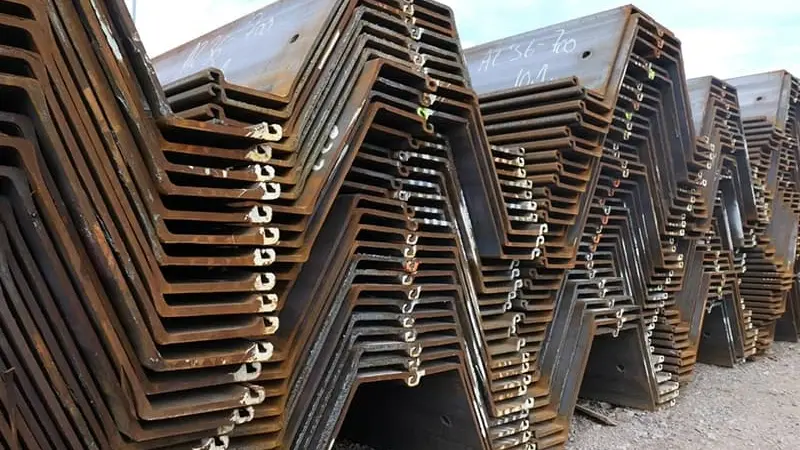
Many customers ask me about the difference between steel piles and steel sheet piles. Although both products are installed into the ground, they have different structures and different engineering purposes. Choosing the correct type of steel pile is important because each type is designed for different loads, soil conditions, and construction environments.
The main types of steel piles include steel sheet piles, H piles, pipe piles, and box piles. Engineers select different steel pile types based on load requirements, soil conditions, installation methods, and project applications.
Classification of steel piles
Steel piles are mainly classified according to their shape and structural function.
The most common types include:
| Steel Pile Type | Main Shape | Main Function |
|---|---|---|
| Steel sheet piles | U, Z, flat profiles | Retaining soil and water |
| H piles | H-shaped section | Supporting vertical loads |
| Pipe piles | Circular hollow section | Deep foundation support |
| Box piles | Square or rectangular hollow section | Heavy structural support |
Each type has its own advantages.
Engineers do not select piles only by appearance. They consider:
- Required load capacity
- Soil conditions
- Installation equipment
- Project environment
- Service life requirements
Steel sheet piles
Steel sheet piles are one of the most common steel pile products used in civil engineering.
Their main purpose is creating continuous walls.
The interlocking edges allow individual piles to connect together and form a strong barrier.
Common steel sheet pile profiles include:
| Profile Type | Characteristics | Typical Applications |
|---|---|---|
| U-shaped sheet piles | Balanced strength and easy installation | River protection, retaining walls |
| Z-shaped sheet piles | Higher bending resistance | Ports and deep excavation |
| Omega sheet piles | Special engineering design | Customized projects |
| Flat sheet piles | Flat wall structure | Circular retaining systems |
Steel sheet piles are widely used for:
- Flood protection
- Riverbank stabilization
- Marine construction
- Cofferdams
- Excavation support
The main force resisted by sheet piles is horizontal pressure from soil and water.
H piles
H piles are another important type of steel pile.
They have an H-shaped cross-section and are mainly used for deep foundations.
Unlike sheet piles, H piles are not connected together to create a wall.
Their main purpose is transferring vertical loads from structures into deeper soil layers.
Common applications include:
- Building foundations
- Bridge foundations
- Heavy industrial structures
- Large equipment supports
| Feature | H Piles |
|---|---|
| Main load | Vertical load |
| Shape | H profile |
| Installation | Individual piles |
| Common use | Deep foundations |
| Soil resistance | End bearing and friction |
H piles provide excellent compression strength.
They are often selected for projects where buildings or bridges need strong foundation support.
Pipe piles
Pipe piles are circular hollow steel piles.
They are produced from steel pipes and can be installed by driving or drilling methods.
Pipe piles are commonly used in:
- Marine structures
- Offshore platforms
- Bridge foundations
- Large buildings
Their advantages include:
| Advantage | Description |
|---|---|
| High strength | Handles large loads |
| Flexible diameter options | Fits different designs |
| Good bending resistance | Suitable for heavy structures |
| Easy connection | Can be welded or joined |
Large diameter pipe piles are especially common in marine engineering because they can resist strong environmental forces.
Box piles
Box piles have a square or rectangular hollow section.
They are usually produced by welding steel plates together.
Box piles are selected when engineers need very high structural capacity.
Common applications include:
- Heavy bridge structures
- Offshore projects
- Large retaining systems
- Special foundation projects
Advantages include:
- High stiffness
- Large load capacity
- Customizable dimensions
- Strong structural performance
However, box piles usually require more complicated manufacturing compared with standard steel piles.
Comparison of different steel pile types
The following table shows the main differences.
| Feature | Sheet Piles | H Piles | Pipe Piles | Box Piles |
|---|---|---|---|---|
| Main purpose | Retaining soil and water | Foundation support | Deep foundation | Heavy structural support |
| Load direction | Horizontal | Vertical | Vertical and lateral | Vertical and lateral |
| Connection | Interlocking | Individual | Individual | Individual |
| Typical project | Retaining walls | Buildings | Bridges, offshore | Large infrastructure |
| Installation | Driving | Driving | Driving or drilling | Driving or installation |
This comparison helps customers understand why different pile types exist.
How engineers select steel piles
When I communicate with contractors, I usually ask several questions before recommending a steel pile.
The main questions include:
| Question | Reason |
|---|---|
| What is the project type? | Determines pile function |
| What loads will the pile carry? | Selects structural capacity |
| What is the soil condition? | Determines installation depth |
| Is the project temporary or permanent? | Affects material selection |
| Is the environment corrosive? | Determines protection requirements |
A port project requires different piles compared with a building foundation.
A flood control project also requires different solutions compared with a bridge foundation.
Steel pile applications in modern engineering
Steel piles are used in many infrastructure projects around the world.
Common applications include:
Transportation projects
Steel piles support:
- Bridges
- Highway structures
- Railway foundations
Engineers choose steel piles because they can provide strong support even in weak soil conditions.
Marine projects
Marine environments create special challenges.
Steel piles are used for:
- Ports
- Docks
- Offshore structures
- Coastal protection
These projects require excellent corrosion resistance and structural strength.
Water protection projects
Steel sheet piles are especially important in water-related projects.
Applications include:
- Riverbank protection
- Flood control walls
- Canal reinforcement
- Seawalls
In our Southeast Asia riverbank protection project, hot rolled U-shaped steel sheet piles were used to create a stable retaining system. The contractor installed the piles along the river edge to reduce erosion and improve flood protection. The strong interlocking structure helped create a reliable barrier against water and soil movement.
How I help customers select the right pile
As a steel sheet pile supplier, I understand that customers often have many options.
I do not recommend products only based on price.
I focus on:
- Project requirements
- Engineering conditions
- Installation method
- Service life expectations
- Total project cost
For example, a temporary excavation project may not require the strongest sheet pile. A permanent flood protection project may need a stronger profile with better corrosion resistance.
The right selection can reduce construction risks and improve project efficiency.
My insight
From my experience, there is no single "best" steel pile for every project. Each pile type has its own purpose. I always recommend customers understand the engineering requirements first and then choose the correct steel pile. The right product can improve safety, reduce costs, and provide better long-term performance.
Conclusion
Steel sheet piles provide strong solutions for soil retention, water control, and infrastructure protection. Understanding their structure, types, and applications helps engineers make better project decisions.