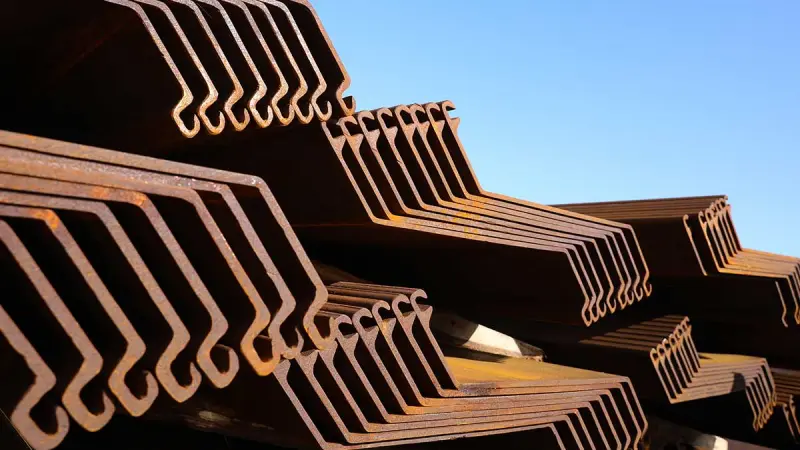
Many buyers know steel sheet piles are used for retaining walls, but they are not sure how to choose the right type. A wrong decision can increase project costs and reduce structural safety.
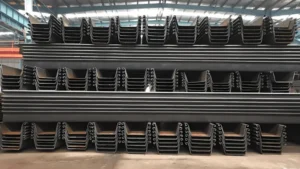
A steel sheet pile is a rolled steel section with interlocking edges that forms a continuous retaining wall. It is widely used for excavation support, flood control, riverbank protection, bridge foundations, ports, and marine construction because it provides high strength, easy installation, and reusable performance.
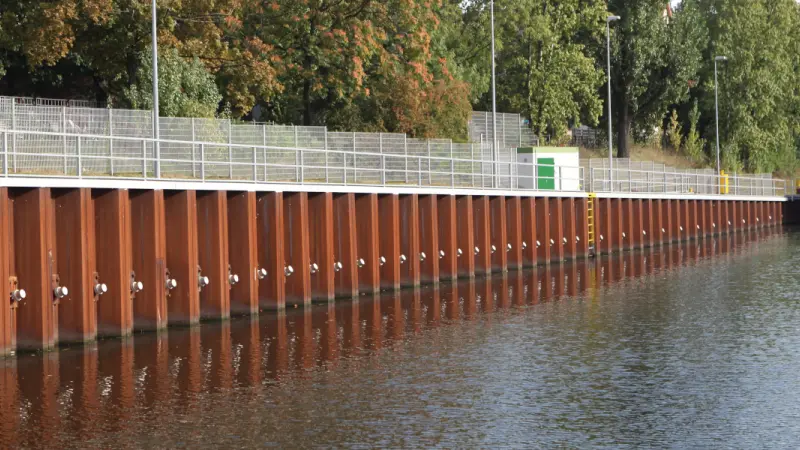
When I work with contractors, civil engineering companies, and steel distributors, I find that many buyers focus only on the price per ton. I always explain that the profile, steel grade, manufacturing standard, and application are equally important. The correct sheet pile profile can improve safety, reduce installation time, and lower the total project cost.
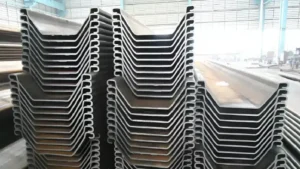
Steel sheet piles are available in many profiles, including U-shaped, Z-shaped, Ω-shaped, flat plate, disc type, cap type, and straight flange types. Every profile has its own structural advantages. Understanding these differences helps engineers select the right solution for each project.
What are the four types of piles?
Many people confuse foundation piles with sheet piles. They are different products and serve different engineering purposes. Understanding the four main pile categories helps buyers select the right foundation solution.
The four main types of piles are end-bearing piles, friction piles, sheet piles, and compaction piles. Each type transfers loads differently and is designed for specific soil conditions and construction requirements.
Understanding the four major pile categories
Pile foundations are essential when surface soil cannot safely support a structure. Different piles work in different ways. Engineers choose the pile type according to soil conditions, structural loads, groundwater level, and project budget.
The four major categories are shown below.
| Pile Type | Primary Function | Typical Application |
|---|---|---|
| End-bearing pile | Transfers load to hard bearing layer | High-rise buildings, bridges |
| Friction pile | Transfers load through soil friction | Soft soil foundations |
| Sheet pile | Retains soil and water | Excavations, ports, flood control |
| Compaction pile | Improves soil density | Ground improvement projects |
Each pile has a different engineering purpose. They should not be considered interchangeable.
End-bearing piles
End-bearing piles transfer structural loads directly to a strong rock layer or dense soil beneath weak surface soils.
The pile acts like a column.
The building load travels through the pile until it reaches the bearing layer.
Common applications include:
- High-rise buildings
- Heavy industrial facilities
- Large bridges
- Power plants
Advantages include:
- High load capacity
- Reliable settlement control
- Long service life
Limitations include:
- Greater drilling depth
- Higher installation cost
- Dependence on deep bearing strata
Friction piles
Friction piles work differently.
Instead of relying on a hard layer, they transfer the load through friction between the pile surface and the surrounding soil.
This solution is common when no suitable bearing layer exists within an economical depth.
Typical applications include:
- Clay foundations
- Loose sand
- Coastal developments
- Soft ground construction
Advantages include:
| Benefit | Description |
|---|---|
| Flexible design | Suitable for many soil conditions |
| Good performance | Effective in deep soft soils |
| Lower excavation requirements | Useful where bedrock is very deep |
The design engineer must carefully calculate the available skin friction to ensure adequate capacity.
Steel sheet piles
Steel sheet piles are very different from load-bearing foundation piles.
Their main purpose is not to support vertical building loads.
Instead, they create a continuous retaining wall that resists lateral earth pressure and water pressure.
Because every sheet pile interlocks with the next one, they form a strong wall capable of stabilizing excavations and preventing soil movement.
Common applications include:
| Application | Why Sheet Piles Are Used |
|---|---|
| Deep excavations | Soil retention |
| Riverbank protection | Prevent erosion |
| Flood control systems | Water barriers |
| Port construction | Marine retaining walls |
| Cofferdams | Temporary water exclusion |
| Bridge foundations | Excavation support |
As a steel sheet pile supplier, this is the pile type I work with most often.
I have supplied U-shaped and Z-shaped sheet piles for contractors working on riverbank reinforcement, deep basement excavations, and harbor developments. These projects require reliable interlocking performance because even a small installation error can affect the entire retaining wall.
Compaction piles
Compaction piles improve the surrounding soil instead of directly carrying structural loads.
During installation, the pile displaces loose soil.
The surrounding ground becomes denser.
This increases bearing capacity and reduces settlement.
Compaction piles are commonly used for:
- Road construction
- Industrial yards
- Airport foundations
- Warehouse developments
Their primary objective is soil improvement rather than structural support.
Which pile type should I recommend?
When customers contact me, I usually ask several questions before recommending any product.
| Question | Reason |
|---|---|
| What is the project application? | Determines pile function |
| What is the soil condition? | Influences pile selection |
| Is groundwater present? | Affects retaining requirements |
| Is the structure temporary or permanent? | Determines material selection |
| What loads must the structure resist? | Determines pile capacity |
Many buyers initially believe all piles perform the same job.
After reviewing the project drawings, they often discover they actually need steel sheet piles instead of traditional foundation piles.
For example, in our Southeast Asia riverbank protection project, the contractor required a retaining wall rather than a load-bearing foundation.
Hot rolled U-shaped steel sheet piles created a continuous barrier that stabilized the riverbank, resisted seasonal water pressure, and protected nearby infrastructure from erosion.
My insight
From my experience, understanding the difference between pile types is the first step toward a successful project. I always recommend selecting the pile according to its engineering function instead of simply comparing material prices.
What are steel sheet piles used for?
Many buyers understand what steel sheet piles look like, but they often ask me where they are actually used. The answer depends on the project because steel sheet piles can solve many different engineering problems.
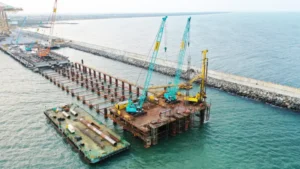
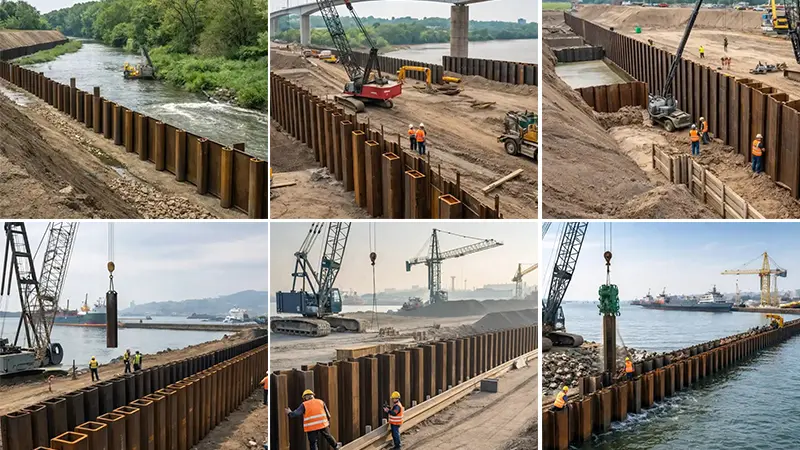
Steel sheet piles are mainly used for retaining walls, excavation support, flood control systems, riverbank protection, bridge foundations, cofferdams, ports, seawalls, and underground construction. Their interlocking design creates a strong and continuous wall that resists soil and water pressure.
Why are steel sheet piles widely used?
Steel sheet piles have become one of the most popular retaining systems because they combine high strength, fast installation, and excellent adaptability.
Unlike concrete retaining walls, steel sheet piles can be installed quickly using vibratory hammers or hydraulic press-in machines. They also require less excavation in many projects.
The biggest advantage is their interlocking connection.
Each pile locks tightly with the next one, creating a continuous wall that distributes pressure evenly.
The main advantages include:
| Advantage | Benefit |
|---|---|
| High structural strength | Resists large lateral loads |
| Fast installation | Shortens construction time |
| Reusable material | Reduces total project cost |
| Excellent interlocks | Improves wall stability |
| Flexible lengths | Suitable for different projects |
| High durability | Long service life |
For contractors working under tight schedules, these advantages can significantly reduce overall construction time.
Excavation support
One of the most common applications is deep excavation support.
Before underground structures are built, engineers need to prevent surrounding soil from collapsing.
Steel sheet piles create temporary or permanent retaining walls around the excavation.
Typical projects include:
- Underground parking structures
- Building basements
- Metro stations
- Utility tunnels
- Pump stations
The sheet pile wall supports the surrounding soil while excavation work continues safely.
The required pile length depends on:
| Design Factor | Effect |
|---|---|
| Excavation depth | Determines embedment depth |
| Soil type | Affects earth pressure |
| Groundwater level | Influences water control |
| Structural loading | Determines pile section |
Proper design ensures the retaining wall remains stable throughout construction.
Riverbank protection and flood control
Riverbank protection is one of the applications I work with most frequently.
Riverbanks experience continuous erosion caused by flowing water.
Without protection, the soil gradually disappears, threatening nearby roads, buildings, and infrastructure.
Steel sheet piles provide an effective solution by forming a continuous retaining wall.
Common flood protection applications include:
- River embankments
- Flood defense walls
- Canal reinforcement
- Reservoir protection
- Stormwater channels
The interlocking system also helps reduce water seepage between piles.
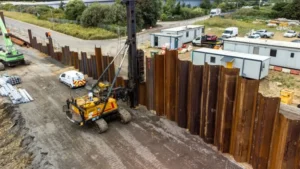
In our Southeast Asia riverbank protection project, the contractor selected hot rolled U-shaped steel sheet piles.
The sheet piles were driven into the ground using vibratory equipment.
The retaining wall stabilized the riverbank while resisting seasonal water level changes.
The installation finished on schedule, and the completed wall provided long-term protection against erosion.
Port and marine construction
Marine projects require retaining systems that can resist both soil pressure and water pressure.
Steel sheet piles are widely used because they provide excellent structural performance.
Typical marine applications include:
| Marine Project | Function |
|---|---|
| Commercial ports | Quay walls |
| Harbors | Dock retaining walls |
| Shipyards | Waterfront structures |
| Seawalls | Coastal protection |
| Bulk terminals | Earth retention |
These projects usually require:
- High-strength steel
- Reliable interlocks
- Corrosion protection
- Long design life
Many engineers choose hot rolled sheet piles because the stronger interlocks perform well under heavy marine loads.
Bridge foundations
Bridge construction often requires excavation below groundwater level.
Steel sheet piles create temporary cofferdams that allow workers to build bridge foundations safely.
The retaining wall keeps soil stable while reducing water intrusion.
Typical bridge applications include:
- Bridge piers
- Abutments
- Temporary excavation support
- River crossings
After the concrete foundation is completed, temporary sheet piles can often be removed and reused on another project.
This improves cost efficiency.
Cofferdams and water control
Cofferdams are temporary enclosures built to keep water away from construction areas.
Steel sheet piles are one of the best materials for this purpose.
Because the interlocks connect continuously, they create an enclosed work area.
Typical cofferdam projects include:
- Bridge foundations
- Dam repairs
- Marine construction
- Water treatment plants
- Harbor maintenance
The wall may not be completely waterproof by itself.
However, sealing materials can be added to the interlocks to significantly reduce water leakage.
Permanent retaining walls
Many people believe steel sheet piles are only temporary.
This is not correct.
With proper design and corrosion protection, they can remain in service for decades.
Permanent applications include:
| Permanent Structure | Purpose |
|---|---|
| Highway retaining walls | Slope stabilization |
| Railway embankments | Earth retention |
| Industrial facilities | Foundation protection |
| Flood barriers | Long-term water control |
| Coastal structures | Shoreline protection |
The design engineer selects the steel grade, wall section, and corrosion allowance according to the required service life.
Temporary construction projects
Temporary projects are another important market.
Many contractors purchase or rent steel sheet piles because they can be removed after construction.
Typical temporary applications include:
- Pipeline installation
- Utility trenches
- Temporary retaining walls
- Emergency flood barriers
- Construction site protection
Because steel sheet piles are reusable, contractors can lower material costs over multiple projects.
How I help customers choose the right application
When customers contact me, I rarely recommend a product immediately.
Instead, I first collect the basic project information.
| Question | Why I Ask |
|---|---|
| What is the project type? | Determines application |
| What is the wall height? | Determines section size |
| Is the project temporary or permanent? | Influences steel grade |
| What is the soil condition? | Determines structural design |
| Is groundwater present? | Determines sealing requirements |
These questions help me recommend the most suitable U-shaped, Z-shaped, Ω-shaped, straight flange, or flat sheet pile system.
My insight
From my experience, steel sheet piles are much more than retaining materials. They are complete engineering solutions. I always recommend choosing the profile, steel grade, and installation method according to the project requirements instead of simply selecting the lowest-priced product.
What is the difference between Type 2 and Type 4 sheet piles?
Many buyers ask me whether they should choose Type 2 or Type 4 sheet piles. The answer depends on the project requirements. A larger section is not always the better choice, and a lighter section is not always the most economical solution.
Type 2 sheet piles are lighter sections designed for moderate loads, while Type 4 sheet piles have a larger section modulus and higher bending resistance. Type 4 is generally preferred for deeper excavations, permanent retaining walls, and marine structures.

What do Type 2 and Type 4 mean?
The terms "Type 2" and "Type 4" are commonly used in several markets to describe different sheet pile sections. They mainly represent differences in structural capacity rather than steel quality.
The most important differences are:
- Section modulus
- Weight per meter
- Wall thickness
- Bending resistance
- Suitable excavation depth
- Project application
The larger the section modulus, the greater the wall’s ability to resist bending caused by soil and water pressure.
This is why engineers focus on section properties instead of simply comparing weight.
Basic comparison
The following table shows the general differences between the two types.
| Feature | Type 2 | Type 4 |
|---|---|---|
| Section weight | Lower | Higher |
| Section modulus | Medium | High |
| Bending resistance | Moderate | Excellent |
| Steel consumption | Lower | Higher |
| Material cost | Lower | Higher |
| Recommended wall height | Medium | High |
| Typical application | Temporary works | Permanent heavy-duty projects |
Although Type 4 costs more, it often provides higher structural efficiency for demanding projects.
Structural performance
The biggest difference is bending capacity.
Steel sheet piles resist lateral forces instead of vertical building loads.
These forces include:
- Soil pressure
- Groundwater pressure
- Hydrostatic pressure
- Traffic surcharge
- Construction equipment loads
- Wave impact
- Tidal movement
Type 4 sections have a larger moment of inertia and section modulus.
This allows the retaining wall to carry higher loads with less deformation.
| Structural Property | Type 2 | Type 4 |
|---|---|---|
| Wall stiffness | Good | Excellent |
| Deflection control | Moderate | Better |
| Heavy load resistance | Medium | High |
| Long-term performance | Good | Excellent |
For deep excavations, reduced wall movement is often one of the most important design objectives.
Typical applications for Type 2
Type 2 sheet piles are suitable for many standard construction projects.
Common applications include:
- Temporary excavation support
- Utility trench protection
- Small retaining walls
- Temporary cofferdams
- Low retaining structures
Advantages include:
- Lower purchase cost
- Easier transportation
- Faster installation
- Lower equipment requirements
Many contractors prefer Type 2 sections for projects with moderate soil pressure because they provide good value.
Typical applications for Type 4
Type 4 sheet piles re designed for projects requiring greater structural capacity.
Typical applications include:
| Application | Reason |
|---|---|
| Deep excavations | Higher bending strength |
| Port construction | Heavy lateral loads |
| Riverbank protection | Long-term stability |
| Flood control walls | Better deformation control |
| Bridge foundations | Reliable excavation support |
| Marine structures | High structural performance |
These projects usually involve greater earth pressure and longer service life.
The stronger section provides additional safety for permanent infrastructure.
Installation differences
The installation method is generally similar, but heavier sections require more powerful equipment.
Common installation methods include:
- Vibratory hammer
- Diesel impact hammer
- Hydraulic impact hammer
- Silent press-in machine
Type 4 sheet piles usually require:
- Higher lifting capacity
- Larger cranes
- Stronger vibratory hammers
- More installation energy
Type 2 sections are easier to handle because they are lighter.
However, installation cost alone should never determine the final selection.
Cost versus performance
Some customers only compare the material price.
I believe the total project cost is much more important.
For example, a stronger Type 4 section may reduce:
- Number of anchors
- Wall deformation
- Maintenance costs
- Construction risks
The final project may actually become more economical.
| Cost Factor | Type 2 | Type 4 |
|---|---|---|
| Initial material cost | Lower | Higher |
| Structural capacity | Medium | High |
| Potential reinforcement | More | Less |
| Long-term value | Good | Excellent |
Looking only at the steel price can sometimes lead to higher overall construction costs.
How I recommend the correct type
When customers send inquiries, I usually ask for the following information before recommending a section.
| Information Needed | Purpose |
|---|---|
| Excavation depth | Determines section size |
| Soil report | Calculates earth pressure |
| Groundwater level | Determines hydraulic pressure |
| Service life | Selects suitable design |
| Project location | Considers corrosion environment |
Once I understand these conditions, I can recommend the most suitable U-shaped or Z-shaped sheet pile profile instead of simply choosing the largest section.
Case study: Riverbank protection project
In one Southeast Asia riverbank protection project, the contractor initially wanted a lighter section to reduce procurement costs.
After reviewing the soil conditions and seasonal water level changes, the engineering team selected a stronger hot rolled U-shaped sheet pile with higher structural capacity.
The final retaining wall showed:
- Excellent interlocking performance
- Stable installation
- Reliable flood protection
- Long-term riverbank stability
Although the initial material investment was higher, the contractor reduced future maintenance and improved overall project safety.
My insight
From my experience, Type 2 and Type 4 sheet piles are designed for different engineering conditions. I always recommend selecting the section according to structural calculations, soil conditions, and project life instead of choosing only by price or weight.
What are the different types of steel sheets?
Many buyers confuse steel sheet piles with ordinary steel sheets because both are made from steel plates. In reality, they are designed for very different purposes. Understanding the different types of steel sheets helps buyers choose the correct material for their project.
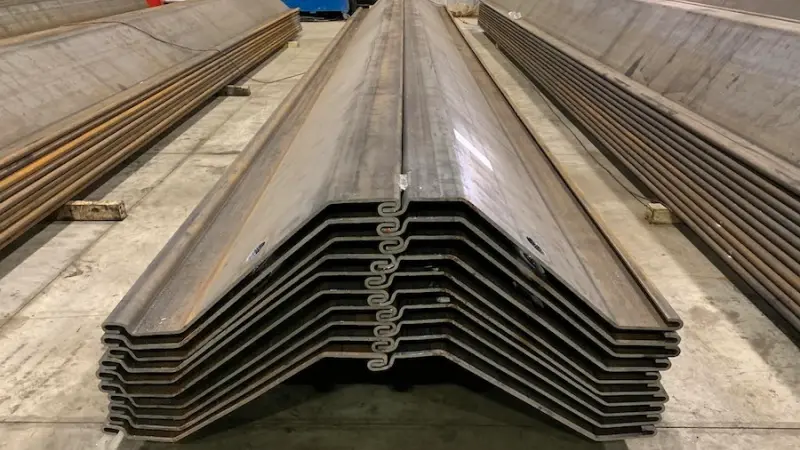
Steel sheets can be classified into carbon steel sheets, galvanized steel sheets, stainless steel sheets, color-coated steel sheets, hot rolled steel sheets, cold rolled steel sheets, and steel sheet piles . Each type offers different mechanical properties, corrosion resistance, and applications.
Classification by manufacturing process
One of the most common classification methods is based on how the steel sheet is produced.
| Steel Sheet Type | Manufacturing Process | Main Features |
|---|---|---|
| Hot Rolled Steel Sheet | Rolled at high temperature | High strength, economical |
| Cold Rolled Steel Sheet | Rolled at room temperature | Smooth surface, high precision |
| Galvanized Steel Sheet | Zinc-coated after rolling | Excellent corrosion resistance |
| Color-Coated Steel Sheet | Painted over galvanized steel | Decorative and weather resistant |
Each manufacturing process creates different mechanical properties.
For structural engineering, hot rolled products are often preferred because they provide excellent strength and toughness.
Cold rolled sheets are commonly used when dimensional accuracy and surface finish are more important.
Carbon steel sheets
Carbon steel sheets are among the most widely used steel materials.
Their mechanical properties vary depending on the carbon content.
Common applications include:
- Structural fabrication
- Machinery
- Construction
- Storage tanks
- Industrial equipment
Advantages include:
- High strength
- Easy welding
- Good machinability
- Competitive cost
However, carbon steel has limited corrosion resistance without protective coatings.
Galvanized steel sheets
Galvanized steel sheets are coated with zinc to improve corrosion resistance.
They are commonly used in outdoor environments where moisture is present.
Typical applications include:
| Application | Benefit |
|---|---|
| Roofing | Weather resistance |
| Building panels | Corrosion protection |
| HVAC systems | Long service life |
| Cable trays | Rust prevention |
| Agricultural buildings | Low maintenance |
The zinc coating protects the steel even if small scratches appear on the surface.
Stainless steel sheets
Stainless steel sheets contain chromium, which creates a protective oxide layer.
This greatly improves corrosion resistance.
Common stainless steel grades include:
- 201
- 304
- 304L
- 316
- 316L
Typical applications include:
- Food processing equipment
- Chemical plants
- Medical equipment
- Decorative architecture
- Marine equipment
Compared with carbon steel, stainless steel offers:
| Property | Stainless Steel | Carbon Steel |
|---|---|---|
| Corrosion resistance | Excellent | Moderate |
| Maintenance | Low | Higher |
| Appearance | Decorative | Industrial |
| Cost | Higher | Lower |
The correct grade depends on the service environment.
Steel sheet piles
Steel sheet piles are very different from ordinary steel sheets.
Instead of being flat plates, they are specially rolled into structural profiles with interlocking edges.
Their purpose is to retain soil and water rather than simply cover or fabricate structures.
Our main products include:
- U-shaped steel sheet piles
- Z-shaped steel sheet piles
- Ω-shaped steel sheet piles
- Flat plate sheet piles
- Disc type sheet piles
- Cap type sheet piles
- Straight flange sheet piles
These profiles create continuous retaining walls with excellent structural performance.
Comparison of sheet pile profiles
Each sheet pile profile has unique characteristics.
| Profile | Main Advantage | Typical Application |
|---|---|---|
| U-shaped | Balanced strength and easy installation | Riverbanks, retaining walls |
| Z-shaped | Higher section modulus | Ports, deep excavations |
| Ω-shaped | Special structural design | Customized engineering |
| Flat plate | Continuous flat wall | Cofferdams |
| Straight flange | High tensile capacity | Circular structures |
| Cap type | Special engineering solution | Customized retaining systems |
Selecting the right profile depends on engineering design rather than appearance.
Which steel sheet should I choose?
When customers contact me, I first ask about the project because different steel sheets solve different engineering problems.
| Project Requirement | Recommended Product |
|---|---|
| Building fabrication | Carbon steel sheet |
| Decorative architecture | Stainless steel sheet |
| Outdoor structures | Galvanized steel sheet |
| Roofing systems | Color-coated steel sheet |
| Excavation support | Steel sheet piles |
| Flood control | Hot rolled steel sheet piles |
| Port construction | High-strength U or Z sheet piles |
The correct material should always match the working environment and structural requirements.
Why I recommend hot rolled steel sheet piles
As a supplier specializing in steel sheet piles , I often recommend hot rolled products for demanding infrastructure projects.
Hot rolled sheet piles provide:
- Strong interlocking performance
- Excellent bending resistance
- Reliable dimensional accuracy
- Long service life
- High structural stability
These advantages make them suitable for permanent retaining walls, marine construction, bridge foundations, and flood control systems.
In our Southeast Asia riverbank protection project, the contractor selected hot rolled U-shaped sheet piles to stabilize the riverbank. The strong interlocks and high structural strength helped complete the installation efficiently while providing reliable long-term erosion protection.
My insight
From my experience, every steel sheet has its own purpose. I always advise customers to focus on the project requirements first. Choosing the right material creates better performance, longer service life, and lower overall project costs.
Conclusion
Steel sheet piles are specialized structural products designed for retaining soil and water. Understanding their types, applications, and steel grades helps engineers choose safer and more economical solutions for every project.