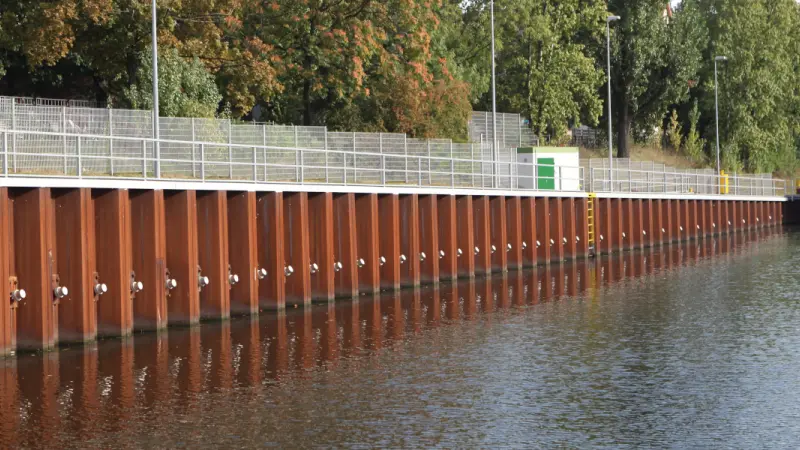
Many buyers focus on strength, price, and delivery first. Then they suddenly face questions about carbon footprint, vibration, noise, waste, and long-term site impact after the project starts.
The environmental impacts of sheet piling mainly include carbon emissions from steel production, noise and vibration during installation, soil and groundwater disturbance, transport emissions, corrosion management, and end-of-life handling. In my view, sheet piles can still be a very sustainable option because they are reusable, recyclable, and efficient in temporary and permanent retaining structures when the project is designed and installed well.
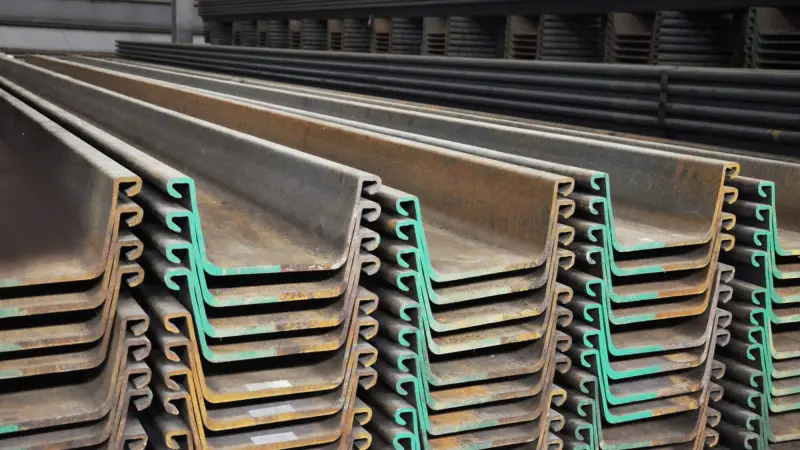
When I talk with contractors, civil engineering companies, and steel distributors, I notice that environmental questions are becoming more practical than before. Years ago, many buyers only asked me about section modulus, delivery time, and price per ton. Now they also ask whether steel sheet piles can be reused, how much noise a piling job creates, whether sheet piling affects groundwater, and how to compare steel with concrete from a sustainability angle. I think this change is real, and I think it will keep growing.
I also think this topic is easy to oversimplify. Some people say steel is bad for the environment because steel production creates carbon emissions. That part is true. Steel production does carry a carbon burden, and I do not think anyone in this industry should hide from that fact. But I also think it is incomplete to stop the discussion there. In real construction work, environmental impact is not only about the material at the mill. It is also about how long the structure lasts, whether it can be reused, whether it can be recycled, how much excavation it avoids, how much spoil it generates, how much vibration it creates, and what happens at the end of service life.
That is why I prefer to look at sheet piling across the full project cycle, not just at the manufacturing stage. ArcelorMittal’s sustainability guidance explains that a proper view of sheet pile sustainability should use Life Cycle Assessment (LCA) and Environmental Product Declarations (EPDs), because environmental impact should be evaluated from raw material sourcing and production to installation, use, dismantling, reuse, and recycling. I agree with that approach because it matches what I see in real B2B projects. A retaining wall is not just a steel order. It is a whole system with an environmental footprint at every stage.
In our business at CN Steel Plant, we supply steel sheet piles for excavation support, retaining walls, bridge foundations, river works, and marine structures. Many of our buyers work on projects where schedule and structural performance are the first priority, but environmental compliance is becoming a close second. In some markets, public tenders already include sustainability scoring. In other markets, the pressure comes from project owners, consultants, or lenders. In all cases, I think suppliers like us need to speak more clearly about both the benefits and the trade-offs of sheet piling.
My own view is simple: sheet piling has real environmental costs, but it also has strong environmental advantages when compared fairly and used correctly. Steel sheet piles create emissions in production, and installation can create noise and vibration. But they are also reusable, almost fully recyclable, fast to install, adaptable to temporary works, and useful in flood control, riverbank protection, contaminated land containment, and marine defense. In other words, sheet piling is not automatically “green,” but it can be a very responsible construction solution when the project team makes smart choices.
In this article, I will break the topic into four practical questions. First, I will explain the environmental impacts of piling itself, because installation impacts are what many site teams feel first. Then I will talk about the disadvantages of using sheet piles, because I think an honest article should not pretend there are no downsides. After that, I will address the environmental impacts of plasterboard, which seems unrelated at first, but is actually useful because it helps show why construction materials must be judged by their own life cycle, not by assumptions. Last, I will look at the eight environmental impacts of construction projects and place sheet piling inside that wider framework. I will also add my own practical view throughout, because in my experience the best environmental decision is rarely the one with the simplest marketing story.
What are the environmental impacts of piling?
Piling can solve major structural and geotechnical problems, but it also creates environmental pressure through energy use, vibration, noise, transport, and disturbance to the surrounding ground and water.
The environmental impacts of piling usually include embodied carbon in the piling material, fuel or electricity used during installation, noise, vibration, soil displacement, groundwater disturbance, spoil generation, and local effects on nearby structures or habitats. In my experience, the biggest environmental concerns during sheet piling are usually noise and vibration on site, while the biggest long-term concerns are carbon footprint, corrosion protection, and how much reuse or recycling is planned at the end of the project.
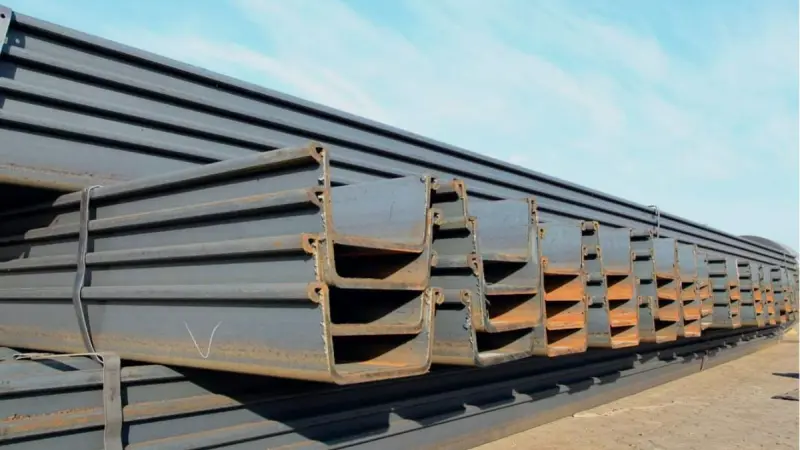
I think the first mistake is to treat “piling impact” as only a carbon issue
When people ask me about environmental impact, they often mean carbon emissions. Carbon matters a lot, and I will come back to it several times in this article. But piling affects the environment in more than one way. If I only talk about CO₂, I would miss some of the impacts that contractors, local authorities, and nearby communities care about most during installation.
For piling work, I usually separate the environmental impact into two stages:
- the impact of making the pile material
- the impact of installing and using the pile on site
This distinction helps because the material stage and the installation stage are influenced by different decisions.
1) Embodied carbon from steel production
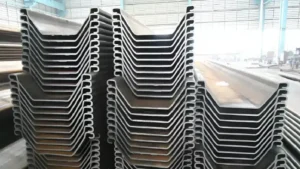
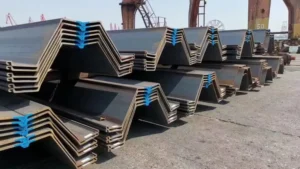
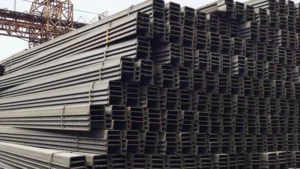
Steel sheet piles are made from steel, and steel production has an environmental footprint. That includes energy use, greenhouse gas emissions, and resource inputs. This is one of the main environmental burdens of sheet piling, and I think it should be acknowledged clearly.
At the same time, not all steel sheet piles carry the same footprint. ArcelorMittal’s EPD and LCA guidance and its sustainability documents explain that the environmental burden changes depending on the production route, recycled content, and electricity source. For example, EAF-based production using recycled scrap can have a lower footprint than traditional primary steelmaking routes. Some sheet pile products are also covered by specific EPDs that quantify global warming potential and other environmental indicators.
This matters to me because buyers increasingly ask for data, not just claims. If a project owner wants to compare retaining wall options, they need a real LCA basis, not vague marketing language.
2) Noise during installation
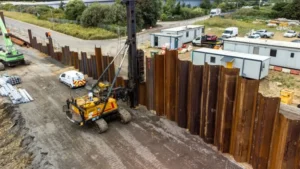
Noise is one of the most visible environmental effects of piling on an active site. Vibratory hammers and impact hammers can create serious noise, especially in urban work, port work near public areas, and jobs close to residential buildings. Noise itself does not always damage the environment in the same way as emissions, but it does affect people, nearby operations, and sometimes wildlife.
I think this is why installation method matters so much. A hydraulic press-in method may reduce noise and vibration compared with impact driving, but it may affect productivity or equipment cost. There is no single perfect answer. The method should fit the site context.
3) Vibration and nearby structure risk
Vibration is another major issue. It can affect nearby buildings, buried utilities, rail lines, quay structures, and sensitive facilities. In some locations, vibration is a stronger constraint than noise. If the contractor ignores this risk, the project can face complaints, monitoring costs, or even damage claims.
This is one reason why I always say that the environmental impact of sheet piling is not only about the steel itself. The installation method changes the environmental profile of the project in a very direct way.
4) Soil and groundwater disturbance
Sheet piling can disturb soil layers and groundwater flow, especially in deep excavations, cofferdams, and cutoff wall applications. In some cases, that disturbance is temporary and manageable. In other cases, it is a major design issue, especially if the site has contamination, dewatering sensitivity, or nearby water infrastructure.
There is also a positive side here. ArcelorMittal’s environmental protection solutions show that steel sheet piles are widely used for pollution containment, landfill conversion, riverbed cleaning operations, and soil remediation, precisely because they can form a barrier that helps isolate contaminated material and control water movement. I think this is an important reminder that sheet piles can both create environmental pressure and solve environmental problems, depending on how they are used.
5) Transport and equipment fuel use
Sheet piles are heavy steel products, so transport matters. If piles are shipped long distances, moved several times, or handled inefficiently, the project footprint increases. On site, cranes, piling rigs, generators, and support equipment also consume fuel or electricity.
6) Corrosion protection and maintenance
For permanent sheet pile walls, corrosion management matters. If coatings, cathodic protection, or other measures are used, they also become part of the environmental picture. In some cases, sacrificial thickness is chosen instead of coating systems. In others, protective systems are necessary because the environment is aggressive.
Main environmental impacts of piling
| Environmental impact | Where it happens | Why it matters |
|---|---|---|
| Embodied carbon | Steel production and transport | Drives life-cycle emissions |
| Noise | Installation stage | Affects nearby residents, workers, and site restrictions |
| Vibration | Installation stage | Can affect structures, utilities, and sensitive zones |
| Soil disturbance | During driving or pressing | Can change ground behavior and handling needs |
| Groundwater impact | Deep excavations and cut-off works | Important for water control and contaminated sites |
| Fuel / electricity use | Site equipment and logistics | Adds operational emissions |
| Corrosion / maintenance impact | Use phase of permanent walls | Affects long-term environmental burden |
| End-of-life handling | Removal, reuse, recycling | Strongly changes total project footprint |
My own view: piling impact should be judged by the whole job, not by one noisy day on site
I understand why people focus on noise and vibration. They are immediate. People hear them, feel them, and complain about them. But I think the real environmental answer needs a wider view. If a sheet pile wall avoids a larger concrete wall, reduces excavation, shortens the programme, and can be reused later, that bigger picture matters. A project owner should care about the whole life cycle, not only the installation moment.
What are the disadvantages of using sheet piles?
Sheet piles can be efficient and reusable, but they are not a perfect solution for every project, and their environmental downsides should be discussed honestly.
The main disadvantages of using sheet piles include carbon emissions from steel production, installation noise and vibration, possible corrosion in aggressive environments, groundwater or sealing limitations if interlocks are not treated properly, transport weight, and the need for suitable equipment and skilled installation. In my view, none of these disadvantages automatically make sheet piles a poor environmental choice, but they do mean the project team has to design, source, and install them carefully.
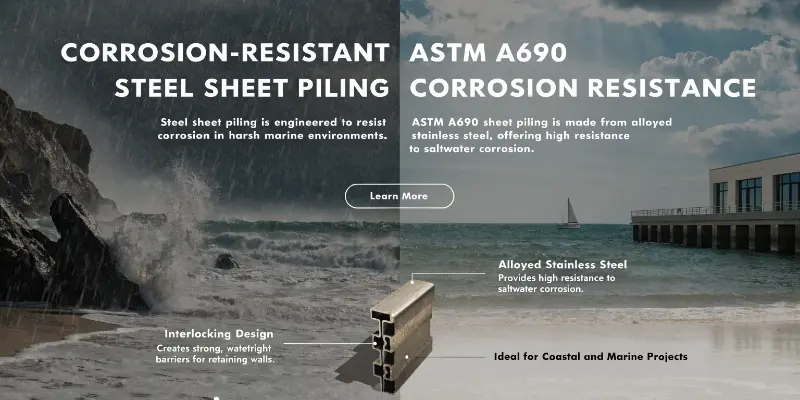
I do not like “sheet piles are sustainable” as a blanket statement
I sell steel sheet piles, so it would be easy for me to write a one-sided article and pretend the product has no real weaknesses. I do not think that helps anyone. Buyers already know that every retaining wall system has trade-offs. If I only talk about benefits, I make the article weaker, not stronger.
So when I think about the disadvantages of sheet piles from an environmental angle, I usually group them into material disadvantages, installation disadvantages, and service-life disadvantages.
Material disadvantage 1: steel production is energy intensive
This is the biggest one. Steel is durable, strong, and recyclable, but it still takes energy to produce. Depending on the production route, the emissions can be significant. That is why I always think it is important to distinguish between:
- hot rolled sheet piles from different production routes
- products with EPD support and clear recycled content
- new piles vs reused piles
- projects with realistic reuse or recycling assumptions vs projects without them
ArcelorMittal’s sustainability guidelines show clearly that the production route and recycled content can change the footprint of steel sheet piles a lot. In simple terms, not all sheet piles carry the same environmental burden.
Installation disadvantage 2: noise and vibration can be a serious site issue
I mentioned this above, but it belongs here too because it is one of the practical disadvantages of sheet piling. In city centres, near schools, near railways, or in sensitive marine zones, the installation method may be limited by noise and vibration rules. That can affect project planning, working hours, and method choice.
I have seen jobs where the steel itself was not the problem at all. The problem was that the site could not tolerate a standard hammer method. In those cases, the contractor may need a press-in system, pre-drilling, or other measures that change cost and speed.
Installation disadvantage 3: difficult ground can increase environmental burden
Sheet piles work very well in many soils, but difficult ground can create problems. Dense gravel, boulders, buried concrete, old foundations, or mixed fill can slow the job and increase energy use. They can also cause more rework, more handling, and sometimes more disturbance.
This is one reason why I care so much about the soil report when I discuss a project with a buyer. A poorly understood site can turn a straightforward sheet piling job into a wasteful and frustrating one.
Service-life disadvantage 4: corrosion must be managed
For permanent walls, corrosion is a real design and environmental issue. In marine works, tidal zones, contaminated ground, or aggressive water chemistry, the wall may need sacrificial steel thickness, coatings, or cathodic protection. These measures add material, maintenance, or both.
That does not mean steel sheet piles are unsuitable. It simply means the project should not pretend the use phase is impact-free.
Performance disadvantage 5: watertightness is not automatic
A steel sheet pile wall is continuous, but the interlocks are not automatically watertight in every application. If the project needs strong cut-off performance, the interlocks may require sealing systems, welding in some cases, or more careful detailing. If this is ignored, the environmental result can be worse because the wall may not control water or contamination as intended.
Commercial disadvantage 6: transport and handling can be heavy
Sheet piles are heavy steel sections. That means transport planning matters. Poor logistics can increase emissions and site handling effort. If the project is remote or the supply chain is fragmented, the environmental burden may rise.
Disadvantages vs practical responses
| Disadvantage | Environmental concern | Practical response |
|---|---|---|
| Carbon-intensive steel production | Higher embodied emissions | Use EPD-backed products, recycled-content routes, or reused piles where possible |
| Noise during installation | Disturbance to community and workers | Choose lower-impact methods where site conditions require them |
| Vibration | Risk to nearby assets and sensitive zones | Monitor vibration, use guides, consider pressing or pre-drilling |
| Corrosion in aggressive environments | More steel loss, protection needs, maintenance burden | Use proper corrosion design and exposure-based detailing |
| Difficult ground conditions | More energy, delay, and rework | Improve site investigation and select the right installation method |
| Interlock leakage risk | Poor water or contamination control | Use sealing systems where performance requires them |
My own view: the disadvantages of sheet piles are manageable, but only if the project team stops treating them as afterthoughts
I think that is the real point. Sheet piles do have environmental disadvantages. But in many cases, those disadvantages become expensive because the project handles them too late. The team chooses the wall system first and only later asks about noise, groundwater, reuse, corrosion, or carbon. I prefer the reverse order. I want those questions on the table before the steel is ordered.
What are the environmental impacts of plasterboard?
Plasterboard is not a piling material, but comparing it with sheet piles is useful because it shows how different construction materials create environmental impact in very different ways across their life cycle.
The environmental impacts of plasterboard usually include gypsum extraction, energy use in manufacturing, transport, packaging waste, landfill concerns when the board is contaminated or mixed with other waste, and potential emissions from disposal. I think plasterboard is a good comparison point because it reminds us that a construction material should not be judged only by its factory footprint. We also need to look at durability, waste generation, reuse potential, and end-of-life handling.
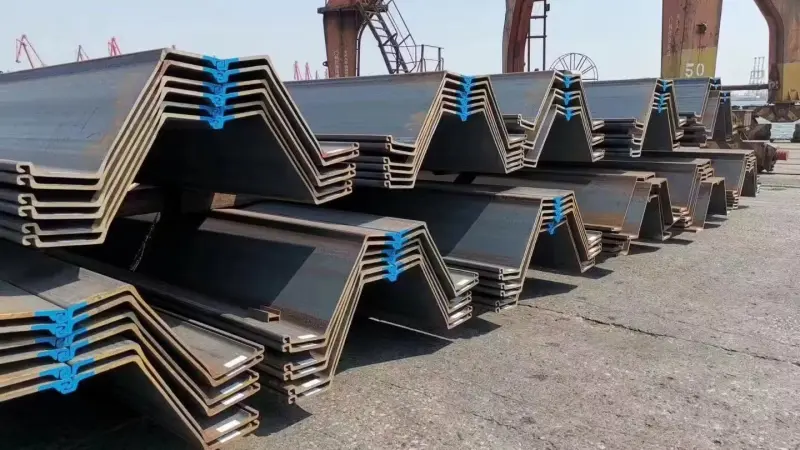
Why I think this question still belongs in a sheet pile article
At first glance, plasterboard has nothing to do with steel sheet piles. One is used for walls and ceilings in buildings. The other is used for retaining walls, cofferdams, bridge foundations, and waterfront structures. So why put them in the same article?
Because I think buyers, engineers, and procurement teams often compare materials in the wrong way. They hear one simple claim such as “steel is carbon intensive” or “gypsum board is lightweight,” and then they assume the environmental story is settled. It is not. Every material has its own pattern of impacts across sourcing, manufacturing, transport, installation, use, and disposal.
Plasterboard is a good example because it often creates large waste volumes in interior construction and demolition, especially when boards are cut on site, damaged in handling, or mixed with other demolition waste. Sheet piles are very different. They are heavy and carbon-intensive to make, but they are also modular, removable, reusable, and highly recyclable.
Plasterboard usually creates more single-use waste than sheet piles
This is the main comparison I would make. On many construction projects, plasterboard is used once and then removed at renovation or demolition. Some recycling systems exist, but real-world recovery rates vary by market and by contamination level. Once plasterboard is mixed with wet waste, paint, insulation residue, or demolition debris, the waste stream becomes harder to recover cleanly.
By contrast, steel sheet piles are often extracted and reused in temporary works. ArcelorMittal’s reuse guidance notes that reusing sheet piles can avoid new production and significantly reduce greenhouse gas emissions per use. In one case study, reuse saved 79% of greenhouse gas emissions compared with a scenario based on new production for the same temporary project. I think that is one of the strongest environmental arguments for steel sheet piles when the wall is temporary and extraction is planned properly.
But steel still carries a higher production burden per ton
This is where the comparison needs balance. Plasterboard and steel sheet piles are not competing products, so I do not compare them directly as substitutes. Still, from an environmental logic standpoint, the contrast is useful:
- plasterboard is usually lighter and less carbon-intensive per unit than structural steel, but it often has a weaker reuse story and can create more waste at replacement or demolition
- sheet piles are heavier and more energy-intensive to produce, but they can be reused multiple times and then recycled at a very high recovery rate
ArcelorMittal’s sustainability materials state that steel sheet piles can be reused up to 10 times in temporary applications and are 100% recyclable, with very high recovery rates at end of life. I think that changes the environmental conversation completely. It means the right comparison is not just “what is the footprint of one new pile?” but “what is the footprint per use over the whole service life?”
The real lesson: life-cycle thinking matters more than material stereotypes
I think this is the reason your article can include a plasterboard section without feeling off-topic. It helps explain that environmental impact is not a simple label attached to one material. It is the result of a life-cycle story.
Simple comparison: plasterboard vs sheet piles
| Item | Plasterboard | Steel sheet piles |
|---|---|---|
| Main raw material issue | Gypsum extraction and manufacturing energy | Steelmaking energy and carbon emissions |
| Typical service pattern | Often single-use or limited reuse | Temporary or permanent, with strong reuse potential |
| Site waste | Can be high from cutting and demolition | Usually low during installation if planned well |
| End-of-life challenge | Contamination can reduce recycling quality | High recycling value and established steel recovery routes |
| Transport burden | Lower weight per unit | Heavy sections with transport emissions |
| Long-term durability | Limited in harsh exposure or structural use | High structural durability in many environments |
My own view: the plasterboard comparison helps buyers ask a better question
Instead of asking “which material sounds greener,” I think the better question is: what is the environmental profile of this material over the whole project life? For sheet piles, that means asking about production route, reuse, corrosion design, installation method, and recycling. If a buyer asks those questions early, they usually make better decisions.
What are the 8 environmental impacts of construction projects?
Construction projects affect the environment in many connected ways, and sheet piling should be judged inside that wider system rather than in isolation.
Eight common environmental impacts of construction projects are carbon emissions, energy use, resource consumption, waste generation, noise, vibration, water pollution or groundwater disturbance, and ecosystem or land-use impact. I think sheet piling can touch all eight of these categories in different ways, but it can also help reduce some of them when it shortens construction time, reduces excavation, enables reuse, or supports flood control and contaminated land containment.
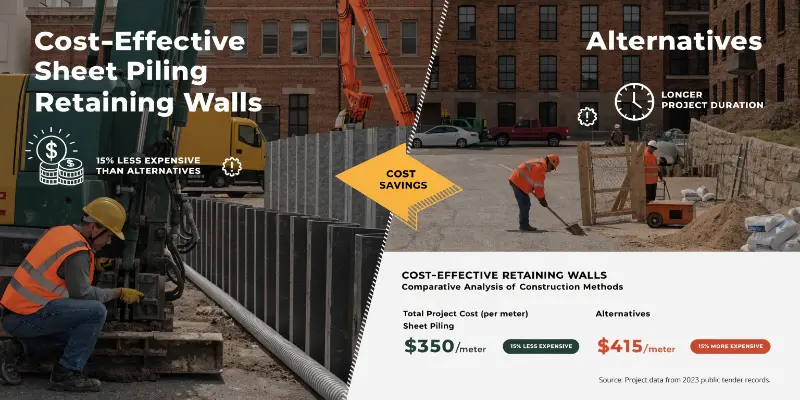
I use this framework when I want a more honest environmental discussion
A lot of sustainability conversations become too narrow. One person talks only about CO₂. Another talks only about recycled content. A site manager talks only about noise complaints. A consultant talks only about groundwater. All of those things matter, but none of them tells the full story alone.
When I step back and look at a retaining wall project, I usually think in eight environmental categories:
1) Carbon emissions
This includes emissions from steel production, transport, equipment fuel, and sometimes maintenance over the service life. For sheet piles, the manufacturing stage is often the biggest carbon contributor, which is why EPD-backed data is useful. ArcelorMittal’s sustainability guidelines explain that life-cycle carbon should be assessed through LCA and not guessed from one stage alone.
2) Energy use
Construction consumes energy in mills, transport, cranes, piling rigs, welding, cutting, and sometimes dewatering systems. If the wall system is hard to install or needs repeated correction, the energy burden rises.
3) Raw material and resource consumption
This is where steel’s reuse story matters. If the same sheet piles are reused on multiple temporary projects, the effective resource burden per use falls. That is very different from a one-time-use material with low recovery.
4) Waste generation
Waste includes damaged materials, excavation spoil, packaging, demolition waste, contaminated runoff treatment waste, and end-of-life disposal. Sheet piling can reduce some waste streams by limiting excavation or by acting as a removable temporary support system.
5) Noise
Noise comes mainly from installation equipment and site operations. In some projects, noise is one of the most visible environmental issues.
6) Vibration
Vibration is closely linked to piling work. It can affect nearby buildings, buried services, and sensitive equipment. Good monitoring and method choice matter a lot here.
7) Water and groundwater impact
Construction can affect water through runoff, sediment movement, dewatering, contamination spread, or changes in groundwater movement. Sheet piles can worsen or improve this picture depending on the application. In contaminated sites or flood-control works, they can actually serve as a protective barrier.
8) Land, habitat, and community impact
Every construction project affects the surrounding area. That can include habitat disturbance, access disruption, visual impact, traffic, and pressure on nearby residents or businesses. Faster installation and smaller work zones can reduce some of these effects.
How sheet piling interacts with the eight impacts
| Construction impact | How sheet piling can create impact | How sheet piling can also reduce impact |
|---|---|---|
| Carbon emissions | Steel production and transport | Reuse, recycling, optimized section design, lower-carbon production routes |
| Energy use | Piling rigs, lifting, transport | Fast installation can reduce total site time |
| Resource use | New steel demand | Reused piles reduce new material demand |
| Waste generation | Damaged piles, packaging, cut-offs | Removable systems can reduce demolition waste and formwork waste |
| Noise | Hammer operation | Press-in methods or better planning can reduce disturbance |
| Vibration | Driving in dense or sensitive sites | Method choice and pre-drilling can reduce vibration risk |
| Water impact | Ground disturbance or leakage if poorly detailed | Cut-off walls and containment systems can protect water and soil |
| Habitat / community impact | Traffic, noise, work-zone disturbance | Faster execution and smaller footprint can reduce disruption |
I think this is where sheet piles deserve a more balanced reputation
In some discussions, sheet piles are treated as if they are environmentally heavy because they are made of steel. That is too narrow. In other discussions, sheet piles are treated as automatically sustainable because they are recyclable. That is also too narrow.
The more honest answer is that sheet piles interact with all eight impact categories. They create burdens in some places and reduce burdens in others. For example:
- they create embodied carbon, but can reduce new material demand through reuse
- they create installation noise, but can shorten site occupation time
- they may disturb groundwater during installation, but they can also provide containment and water control
- they require corrosion planning, but they can deliver long service life and strong recyclability at end of life
I think this balanced view is much more useful for buyers than any simple “green” or “not green” label.
My own take: sheet piling is not environmentally neutral, but it is often environmentally efficient
After looking at this topic from the angles of piling impact, sheet pile disadvantages, material comparison, and broader construction impact, my own view is very clear: sheet piling should be judged by efficiency across the whole life of the project.
I do not think steel sheet piles should be sold as a magic sustainability product. Steel still has a carbon footprint. Piling can still be noisy. Ground conditions can still complicate installation. Corrosion still needs engineering. Those facts are real.
But I also do not think sheet piles should be judged only by the carbon cost of making new steel. That would ignore some of the strongest environmental advantages of the system:
- high reuse potential in temporary works
- very high recyclability at end of life
- fast installation and removal
- reduced need for bulky concrete works in some applications
- strong use in riverbank protection, flood control, quay walls, cofferdams, and pollution containment
- modular sections that can fit both temporary and permanent projects
This matters a lot in our business. At CN Steel Plant, we work with buyers who need more than a price list. They need a practical solution that fits structural demand, project schedule, logistics, and now more often environmental targets too. In those cases, I think the best conversation is not “are steel sheet piles good or bad for the environment?” The better question is: how do we make this sheet piling solution perform better environmentally for this exact project?
That means asking practical questions:
- Can the wall be designed for reuse after temporary service?
- Can the buyer choose a section with reliable EPD support or higher recycled content?
- Can the installation method reduce noise and vibration on a sensitive site?
- Can the design reduce tonnage without hurting safety?
- Can the wall help solve a wider environmental problem such as erosion, flood control, or contaminated soil containment?
I think that is the right level of discussion for modern B2B sheet piling. Environmental performance is not only a product label. It is a project decision.
A quick example from our riverbank work
I think our Riverbank Protection Project in Southeast Asia shows this idea well. In that project, hot rolled U type steel sheet piles were used to build a retaining wall along the riverbank for flood control and erosion protection. If someone only looked at the steel tonnage, they might say the project created a carbon burden. That is true at one level. But that is not the whole story.
The wall also created a durable barrier that helped stabilize the riverbank, control erosion, and support long-term infrastructure safety. The interlocking system helped maintain wall continuity. The installation was completed efficiently with vibratory piling equipment, which supported the contractor’s schedule. In environmental terms, I see that project as a good example of why context matters. The sheet piles were not just material consumption. They were part of a protective system for water, soil, and infrastructure resilience.
That is why I think the environmental discussion around sheet piles should always stay close to the project function. A retaining wall that protects a riverbank, controls flood risk, or contains contaminated soil should not be judged the same way as a material used once and thrown away. The function of the structure matters.
Conclusion
Sheet piling does have environmental impacts, especially in steel production and installation. But when I look at reuse, recyclability, durability, and project efficiency, I still see sheet piles as a strong environmental solution in many civil works.