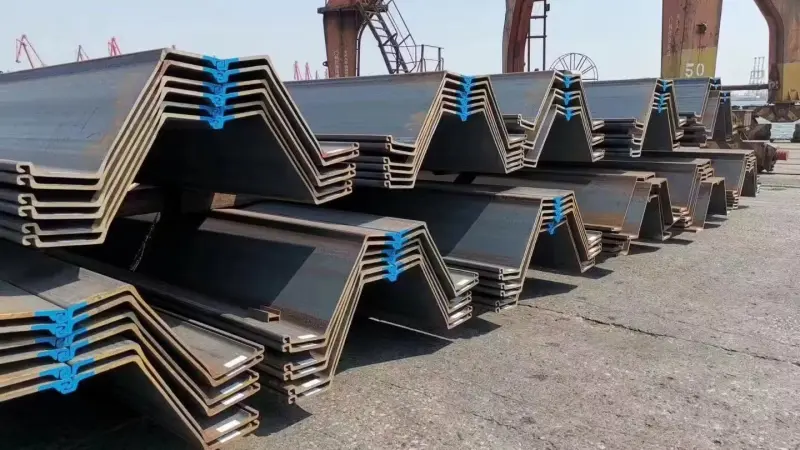
Many buyers struggle to choose between U type and Z type sheet piles. The wrong profile can increase costs and reduce structural efficiency.
U type sheet piles provide balanced structural performance and easy installation, while Z type sheet piles offer higher bending resistance and better efficiency for large-scale retaining projects.
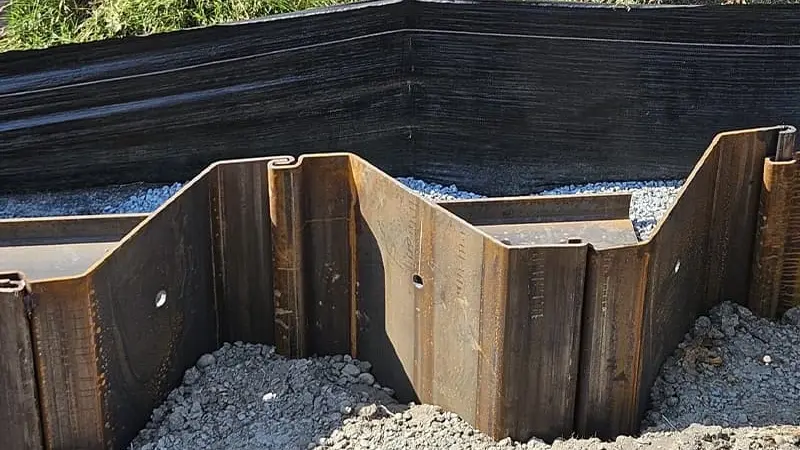
I often help contractors compare these two profiles before large projects begin. The right selection depends on structural demand, installation conditions, and project budget.
How Do U Type and Z Type Sheet Piles Differ in Structural Design?
Different sheet pile shapes create different structural behaviors. Profile geometry directly affects wall performance and installation.
U type sheet piles feature symmetrical interlocks at the center axis, while Z type sheet piles place interlocks on the outer edges to improve structural efficiency and bending performance.
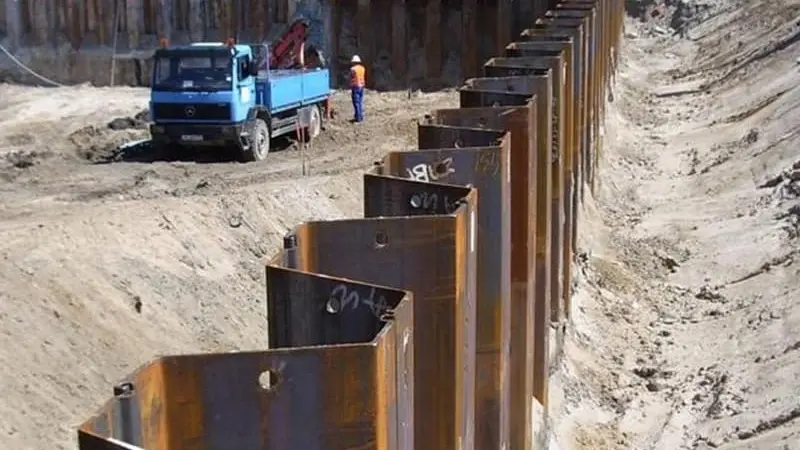
When I first compared U piles and Z piles in a marine project, I noticed how their profile geometry changed the overall wall stiffness and installation process.
U Type Sheet Pile Design
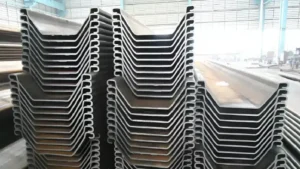
U type sheet piles have a symmetrical cross-section. The interlocks are located along the neutral axis. This design allows the piles to distribute loads evenly across the wall system. Contractors often prefer U type piles because they are easier to connect and align during installation.
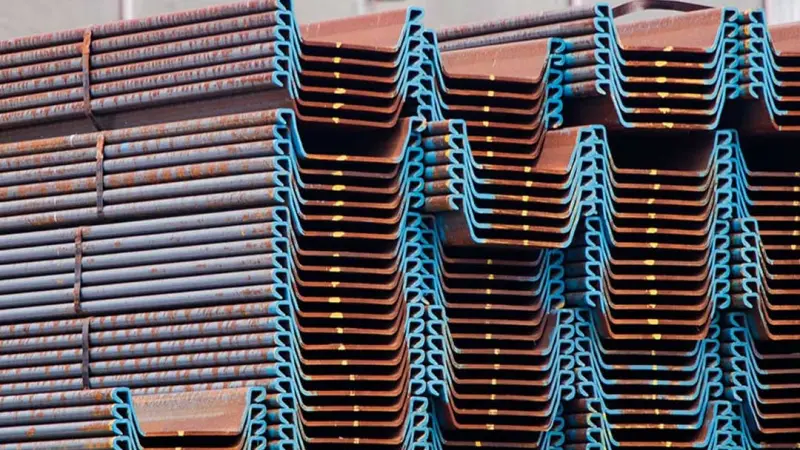
These piles also create continuous wall systems with reliable water-tight performance. Their symmetrical structure simplifies handling during driving operations.
Z Type Sheet Pile Design
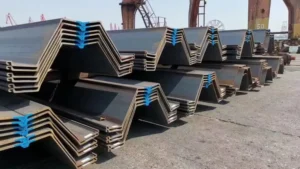
Z type sheet piles use a different layout. The interlocks are positioned at the outer edges of the section. This arrangement increases the effective section modulus and improves bending resistance.
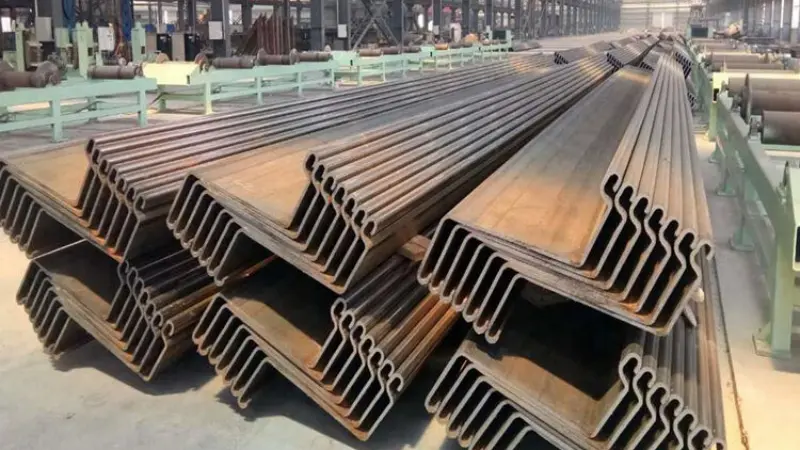
Z piles transfer loads more efficiently because the flange width is larger. This design helps engineers reduce steel consumption while maintaining wall strength.
Structural Comparison Table
| Feature | U Type Sheet Piles | Z Type Sheet Piles |
|---|---|---|
| Interlock Position | Center | Outer Edge |
| Structural Symmetry | Symmetrical | Asymmetrical |
| Section Efficiency | Moderate | High |
| Installation Alignment | Easier | More Complex |
| Water Tightness | Excellent | Excellent |
My View on Structural Design
I believe U type piles provide better flexibility for medium-sized retaining systems and temporary works. Z type piles become more efficient when projects require high bending resistance and deeper retaining walls.
In many riverbank and flood protection projects, contractors choose U type piles because installation speed matters. In large ports and quay walls, engineers often prefer Z type piles because they maximize structural efficiency under heavy loads.
The structural design difference may look simple at first glance, but it changes the entire engineering behavior of the retaining wall.
Which Sheet Pile Profile Provides Better Bending Resistance and Strength?
Structural strength determines whether a retaining wall can resist soil and water pressure safely. Bending resistance is one of the most important engineering factors.
Z type sheet piles usually provide higher bending resistance and section modulus, while U type sheet piles offer stable overall wall performance with balanced strength distribution.
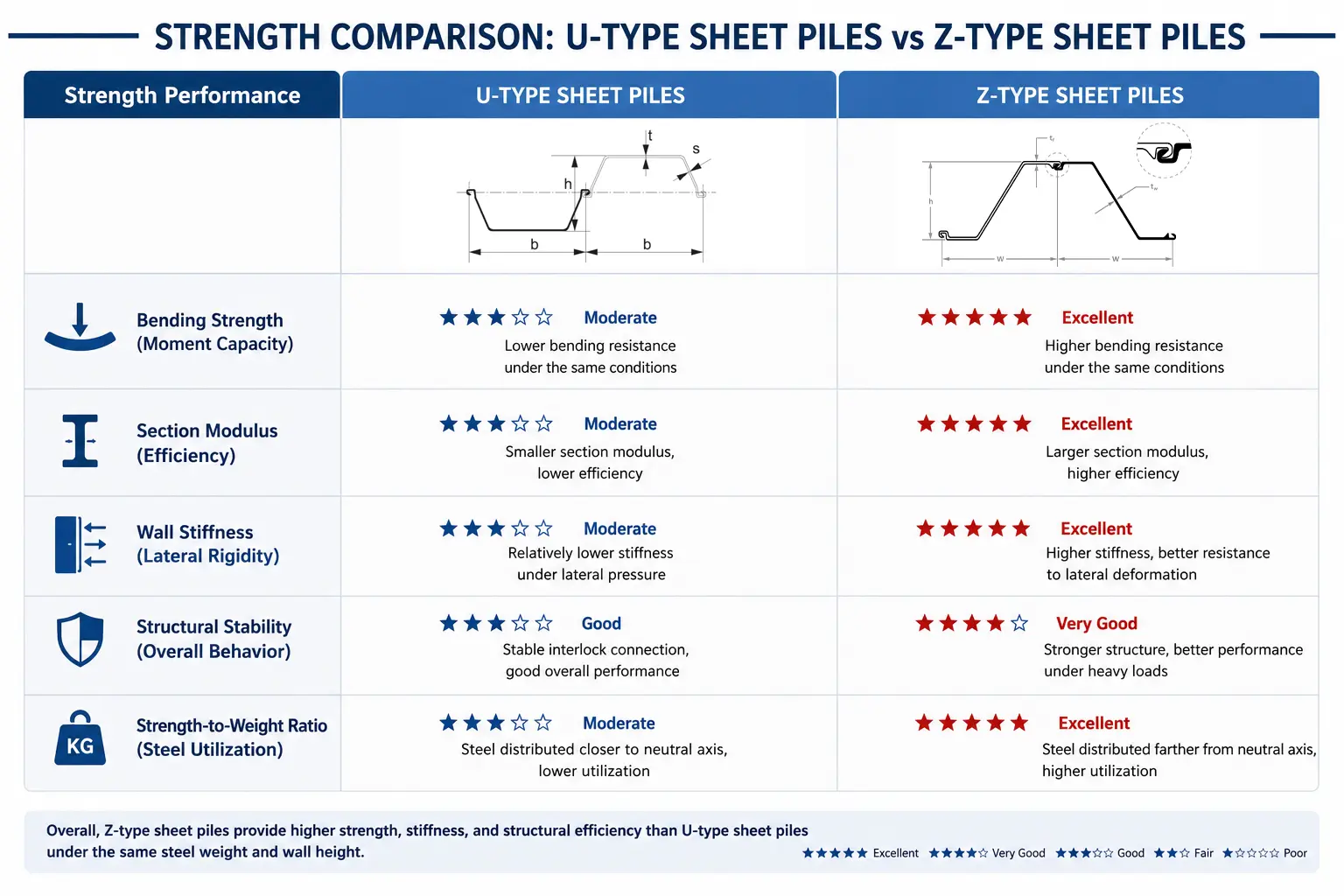
I once discussed this topic with a contractor building a deep quay wall. The project required maximum bending strength because of heavy lateral pressure from soil and tidal movement.
Why Bending Resistance Matters
Retaining walls face constant horizontal pressure. Soil movement, groundwater pressure, and heavy traffic loads all increase structural stress.
Sheet pile profiles must resist these forces without excessive deflection. Strong bending resistance helps maintain wall stability and reduces long-term deformation.
Z Type Structural Advantage
Z type piles usually provide higher section modulus because their flange geometry distributes steel farther from the neutral axis. This increases resistance against bending forces.
Engineers often select Z piles for:
- Deep excavations
- Heavy marine structures
- Large quay walls
- Industrial port projects
U Type Structural Performance
U type piles still provide excellent structural strength. Their symmetrical profile creates stable interlock performance and continuous wall alignment.
These piles perform well in:
- Flood control systems
- Temporary retaining walls
- Medium-depth excavations
- Riverbank stabilization projects
Strength Comparison Table
| Structural Factor | U Type | Z Type |
|---|---|---|
| Section Modulus | High | Very High |
| Bending Resistance | Strong | Stronger |
| Load Distribution | Balanced | Efficient |
| Deep Excavation Suitability | Good | Excellent |
| Material Efficiency | Moderate | High |
Real Project Experience
In a Southeast Asian riverbank project, we used hot rolled U type sheet piles because the contractor wanted reliable installation and strong water control. The piles performed very well under seasonal flooding conditions.
For larger marine structures, I usually recommend Z type piles because they reduce steel weight while maintaining high strength. This often lowers total project costs for long retaining walls.
From my perspective, both profiles are strong. The real question is not which one is stronger overall. The better question is which one matches the engineering demands of the project.
What Are the Common Sizes and Specifications of U Type and Z Type Sheet Piles?
Different projects require different dimensions and specifications. Profile selection affects installation depth, wall strength, and transportation cost.
U type and Z type sheet piles are available in multiple widths, thicknesses, and section moduli to support different retaining wall heights and load conditions.
Many buyers ask me about standard dimensions before placing orders. Proper specification selection helps avoid overdesign and unnecessary material cost.
Common U Type Sheet Pile Specifications
U type piles are widely available in hot rolled and cold formed versions. Common widths range from 400 mm to 750 mm. Thickness usually ranges from 8 mm to 16 mm depending on structural demand.
These piles are often selected for flexible retaining systems because they are easier to transport and install.
Common Z Type Sheet Pile Specifications
Z type piles generally provide larger section modulus values with lighter steel consumption. Widths often range from 500 mm to 700 mm. Wall thickness depends on the required bending resistance.
Many heavy marine projects prefer Z profiles because they maximize efficiency over long wall lengths.
Typical Specification Table
| Specification | U Type Sheet Piles | Z Type Sheet Piles |
|---|---|---|
| Width Range | 400–750 mm | 500–700 mm |
| Thickness Range | 8–16 mm | 8–18 mm |
| Section Modulus | Moderate to High | High to Very High |
| Common Length | 6–24 m | 6–30 m |
| Typical Applications | Flood walls | Port structures |
Material and Surface Options
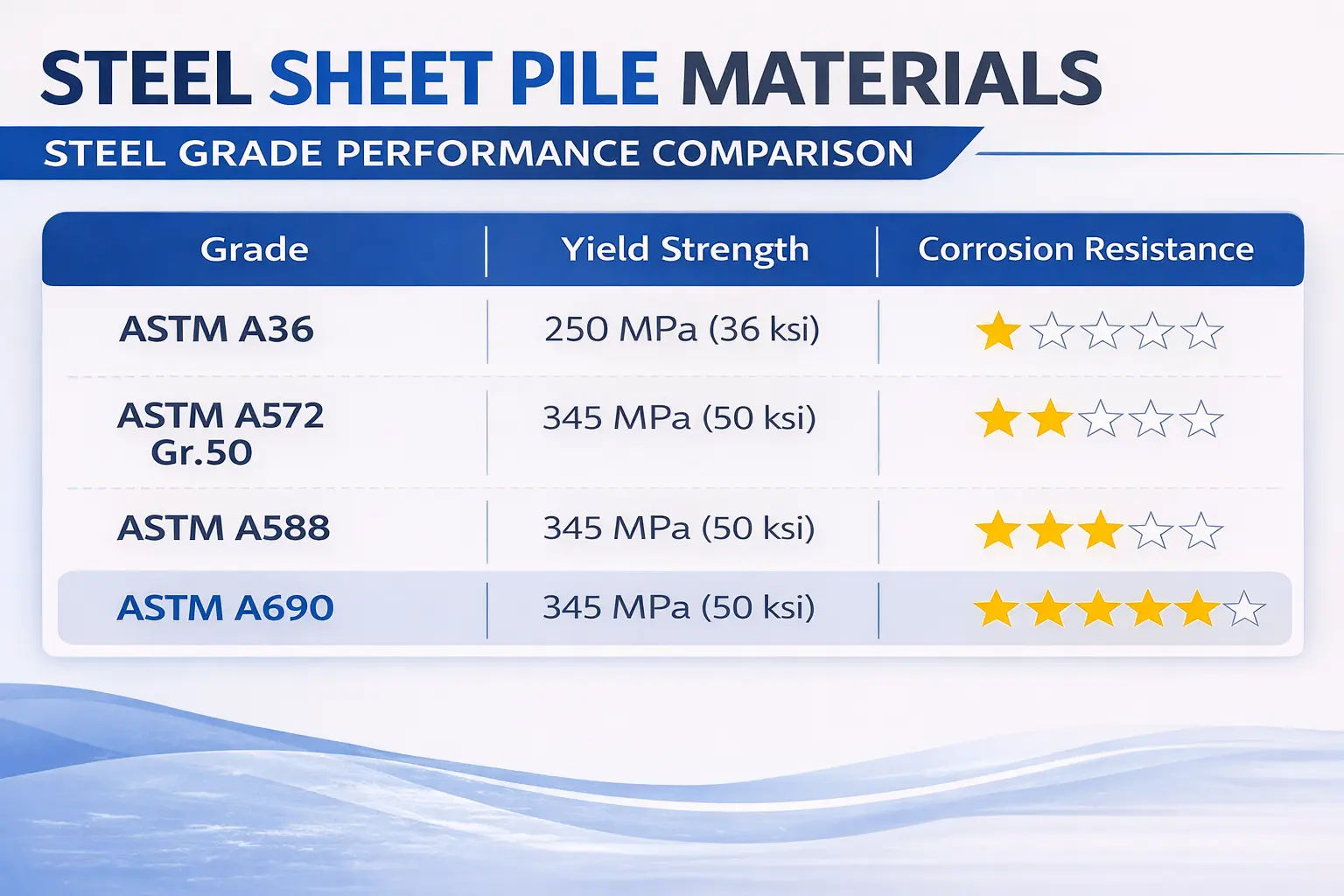
Both U type and Z type piles can be manufactured with:
- Hot rolled steel (hot rolling
- Cold formed steel
- Corrosion-resistant coatings (corrosion protection)
- Customized lengths
- OEM production options
I always recommend checking both engineering requirements and transportation limits before finalizing specifications. Oversized piles may increase logistics cost significantly.
In my business, many Middle Eastern and Southeast Asian clients prefer customized lengths because their marine and flood control projects have unique site conditions. Flexible production options help reduce onsite welding and installation delays.
How to Choose Between U Type and Z Type Sheet Piles for Different Projects?
Choosing the correct sheet pile profile affects structural performance, construction speed, and project cost. Every project has different priorities.
U type sheet piles are often selected for balanced performance and easier installation, while Z type sheet piles are preferred for high-strength marine and deep excavation projects.
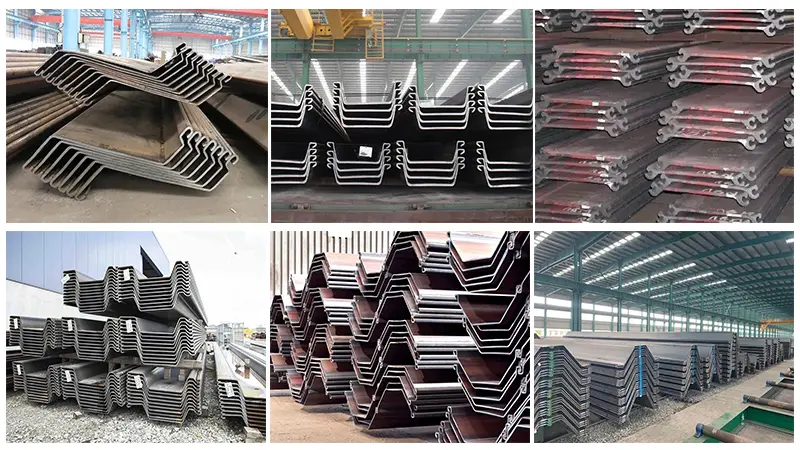
I always ask clients several questions before recommending a profile. Soil conditions, wall depth, and budget all influence the final decision.
Factors That Influence Selection
Project conditions determine whether U or Z piles perform better. Engineers normally evaluate:
- Excavation depth
- Soil pressure
- Water conditions
- Transportation cost
- Installation equipment
- Long-term durability needs
When U Type Piles Are Better
U type piles are often ideal for medium-sized retaining systems where easy installation and balanced performance matter most.
Common applications include:
| Project Type | Recommended Profile |
|---|---|
| Flood Protection | U Type |
| Riverbank Stabilization | U Type |
| Temporary Excavation | U Type |
| Medium Retaining Walls | U Type |
When Z Type Piles Are Better
Z type piles are usually preferred in heavy-duty applications where maximum bending strength is required.
| Project Type | Recommended Profile |
|---|---|
| Deep Marine Walls | Z Type |
| Large Port Structures | Z Type |
| Heavy Industrial Projects | Z Type |
| Deep Foundation Support | Z Type |
My Practical Recommendation
I think many buyers focus too much on price alone. The real value comes from selecting the profile that improves total project efficiency.
For contractors handling fast-moving flood control or riverbank projects, U type piles often simplify logistics and installation. For large infrastructure and marine developments, Z type piles usually provide better long-term structural efficiency.
I always encourage buyers to discuss wall depth, soil reports, and equipment availability before making a final decision. A properly selected profile can reduce installation problems and improve overall project safety.
Conclusion
U type and Z type sheet piles both provide reliable retaining performance, but the best choice depends on structural demand, installation conditions, and project goals.