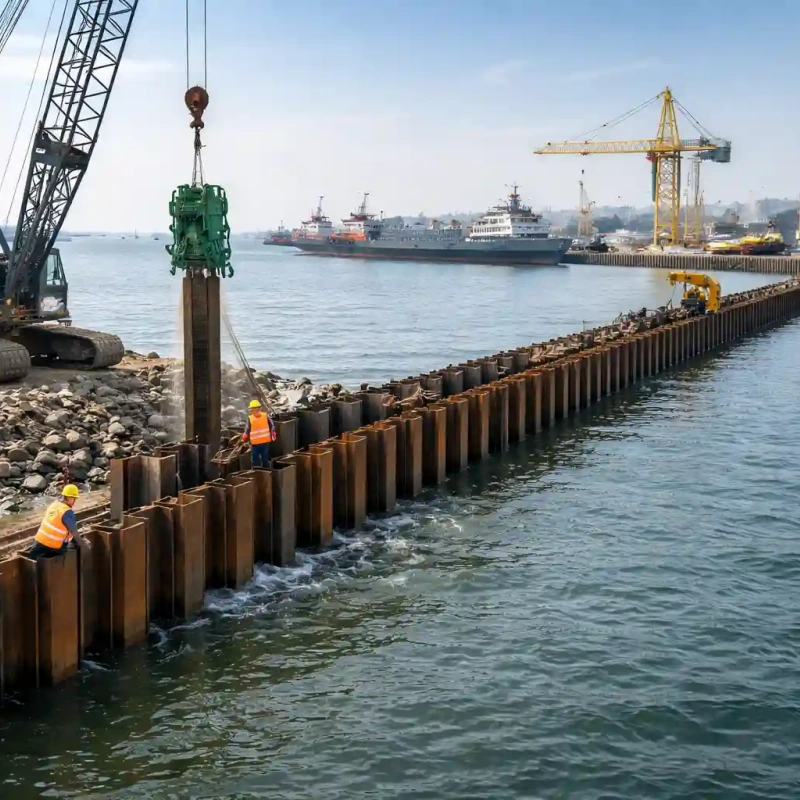
Marine projects face strong waves, corrosion, and unstable soil. Many structures fail early when weak foundation systems are selected.
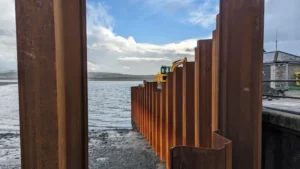
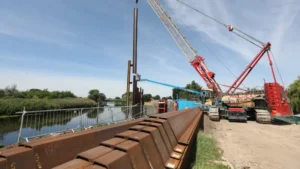
Steel sheet piles are widely used in marine projects because they provide strong structural support, fast installation, water resistance, and long-term performance in harsh coastal environments.
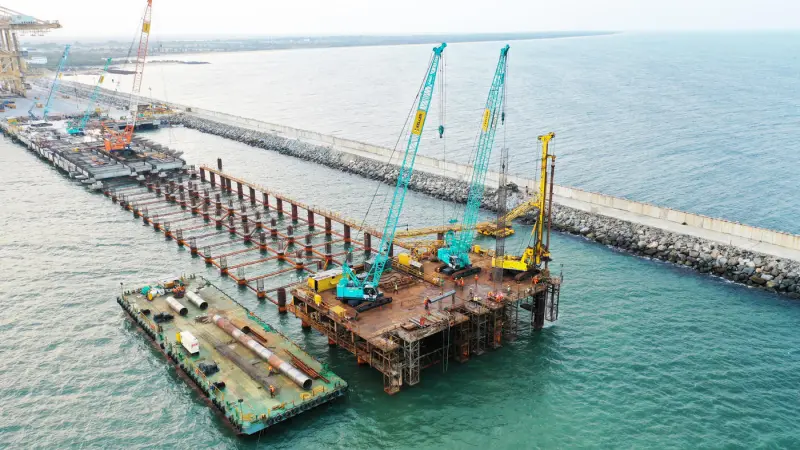
I work with many contractors involved in ports, riverbanks, and coastal infrastructure. I have seen how steel sheet piles help projects stay stable under difficult marine conditions. I also know what problems happen when the wrong piling system is selected.
What are steel sheet piles used for?
Many engineers need a retaining structure that is strong and fast to install. Traditional systems often take too much time.
Steel sheet piles are used for retaining walls, marine structures, excavation support, flood control systems, bridge foundations, and cofferdams.
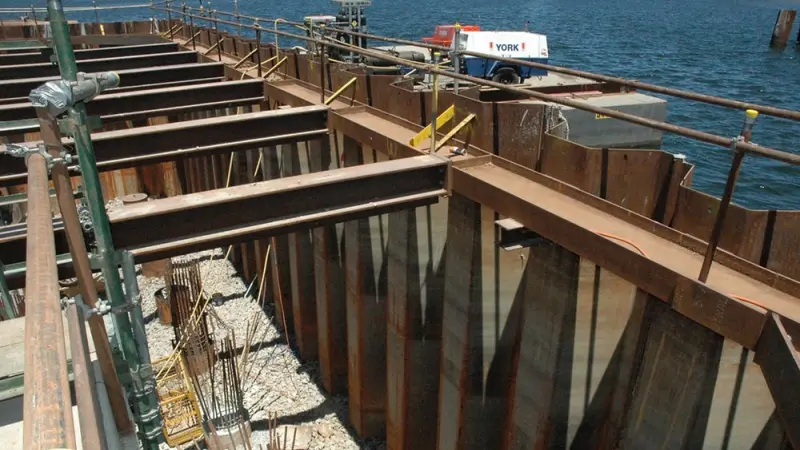
Common Marine Applications
Port Construction
Steel sheet piles support quay walls and cargo terminals.
Riverbank Protection
They prevent soil erosion and stabilize shorelines.
Cofferdam Systems
They block water during underwater construction.
| Application | Main Purpose |
|---|---|
| Quay wall | Soil retention |
| Riverbank | Erosion control |
| Cofferdam | Water blocking |
| Bridge foundation | Structural support |
Why Marine Projects Prefer Steel Sheet Piles
Strong Interlock System
Interlocks create continuous wall structures.
Fast Construction
Installation is faster than concrete systems.
High Structural Strength
Steel handles high lateral pressure.
My Insight
I supplied hot rolled U type sheet piles for a riverbank project in Southeast Asia. The contractor needed quick installation before flood season. Steel sheet piles solved the problem because installation speed was critical.
Which type of pile is suggested for marine applications?
Marine projects require piles that can resist water pressure, corrosion, and wave impact. Not every pile type can handle this environment.
Steel sheet piles and tubular piles are commonly suggested for marine applications because they provide strong structural performance and reliable water resistance.
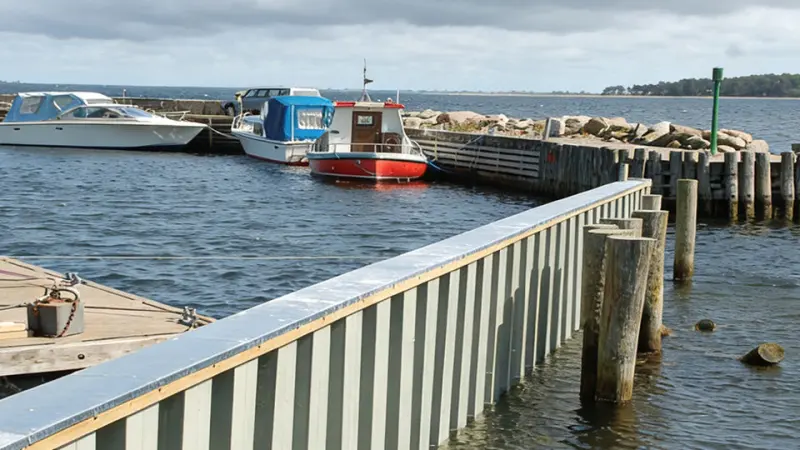
Common Pile Types in Marine Projects
U Type Steel Sheet Piles
Suitable for retaining walls and cofferdams.
Z Type Steel Sheet Piles
Provide high section modulus for heavy-duty walls.
Tubular Piles
Used for deep foundations and offshore structures.
| Pile Type | Main Advantage | Typical Use |
|---|---|---|
| U type | Easy installation | Riverbanks |
| Z type | High strength | Port walls |
| Tubular | Deep foundation | Offshore |
Why Steel Performs Better
Better Structural Capacity
Steel handles dynamic marine loads.
Easier Installation
Driving methods improve efficiency.
Reusability
Temporary marine works can reuse piles.
My Insight
I often recommend Z type piles for large port projects because the bending performance is excellent. For smaller flood control projects, U type piles are more economical and easier to install.
What are the advantages of sheet piles?
Many contractors select steel sheet piles because they solve multiple engineering problems at the same time.
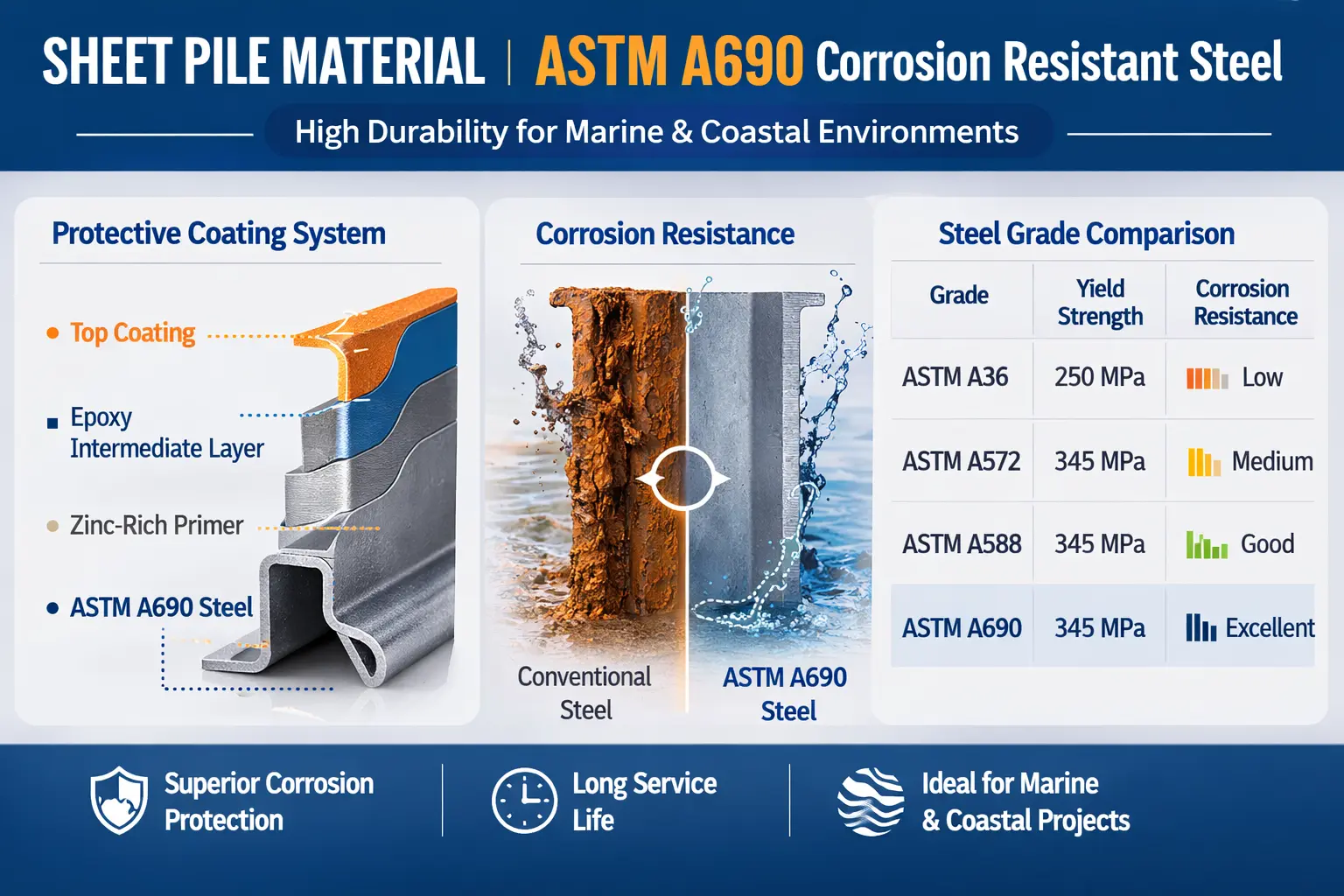
Steel sheet piles offer advantages such as high strength, fast installation, water resistance, reusability, and long service life.
Main Advantages
Fast Installation
Vibratory hammers speed up construction.
Strong Retaining Capacity
Steel resists soil and water pressure.
Flexible Design
Different pile profiles fit different projects.
| Advantage | Project Benefit |
|---|---|
| Fast installation | Shorter project time |
| High strength | Better stability |
| Reusability | Lower long-term cost |
Economic Benefits
Reduced Labor Cost
Fast installation reduces manpower.
Reusable Materials
Temporary structures can reuse piles.
Lower Maintenance
Protected steel has long service life.
My Insight
I believe one major advantage is flexibility. I have seen the same batch of sheet piles used in temporary excavation first and then reused in permanent river protection work later.
What is the marine piling method?
Marine construction is difficult because water creates instability during installation.
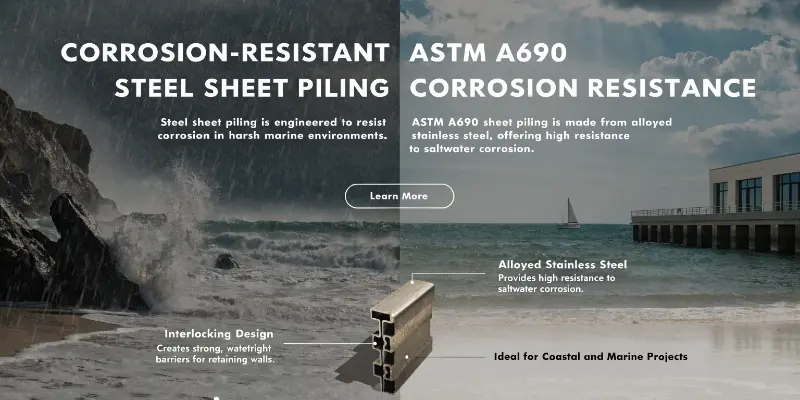
The marine piling method involves driving or installing piles into underwater or coastal soil to create stable foundations and retaining structures.
Main Installation Methods
Vibratory Hammer
Fast and common for sheet pile installation.
Impact Hammer
Suitable for dense soil conditions.
Press-In Method
Low noise and low vibration solution.
| Method | Best Condition |
|---|---|
| Vibratory | Soft soil |
| Impact | Dense soil |
| Press-In | Urban marine areas |
Installation Process
Site Preparation
Survey soil and water condition.
Positioning
Align piles accurately.
Driving
Install piles to required depth.
Inspection
Check alignment and interlock quality.
My Insight
I always tell contractors that installation method is as important as material quality. Good piles can still fail if installation control is poor.
How long do pilings last in saltwater?
Saltwater is one of the most aggressive environments for steel structures.
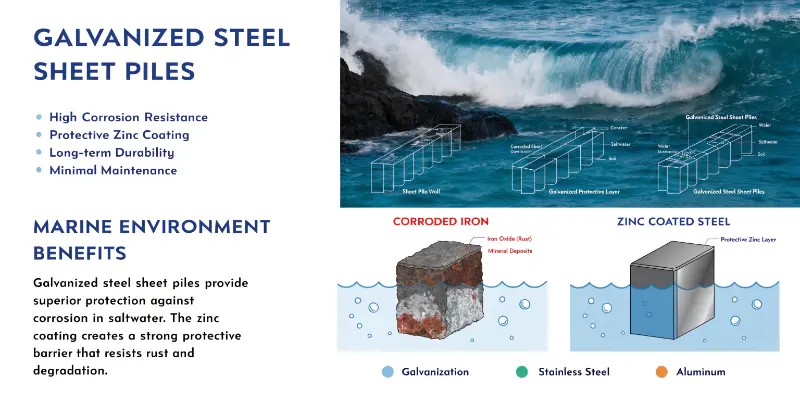
Steel pilings in saltwater can last from 20 to over 50 years depending on steel grade, coating system, and maintenance conditions.
Factors Affecting Lifespan
Corrosion Rate
Salt accelerates steel corrosion.
Protective Systems
Coatings and cathodic protection increase lifespan.
Maintenance
Regular inspection reduces structural risk.
| Condition | Estimated Lifespan |
|---|---|
| Unprotected steel | 10–20 years |
| Coated steel | 25–40 years |
| Cathodic protection | 40–50+ years |
Corrosion Protection Methods
Hot Dip Galvanizing
Adds zinc protection layer.
Epoxy Coating
Reduces direct exposure.
Cathodic Protection
Controls electrochemical corrosion.
My Insight
I have seen marine sheet pile projects in the Middle East survive many years because the contractor invested in proper coating systems from the beginning. Protection always matters more than price alone.
What is the steel sheet piling method?
Many beginners confuse sheet piling with standard piling systems.
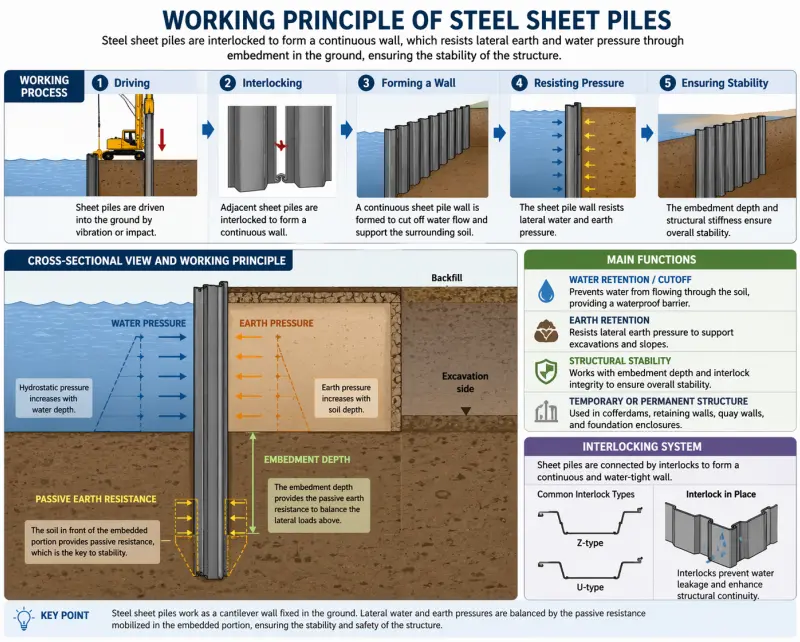
The steel sheet piling method uses interlocking steel sections driven into the ground to form continuous retaining or cutoff walls.
Main Steps
Survey and Design
Engineers calculate depth and load.
Equipment Selection
Choose hammer type based on soil condition.
Pile Driving
Install piles sequentially.
Interlock Connection
Ensure tight wall formation.
| Step | Purpose |
|---|---|
| Design | Structural safety |
| Driving | Wall installation |
| Interlock | Water control |
Advantages Over Concrete Walls
Faster Construction
No curing time required.
Easier Modification
Piles can be removed or adjusted.
Better Water Resistance
Interlocks reduce seepage.
My Insight
I think steel sheet piling is one of the most practical methods in marine engineering because it combines structural support and water control in one system.
What is the difference between piling and sheet piling?
Many people think piling and sheet piling are the same. They are different systems with different purposes.
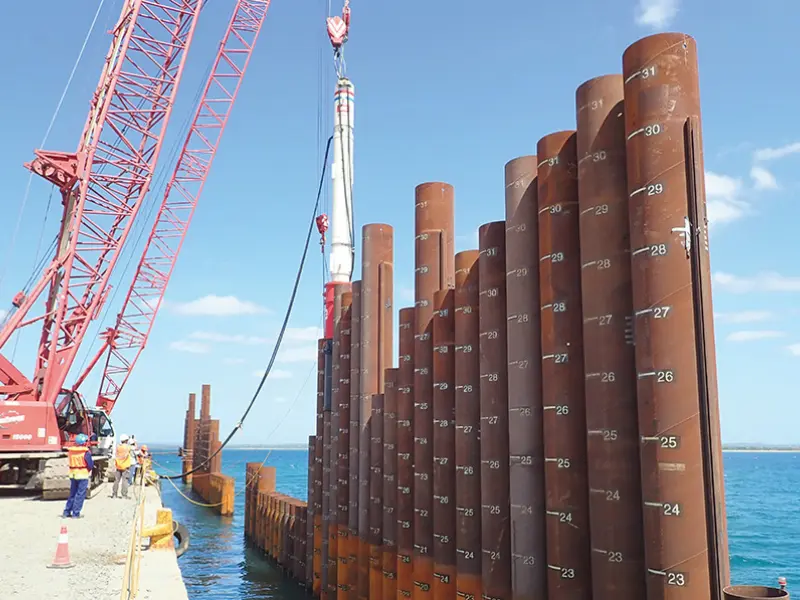
Piling mainly supports vertical loads, while sheet piling mainly retains soil and controls water.
Main Difference
| Feature | Piling | Sheet Piling |
|---|---|---|
| Main function | Load support | Soil retention |
| Structure | Individual pile | Continuous wall |
| Water control | Limited | Strong |
Typical Use Cases
Standard Piles
Used in buildings and bridges.
Sheet Piles
Used in retaining walls and marine structures.
My Insight
I explain this difference to new buyers often. If the project needs lateral support and water control, sheet piles are usually the better option.
What are the 5 types of piles?
Different projects require different pile systems. Selection depends on soil and structural demand.
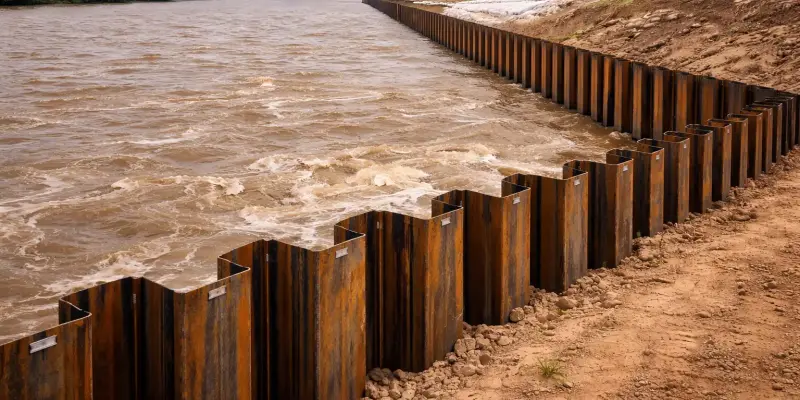
The five common pile types are sheet piles, bearing piles, friction piles, compaction piles, and anchor piles.
Main Types
Sheet Piles
Used for retaining structures.
Bearing Piles
Transfer load to hard soil or rock.
Friction Piles
Transfer load through surface friction.
Compaction Piles
Improve soil density.
Anchor Piles
Resist uplift forces.
| Pile Type | Main Purpose |
|---|---|
| Sheet pile | Retaining wall |
| Bearing pile | Vertical support |
| Friction pile | Load transfer |
| Compaction pile | Soil improvement |
| Anchor pile | Uplift resistance |
My Insight
I always tell clients that pile selection should follow engineering requirements, not only budget. Wrong pile selection creates much higher repair cost later.
Conclusion
Steel sheet piles remain one of the most effective solutions for marine projects because they combine strength, speed, flexibility, and reliable water control.