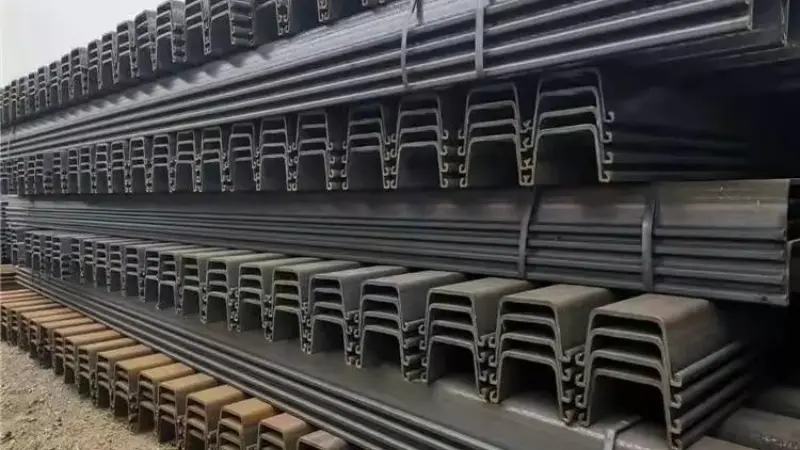
What Is the Structure of a Steel Sheet Pile?
Weak retaining systems often fail under soil and water pressure. Poor pile selection can also increase construction risk and repair costs.
The structure of a steel sheet pile includes an interlocking steel section with a specific profile shape designed to provide soil retention, water resistance, and structural stability in construction projects.
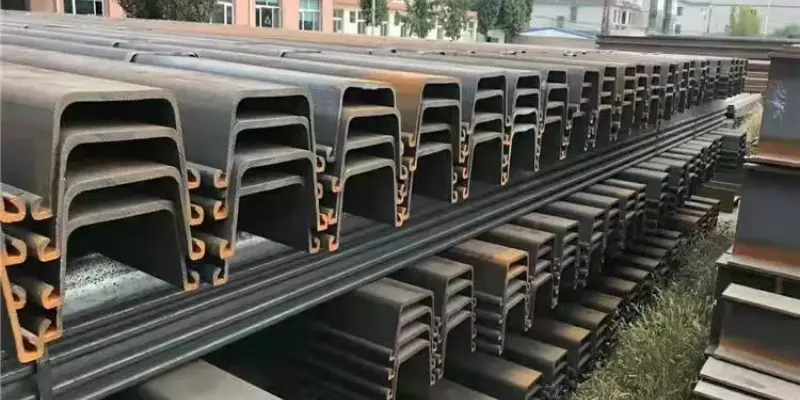
I often explain steel sheet pile structures to contractors and distributors who are new to marine or excavation projects. Many buyers focus only on price first. Later, they realize structure design directly affects wall strength, installation speed, and long-term durability.
What is the structural shape of steel piling?
Many construction problems start because the wrong pile profile is selected. Different projects require different structural capacities.
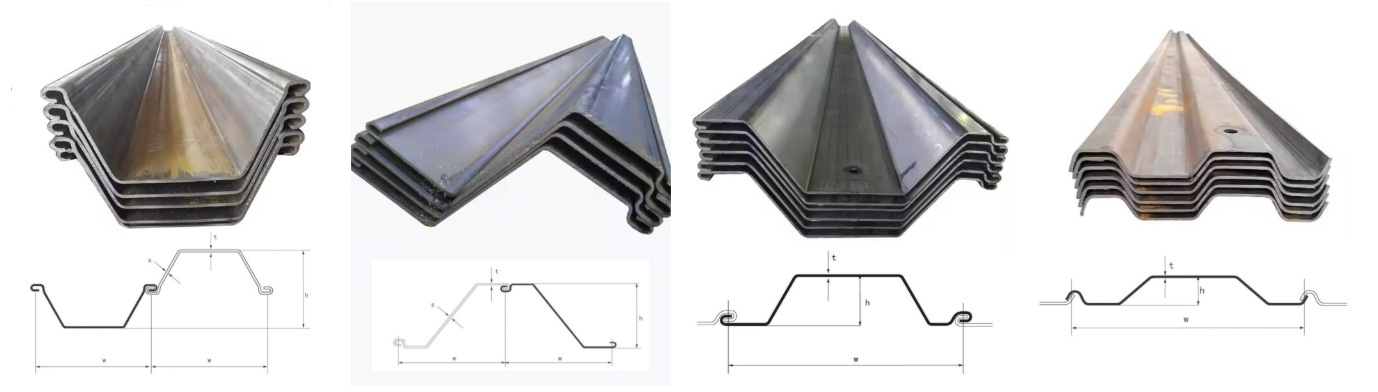
The structural shape of steel piling is usually designed as U type, Z type, straight web, or flat profile sections to improve strength and interlocking performance.
Common Structural Shapes
U Type Steel Sheet Pile
U type piles are one of the most widely used profiles in retaining wall systems. The cross section forms a deep U shape. This design gives balanced bending strength and easier interlocking performance.
I often recommend U type piles for riverbank protection and temporary excavation support because they are flexible and cost-effective.
Z Type Steel Sheet Pile
Z type piles have interlocks positioned at both sides of the section. This design increases the section modulus and improves bending resistance.
Z piles are common in large marine structures and heavy-duty port walls.
Straight Web Sheet Pile
Straight web piles are mainly used for circular structures like cofferdams because they handle tensile force effectively.
| Structural Shape | Main Feature | Typical Application |
|---|---|---|
| U Type | Balanced strength | Excavation support |
| Z Type | High bending resistance | Port projects |
| Straight Web | Circular wall systems | Cofferdams |
| Flat Type | Simple structure | Light retaining walls |
Why Structural Shape Matters
Load Distribution
Different profiles distribute soil pressure differently. Thick sections improve structural stability.
Interlocking Performance
Good interlocks reduce water leakage and improve alignment.
Installation Efficiency
Some shapes are easier to drive into dense soil conditions.
My Insight
I have seen contractors switch from light flat piles to hot rolled U type piles after facing wall movement problems. The profile structure changed the entire project performance.
What is a steel sheet pile?
Some buyers think steel sheet piles are only steel plates pushed into the ground. That idea is incorrect.
A steel sheet pile is a specially formed steel section with interlocking edges designed to create continuous retaining walls and water control systems.
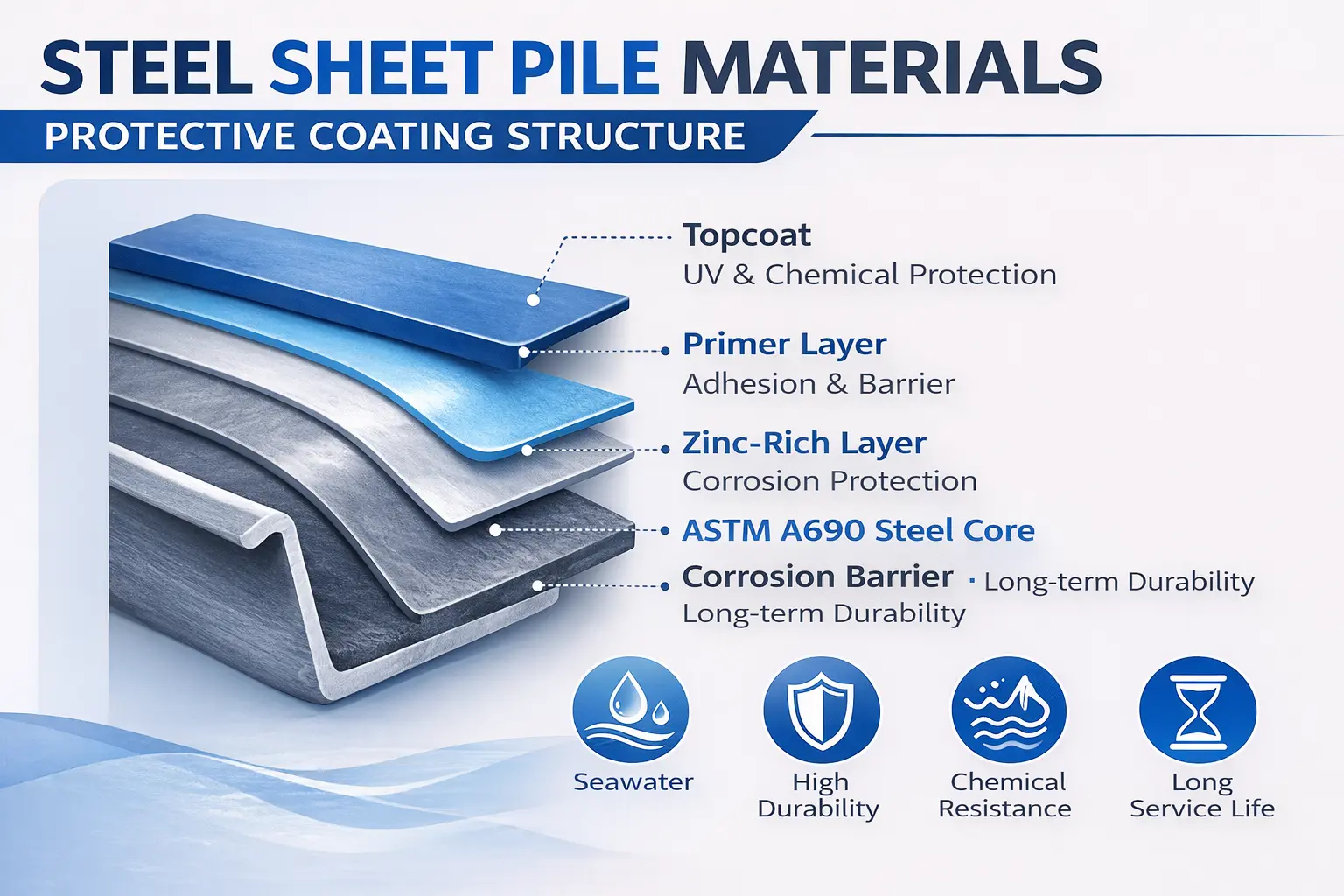
Main Components of a Steel Sheet Pile
Steel Body
The main section provides structural support against lateral pressure.
Interlocks
Interlocks connect adjacent piles together to form continuous walls.
Coating or Protection Layer
Many marine piles include anti-corrosion systems.
| Component | Function |
|---|---|
| Steel section | Structural strength |
| Interlock | Connection and sealing |
| Coating | Corrosion protection |
Main Uses
Excavation Retaining Walls
Sheet piles stabilize deep foundation pits.
Flood Protection
Continuous walls reduce water intrusion.
Marine Structures
Ports and docks require durable retaining systems.
Manufacturing Process
Most steel sheet piles are hot rolled or cold formed. Hot rolled piles usually provide stronger interlocks and higher durability.
My Insight
I always tell customers that interlock quality is one of the most important details. Weak interlocks can create leakage problems even if the steel itself is strong.
What are sheet piles made of?
Many people only focus on pile shape. Material selection is equally important for project lifespan.
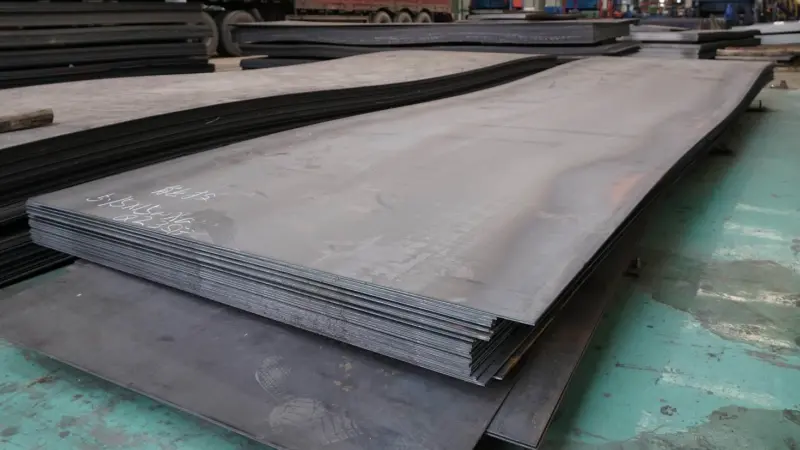
Sheet piles are mainly made of hot rolled steel, cold formed steel, vinyl, reinforced concrete, or composite materials.
Steel Materials
Carbon Steel
Carbon steel is common for structural retaining systems because it offers high strength and reasonable cost.
High Strength Steel Grades
Marine projects often use S355, Q345, or ASTM A690 steel grades for better corrosion resistance and strength.
| Material | Main Advantage | Common Use |
|---|---|---|
| Carbon steel | Cost-effective | General projects |
| ASTM A690 | Marine corrosion resistance | Coastal structures |
| Vinyl | Corrosion resistance | Light-duty walls |
| Concrete | Heavy mass | Permanent walls |
Why Steel Is Widely Used
Better Structural Strength
Steel handles high lateral loads effectively.
Easy Installation
Steel piles work well with vibratory hammers.
Reusability
Temporary construction projects can reuse steel piles.
Corrosion Protection
Hot Dip Galvanizing
Hot-dip galvanizing improves corrosion resistance.
Epoxy Coating
Marine projects often require extra coating systems.
My Insight
I prefer hot rolled steel piles for most heavy marine applications because the interlocks are stronger and the overall wall performance is more reliable.
What does a sheet pile look like?
Many new buyers cannot identify different pile profiles during procurement discussions.
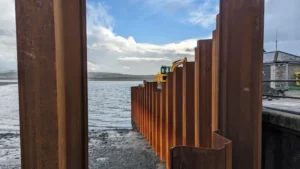
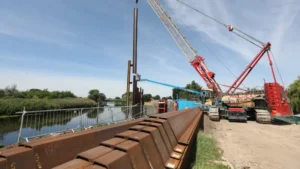
A sheet pile looks like a long steel section with interlocking edges and a shaped cross section such as U type or Z type.
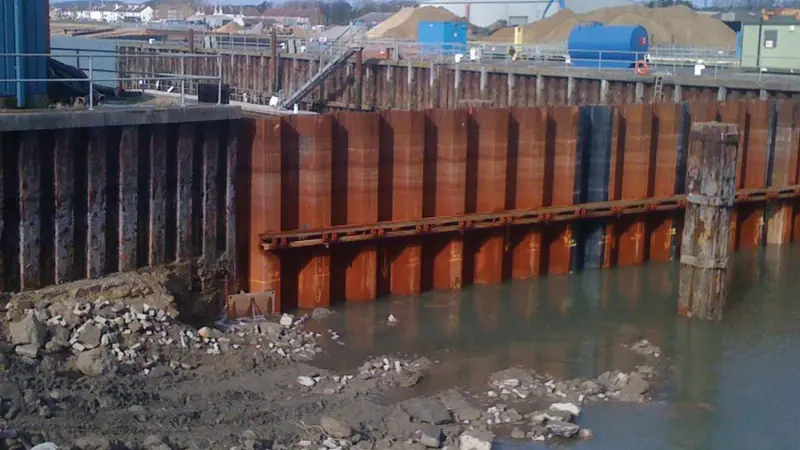
Main Visual Features
Long Vertical Shape
Most sheet piles are produced in long sections from several meters up to over 20 meters.
Interlocking Edges
The side edges connect tightly with adjacent piles.
Profile Shape
The section profile determines strength and stiffness.
| Pile Appearance | Description |
|---|---|
| U Shape | Rounded section profile |
| Z Shape | Zigzag structural profile |
| Flat Type | Straight profile wall |
Surface Condition
Black Steel Finish
Standard factory finish without coating.
Coated Surface
Marine projects often use painted or galvanized piles.
Why Appearance Matters
The pile profile directly affects engineering performance. Larger section modulus improves bending capacity.
My Insight
Some clients only compare weight and price. I always encourage them to also inspect profile depth and interlock precision because those details strongly affect installation quality.
What is the difference between Type 2 and Type 4 sheet piles?
Many contractors become confused when comparing Type 2 and Type 4 pile specifications.
Type 4 sheet piles are heavier and stronger than Type 2 sheet piles, which makes them suitable for deeper excavations and higher load conditions.
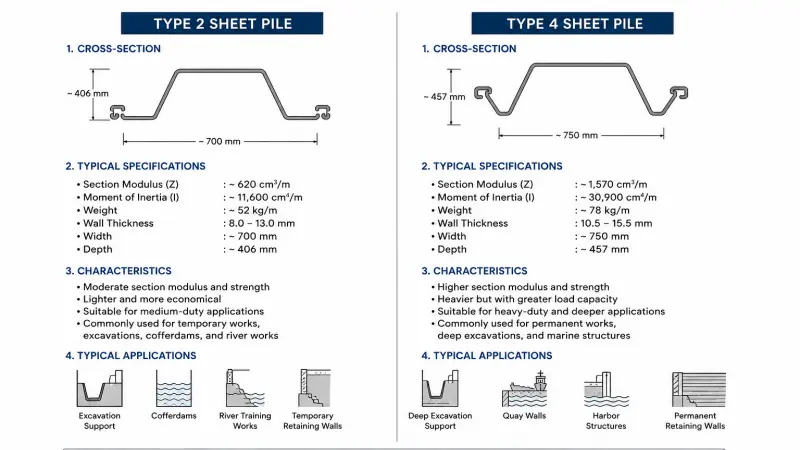
Main Differences
Section Thickness
Type 4 piles usually have thicker steel sections.
Structural Capacity
Type 4 piles provide higher bending resistance.
Project Depth
Type 2 piles suit lighter retaining work. Type 4 piles handle deeper excavation systems.
| Feature | Type 2 | Type 4 |
|---|---|---|
| Thickness | Medium | Heavy |
| Strength | Moderate | High |
| Common Use | Light retaining walls | Deep excavation |
Typical Applications
Type 2
Temporary retaining walls and shallow excavation.
Type 4
Marine walls, bridge foundations, and deep cofferdams.
Cost Difference
Type 4 piles cost more because of larger steel weight and higher structural performance.
My Insight
I usually recommend Type 4 piles for marine retaining systems because the higher section modulus provides better long-term stability under wave and soil pressure.
What is the difference between piling and sheet piling?
Some people use piling and sheet piling as the same engineering term. They actually serve different purposes.
Piling mainly supports vertical structural loads, while sheet piling mainly retains soil and controls water movement.
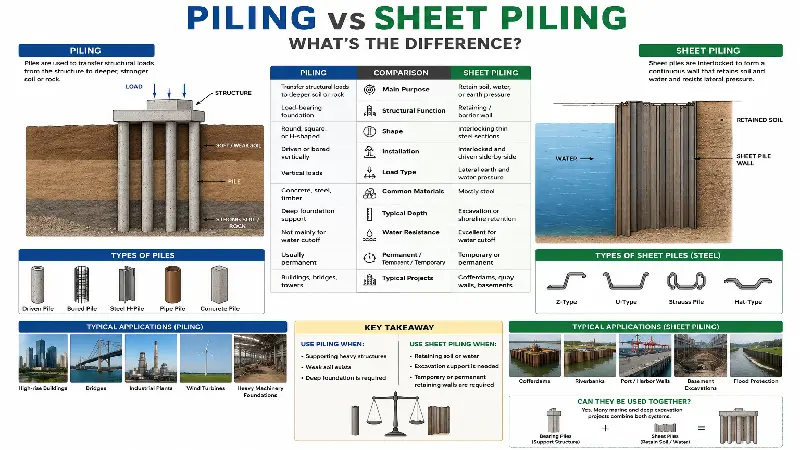
Main Function Difference
Standard Piling
Piles transfer building loads into deeper soil layers.
Sheet Piling
Sheet piles form continuous retaining walls.
| Feature | Piling | Sheet Piling |
|---|---|---|
| Main Purpose | Vertical support | Soil retention |
| Structure | Individual piles | Interlocked wall |
| Water Control | Limited | Strong |
Construction Difference
Piling Systems
Usually installed individually using drilling or driving methods.
Sheet Pile Systems
Installed continuously through interlocking sections.
Typical Project Examples
Standard Piles
Buildings, bridges, offshore platforms.
Sheet Piles
Ports, retaining walls, flood barriers.
My Insight
I often explain this difference to project buyers in the Middle East. Many first-time buyers request standard pipe piles when the project actually requires continuous sheet pile walls for water control.
Conclusion
Steel sheet pile structure directly affects wall strength, water resistance, installation efficiency, and long-term project stability in marine and excavation applications.