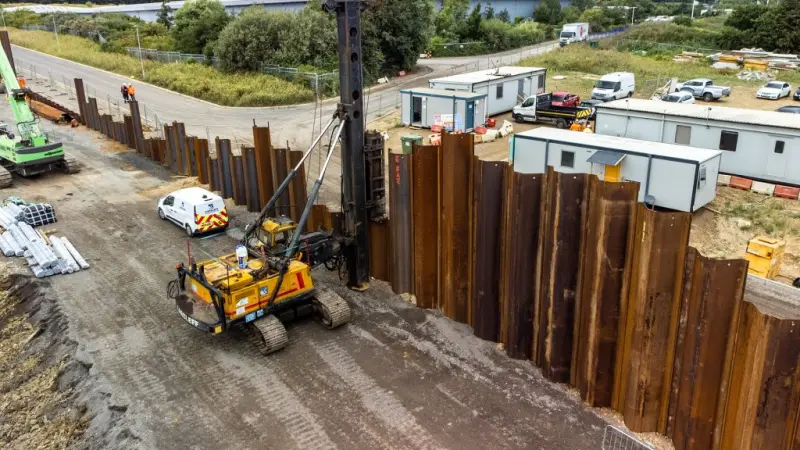
Many contractors use steel sheet piles, but they do not always understand how interlocks transfer loads. Poor understanding can cause design mistakes and structural problems.
Steel sheet piles work through a combination of interlocking connections, soil resistance, and load transfer mechanisms. The interlock system connects each pile into a continuous wall that can resist external forces.
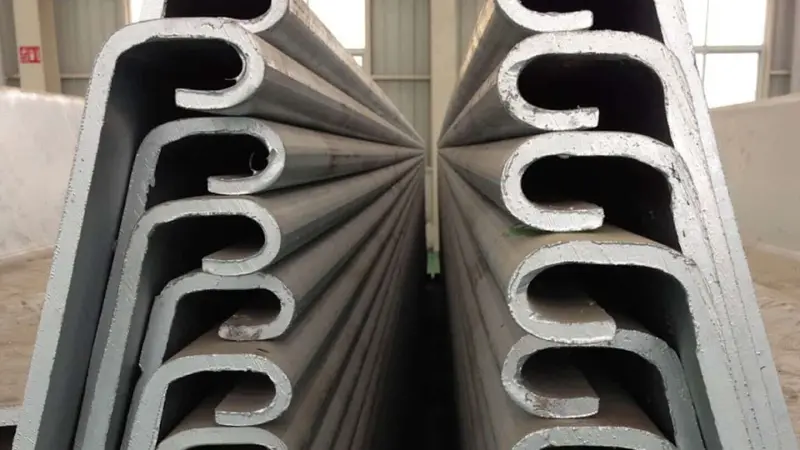
Steel sheet pile interlocks connect individual piles together and create a continuous retaining structure. The system transfers loads from the sheet pile wall into the surrounding soil through bending resistance and friction and passive earth pressure.
Understanding how loads move through a sheet pile system helps contractors select the right profile, installation method, and steel grade for different construction projects.
What is the load transfer method of piles?
Many engineers focus on the strength of steel sheet piles but forget that the load transfer method controls the final performance of the structure. A strong pile system needs a clear path for forces to move safely.
Steel sheet piles transfer loads through the interaction between the pile body, interlock connection, and surrounding soil. The wall receives external pressure and transfers these forces into deeper soil layers.
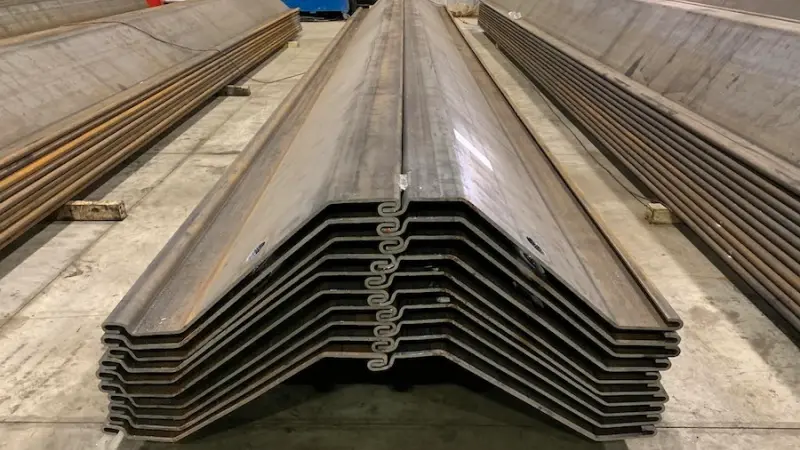
The load transfer method of piles depends on structural resistance, friction, and soil support. Steel sheet piles transfer lateral loads through bending action and transfer vertical forces through friction and soil resistance.
How Load Transfer Works in Steel Sheet Pile Systems
When a steel sheet pile wall receives pressure from soil or water, the force does not stay in one area. The load moves through the entire structure.
The interlocks play an important role because they connect every sheet pile section. Without proper interlocking, each pile would work separately and the wall would lose stability.
The main load transfer process includes:
| Load Transfer Stage | Function |
|---|---|
| External Pressure Applied | Soil or water creates force against the wall |
| Sheet Pile Bending Resistance | Steel section resists deformation |
| Interlock Connection | Transfers force between connected piles |
| Soil Resistance | Surrounding soil supports the wall |
| Embedded Depth Support | Lower pile section provides stability |
I often explain to contractors that steel sheet piles do not work only because of steel strength. The performance comes from the complete system between steel, interlocks, and soil.
Main Types of Loads Acting on Sheet Piles
Steel sheet pile walls usually handle several types of loads during service.
| Load Type | Example |
|---|---|
| Lateral Earth Pressure | Soil pushing against retaining walls |
| Water Pressure | Rivers, ports, and flood control structures |
| Vertical Loads | Structures connected to the pile system |
| Impact Loads | Marine environments and temporary works |
Lateral loads are usually the main concern for sheet pile design. Soil pressure increases with excavation depth, so contractors need to select suitable pile sections.
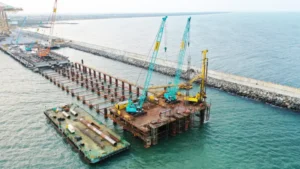
Water pressure also creates additional challenges. In marine construction projects, steel sheet piles must resist changing water levels, waves, and current forces.
The Role of Interlocks in Load Transfer
The interlock is one of the most important features of a steel sheet pile. It allows separate piles to become one connected wall.
When one pile receives pressure, the interlock helps share the force with nearby piles. This improves the overall stability of the structure.
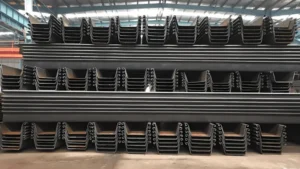
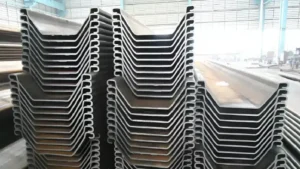
Different sheet pile profiles have different interlock designs. U-shaped sheet piles and Z-shaped sheet piles are widely used because their connections provide good strength and installation efficiency.
| Sheet Pile Type | Interlock Feature | Common Use |
|---|---|---|
| U Type Sheet Piles | Strong connected profile | Retaining walls, flood control |
| Z Type Sheet Piles | High section modulus | Deep excavation, marine projects |
| Flat Sheet Piles | Straight connection | Circular structures, special projects |
Soil Resistance and Embedded Depth
The surrounding soil is another important part of the load transfer system.
A sheet pile wall does not carry all forces by itself. The embedded part of the pile develops passive soil resistance. This resistance helps prevent excessive movement.
The deeper the sheet pile goes into the ground, the more soil support it can receive. However, contractors must calculate the required depth based on soil conditions and project requirements.
I believe this is one reason why sheet pile projects need professional engineering support. The same steel profile may perform differently in clay, sand, or mixed soil conditions.
My Insight
From my experience working with contractors, I think understanding load transfer is more important than only comparing steel thickness or price.
A suitable sheet pile system needs the right combination of profile design, interlock performance, installation method, and soil conditions. Choosing the correct system can improve safety and reduce unnecessary construction costs.
What is the difference between Type 2 and Type 4 sheet piles?
Many contractors compare Type 2 and Type 4 sheet piles because these two profiles are commonly used in excavation, retaining wall, and marine projects. However, the difference between them is not only the shape or size. The main difference is related to strength, section properties, and the loads they can handle.
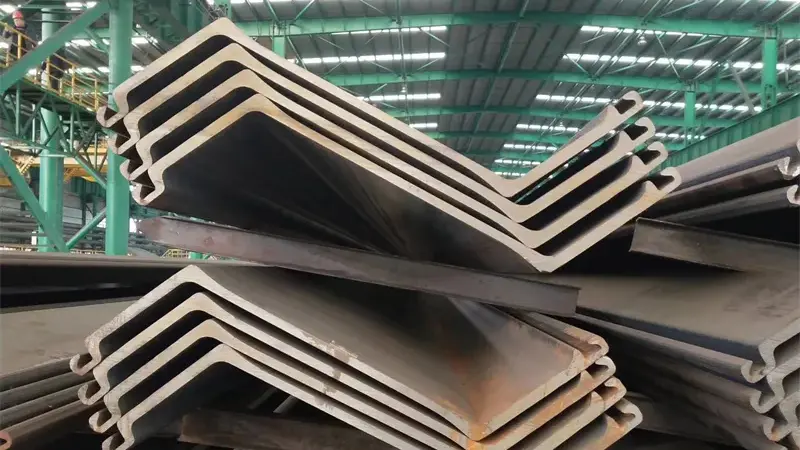
Type 2 and Type 4 sheet piles are different steel sheet pile profiles with different mechanical properties. Type 4 sheet piles usually have a higher section modulus and stronger bending resistance, which makes them suitable for projects requiring higher load capacity.
Understanding Type 2 and Type 4 Sheet Piles
When contractors select sheet piles, they usually consider excavation depth, soil pressure, water conditions, and project requirements. The sheet pile type affects the overall stability of the retaining system.
Type 2 sheet piles are often used for general construction projects where the load requirements are moderate. Type 4 sheet piles are designed for heavier applications because they provide higher structural strength.
The selection should not only depend on the sheet pile number. Engineers need to check technical data such as:
- Section modulus
- Moment of inertia
- Steel grade
- Wall thickness
- Installation conditions
| Feature | Type 2 Sheet Pile | Type 4 Sheet Pile |
|---|---|---|
| Structural Strength | Standard strength | Higher strength |
| Section Modulus | Lower | Higher |
| Bending Resistance | Suitable for medium loads | Suitable for heavy loads |
| Typical Application | Temporary works, shallow excavation | Deep excavation, marine projects |
| Material Requirement | Usually less steel | Usually more steel |
Section Modulus and Bending Performance
The main technical difference between Type 2 and Type 4 sheet piles is the section modulus.
Section modulus shows the ability of a steel section to resist bending. A higher section modulus means the sheet pile can handle greater bending forces before deformation occurs.
For example, a deep excavation project creates stronger lateral soil pressure than a shallow excavation project. In this situation, contractors usually need sheet piles with better bending resistance.
Type 4 sheet piles are often selected for these demanding projects because they provide stronger structural performance.
| Engineering Factor | Effect on Sheet Pile Selection |
|---|---|
| Excavation Depth | Deeper excavation requires stronger profiles |
| Soil Pressure | Higher pressure requires better bending resistance |
| Water Level | Higher water pressure increases load |
| Project Duration | Permanent structures need higher durability |
Application Differences Between Type 2 and Type 4
Both types can be used in many construction projects, but their applications are different.
Type 2 sheet piles are commonly used in:
- Temporary excavation support
- Small retaining walls
- Short-term construction projects
- General foundation works
Type 4 sheet piles are commonly used in:
- Deep excavation support
- Port construction
- Marine retaining structures
- Flood protection systems
- Large infrastructure projects
I often see contractors choose Type 2 sheet piles when they want a cost-effective solution for projects with normal loads. They choose Type 4 sheet piles when safety and long-term performance are more important than the initial material cost.
Why Contractors Choose Different Sheet Pile Types
The correct sheet pile selection depends on balancing cost and performance.
Using a stronger sheet pile than necessary may increase material costs. However, using a weaker sheet pile in a high-load project may create safety risks.
A professional design process should consider:
| Consideration | Why It Matters |
|---|---|
| Soil Investigation | Determines actual ground conditions |
| Load Calculation | Defines required strength |
| Installation Method | Affects pile performance |
| Service Life | Determines durability requirements |
For example, a riverbank protection project may require different sheet piles compared with a temporary excavation project. A flood control wall needs to resist water pressure for many years, while a temporary construction support wall may only need short-term performance.
Relationship Between Sheet Pile Profile and Project Performance
The sheet pile profile directly affects how forces are distributed through the wall.
A stronger profile reduces deformation and improves stability. The interlock connection also plays an important role because it allows multiple sheet piles to work together.
Type 4 sheet piles usually provide better performance in large-scale projects because their stronger profile can transfer greater forces into the soil.
However, Type 2 sheet piles still have advantages. They are lighter, easier to handle, and can reduce transportation and installation costs.
My Insight
In my opinion, there is no single best sheet pile type for every project.
I think contractors should select sheet piles based on engineering requirements instead of only choosing the strongest option. The right balance between strength, cost, and installation conditions creates the best solution.
How do piles transfer load?
Many people think piles only support structures by carrying weight vertically. However, piles transfer different types of loads through the interaction between the pile body and surrounding soil.
Steel sheet piles transfer loads through bending resistance, interlock connections, friction, and soil support. The pile system distributes external forces and transfers them safely into the ground.
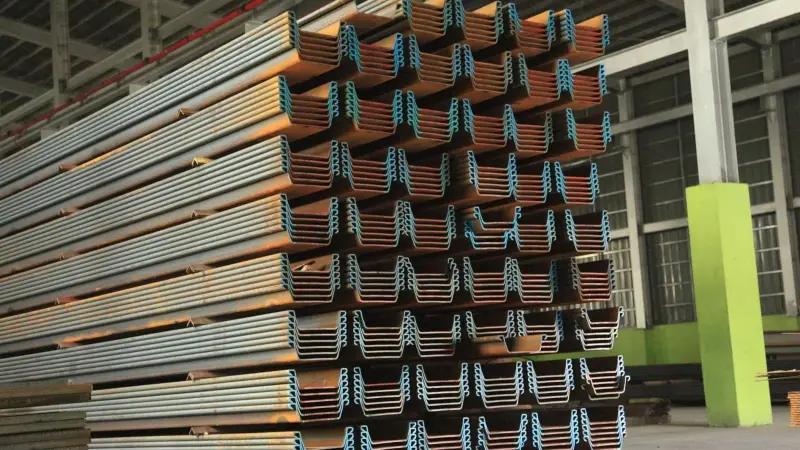
Piles transfer loads by moving forces from the structure or retaining system into the surrounding soil. The main load transfer methods include end bearing, skin friction, lateral resistance, and structural bending resistance.
Main Load Transfer Mechanisms of Steel Piles
When a pile receives external forces, the load needs to find a stable path. The pile transfers these forces from the upper structure to the ground.
For traditional foundation piles, vertical loads are usually transferred through end bearing and skin friction. For steel sheet piles, the main concern is usually lateral load transfer because they are commonly used for retaining structures.
| Load Transfer Method | Description | Common Application |
|---|---|---|
| End Bearing | Load transfers through the pile tip to strong soil layers | Deep foundation piles |
| Skin Friction | Load transfers through contact between pile surface and soil | Long piles in soft soil |
| Lateral Resistance | Soil supports the pile against horizontal movement | Retaining walls and excavation support |
| Bending Resistance | Steel section resists external pressure | Sheet pile walls |
1. End Bearing Load Transfer
End bearing happens when the bottom part of the pile transfers the load directly to a stronger soil layer or rock.
This method is common in deep foundation systems where the upper soil cannot provide enough support. The pile extends until it reaches a stable layer that can carry the required load.
For example, a building foundation may use deep piles because the surface soil has limited strength. The piles transfer the building load through the pile tip into stronger ground.
However, steel sheet piles usually do not depend mainly on end bearing. Their main purpose is to create a continuous wall that controls soil and water movement.
2. Skin Friction Load Transfer
Skin friction occurs when the surface of the pile interacts with surrounding soil.
The contact between steel and soil creates resistance. This resistance helps the pile transfer forces into the surrounding ground.
The amount of friction depends on several factors:
| Factor | Influence |
|---|---|
| Soil Type | Different soils create different friction levels |
| Pile Surface Area | Larger surface area increases contact |
| Installation Method | Changes soil conditions around the pile |
| Soil Density | Denser soil usually provides more resistance |
For sheet pile walls, soil friction helps improve stability. The embedded section of the pile works with the surrounding soil to resist movement.
3. Lateral Load Transfer in Sheet Pile Walls
Steel sheet piles mainly work as lateral load-resisting structures.
When soil pushes against a retaining wall, the sheet pile receives horizontal pressure. The steel section bends slightly and transfers the force into the soil behind and in front of the pile.
The load transfer process usually follows this path:
- Soil or water creates pressure.
- The sheet pile receives the external force.
- The steel section resists bending.
- The interlock transfers force between piles.
- The surrounding soil provides resistance.
This process allows a sheet pile wall to remain stable under different conditions.
How Interlocks Improve Load Transfer
The interlock system is one of the key features of steel sheet piles.
Each individual pile connects with the next pile through a mechanical locking system. This creates a continuous wall instead of separate steel sections.
| Component | Function |
|---|---|
| Sheet Pile Body | Provides bending strength |
| Interlock Connection | Transfers force between piles |
| Embedded Section | Provides soil resistance |
| Soil System | Supports overall stability |
A strong interlock improves load distribution. If one area receives higher pressure, the connected piles can share part of the force.
This is especially important in marine construction and flood protection projects where water pressure can change quickly.
Load Transfer in Different Project Conditions
Different projects create different loading situations.
| Project Type | Main Load | Important Factor |
|---|---|---|
| Deep Excavation | Earth pressure | Bending strength |
| River Protection | Water and soil pressure | Interlock performance |
| Port Construction | Wave and water forces | Corrosion resistance |
| Temporary Cofferdam | Water pressure | Installation speed |
I often explain to contractors that the steel sheet pile is only one part of the complete system. The soil, installation method, and engineering design all affect the final performance.
Factors Affecting Pile Load Transfer Performance
The load transfer ability of a pile system depends on many conditions.
| Factor | Effect |
|---|---|
| Steel Grade | Affects strength and durability |
| Sheet Pile Profile | Controls bending resistance |
| Embedment Depth | Influences stability |
| Soil Condition | Determines support capacity |
| Installation Quality | Affects actual performance |
A well-designed sheet pile wall can perform effectively for many years. However, poor installation or incorrect design can reduce the expected performance.
Load Transfer Example in Riverbank Protection
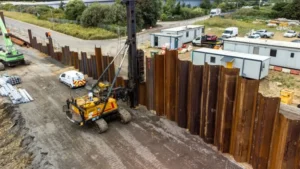
In a Southeast Asia riverbank protection project, hot rolled U type steel sheet piles were installed to create a stable retaining wall.
The contractor used vibratory piling equipment to drive the sheet piles into the riverbank soil. The interlocking connections created a continuous barrier that resisted soil erosion and controlled water movement.
The sheet pile wall transferred river pressure through the steel structure and surrounding soil. The embedded section provided additional support and improved stability.
This project shows that successful load transfer depends on the cooperation between steel strength, interlock connection, and soil resistance.
My Insight
From my experience, I believe many contractors focus too much on the steel material itself and ignore the load transfer system.
A good steel sheet pile project requires the right profile, correct installation method, and proper soil analysis. The whole system decides the final performance, not only the steel thickness.
What are the four types of piles?
Many contractors use the word "pile" when discussing foundation and retaining structures, but different pile types have different functions. Choosing the wrong pile type can affect construction safety, cost, and project performance.
In civil engineering, piles are generally classified based on their material, installation method, and load transfer method. The four common types of piles are driven piles, bored piles, screw piles, and sheet piles.
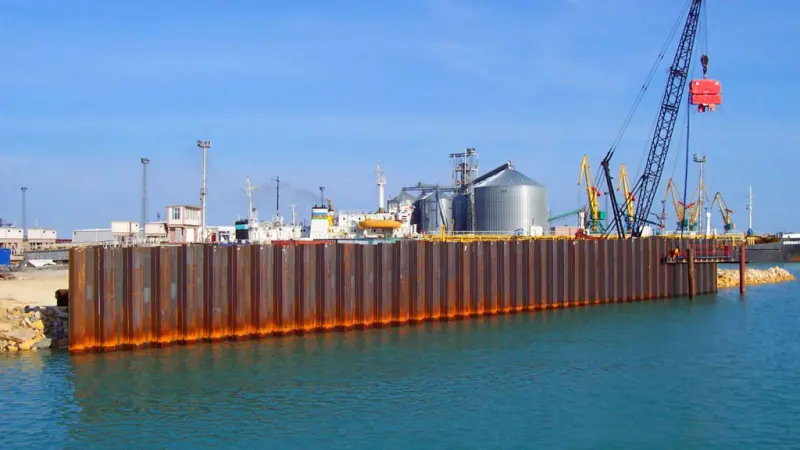
The four main types of piles are driven piles, bored piles, screw piles, and sheet piles. Each type has different advantages and applications depending on soil conditions, structural requirements, and construction environments.
Understanding Different Types of Piles
Piles are deep foundation or retaining elements that transfer loads into the ground. Engineers use piles when surface soil cannot provide enough support or when projects require additional stability.
Different projects require different pile solutions. A building foundation may need vertical load support, while a flood protection project may need a barrier that controls water and soil movement.
| Pile Type | Main Function | Common Applications |
|---|---|---|
| Driven Piles | Transfer structural loads into deeper soil | Buildings, bridges, foundations |
| Bored Piles | Create large foundation supports | Heavy structures, bridges |
| Screw Piles | Provide fast installation support | Small buildings, renewable energy projects |
| Sheet Piles | Create retaining and water control walls | Excavation, ports, flood protection |
1. Driven Piles
Driven piles are installed by pushing or hammering the pile into the ground. This method creates strong contact between the pile and surrounding soil.
Steel, concrete, and timber can all be used as driven piles. Steel driven piles are common because they provide high strength and can handle difficult soil conditions.
The installation process usually uses equipment such as hydraulic hammers or vibratory hammers.
| Feature | Driven Piles |
|---|---|
| Installation Method | Hammering or vibration |
| Main Advantage | Fast installation |
| Suitable Soil | Various soil conditions |
| Common Use | Bridges, buildings, marine structures |
Driven piles transfer loads through end bearing and skin friction. The pile tip can reach stronger soil layers, while the pile surface creates friction with surrounding soil.
Contractors often choose driven piles when they need reliable foundation support and fast construction progress.
2. Bored Piles
Bored piles are installed by drilling a hole into the ground and filling it with concrete or installing a steel reinforcement system.
This method creates large-diameter piles that can support heavy structures.
Bored piles are commonly used for:
- High-rise buildings
- Bridge foundations
- Large industrial projects
- Heavy infrastructure
| Feature | Bored Piles |
|---|---|
| Installation Method | Drilling and filling |
| Noise Level | Lower than driven piles |
| Load Capacity | Very high |
| Common Application | Large structures |
The main advantage of bored piles is their ability to support very large loads. However, the construction process usually takes more time and requires more equipment.
3. Screw Piles
Screw piles, also called helical piles, use a spiral-shaped plate attached to a steel shaft. The pile is rotated into the ground instead of being hammered.
This installation method creates less vibration and is suitable for areas where surrounding structures need protection.
| Feature | Screw Piles |
|---|---|
| Installation Method | Rotating into soil |
| Vibration | Very low |
| Construction Speed | Fast |
| Common Use | Small structures and special projects |
Screw piles are often used for solar projects, temporary structures, and light construction.
Their main advantage is easy installation and removal. However, they are usually not selected for projects requiring extremely high load capacity.
4. Steel Sheet Piles
Steel sheet piles are different from traditional foundation piles because they mainly work as retaining structures instead of vertical supports.
Steel sheet piles use interlocking connections to create continuous walls. These walls resist soil pressure, control water movement, and provide excavation support.
Common applications include:
| Application | Purpose |
|---|---|
| Deep Excavation | Prevent soil collapse |
| Flood Protection | Control water flow |
| Riverbank Protection | Reduce erosion |
| Port Construction | Support marine structures |
| Cofferdams | Create dry working areas |
Steel sheet piles are available in different profiles, including:
- U-shaped sheet piles
- Z-shaped sheet piles
- Flat sheet piles
- Omega sheet piles
- Straight web sheet piles
The correct profile depends on project loads, soil conditions, and installation requirements.
Comparison of Four Common Pile Types
Understanding the difference between pile types helps contractors select the correct solution.
| Type | Load Direction | Main Purpose | Installation Method |
|---|---|---|---|
| Driven Pile | Vertical | Foundation support | Hammer driving |
| Bored Pile | Vertical | Heavy structures | Drilling |
| Screw Pile | Vertical | Fast support systems | Rotation |
| Sheet Pile | Mainly Horizontal | Retaining and water control | Driving or pressing |
Why Contractors Choose Steel Sheet Piles
From my experience, many contractors choose steel sheet piles because they provide a combination of strength, speed, and flexibility.
A steel sheet pile wall can be installed quickly compared with many traditional retaining systems. It also requires less working space, which makes it suitable for urban construction.
Steel sheet piles are also useful because contractors can select different profiles for different requirements.
For example:
| Project Requirement | Suitable Sheet Pile Choice |
|---|---|
| High bending resistance | Z-shaped sheet piles |
| General retaining walls | U-shaped sheet piles |
| Temporary structures | Reusable sheet piles |
| Marine projects | Heavy-duty steel profiles |
How I Recommend Selecting the Right Pile Type
I usually suggest that contractors evaluate several factors before choosing a pile system:
| Factor | Importance |
|---|---|
| Soil Condition | Determines support performance |
| Project Load | Defines required strength |
| Construction Area | Affects installation method |
| Project Duration | Determines material requirements |
| Budget | Balances performance and cost |
The cheapest option is not always the best choice. A suitable pile system should provide reliable performance while controlling the total project cost.
My Insight
In my opinion, contractors should select piles based on engineering requirements instead of only looking at material prices.
Steel sheet piles are not designed to replace every type of pile. They have their own advantages in retaining walls, coastal engineering projects, and flood control projects.
The best solution comes from matching the pile type with the actual project conditions.
Conclusion
Steel sheet pile interlocks create strong load transfer systems. Understanding pile types and load paths helps contractors build safer and more efficient structures.
The performance of a sheet pile wall depends on many factors, including profile selection, interlock design, installation method, soil conditions, and project requirements.
Contractors should evaluate the complete system instead of focusing only on material cost. A suitable sheet pile solution can improve construction efficiency, reduce risks, and provide reliable long-term performance.