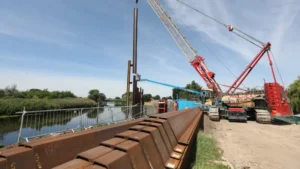
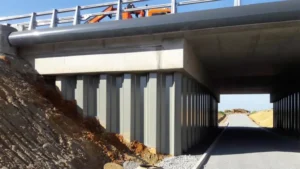
You are building a new high-rise or a residential home with a basement. The excavation is deep, and the soil wants to collapse. You need a support system that works fast, fits in tight urban sites, and can be removed after the basement is built.
Sheet pile systems are the most common solution for basement construction1. They provide a continuous, interlocking wall that holds back soil and water during excavation. After the basement walls are poured, the sheet piles can be extracted and reused on another project. They are fast, cost-effective, and ideal for urban sites with limited space.
](https://cnsteelplant.com/wp-content/uploads/2026/03/Article-Application-Subway-2.webp)
I have supplied sheet piles for basement projects across the Middle East and Southeast Asia. A high-rise foundation in the UAE used braced sheet piles for a 15-meter basement. A residential project in Australia used cantilever sheet piles for a 3-meter basement. Let me walk you through how sheet pile systems2 work for basement construction1.
Sheet pile wall
A sheet pile wall1 is a retaining structure made from interlocking steel sections driven into the ground to support excavations for basements.
A sheet pile wall1 for basement construction consists of steel sheet piles driven around the perimeter of the excavation. The piles are interlocked to form a continuous, watertight barrier. As excavation proceeds, bracing2 is installed to support the wall. After the permanent basement walls are constructed, the sheet piles are extracted and reused.
[^1] cross section for basement excavation](https://placehold.co/600x400 "Sheet Pile Wall for Basement")](https://cnsteelplant.com/wp-content/uploads/2026/03/Article-Application-Subway-1.webp)
How Sheet Pile Walls Work for Basements
Let me explain the function and components of a sheet pile wall1 for basement construction.
Wall Components
- Sheet piles: Interlocking steel sections driven to depth
- Walers: Horizontal beams that distribute pressure
- Bracing: Struts or rakers that support the wall
- Tiebacks: Grouted anchors (for deep excavations where space allows)
Construction Sequence
- Drive sheet piles around the perimeter
- Excavate to first brace level
- Install walers and bracing2
- Excavate to final depth
- Pour basement slab and walls
- Remove bracing2
- Extract sheet piles (for temporary works)
Types of Sheet Pile Walls for Basements
| Type | Description | Depth Range |
|---|---|---|
| Cantilever | No bracing2, relies on embedment | Up to 4-5 m |
| Braced (internal struts) | Steel beams pushing against opposite walls | 5-15 m |
| Anchored (tiebacks) | Grouted anchors behind wall | 5-15 m (requires space) |
Advantages for Basement Construction
- Fast installation (no curing time)
- Minimal ground loss
- Can be installed in tight urban sites
- Reusable (piles extracted after basement built)
- Works in high water table conditions
My Experience
For a high-rise basement in the UAE, we used a braced sheet pile wall1 with three levels of internal struts. The excavation was 15 m deep, and the bracing2 allowed the contractor to work safely while the basement was constructed.
Sheet piling construction
Sheet piling construction for basements involves driving interlocking steel piles, installing bracing1, excavating, and then extracting the piles after the permanent structure is built.
Sheet piling construction begins with driving the sheet piles2 around the perimeter using vibratory or impact hammers. As excavation proceeds, bracing1 is installed at predetermined levels. The excavation continues until the final depth is reached. The basement slab3 and walls are constructed, and then the bracing1 is removed and the piles are extracted.
](https://cnsteelplant.com/wp-content/uploads/2026/03/Article-application-Cofferdam-Deep-Excavation-5.webp)
Step-by-Step Construction Process
Let me walk you through the construction process for a basement sheet pile wall.
Step 1: Site Preparation
- Clear the site and establish survey control
- Set up guide frames for alignment
- Prepare access for pile driving equipment
Step 2: Pile Driving
- Drive sheet piles2 using vibratory hammer4 (preferred for speed)
- Maintain alignment with guide frames
- Drive to required depth (typically below excavation depth)
Step 3: Excavation and Bracing
- Excavate to first brace level
- Install walers (horizontal beams)
- Install bracing1 (struts or rakers)
- Continue excavating to next level
- Repeat until final depth
Step 4: Basement Construction
- Pour basement slab3
- Construct basement walls
- Remove temporary bracing1 as walls gain strength
Step 5: Pile Extraction
- Use vibratory hammer4 to extract piles
- Clean and inspect piles for reuse
- Store for next project
Equipment for Basement Construction
| Equipment | Function |
|---|---|
| Vibratory hammer | Driving and extracting piles |
| Crane or excavator | Handling piles and bracing1 |
| Guide frames | Maintaining alignment |
| Steel struts | Bracing the wall |
| Walers | Distributing pressure |
My Experience
For a basement project in Australia, we used a vibratory hammer4 mounted on an excavator to drive the sheet piles2. The guide frames kept the piles straight, and the bracing1 was installed as excavation progressed. The whole process took 4 weeks for a 5 m deep basement.
Sheet pile cost
Sheet pile cost for basement construction depends on the depth, soil conditions, section type, and whether the piles are new or used.
Sheet pile cost for basement construction ranges from $300 to $1,200 per linear meter of wall, including material, installation, bracing, and extraction. Material cost alone is $550-800 per ton for new piles, $300-500 per ton for used piles. The total project cost depends on excavation depth, bracing requirements, and site conditions.
[^1] comparison chart for basement work](https://placehold.co/600x400 "Sheet Pile Cost")](https://cnsteelplant.com/wp-content/uploads/2026/03/Article-Application-City-5.webp)
Cost Breakdown for Basement Projects
Let me break down the costs for sheet pile systems in basement construction.
Material Costs
| Section | New Cost ($/ton) | Used Cost ($/ton) | Weight (kg/m) |
|---|---|---|---|
| U 400 x 125-13 | 600-700 | 350-450 | 60 |
| U 400 x 170-15.5 | 650-750 | 400-500 | 76 |
| U 600 x 180-13.4 | 600-700 | 350-450 | 82 |
| U 600 x 210-18 | 650-750 | 400-500 | 106 |
| AZ 18 | 650-750 | 400-500 | 75 |
| AZ 26 | 700-800 | 450-550 | 109 |
Installation Costs
| Depth | Installation Cost ($/linear m) |
|---|---|
| 3 m | 150-250 |
| 5 m | 250-350 |
| 8 m | 350-500 |
| 10 m | 500-650 |
| 12 m | 650-800 |
| 15 m | 800-1,000 |
Bracing Costs
| Depth | Bracing Type | Cost ($/linear m) |
|---|---|---|
| Up to 5 m | None (cantilever) | 0 |
| 5-8 m | Single brace | 100-200 |
| 8-12 m | Double brace | 200-300 |
| 12-15 m | Triple brace | 300-400 |
Total Cost Example
Project: 10 m deep basement, 100 m perimeter, U 400 x 170-15.5 piles
- Wall length: 100 m
- Piles per meter: 2.5 (for 400 mm width)
- Total pile length: 100 m × 2.5 × 10 m = 2,500 m
- Pile weight: 2,500 m × 76 kg/m = 190,000 kg = 190 tons
- Material cost (new): 190 × $700 = $133,000
- Installation: 100 m × $600 = $60,000
- Bracing: 100 m × $250 = $25,000
- Extraction: 100 m × $200 = $20,000
- Total: $238,000 ($2,380 per linear meter of wall)
Cost Savings with Reuse
- Using used piles: Material cost reduced by 40% ($53,200 savings)
- Reusing piles on next project: Extraction and handling only
My Experience
For a residential basement project, we used used sheet piles from a previous job. The material cost2 was $400 per ton instead of $700, saving the client $18,000 on a 30 m wall.
Sheet pile wall construction
Sheet pile wall construction for basements requires careful planning, proper equipment, and experienced crews to ensure a safe and successful project.
Sheet pile wall construction begins with driving the sheet piles to depth, followed by excavation and bracing installation. The wall must be designed to resist soil and water pressures. For deep basements, multiple levels of bracing are required. After the permanent basement walls are constructed, the sheet piles are extracted.
[^1] sequence diagram](https://placehold.co/600x400 "Sheet Pile Wall Construction")](https://cnsteelplant.com/wp-content/uploads/2026/03/Article-Application-City-3.webp)
Key Considerations for Basement Construction
Let me explain the critical factors for successful sheet pile wall construction1.
Design Considerations
| Factor | Consideration |
|---|---|
| Excavation depth | Determines pile length and bracing levels |
| Soil conditions | Affects embedment and driving |
| Water table | May require dewatering or watertight interlocks |
| Adjacent structures | Vibration and settlement control |
| Access | Space for equipment and bracing |
Bracing Systems for Basements
| System | Description | Best For |
|---|---|---|
| Internal struts | Steel beams pushing against opposite walls | Rectangular basements |
| Rakers | Diagonal braces bearing on foundation | Deep basements |
| Tiebacks | Grouted anchors behind wall | Wide basements, urban sites |
Construction Sequence Details
- Pre-installation: Survey alignment, set guide frames
- Pile driving: Drive sheet piles using vibratory hammer
- First excavation: Excavate to first brace level
- Brace installation: Install walers and struts
- Continue excavation: Repeat for each brace level
- Basement construction: Pour slab and walls
- Brace removal: Remove bracing as walls gain strength
- Pile extraction: Extract piles for reuse
Safety Considerations
- Bracing must be installed before excavation proceeds to next level
- All bracing connections must be secure
- Regular monitoring of wall movement
- Qualified personnel for pile driving and bracing
My Experience
For a 12 m deep basement in the UAE, we used a braced sheet pile wall with three levels of internal struts. The struts were designed to allow access for concrete trucks. The basement was completed on schedule, and the piles were extracted and reused on another project.
Conclusion
Sheet pile systems1 are ideal for basement construction. Cantilever walls work for shallow basements up to 4-5 m. Braced walls2 with internal struts are used for deeper basements (5-15 m). Used piles reduce cost, and extraction allows reuse on future projects.
-
Explore this link to understand how sheet pile systems enhance basement construction efficiency and cost-effectiveness. ↩ ↩ ↩ ↩ ↩ ↩ ↩ ↩ ↩ ↩ ↩ ↩ ↩ ↩ ↩
-
Learn about braced walls and their role in supporting deeper basements, ensuring safety and stability. ↩ ↩ ↩ ↩ ↩ ↩ ↩ ↩ ↩ ↩ ↩
-
Discover the essential steps and considerations involved in building a strong and durable basement slab. ↩ ↩
-
Learn about the mechanics of vibratory hammers and their role in enhancing the speed and precision of sheet piling. ↩ ↩ ↩