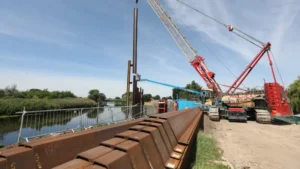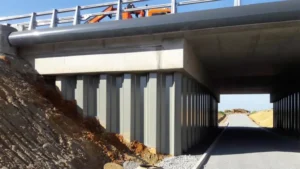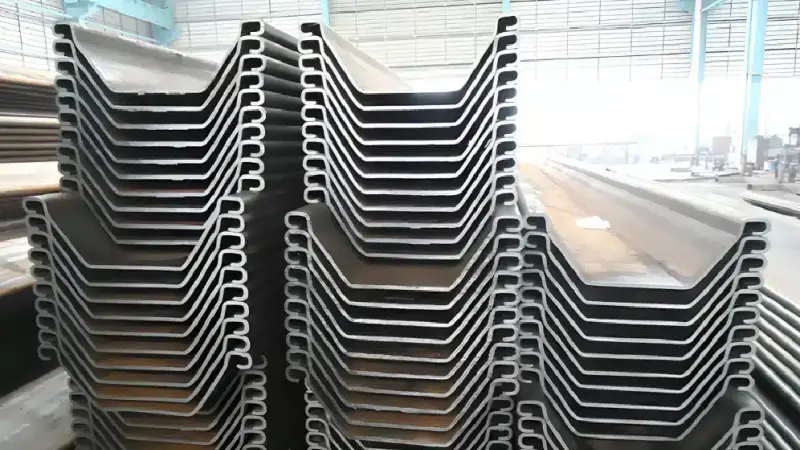
Sheet piles lean when control is weak. I have seen projects fail because small angle errors grow fast.
Verticality in sheet piling is controlled by guides, survey tools, and constant monitoring. The pile must stay within tight tolerance, usually 1:100 or better depending on design and soil conditions.
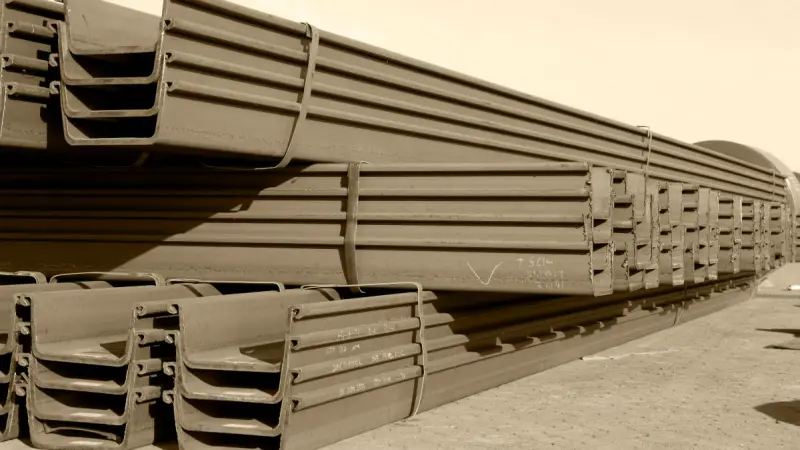
Verticality is not a single step. It is a full process from setup to final driving. I will break it down in simple parts.
How to check verticality of pile?
Small tilt can create big wall problems. I always check verticality early to avoid correction later.
Verticality is checked using spirit levels, theodolites, total stations, or laser plummets. The pile position is monitored during driving and adjusted immediately if deviation appears.
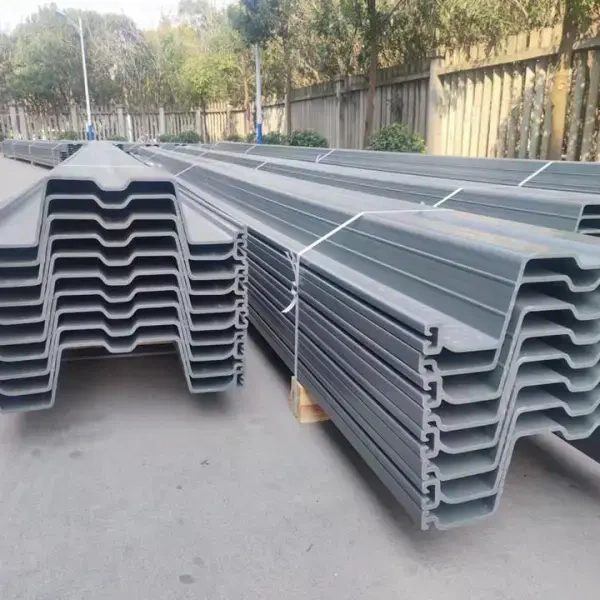
I always treat verticality control as a live process, not a one-time check. I do not wait until the pile is fully driven. I monitor from the first contact with soil.
Methods I use on site
I use a theodolite for line control. I use a level for tilt. I also use a total station in tighter urban sites. Each tool has a simple job. Theodolite checks direction. Level checks tilt. Total station checks both position and angle.
Simple monitoring workflow
I first set a guide frame or guide wall. I then place the first pile carefully. I check alignment before hammering starts. I keep checking every 1 to 2 meters during driving. If I see drift, I stop and correct immediately.
| Tool | Purpose | Accuracy |
|---|---|---|
| Spirit level | Basic tilt check | Low |
| Theodolite | Direction control | Medium |
| Total station | Full 3D control | High |
Common real issue
I often see operators only check at start. This is a mistake. Soil changes resistance during driving. The pile can rotate slowly without notice. That is why continuous checking matters more than initial alignment. For surveying and monitoring equipment standards, see ASTM Surveying Standards .
What is the verticality tolerance for piles?
Tolerance is small in sheet piling. A small error can affect the full wall line.
Verticality tolerance for sheet piles is usually around 1:100 to 1:150. Some strict urban projects require even tighter control depending on structural and waterproofing needs. For construction tolerance standards, see ACI Construction Tolerances .
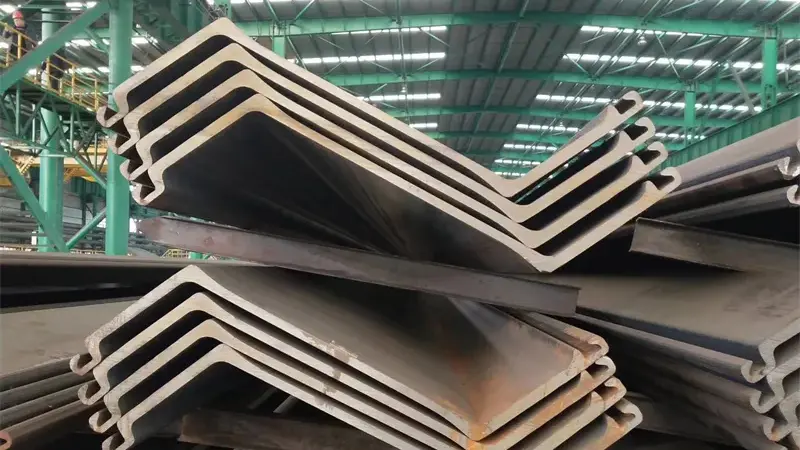
Tolerance defines how much tilt is allowed before the structure becomes unsafe or unacceptable. I always explain this to site teams before driving starts.
Standard tolerance range
Most projects accept a deviation of about 1% (1:100). This means a 10 meter pile can lean up to 10 cm at the top. Some critical walls reduce this to 1:150 or even 1:200.
Why tolerance matters
If piles lean too much, interlocks will open. Water can leak. Wall strength will drop. Excavation safety becomes a risk. In deep basements, even small deviation can change load distribution.
Field control method
I always mark tolerance lines on site frames. I also train operators to stop driving when deviation approaches limit. Correction is always easier early, not later.
| Project type | Typical tolerance |
|---|---|
| Standard retaining wall | 1:100 |
| Urban excavation | 1:150 |
| Critical infrastructure | 1:200 |
What is the allowable deflection for sheet pile wall?
Deflection is normal in sheet piles. But too much movement can damage the structure.
Allowable deflection depends on design, but common limits range from 0.5% to 1% of wall height. It ensures stability and prevents cracking or leakage.
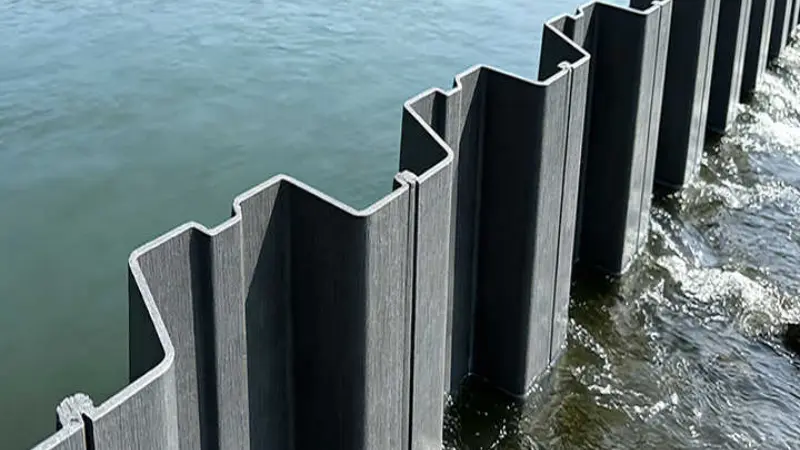
Deflection is the bending of the wall after load is applied. I always remind engineers that zero deflection is not realistic. Controlled deflection is the goal.
What affects deflection
Soil pressure is the main factor. Excavation depth also matters. Anchors and struts reduce movement. Soil type changes everything. Soft clay causes more bending than dense sand.
Practical control methods
I use stronger sections for deeper excavations. I add tie rods or anchors when needed. I also control excavation speed. Slow excavation reduces sudden pressure change.
Simple rule I follow
I keep deflection within design envelope. I do not push wall to its limit. Safety margin is always required in real projects. For soil retention systems, see Cement Association Soil Retention .
What are common pile driving mistakes?
Many sheet pile failures come from simple mistakes. I see them often on new sites.
Common mistakes include poor alignment, incorrect hammer selection, ignoring soil conditions, and lack of continuous monitoring during driving.
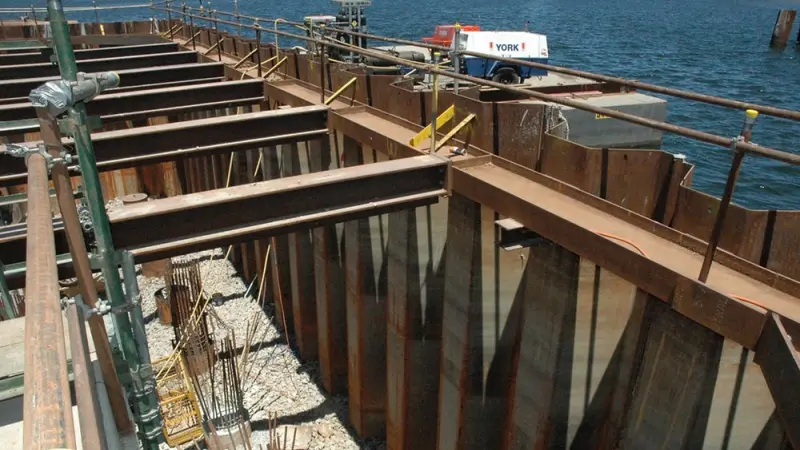
I have seen the same mistakes repeat in many projects. Most problems are not from material failure. They come from human control issues.
Mistake 1: No guide system
Without guide frames, piles drift easily. Even strong operators cannot control direction in loose soil.
Mistake 2: Wrong hammer energy
Too strong hammer damages pile head. Too weak hammer stops penetration. Both create alignment problems.
Mistake 3: Ignoring soil change
Soil is not uniform. Resistance changes every meter. If operators ignore this, piles rotate or lean.
Mistake 4: No real-time correction
Some teams wait until pile is fully driven. This is too late. Correction must happen during driving.
| Mistake | Result |
|---|---|
| No guide | Misalignment |
| Wrong hammer | Damage or refusal |
| No monitoring | Cumulative tilt |
| Late correction | Irreversible error |
For pile driving equipment guidelines, see FHWA Pile Driving Guidelines .
Conclusion
Verticality control is not luck. It is planning, tools, and constant checking during installation.