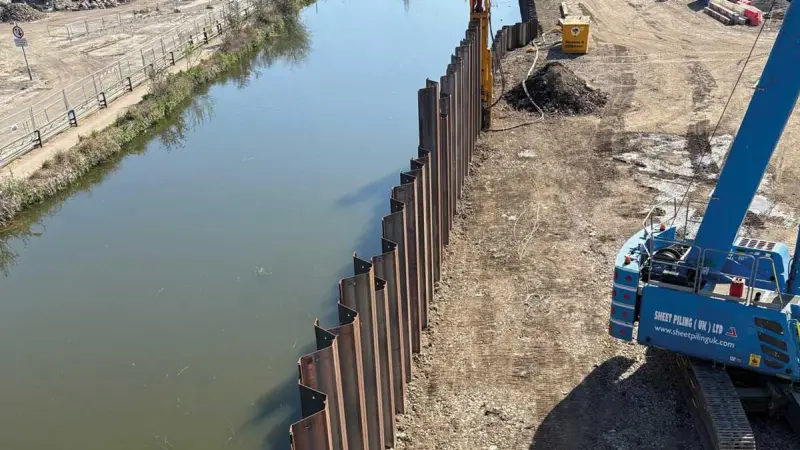
You are designing a marine foundation or a offshore structure. The engineer specifies steel pipe piles. You see terms like SSAW1 and LSAW2 on the drawings. What is the difference, and which one should you choose for a marine environment?
SSAW1 (Spiral Submerged Arc Welded) and LSAW2 (Longitudinal Submerged Arc Welded) pipes differ in their manufacturing process and weld seam orientation. For marine projects, LSAW2 pipes are generally preferred for critical applications because they have better fatigue resistance, thicker wall capabilities, and more reliable weld performance under dynamic loads.
](https://cnsteelplant.com/wp-content/uploads/2026/03/Article-application-6-1.webp)
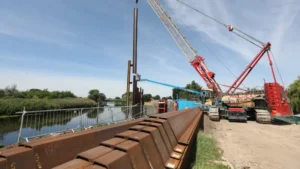
I have supplied steel pipes for marine projects across the Middle East and Southeast Asia. A port expansion in the UAE used LSAW2 pipes for the main berth piles. A offshore platform in Southeast Asia used SSAW1 pipes for secondary structures. Let me walk you through the differences and help you choose the right pipe for your marine project.
Difference between LSAW1 and HSAW2 pipes
LSAW1 and HSAW2 are both types of welded steel pipes. The main difference is the orientation of the weld seam.
LSAW1 (Longitudinal Submerged Arc Welded) pipes have a straight weld seam running parallel to the pipe axis. HSAW2 (Helical Submerged Arc Welded) pipes, also called SSAW, have a spiral weld seam that wraps around the pipe at an angle. For marine projects, LSAW1 pipes are preferred for primary structures due to better fatigue resistance3 and thicker wall capabilities.
](https://cnsteelplant.com/wp-content/uploads/2026/03/Article-Application-River-Embankment-2.webp)
Manufacturing Process Comparison
Let me explain how each pipe is made and why it matters for marine applications.
LSAW1 Pipe Manufacturing
LSAW1 pipes start with steel plates. The plate is cut to the required width and then formed into a cylinder using a UOE, JCOE, or press bending process. The formed cylinder has a single longitudinal seam. This seam is welded from both the inside and outside using submerged arc welding (DSAW). After welding, the pipe is often mechanically expanded to achieve precise dimensions and reduce residual stresses.
Key characteristics for marine use:
- Thicker walls possible (up to 50 mm or more)
- Shorter weld length (1 × pipe length)
- Weld aligned with pipe axis, better for longitudinal loading
- Excellent dimensional precision4
HSAW2/SSAW Pipe Manufacturing
HSAW2 (also called SSAW) pipes start with steel coils. The coil is unwound and fed into a forming machine at a specific angle. As the steel strip moves forward, it spirals into a tube shape. The spiral seam is welded continuously as the pipe forms. Like LSAW1, welding is done from both inside and outside.
Key characteristics for marine use:
- Limited wall thickness (typically up to 25 mm)
- Longer weld length (1.5-2 × pipe length)
- Weld at an angle to pipe axis
- Can be made in very long lengths (up to 64 m)
Comparison Table for Marine Applications
| Feature | LSAW1 Pipe | HSAW2/SSAW Pipe |
|---|---|---|
| Weld orientation | Longitudinal (parallel) | Helical (spiral angle) |
| Wall thickness | Up to 50 mm+ | Up to 25 mm typical |
| Weld length | 1 × pipe length | 1.5-2 × pipe length |
| Fatigue resistance | Better | Acceptable |
| Driving stress resistance | Better | Acceptable |
| Dimensional precision | Excellent | Good |
| Cost per ton | Higher (30-50% premium) | Lower |
| Best marine use | Primary piles, deep water | Secondary piles, moderate conditions |
My Experience
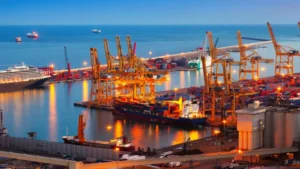
For a marine terminal in the UAE, the engineer specified LSAW1 for the main berth piles. The wall thickness was 30 mm, which SSAW could not produce. The longitudinal weld provided better resistance to the dynamic loads from ship berthing and wave action.
SSAW pipe
SSAW (Spiral Submerged Arc Welded) pipe1 is a cost-effective option for marine projects where wall thickness requirements are moderate and driving conditions are not severe.
SSAW pipe is manufactured by forming steel coil into a spiral and welding the seam using submerged arc welding. It is available in diameters from 16 inches to over 120 inches, with wall thicknesses up to 25 mm. SSAW pipes are economical and can be produced in very long lengths, reducing the number of field welds.
](https://cnsteelplant.com/wp-content/uploads/2026/03/Article-application-4-1.webp)
SSAW Pipe for Marine Applications
Let me explain where SSAW pipes work well in marine environments.
Advantages of SSAW for Marine
- Cost effective2: Lower material cost than LSAW for the same diameter and thickness
- Long lengths3: Can be produced in continuous lengths up to 64 m, reducing field splices
- Large diameters: Available in diameters over 100 inches, useful for large-diameter piles
- Good availability: Widely produced in Asia, Europe, and North America
Limitations of SSAW for Marine
- Limited wall thickness4: Typically limited to 25 mm, which may not provide enough corrosion allowance for long-life marine structures
- Weld fatigue: The spiral weld has lower fatigue resistance than a longitudinal weld under cyclic loading
- Driving stress: The weld at an angle can be more susceptible to damage during hard driving
- Inspection complexity: Spiral welds are more difficult to inspect with automated ultrasonic testing
Typical Marine Applications for SSAW
- Secondary piles in port structures (access trestles, dolphins)
- Moderate depth piles in soft soils
- Temporary works and cofferdams
- Piles in non-critical areas
SSAW Pipe Specifications
| Property | Range |
|---|---|
| Diameter | 16" to 120"+ (406 mm to 3,048 mm) |
| Wall thickness | 4 mm to 25 mm typical |
| Length | Up to 64 m continuous |
| Steel grades | ASTM A252 Grades 2 and 3, API 5L |
| Standards | ASTM A252, EN 10219, API 5L |
My Experience
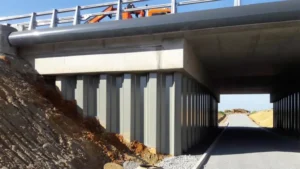
For a port expansion project, we used SSAW pipes for the access trestle piles. The water depth was moderate (8 meters), and the soil was soft sand. The SSAW pipes drove easily and cost 25% less than LSAW. For the main berth piles, we used LSAW.
LSAW pipe
LSAW (Longitudinal Submerged Arc Welded) pipe is the preferred choice for critical marine applications where reliability, fatigue resistance1, and thick walls are required.
LSAW pipe is manufactured from steel plates formed into a cylinder with a single longitudinal weld. The weld is made from both sides (DSAW) for full penetration. LSAW pipes are available in diameters from 16 inches to 60 inches, with wall thicknesses up to 50 mm or more. They are the standard for offshore platforms, deepwater ports, and heavy-duty piling.
](https://cnsteelplant.com/wp-content/uploads/2026/03/Article-Application-Port-3.webp)
LSAW Pipe for Marine Applications
Let me explain why LSAW is the gold standard for marine piles.
Advantages of LSAW for Marine
- Thick walls: Can be manufactured with wall thicknesses up to 50 mm or more, providing corrosion allowance2 for 50+ year service life
- Superior fatigue resistance1: Longitudinal weld performs better under cyclic loading from waves and ship impacts
- Better driving performance: Weld aligned with driving stress direction, reducing risk of failure
- Excellent dimensional precision3: Mechanically expanded pipes have tight tolerances
- Easier inspection: Straight welds are easier to inspect with automated ultrasonic testing
- Higher strength grades: Available in high-strength steels4 up to X80 and beyond
Limitations of LSAW for Marine
- Higher cost: Typically 30-50% more expensive than SSAW for the same diameter and thickness
- Length limitations: Standard lengths are 12-18 meters; longer lengths require special ordering
- Diameter limitations: Typically limited to 60 inches; larger diameters are possible but require wider plates
Typical Marine Applications for LSAW
- Main piles for deepwater ports and terminals
- Offshore platform jacket piles
- Bridge foundations in marine environments
- Piles for heavy crane loads
- Piles requiring high corrosion allowance2
LSAW Pipe Specifications
| Property | Range |
|---|---|
| Diameter | 16" to 60" (406 mm to 1,524 mm) |
| Wall thickness | 6 mm to 50 mm+ |
| Length | 12-18 m typical, up to 40 m available |
| Steel grades | ASTM A252 Grade 3, ASTM A572, API 5L X42-X80 |
| Standards | ASTM A252, API 5L, DNV-OS-F101 |
My Experience
For a deepwater port project, we supplied LSAW pipes with 30 mm wall thickness and 24-inch diameter. The piles were driven to 40 meters depth through dense sand. The longitudinal welds held up perfectly under the hard driving conditions. The client required LSAW because of the 50-year design life and the high wave loads at the site.
LSAW Pipe manufacturing process
The LSAW manufacturing process is critical to the pipe’s quality and performance in marine applications.
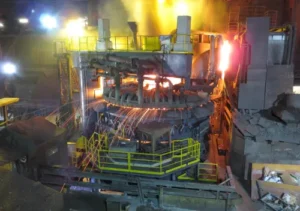
LSAW pipes1 are manufactured through a multi-step process: plate preparation, forming (UOE or JCOE), welding (DSAW), expansion, and inspection. The UOE process2 (U-ing, O-ing, Expanding) is the most common for large-diameter pipes. The double submerged arc welding (DSAW) ensures full penetration welds with high integrity.
](https://cnsteelplant.com/wp-content/uploads/2026/03/Article-Application-Port-4.webp)
Step-by-Step Manufacturing Process
Let me walk you through the LSAW manufacturing process.
Step 1: Plate Preparation
Steel plates are inspected for surface defects and dimensions. The edges are beveled to prepare for welding. The plates are cut to the exact width required for the pipe diameter.
Step 2: Forming (UOE Process)
The UOE process2 has three stages:
- U-ing: The plate is pressed into a U shape using a U-press
- O-ing: The U shape is pressed into an O shape using an O-press
- Expanding: The pipe is mechanically expanded to achieve precise diameter and reduce residual stresses
Alternative forming methods include JCOE (J-ing, C-ing, O-ing, Expanding) for thicker walls and press bending for smaller diameters.
Step 3: Welding (DSAW)
Double Submerged Arc Welding3 is used:
- Inside weld: First pass from inside the pipe
- Outside weld: Second pass from outside
- The weld is fully penetrated through the wall thickness
- Submerged arc process uses granular flux to protect the weld
Step 4: Inspection
The weld is inspected using:
- Visual inspection of weld profile
- Ultrasonic testing4 (UT) for internal defects
- Radiographic testing (RT) for critical applications
- Mechanical testing of weld coupons
Step 5: Finishing
- Pipe ends are beveled for field welding
- Hydrostatic testing for pressure applications (if required)
- Coating application (if specified)
- Marking and documentation
Why This Matters for Marine Projects
- The mechanical expansion step ensures precise dimensions, which helps with pile driving
- DSAW ensures full penetration welds that can withstand driving stresses
- Ultrasonic inspection detects any weld defects before the pipe leaves the mill
My Experience
For a marine project in the Middle East, we visited the mill to witness the LSAW manufacturing process. The UOE forming produced pipes with perfect roundness. The DSAW welds passed ultrasonic inspection with no defects. The client was confident in the product quality.
Conclusion
For marine projects, LSAW pipes1 are preferred for critical applications due to thicker walls, better fatigue resistance, and reliable weld performance. SSAW pipes2 are cost-effective for secondary structures and moderate conditions. Choose based on wall thickness requirements and driving conditions.
-
Explore this link to understand why LSAW pipes are crucial for marine applications, focusing on their durability and performance. ↩ ↩ ↩ ↩ ↩ ↩ ↩ ↩ ↩ ↩ ↩ ↩ ↩ ↩ ↩ ↩ ↩
-
Discover the cost-effectiveness and suitability of SSAW pipes for various conditions, making them a smart choice for secondary structures. ↩ ↩ ↩ ↩ ↩ ↩ ↩ ↩ ↩ ↩ ↩ ↩ ↩ ↩ ↩ ↩
-
Learn about DSAW’s advantages in pipe manufacturing and how it ensures weld integrity. ↩ ↩ ↩ ↩
-
Discover the importance of ultrasonic testing in ensuring the quality and safety of welded pipes. ↩ ↩ ↩ ↩