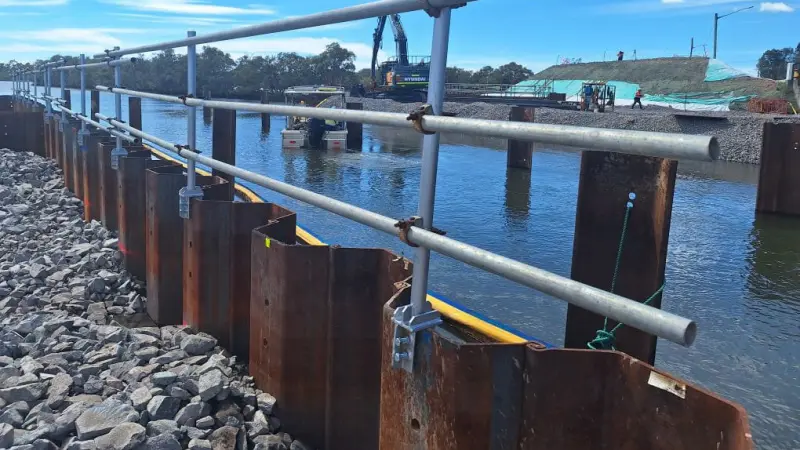
Water finds every weakness in a retaining wall. One leaking interlock can flood a cofferdam, delay a project, and cost you money every single day.
Interlocked steel sheet piles are water-resistant, not automatically watertight. The interlocks slow water down, but only good driving practice, sealing systems, and quality control make a wall truly hold water back.
I have supplied interlocked steel sheet piles to contractors in the Middle East, Australia, and Africa for years. Almost every buyer asks me the same question at some point: “Will this wall actually keep the water out?” It is a fair question. In this article, I will answer it the way I answer my customers, based on what I have seen on real sites, not just in catalogs.
How Do Interlocked Joints Actually Hold Back Water?
Unsealed interlocks leak. If you do not understand how the joint works, you will pick the wrong pile and pay for it during dewatering.
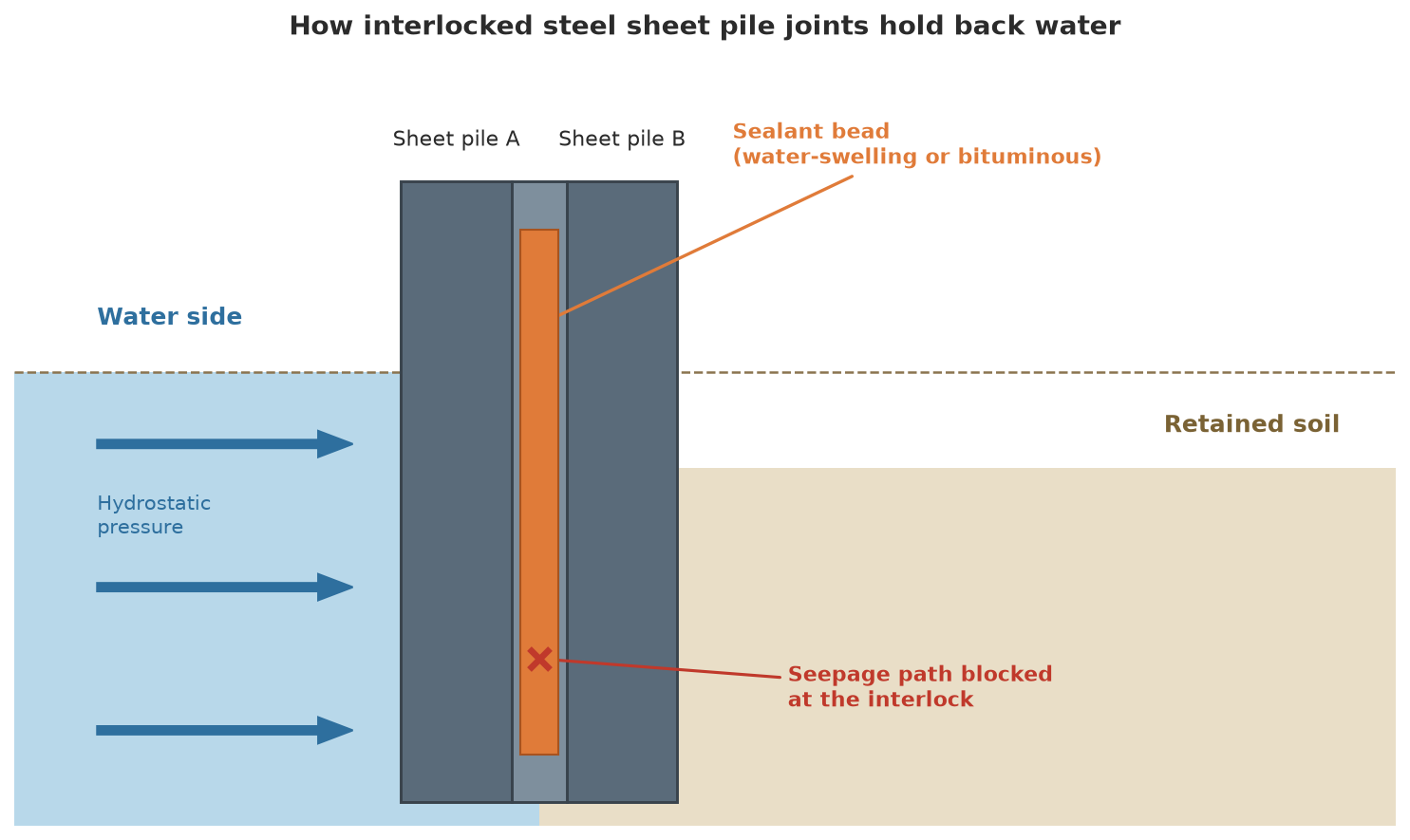
Interlocks work in two ways. The clutch shape creates a long, narrow steel path that water struggles to cross, and the driving process tightens the joint so soil and sealant can close the remaining gaps.
The Three Lines of Defense in Every Joint
When I explain interlocked steel sheet piles to new buyers, I start with a simple picture. Water wants to cross your wall. Between every two piles sits an interlock, and that interlock gives you three layers of protection.
The first layer is geometry. A Larssen interlock is a thumb-and-crimp shape. After driving, the two piles grip each other along a path that is long and thin. Water can still move through the small void inside the clutch, but the path is narrow. A narrow path means high resistance, and high resistance means low flow.
The second layer is driving effect. As piles are driven, the interlocks tighten. In clay and silt, the soil itself gets dragged into the void and forms a natural plug. On many projects I have visited, this plug alone reduced seepage to a few drips. That is why an unsealed wall in tight clay can look almost dry, while the same wall in loose sand weeps badly.
The third layer is whatever sealing system you add. This is the part you control before the piles leave the yard, and it is where most waterproof performance is won or lost. If you want the full comparison of clutch shapes, I covered it in my article on steel sheet pile interlock types and their performance advantages.
| Line of defense | What it does | How much it helps |
|---|---|---|
| Interlock geometry | Creates a long, narrow path for water | Slows seepage in every soil |
| Driving effect and soil plug | Tightens the joint and fills the void | Very effective in clay and silt |
| Added sealant system | Fills or blocks the remaining void | Controls the result in sand and gravel |
The table above is the core of the whole topic. Every watertight wall I have supplied used all three lines together. When a contractor tells me his wall leaked, the cause is almost always a missing or failed third layer, not a bad pile.
One detail buyers often miss is the difference between hot rolled and cold formed piles. Hot rolled clutches are formed under high pressure in the mill, so the thumb-and-crimp fit is consistent along the whole length. Cold formed clutches are looser by design, which makes them easier to drive but gives water a wider path. Neither one is wrong. But when a spec sheet says “watertight”, I always ask which rolling process the piles use. For a project with a real water head, I usually point the customer to hot rolled. I also remind them that corner piles and special junction pieces come from the same rolling logic, so ordering corners from the same mill avoids mixed clutches on the most leak-prone spots of the wall.
How Much Water Seeps Through an Unsealed Wall?
Nobody can give you one number. The honest answer depends on your soil, your wall, and your driving quality, and the difference is huge.
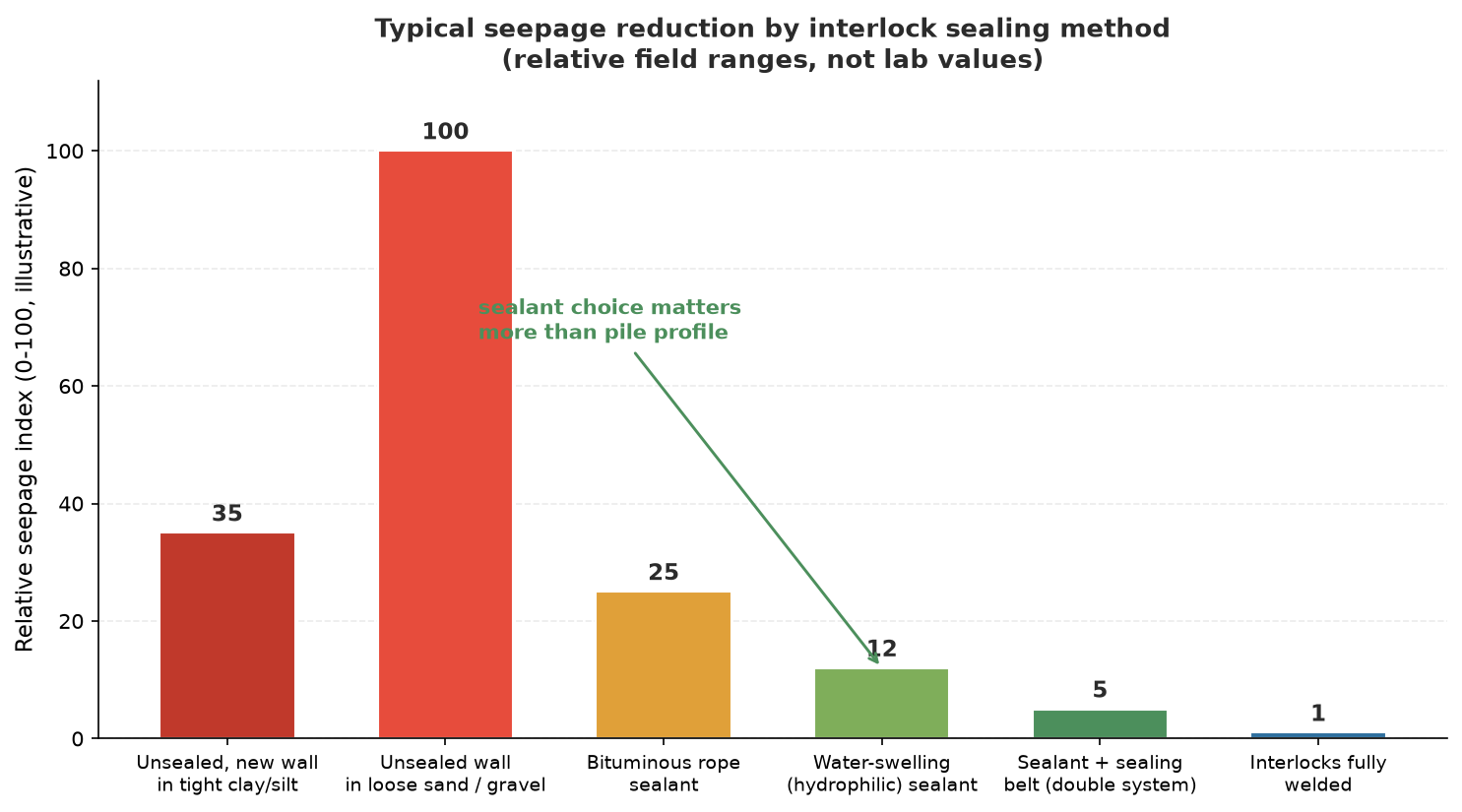
An unsealed wall in tight clay may weep only a few liters per hour. The same unsealed wall in loose sand or gravel can pass hundreds of liters, which is why soil conditions decide the sealing budget before anything else.
Why Soil Conditions Set the Seepage Rate
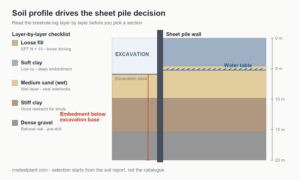
I like to give my customers a relative picture instead of a fake precise number. Think of seepage through a wall as water looking for openings. In clay, the openings are tiny and the soil behind the wall is nearly impermeable, so there is little water moving toward the wall in the first place. In loose sand or gravel below the water table, you have both an open interlock void and a lot of water under pressure pushing through it. That combination is what floods pits.
Driving quality is the second big factor. If the piles drift out of line, the interlocks stretch and open. I wrote before about how to keep sheet piles vertical during driving, because a straight wall is a tighter wall. Stretched or damaged clutches can leak badly even when the sheet piles themselves are perfect.
Corner details matter too. Most leaks I hear about are not in the middle of the wall. They are at corners, at the junction with old structures, or where a pile had to be re-driven after striking an obstruction. These are exactly the spots my article on common challenges in steel sheet pile construction deals with.
| Condition | Typical behavior of an unsealed wall |
|---|---|
| Clay or silt behind the wall | Soil plugs the clutch; minor weeping only |
| Dense sand | Slow seepage; usually manageable with pumps |
| Loose sand or gravel | Heavy seepage; sealing is normally required |
| Corners and re-driven piles | Highest leak risk on almost every project |
My advice is simple. Before you price a project, look at the soil report. If you see loose sand or gravel below the water table, budget for sealing from day one. Trying to fix a badly leaking wall after driving is far more expensive than sealing it properly before installation.
I also tell buyers to plan their dewatering setup honestly. Even a good wall will pass some water, so your pumps should handle a reasonable flow without drama. If the flow is higher than expected, the fix is usually local. A short curtain of bentonite or cement grouting along the leaking stretch, or a bead of sealant injected into the clutch from the inside, closes most small paths in a day. What you should never do is ignore it. A steady stream through an interlock carries soil particles with it, and once the soil behind the wall starts to wash out, you get voids, settlement, and a much bigger repair bill. I have seen a small drip turn into a sinkhole within a week on a sandy site, simply because the crew waited for “the silt to seal it naturally”.
Which Sealing Methods Work Best on Real Sites?
There are several ways to seal an interlock, and suppliers sell them with very different promises. On site, the differences show up fast.
Water-swelling sealants are the most practical choice for most projects. Bituminous rope is cheap but messy, double systems suit critical walls, and full welding is reserved for structures that must be completely watertight.
Choosing a Sealant for Your Project
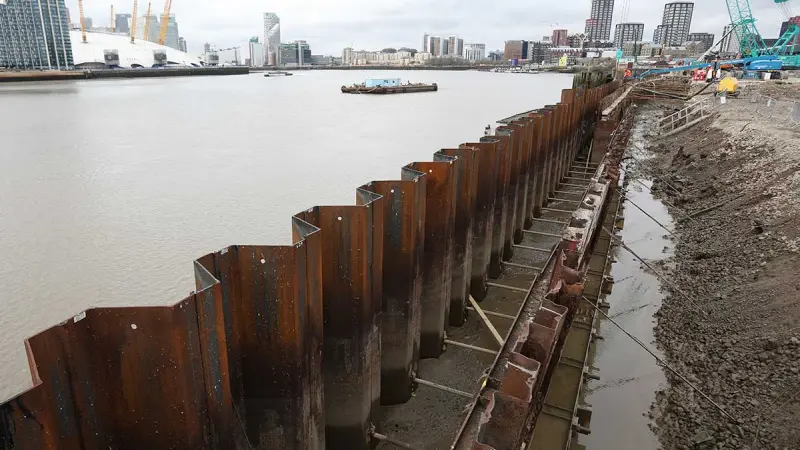
The cheapest option is a bituminous rope or mastic, which workers lay into the interlock before driving. I have seen it work fine on riverbank walls. It is not expensive, and it tolerates rough handling. The downside is mess and inconsistent placement, because a fast crew will squeeze the rope irregularly and leave gaps. For general marine engineering applications, it is a reasonable baseline.
Water-swelling sealants are my usual recommendation. They are applied as a bead, and once water reaches them they expand and fill the void. They cost more than rope, but they are forgiving. Even if the interlock opens slightly during driving, the expanding bead follows it. For cofferdams and basements, this is the sweet spot between cost and performance.
For critical structures, contractors combine a sealant bead with a fabric sealing belt glued over the interlock, or they weld the clutches. A treatment plant basin I supplied in the Middle East used a double system, because any leak there would contaminate the surrounding ground. Fully welding every interlock gives the driest result, but it is slow, it needs skilled welders, and it removes the possibility of extraction and reuse. I explain that trade-off further in my article on improving the waterproofing performance of sheet pile walls.
| Sealing method | Relative cost | Best use case |
|---|---|---|
| Bituminous rope / mastic | Low | Riverbank walls, moderate water heads |
| Water-swelling sealant bead | Medium | Cofferdams, basements, standard marine walls |
| Sealant + sealing belt (double) | High | Critical walls, contaminated sites |
| Fully welded interlocks | Highest | Tanks, basins, permanent watertight structures |
One more tip from the field. Sealant goes on before driving, at the factory or on site, pile by pile. Plan the sequence so sealed piles are installed the same day. Leaving pre-sealed piles in the sun for weeks can dry out the bead, and then the money you spent on it is wasted.
A real example shows how this plays out. A contractor on a Southeast Asian riverbank project used our hot rolled U piles with a simple bituminous rope in the interlocks. The water head was modest and the soil was silty, so the budget option was right for the site. The wall went in with a vibratory hammer, the clutch plugs formed quickly, and the flood wall has stayed serviceable for years. On a deeper basement in the same soil, that same rope would not have been enough. Matching the sealing method to the water head, not to habit, is the whole game.
What Should You Check Before Ordering for a Watertight Project?
If waterproof performance is your priority, the purchase order is where you lock it in. What you ask for at the factory decides what arrives on site.
Check four things before ordering: interlock tolerance and condition, pile straightness, the sealing system specification, and corrosion protection. If a supplier cannot document these, your wall will show it.
A Simple Pre-Order Checklist from a Supplier
First, ask about interlock tolerance. Hot rolled piles have a tighter, more robust clutch than most cold formed profiles, which matters when you need water resistance. Second, ask how the piles will be handled and stored. Clutches damaged by rough lifting or by dragging piles across the yard will leak no matter what sealant you buy later.
Third, confirm the sealing system in writing: which product, where it is applied, and who applies it. Fourth, think about the life of the wall, not just day one. Corrosion and water tightness travel together, because a wall that rusts through will eventually leak through corrosion holes. I cover that link in my articles on corrosion resistance solutions and the service life and durability of steel sheet piling systems.
| Check point | What to require from your supplier |
|---|---|
| Interlock tolerance | Documented clutch dimensions and rolling standard |
| Handling and storage | Controlled stacking, lifting, no clutch dragging |
| Sealing system | Product name, application location, application method |
| Corrosion protection | Steel grade, coating or allowance for the design life |
At our factory in Liaocheng, we ship OEM and wholesale orders with SGS inspection support, and for watertight projects we always agree on the interlock and sealant checks before production starts. It costs nothing extra at this stage, and it is far cheaper than a claim after the wall is in the ground.
Finally, anchor your order to a standard. Hot rolled piles to EN 10248 or an equivalent grade give you a documented clutch geometry, and cold formed piles to EN 10249 do the same for their class. When the standard is written into the purchase order, there is no argument at inspection time. For export shipments I also ask customers to decide the inspection stage in advance: checking clutch samples at the mill is quick, but finding a stretched interlock after the piles arrive in a container on the other side of the world is painful for everyone. A simple witness point at pre-shipment keeps the whole chain honest.
My Take
After years of supplying projects across the Middle East, Australia, and Africa, here is my honest view. Most “waterproofing problems” are actually planning problems. The contractor who budgets for sealing and driving control at the start spends a few percent more. The one who hopes the interlocks will do it alone ends up paying for extra pumps, grouting, and delays. Water is patient. It will test every shortcut you take.
My second point is about honesty in specifications. I would rather tell a customer “this wall will weep a little, here is the pump size you need” than sell him a fantasy of a perfectly dry pit. Every professional I work with respects a straight answer, and it is why so many of them come back for the next tender. A supplier who hides the seepage question is not saving the project; he is just moving the cost to someone else’s side of the contract.
Conclusion
Interlocked steel sheet piles hold water back well when geometry, driving quality, and sealing work together. Define those three early, and your wall will stay dry.