Selecting the wrong steel sheet pile size can increase project costs and create installation problems. Many buyers need clear size information before ordering.
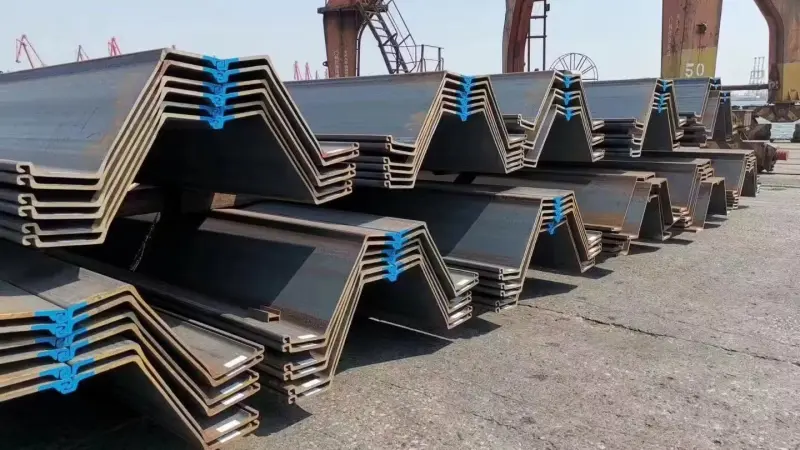
Steel sheet piles come in different sizes, thicknesses, lengths, and profiles. The most common types include U-type, Z-type, and straight web sheet piles, which are selected according to project requirements.
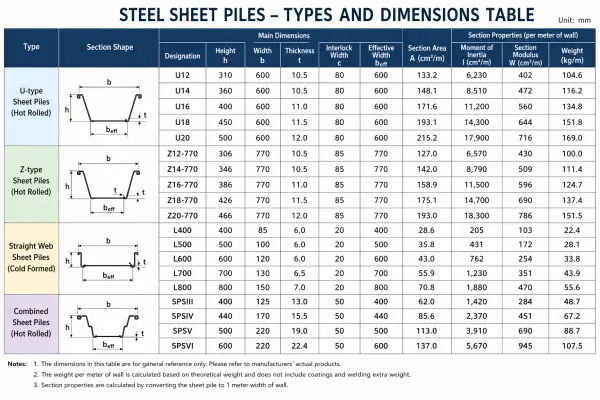
I have worked with many international contractors, civil engineering companies, and steel distributors who purchase steel sheet piles for construction projects. One of the most common questions I receive is about standard sizes and profiles.
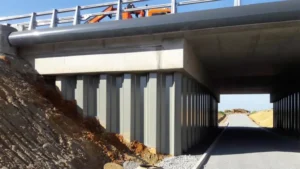
Many customers know that steel sheet piles are used for retaining walls, excavation support, bridge foundations, and marine construction. However, they are often unsure about which size, thickness, and profile they should choose.
I understand this concern because steel sheet piles are not simple steel products. Their dimensions directly affect structural performance, installation efficiency, and project safety.
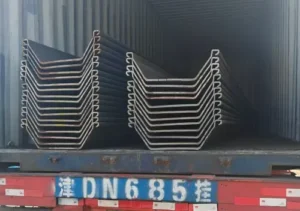
My company supplies different types of steel sheet piles, including U-shaped, Z-shaped, Ω-shaped, flat plate type, disc type, cap type, and straight flange type metal sheet piles. We cooperate with certified mills and provide OEM production, SGS inspection support, and flexible MOQ solutions for global buyers.
In my opinion, choosing the correct sheet pile size should start with understanding the project conditions. The longest or thickest sheet pile is not always the best choice. Engineers need to consider soil pressure, wall height, water conditions, and required service life.
What are the standard sizes of sheet piles?
The standard sizes of steel sheet piles depend on the profile type, thickness, width, and length. Common sheet pile dimensions include widths from around 400 mm to 800 mm, thicknesses from 6 mm to more than 20 mm, and lengths from several meters to over 30 meters.
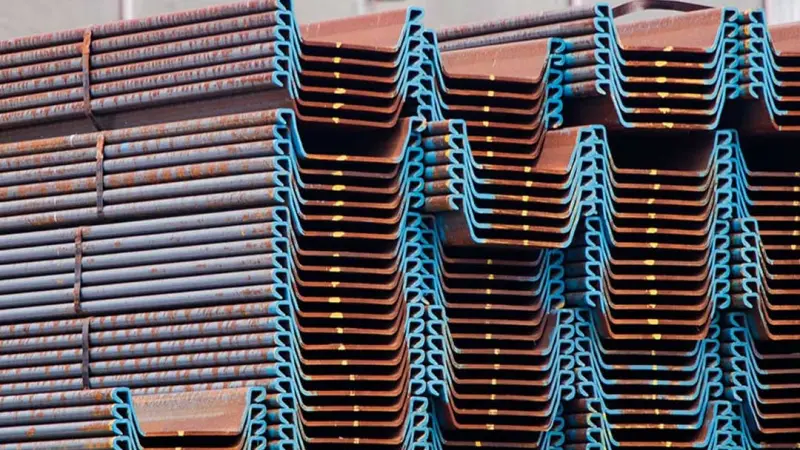
When customers ask me about standard sheet pile sizes, I usually explain that there is no single universal size for every project.
Steel sheet piles are designed in different profiles because construction conditions are different. A river protection project may require different dimensions compared with a deep excavation project or a port construction project.
The main size parameters include:
- Width
- Height
- Thickness
- Length
- Weight per meter
- Section modulus
- Moment of inertia
These parameters determine how the sheet pile performs under pressure.
According to steel structural design principles, engineers need to evaluate structural capacity before selecting steel sections. Sheet piles work as retaining structures, so their dimensions must match the expected loads.
Common Steel Sheet Pile Size Parameters
| Parameter | Common Range | Importance |
|---|---|---|
| Width | 400 mm – 800 mm | Determines installation efficiency |
| Height | 100 mm – 500 mm | Affects wall depth and strength |
| Thickness | 6 mm – 25 mm | Influences durability and load capacity |
| Length | 6 m – 30 m or more | Depends on soil and excavation depth |
| Weight | 20 kg/m² – 200 kg/m² | Affects handling and transportation |
The width of a sheet pile affects how many piles are needed for a project.
A wider sheet pile can reduce the number of connections required, which may improve installation efficiency.
The thickness affects the strength and service life of the retaining wall. Thicker sheet piles usually provide higher resistance against bending forces and soil pressure.
The length depends on the project depth and ground conditions. Engineers usually calculate the required embedment depth before selecting the final sheet pile length.
Standard Sizes of U-Type Steel Sheet Piles
U-type steel sheet piles are one of the most widely used profiles in construction.
The U-shaped design provides balanced structural performance and easy installation.
| U-Type Sheet Pile Parameter | Typical Range |
|---|---|
| Width | 400 mm – 750 mm |
| Height | 100 mm – 400 mm |
| Thickness | 8 mm – 20 mm |
| Length | 6 m – 30 m |
| Application | Retaining walls, river protection, excavation support |
U-type sheet piles are often selected for projects that require reliable performance and reasonable cost.
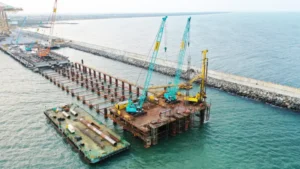
I supplied hot rolled U type steel sheet piles for a riverbank protection project in Southeast Asia. The customer needed a retaining structure that could prevent soil erosion and improve flood control.
The contractor installed the sheet piles along the riverbank to create a continuous wall system. The strong interlocking connection between each pile improved stability and water control.
The installation team used vibratory piling equipment, which helped complete the project efficiently.
This project showed me that the correct sheet pile size is more important than simply choosing a larger product. The customer needed a profile that matched the river conditions, installation method, and project requirements.
Standard Sizes of Z-Type Steel Sheet Piles
Z-type steel sheet piles are commonly used for projects that require higher bending resistance.
Their Z-shaped profile improves material efficiency and provides strong structural performance.
| Z-Type Sheet Pile Parameter | Typical Range |
|---|---|
| Width | 400 mm – 800 mm |
| Height | 150 mm – 450 mm |
| Thickness | 8 mm – 25 mm |
| Length | 6 m – 30 m or more |
| Application | Ports, marine construction, deep excavation |
Z-type sheet piles are often used in larger infrastructure projects.
The profile design provides higher section modulus, which means the pile can resist greater bending forces.
For projects with high lateral loads, such as marine structures and deep excavation systems, engineers often prefer Z-type sheet piles.
However, I always remind customers that higher strength does not automatically mean better performance.
If a project only requires a medium-strength retaining wall, choosing a very large Z-type profile may increase unnecessary costs.
The best choice depends on engineering calculations and project conditions.
How Do Engineers Select Sheet Pile Sizes?
Engineers usually consider several factors before selecting sheet pile dimensions.
| Selection Factor | Influence |
|---|---|
| Soil Type | Determines required strength |
| Excavation Depth | Affects pile length |
| Water Pressure | Influences wall design |
| Load Conditions | Determines thickness |
| Service Life | Affects material selection |
Soil condition is one of the most important factors.
Soft soil may require deeper embedment and stronger profiles. Hard soil may require different installation methods.
Water conditions are also important.
Projects near rivers, ports, and coastal areas require special consideration because water pressure and corrosion can affect the structure.
I often ask customers to provide project drawings, soil information, required dimensions, and installation methods before recommending products.
This information helps me provide a more suitable solution instead of only offering standard products.
My experience shows that successful steel sheet pile projects usually begin with correct size selection. The right dimensions help contractors improve installation efficiency and achieve long-term structural stability.
What are the standard sizes of steel sheets?
Steel sheet sizes are different from steel sheet pile sizes. Steel sheets are flat steel products, while steel sheet piles are specially designed profiles with interlocking systems for construction applications.
Standard steel sheet sizes usually depend on thickness, width, and length. Common dimensions are selected according to manufacturing standards, transportation conditions, and project requirements.
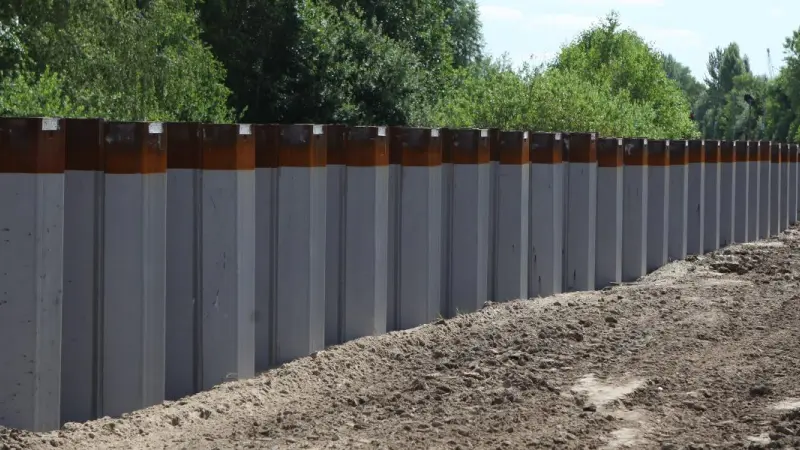
When customers ask me about steel sheet sizes, I first confirm whether they mean flat steel sheets or steel sheet piles. These two products have similar names, but they serve different purposes.
Flat steel sheets are mainly used for fabrication, machinery, structures, and industrial applications. Steel sheet piles are used for retaining walls, excavation support, and water control structures.
The size selection process is different for each product.
For flat steel sheets, customers usually focus on thickness, width, length, surface treatment, and steel grade. For steel sheet piles, engineers focus more on profile shape, bending resistance, interlocking performance, and embedment depth.
According to steel material standards, steel dimensions need to meet specific manufacturing requirements to ensure consistent quality.
Common Steel Sheet Dimensions
| Steel Sheet Parameter | Common Range |
|---|---|
| Thickness | 0.5 mm – 100 mm or more |
| Width | 600 mm – 2500 mm |
| Length | 1000 mm – 12000 mm |
| Material Grade | Carbon steel, alloy steel, stainless steel |
| Surface Treatment | Coating, galvanizing, polishing |
Thickness is one of the most important factors for steel sheet selection.
Thin steel sheets are often used for lightweight applications, while thick steel plates are used for heavy structures and industrial projects.
Width and length also affect transportation and processing.
For example, large steel sheets can reduce welding work during fabrication, but they may require special transportation equipment.
Difference Between Steel Sheets and Steel Sheet Piles
Many new buyers confuse steel sheets with steel sheet piles because the names are similar.
However, their structures and applications are different.
| Comparison | Steel Sheet | Steel Sheet Pile |
|---|---|---|
| Shape | Flat surface | Interlocking profile |
| Main Purpose | Fabrication and manufacturing | Retaining and foundation structures |
| Connection Method | Welding or bolting | Mechanical interlocking |
| Common Applications | Machinery, buildings, equipment | Excavation, marine projects, flood control |
Steel sheet piles are not simply thicker steel sheets.
The profile design gives them special structural advantages.
The interlocking system allows multiple piles to connect and form a continuous wall. This feature is important for retaining soil and controlling water movement.
I often explain to customers that selecting sheet piles requires more engineering consideration than selecting flat steel products.
The customer needs to consider the entire wall system, not only individual pile dimensions.
How Do Steel Sheet Pile Dimensions Affect Performance?
The dimensions of steel sheet piles directly affect their structural performance.
A larger profile usually provides higher resistance against bending and external pressure.
| Dimension Factor | Effect on Performance |
|---|---|
| Thickness | Improves strength and durability |
| Height | Increases structural capacity |
| Width | Reduces installation quantity |
| Length | Determines embedment capability |
For retaining wall projects, engineers often calculate the required bending moment before selecting the sheet pile profile.
The required section modulus helps determine whether a sheet pile can resist the expected loads.
A sheet pile with insufficient strength may deform under soil pressure.
A sheet pile with excessive strength may increase project costs unnecessarily.
I believe the best solution is always a balanced solution.
The customer should select a product that provides enough performance without creating unnecessary expenses.
Common Length Options for Steel Sheet Piles
Steel sheet pile length depends on project depth and soil conditions.
Manufacturers can usually supply different lengths according to customer requirements.
| Application | Common Length Range |
|---|---|
| Small Excavation | 6 m – 12 m |
| Retaining Walls | 12 m – 20 m |
| Marine Projects | 15 m – 30 m |
| Deep Foundation Support | 20 m or longer |
Longer sheet piles are often required for projects with deeper excavation or unstable soil.
For example, port construction projects often require long sheet piles because the retaining structure must extend deep into the ground.
Riverbank protection projects also require suitable pile length because the structure needs to resist water pressure and soil movement.
In our Southeast Asia riverbank protection project, the customer selected hot rolled U type steel sheet piles with suitable length and thickness according to the river conditions.
The contractor installed the piles along the river edge to create a stable retaining system.
The correct dimensions helped the project achieve good installation efficiency and long-term protection.
International Standards for Steel Sheet Pile Sizes
Different countries and regions may follow different steel sheet pile standards.
Common standards include European, American, and Japanese specifications.
| Standard | Application |
|---|---|
| EN 10248 | Hot rolled steel sheet piles |
| ASTM A6 | General requirements for structural steel |
| JIS Standards | Japanese steel products |
Standards help buyers compare product specifications and quality requirements.
For international projects, customers often request specific standards because local engineers need to approve the materials.
My company works with customers from Iraq, Iran, Jordan, UAE, Saudi Arabia, Bahrain, Kuwait, Pakistan, Australia, Africa, and other regions.
Different markets may have different requirements for steel sheet pile dimensions and quality inspection.
I always recommend confirming the required standards before production.
This step helps avoid problems during installation and project approval.
How Do I Recommend Steel Sheet Sizes to Customers?
When customers contact me, I usually collect several important details first:
- Project application
- Required wall height
- Soil condition
- Water environment
- Installation method
- Required standard
- Expected service life
These details help me understand the real project needs.
I do not believe that choosing the biggest size always creates the best result.
A suitable sheet pile profile can provide better cost control and construction efficiency.
For example, a river protection project may use U-type sheet piles because they provide reliable performance and good economy.
A large marine project may require Z-type sheet piles because they provide higher bending resistance.
My experience tells me that professional advice is valuable during material selection.
Steel sheet pile sizes are not only numbers on a specification sheet. They represent the relationship between product design and engineering performance.
What are the key differences between Type 2 and Type 4 sheet piles?
Type 2 and Type 4 sheet piles are two common categories used in steel sheet pile applications. The main differences are their dimensions, weight, structural capacity, and suitable project applications.
Type 4 sheet piles are generally larger and stronger than Type 2 sheet piles. They provide higher bending resistance and are often selected for projects with heavier loads, deeper excavation, and more demanding ground conditions.

When customers ask me about Type 2 and Type 4 sheet piles, I explain that the number does not simply represent the quality level. It represents different profile specifications.
Many buyers think Type 4 must always be better because it is a larger number. However, the correct choice depends on project requirements.
A smaller sheet pile can perform well if the project load is limited. A larger sheet pile may be necessary when the structure faces higher pressure.
The selection should consider soil conditions, wall height, water pressure, and structural requirements.
Basic Comparison Between Type 2 and Type 4 Sheet Piles
| Feature | Type 2 Sheet Piles | Type 4 Sheet Piles |
|---|---|---|
| Profile Size | Medium | Large |
| Weight | Lower | Higher |
| Bending Resistance | Moderate | Higher |
| Installation Difficulty | Easier | Requires stronger equipment |
| Material Cost | Lower | Higher |
| Application | General retaining walls | Heavy engineering projects |
Type 2 sheet piles are commonly used for general construction applications.
They are suitable for temporary retaining walls, smaller excavation projects, and projects where extreme structural strength is not required.
Type 4 sheet piles provide higher structural performance.
They are often used in marine construction, deep excavation support, bridge foundations, and large retaining structures.
Difference in Structural Performance
The biggest difference between Type 2 and Type 4 sheet piles is their structural capacity.
The profile design affects the section modulus, which is an important factor for bending resistance.
| Structural Factor | Type 2 | Type 4 |
|---|---|---|
| Section Modulus | Lower | Higher |
| Moment Resistance | Moderate | Strong |
| Soil Pressure Resistance | Suitable for normal loads | Suitable for heavy loads |
When soil pressure increases, the retaining wall needs stronger resistance against bending.
A stronger profile can reduce deformation and improve long-term stability.
For example, deep excavation projects near buildings often require stronger sheet piles because the structure must control soil movement carefully.
Marine projects also require high-performance sheet piles because water pressure creates additional forces on the wall.
Type 2 Sheet Pile Applications
Type 2 sheet piles are widely used because they provide a good balance between performance and cost.
| Application | Reason |
|---|---|
| Temporary Excavation | Cost-effective solution |
| Small Retaining Walls | Sufficient structural strength |
| River Protection | Suitable for moderate conditions |
| Construction Support | Easy installation |
Many contractors choose Type 2 sheet piles when the project does not require extremely high load capacity.
For example, a small riverbank protection project may not need the largest sheet pile profile.
The contractor needs a solution that provides reliable protection while maintaining reasonable costs.
I often help customers evaluate whether a medium profile is enough for their application.
Choosing a larger sheet pile than necessary may increase material costs and transportation expenses.
Type 4 Sheet Pile Applications
Type 4 sheet piles are designed for more demanding projects.
They provide stronger resistance against bending and external forces.
| Application | Reason |
|---|---|
| Deep Excavation | Handles higher soil pressure |
| Port Construction | Resists water and wave forces |
| Bridge Foundations | Supports complex loads |
| Permanent Retaining Walls | Provides long-term stability |
For large infrastructure projects, engineers often prefer stronger profiles because the structure must operate safely for many years.
My company supplies steel sheet piles for contractors and distributors working on infrastructure projects around the world.
Many customers involved in marine construction or large excavation projects require high-performance sheet piles because failure risks are expensive.
Installation Differences Between Type 2 and Type 4
The installation process can also be different because the two profiles have different weights and dimensions.
| Installation Factor | Type 2 | Type 4 |
|---|---|---|
| Equipment Requirement | Standard equipment | More powerful equipment |
| Handling | Easier | Requires more planning |
| Driving Resistance | Lower | Higher |
Type 4 sheet piles usually require stronger piling equipment because of their larger size and higher weight.
The contractor needs to select suitable vibratory hammers or impact equipment.
In our Southeast Asia riverbank protection project, the contractor used vibratory piling equipment to install hot rolled U type steel sheet piles.
The equipment selection helped the installation team maintain efficiency and complete the project according to schedule.
This experience showed me that product selection and installation planning should always work together.
How Should Buyers Choose Between Type 2 and Type 4 Sheet Piles?
I usually recommend that buyers consider the following points:
| Consideration | Question |
|---|---|
| Project Type | Is it temporary or permanent? |
| Load Condition | How much pressure will the wall receive? |
| Environment | Is it marine, river, or land application? |
| Budget | What is the balance between cost and performance? |
The right choice depends on engineering needs.
I do not recommend Type 4 sheet piles simply because they are stronger. A suitable Type 2 sheet pile may provide enough performance for many projects.
However, I also do not recommend reducing material strength when the project requires high safety standards.
The correct solution should balance safety, cost, and construction efficiency.
What are the different types of sheet piles?
Steel sheet piles are available in different profiles and designs. Each type has specific advantages and is selected according to project conditions.
The main types include U-type, Z-type, straight web, Ω-shaped, flat plate type, disc type, cap type, and straight flange sheet piles.
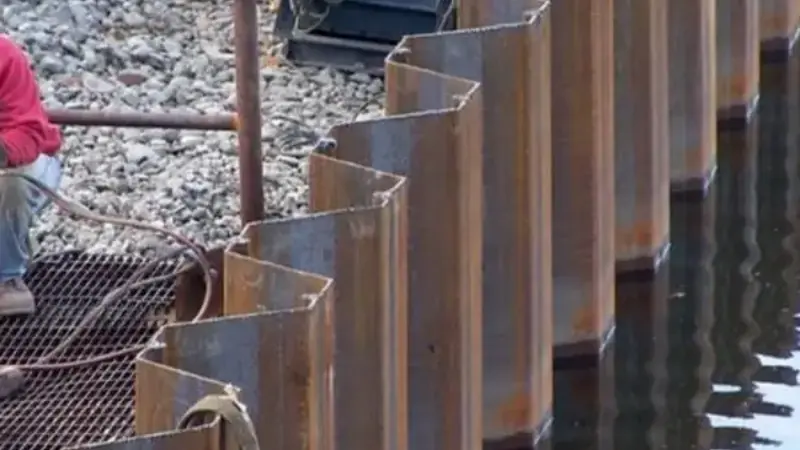
When I introduce steel sheet pile solutions to customers, I usually explain that profile selection is one of the most important decisions in a project.
Different profiles have different strength characteristics, installation methods, and application areas.
U-Type Steel Sheet Piles
U-type sheet piles are among the most common profiles in construction.
Their U-shaped design provides good balance between strength, installation convenience, and cost efficiency.
| Feature | Description |
|---|---|
| Shape | U-shaped profile |
| Strength | Medium to high |
| Application | Retaining walls, flood control |
U-type sheet piles are widely used in riverbank protection projects.
They provide reliable interlocking performance and are suitable for many soil conditions.
Z-Type Steel Sheet Piles
Z-type sheet piles have a Z-shaped profile that improves structural efficiency.
They are commonly used for projects requiring high bending resistance.
| Feature | Description |
|---|---|
| Shape | Z-shaped profile |
| Strength | High |
| Application | Ports, marine structures |
Z-type sheet piles are often selected for large infrastructure projects.
Their profile design provides strong resistance against bending forces.
Straight Web Sheet Piles
Straight web sheet piles are mainly used for special applications where the wall needs to resist tension forces.
They are often used in circular structures and special retaining systems.
| Feature | Description |
|---|---|
| Shape | Flat web profile |
| Application | Circular cofferdams |
Straight web sheet piles provide unique structural advantages compared with traditional profiles.
What are the different types of sheet piles?
Steel sheet piles are available in many different profiles because construction projects have different structural requirements. Each profile has its own advantages in terms of strength, installation method, connection performance, and application range.
The most common types include U-type, Z-type, straight web, Ω-shaped, flat plate type, disc type, cap type, and straight flange steel sheet piles.
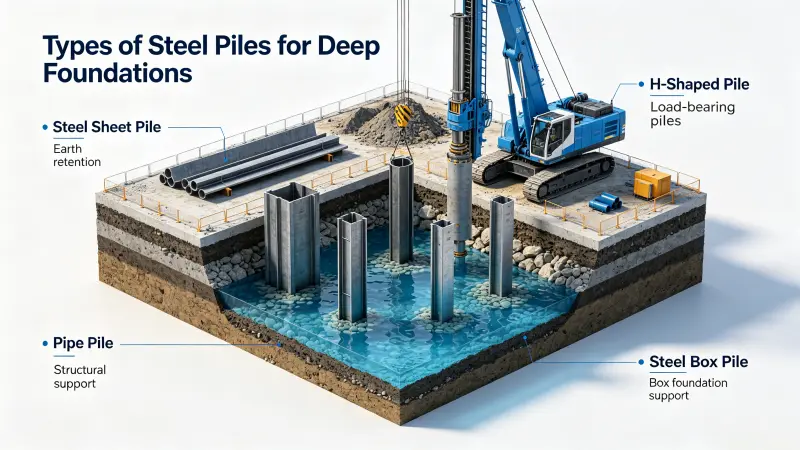
When I help customers select steel sheet piles, I do not only focus on the product name. I check the project conditions first.
A retaining wall for a small excavation project does not need the same profile as a large port construction project. A riverbank protection project also has different requirements compared with an underground foundation project.
The profile design determines how the sheet pile transfers loads and how efficiently the wall system works.
Comparison of Different Steel Sheet Pile Types
| Type of Sheet Pile | Main Features | Common Applications |
|---|---|---|
| U-Type Sheet Pile | Balanced strength and easy installation | Retaining walls, river protection, flood control |
| Z-Type Sheet Pile | High bending resistance | Ports, marine construction, deep excavation |
| Straight Web Sheet Pile | Strong tension resistance | Cofferdams and circular structures |
| Ω-Shaped Sheet Pile | Special profile design | Customized retaining projects |
| Flat Plate Type Sheet Pile | Simple flat structure | Special construction solutions |
| Disc Type Sheet Pile | Circular connection design | Special retaining systems |
| Cap Type Sheet Pile | Enhanced structural connection | Heavy-duty structures |
| Straight Flange Sheet Pile | Strong flange performance | Specialized engineering projects |
U-Type Steel Sheet Piles
U-type steel sheet piles are one of the most popular solutions in global construction projects.
The U-shaped profile provides a good balance between strength, weight, and cost. The interlocking system allows individual piles to connect and create a continuous retaining wall.
| Feature | Description |
|---|---|
| Profile Shape | U-shaped |
| Strength Level | Medium to high |
| Installation | Simple and efficient |
| Common Use | River protection, excavation support |
I often recommend U-type sheet piles for customers who need reliable performance without selecting an oversized profile.
They are widely used in riverbank protection, flood control, temporary retaining walls, and general foundation projects.
In our Southeast Asia riverbank protection project, the customer selected hot rolled U type steel sheet piles.
The project required a stable retaining wall system along the riverbank. The main purpose was to prevent soil erosion and improve flood control performance.
The contractor installed the piles using vibratory piling equipment. The strong interlocking system helped create a continuous barrier that improved stability and water control.
This project showed me that U-type sheet piles can provide excellent value when the profile matches the actual application.
Z-Type Steel Sheet Piles
Z-type steel sheet piles are designed for projects that require higher structural efficiency.
The Z-shaped profile places the interlocks near the neutral axis, which improves the overall bending performance.
According to principles of structural steel design, profile geometry plays an important role in determining resistance against bending forces.
| Feature | Description |
|---|---|
| Profile Shape | Z-shaped |
| Structural Performance | High bending resistance |
| Typical Use | Marine and heavy engineering projects |
Z-type sheet piles are commonly used in:
- Port construction
- Seawalls
- Deep excavation support
- Large retaining walls
For projects with high soil pressure or water pressure, engineers often select Z-type profiles because they provide efficient material use.
I have worked with customers who require sheet piles for large infrastructure projects. Many of them choose Z-type profiles because they need stronger performance over long service periods.
Straight Web Steel Sheet Piles
Straight web sheet piles have a different design compared with U-type and Z-type profiles.
Their main feature is the flat web structure and strong tension connection.
| Feature | Description |
|---|---|
| Profile Shape | Straight flat web |
| Main Advantage | High tensile connection |
| Application | Circular cofferdams |
Straight web sheet piles are often used in special engineering projects.
For example, circular cofferdams require sheet piles to form a closed structure. The tensile forces between piles become very important.
This type of sheet pile is not always the first choice for standard retaining walls, but it provides unique advantages in special conditions.
Ω-Shaped and Special Profile Sheet Piles
Some projects require customized solutions. In these situations, special profiles such as Ω-shaped, flat plate, disc, cap, and straight flange sheet piles may be selected.
| Special Profile | Main Feature |
|---|---|
| Ω-Shaped | Customized structural design |
| Flat Plate Type | Simple profile structure |
| Disc Type | Special connection method |
| Cap Type | Enhanced reinforcement |
| Straight Flange | Strong flange performance |
These profiles are usually selected according to specific engineering requirements.
I often receive inquiries from contractors who need special dimensions or unique designs. These projects usually involve unusual soil conditions, special construction methods, or limited installation space.
My company supports OEM production and works with certified mills to provide customized steel sheet pile solutions.
How Do I Select the Right Steel Sheet Pile Type?
From my experience, choosing the correct sheet pile type requires several steps.
I usually consider:
| Factor | Why It Matters |
|---|---|
| Project Application | Determines required performance |
| Soil Condition | Affects structural load |
| Water Environment | Influences corrosion protection |
| Wall Height | Determines pile strength |
| Installation Method | Affects profile selection |
| Service Life | Determines material requirements |
The first question I ask customers is about the project application.
A marine project usually requires stronger corrosion resistance and higher structural capacity.
A temporary excavation project may focus more on installation efficiency and cost control.
The second question is about soil conditions.
Different soils create different levels of pressure. Engineers need suitable sheet pile dimensions and profiles to maintain stability.
The third question is about installation equipment.
Some profiles require stronger equipment because of their size and weight.
I believe communication between supplier and customer is very important. A professional supplier should understand the project before recommending products.
My Insight: Why Profile Selection Matters More Than Size Alone
After working with international steel buyers, I have learned that many customers initially focus only on size and price.
However, I believe the profile design is just as important as the size.
A larger sheet pile is not always the best choice. A properly designed profile can provide better performance with more reasonable cost.
For example, U-type sheet piles are often a practical choice for river protection projects because they provide good strength and installation efficiency.
Z-type sheet piles are often better for large marine projects because they provide higher bending resistance.
The final decision should consider engineering requirements, not only product specifications.
My company helps customers from different countries choose suitable steel sheet pile solutions. We supply multiple profiles, support OEM requirements, provide SGS inspection services, and cooperate with reliable mills to ensure stable quality.
I believe the best supplier relationship is not only about selling products. It is about helping customers complete projects successfully.
Conclusion
Steel sheet piles have different sizes and profiles. Choosing the correct type helps improve construction safety, efficiency, and long-term performance.