Choosing the wrong steel sheet pile profile can increase project costs and create structural risks. Engineers need to understand the differences before selecting materials.
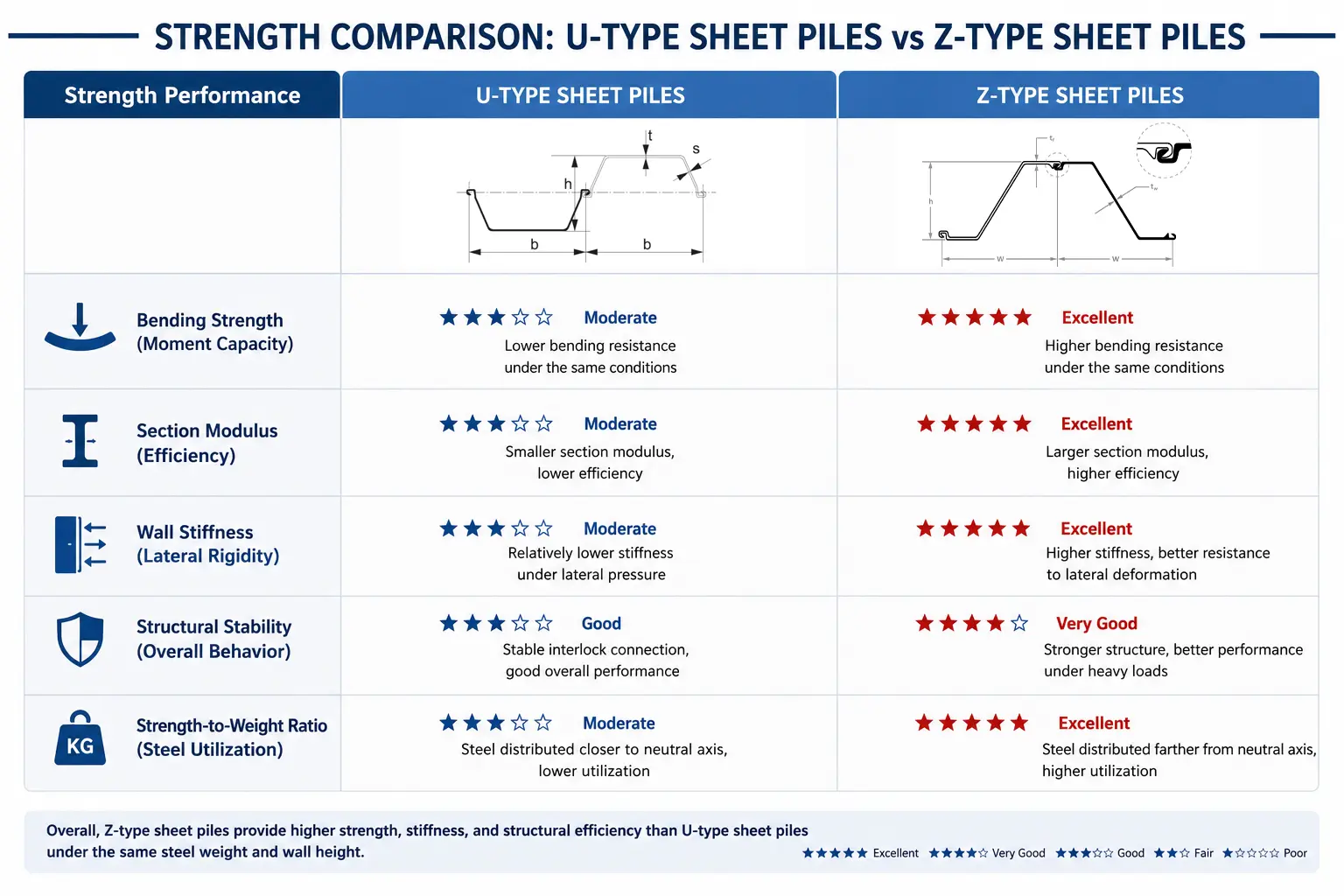
U-type and Z-type steel sheet piles have different designs, strength characteristics, and applications. U-type piles offer flexible solutions, while Z-type piles provide higher bending efficiency for demanding projects.
I have worked with many international contractors, engineering companies, and steel distributors who need reliable sheet pile solutions for construction projects. One question I receive frequently is the difference between U-type and Z-type steel sheet piles.
Many buyers know that steel sheet piles are widely used for retaining walls, excavation support, and marine projects. However, they are often unsure which profile can provide better performance for their specific application.
I believe choosing the right profile is one of the most important steps before starting a foundation project. The shape of a sheet pile affects its strength, installation method, material efficiency, and overall project cost.
In my experience, customers often focus on the price difference between U-type and Z-type sheet piles. However, the lowest price does not always create the best solution. The correct choice depends on soil conditions, loading requirements, project environment, and service life expectations.
My company supplies different types of steel sheet piles, including U-shaped, Z-shaped, Ω-shaped, flat plate type, disc type, cap type, and straight flange type metal sheet piles. We cooperate with certified mills and provide OEM production, SGS inspection support, and flexible MOQ solutions for global customers.
What are the key differences between Z-type and U-type sheet piles?
Z-type and U-type sheet piles are both widely used retaining solutions, but they have different structural designs. U-type sheet piles are easier to handle and suitable for general applications, while Z-type sheet piles provide higher bending resistance for large engineering projects.
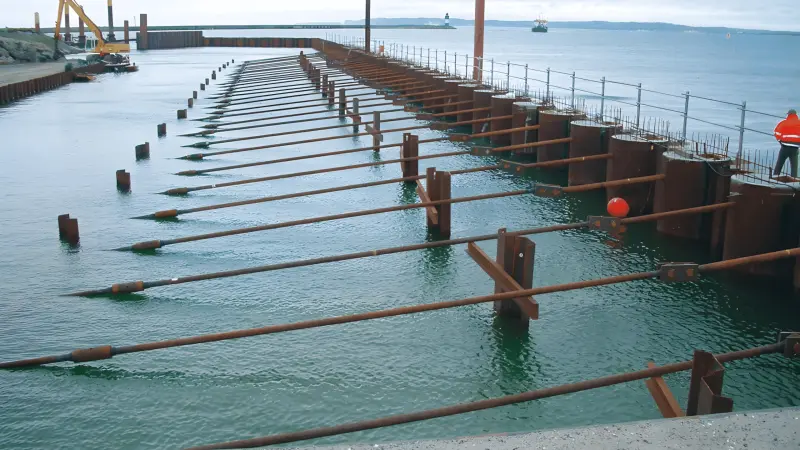
When customers ask me about U-type and Z-type sheet piles, I usually explain the difference from three aspects: profile design, structural performance, and project application.
Both products can create continuous retaining walls through their interlocking system. However, the position of the interlock and the shape of the steel section create different mechanical behaviors.
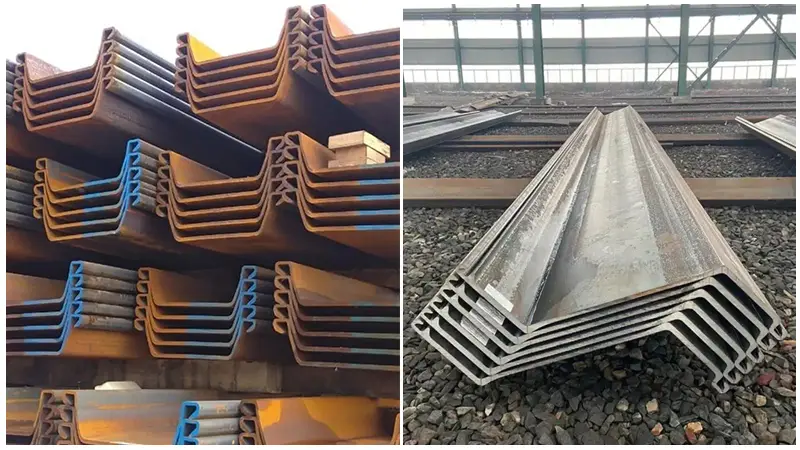
U-type sheet piles have a U-shaped profile. Their interlocks are located on both sides of the pile. This design provides good connection performance and makes installation easier. Contractors often select U-type sheet piles for riverbank protection, temporary retaining walls, and general excavation projects.
Z-type sheet piles have a Z-shaped profile. Their interlocks are positioned away from the neutral axis. This design improves the section performance and provides better resistance against bending forces.
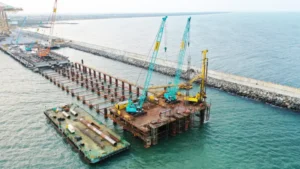
For projects with higher loads, such as ports, deep excavation systems, and large retaining walls, engineers often consider Z-type sheet piles because they provide efficient use of steel material.
Structural Comparison Between U-Type and Z-Type Sheet Piles
The profile shape directly affects the structural performance of a sheet pile wall. Engineers usually evaluate factors such as section modulus, bending moment, soil pressure, and wall height before selecting a suitable profile.
| Comparison Factor | U-Type Steel Sheet Piles | Z-Type Steel Sheet Piles |
|---|---|---|
| Profile Shape | U-shaped section | Z-shaped section |
| Interlock Position | Located near the neutral axis | Located away from neutral axis |
| Bending Performance | Good | Higher efficiency |
| Installation | Easier handling | Requires more installation control |
| Common Application | Medium projects | Large infrastructure projects |
| Material Efficiency | Standard performance | Better optimization |
The main advantage of U-type sheet piles is their practical performance. Their symmetrical design allows contractors to install them efficiently. Many construction companies choose U-type sheet piles because they provide a good balance between cost and performance.
I have supplied U-type sheet piles for projects where customers needed reliable retaining structures with reasonable budgets. One example was a riverbank protection project in Southeast Asia.
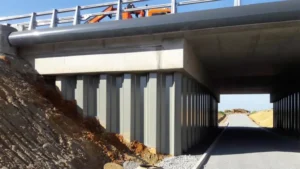
The project required a durable structure to prevent soil erosion and improve flood control. The contractor used hot rolled U type steel sheet piles to create a continuous retaining wall along the riverbank.
The sheet piles were driven into the soil and connected through their strong interlocking system. This created a stable barrier that helped control soil movement and water impact. The contractor used vibratory piling equipment, which helped complete the installation efficiently and maintain the project schedule.
This project showed me that U-type sheet piles are a practical choice when the project requires stable performance, fast installation, and cost control.
Why Are Z-Type Sheet Piles Used for Heavy Engineering Projects?
Z-type sheet piles are often selected for larger and more demanding applications because they provide high structural efficiency.
The Z-shaped profile improves the distribution of steel material. This allows engineers to achieve higher resistance with optimized weight.
| Project Type | Reason for Choosing Z-Type Sheet Piles |
|---|---|
| Deep Excavation Support | Higher resistance against lateral earth pressure |
| Port Construction | Suitable for heavy marine loads |
| Large Retaining Walls | Provides strong bending performance |
| Bridge Foundation Projects | Supports complex foundation conditions |
Large infrastructure projects often face stronger external forces. Soil pressure, water pressure, and construction loads can create significant stress on retaining structures.
According to principles of geotechnical engineering, engineers need to understand soil behavior before selecting a retaining system. Soil type, groundwater level, and excavation depth all affect the required sheet pile strength.
Z-type sheet piles are commonly used in marine construction because coastal structures experience changing water conditions and stronger environmental forces. The efficient design helps engineers build stronger retaining systems while controlling material usage.
I often explain to customers that Z-type sheet piles are not always the best choice for every project. A stronger profile may increase initial material costs if the project does not require higher capacity.
The correct selection depends on engineering requirements. For a small excavation project, U-type sheet piles may provide enough performance. For a large port structure, Z-type sheet piles may provide better long-term value.
How Does the Interlocking System Affect Performance?
The interlocking system is one of the most important features of steel sheet piles. It connects individual piles together and creates a continuous wall structure.
| Interlocking Feature | Project Benefit |
|---|---|
| Tight Connection | Improves wall stability |
| Continuous Barrier | Reduces soil movement |
| Water Resistance | Helps control groundwater |
| Load Transfer | Improves overall structural performance |
The interlock design is different between U-type and Z-type sheet piles. However, both systems are designed to provide reliable connections during installation and service.
A strong interlocking system helps distribute forces between individual piles. This means the wall can work as a complete structure instead of separate steel sections.
For projects involving water, the interlock performance becomes even more important. River protection and marine construction require structures that can reduce water penetration and maintain soil stability.
My company provides steel sheet piles for different applications, including retaining walls, bridge foundations, port construction, and flood control projects. We help customers select suitable profiles based on their engineering requirements.
From my experience, the best sheet pile solution is not always the largest or strongest product. The best solution is the one that matches the project condition, installation method, and expected service life.
What are the four types of piles?
Many customers use the word "piles" when discussing foundation projects, but different pile systems have different purposes. Understanding the four main types of piles helps engineers choose the correct foundation solution.
The four common types of piles are driven piles, bored piles, screw piles, and cast-in-place piles. Each type has different installation methods, load performance, and suitable applications.
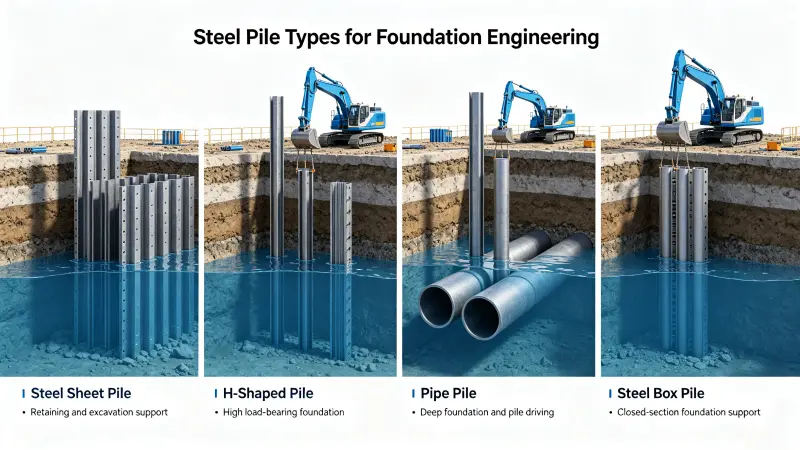
When I communicate with construction contractors and engineering companies, I often find that customers confuse foundation piles with steel sheet piles. These products both use steel or other structural materials, but they solve different engineering problems.
Foundation piles are mainly designed to transfer vertical loads from buildings or structures into deeper soil layers. Steel sheet piles are mainly designed to create retaining walls that resist horizontal soil pressure and control water movement.
In modern construction, engineers select pile systems according to soil conditions, structural loads, construction environment, and project requirements. A high-rise building, a bridge foundation, and a river protection project may all require different pile solutions.
I believe understanding the basic types of piles helps buyers communicate better with suppliers and engineers. When customers understand the purpose of each pile system, they can make better decisions about materials, costs, and construction methods.
The Four Main Types of Foundation Piles
Different pile types have different installation processes and structural characteristics.
| Pile Type | Installation Method | Main Advantages | Common Applications |
|---|---|---|---|
| Driven Piles | Installed by hammer driving | Fast installation and immediate support | Bridges, buildings, marine structures |
| Bored Piles | Installed by drilling and filling concrete | Low vibration and high load capacity | Urban construction, large buildings |
| Screw Piles | Installed by rotation into soil | Fast and flexible installation | Solar projects, temporary structures |
| Cast-in-Place Piles | Constructed directly at project site | Customizable size and capacity | Heavy infrastructure projects |
Driven Piles
Driven piles are one of the most traditional foundation systems. Contractors install these piles by using impact hammers or vibratory equipment to push them into the ground.
Steel driven piles are widely used because steel provides high strength and durability. Engineers often select them for projects that require deep foundation support.
| Feature | Description |
|---|---|
| Installation Method | Hammer driving |
| Material Options | Steel, concrete, timber |
| Main Benefit | Fast construction |
| Common Projects | Bridges, buildings, marine structures |
The main advantage of driven piles is construction efficiency. After installation, the piles immediately provide structural support. This feature helps contractors reduce project waiting time.
However, driven piles can create noise and vibration. Engineers need to consider surrounding buildings and environmental requirements before choosing this method.
For marine projects, driven steel piles are often a practical choice. They can withstand heavy loads and challenging conditions. Ports, offshore structures, and bridge foundations often require strong pile systems that can perform in difficult environments.
Bored Piles
Bored piles are created by drilling holes into the ground and filling them with concrete reinforcement.
This method is common in areas where vibration control is important, especially urban construction projects.
| Feature | Description |
|---|---|
| Installation Method | Drilling and concrete placement |
| Main Advantage | Low vibration |
| Load Capacity | High |
| Common Applications | High-rise buildings, bridges |
Bored piles allow engineers to create large-diameter foundations. They are suitable for structures that require high load-bearing capacity.
The construction process requires careful quality control. The drilling depth, reinforcement placement, and concrete quality all affect final performance.
I have worked with many international buyers who manage large construction projects. They often ask about balancing construction efficiency and technical requirements. I usually explain that there is no universal foundation method. The best solution depends on the project environment.
Screw Piles
Screw piles use a helical blade design that allows them to be installed by rotating into the soil.
They are often selected for projects that require quick installation and minimal site disturbance.
| Feature | Description |
|---|---|
| Installation Method | Rotational installation |
| Main Advantage | Fast and flexible |
| Environmental Impact | Lower disturbance |
| Common Uses | Solar structures, small buildings |
Screw piles are useful for lightweight structures and temporary projects. They can often be installed without large construction equipment.
However, engineers need to evaluate soil conditions carefully because load capacity depends on the ground environment.
Cast-in-Place Piles
Cast-in-place piles are constructed directly at the construction site. Workers drill holes, install reinforcement cages, and pour concrete into the prepared area.
| Feature | Description |
|---|---|
| Construction Method | Built on site |
| Main Advantage | Flexible design |
| Application | Large foundation systems |
| Quality Control | Requires professional management |
Cast-in-place piles are widely used in large infrastructure projects. They allow engineers to design piles according to specific project requirements.
The construction process requires experienced workers and careful inspection. Any problems during installation can affect the final foundation performance.
How Are Steel Sheet Piles Different From the Four Types of Foundation Piles?
Although steel sheet piles contain the word "piles," they have a different purpose from traditional foundation piles.
Steel sheet piles are mainly used for lateral support, while foundation piles are mainly used for vertical load transfer.
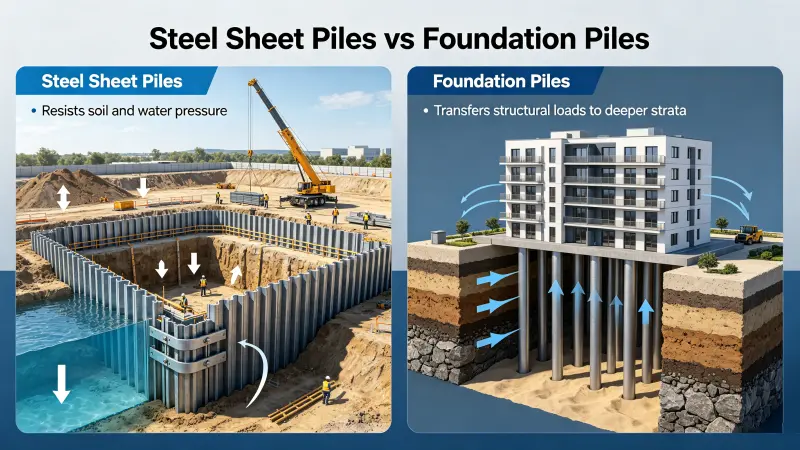
| Comparison | Steel Sheet Piles | Foundation Piles |
|---|---|---|
| Main Function | Retain soil and control water | Support structural loads |
| Force Direction | Horizontal pressure | Vertical loads |
| Structure | Connected wall system | Individual pile elements |
| Main Applications | Retaining walls, excavation, marine works | Buildings, bridges |
Steel sheet piles are widely used in deep excavation support because they create stable barriers around construction areas.
For example, when contractors build underground parking structures, they need protection against soil collapse. Steel sheet piles can create a temporary retaining wall around the excavation area.
In marine projects, steel sheet piles can create seawalls, cofferdams, and port structures. Their interlocking design helps control water movement and soil erosion.
My company focuses on supplying steel sheet piles for international construction projects. Our customers include contractors, civil engineering companies, and steel distributors who require reliable products for large projects.
We provide U-type, Z-type, straight web, Ω-shaped, flat plate type, disc type, cap type, and straight flange type sheet piles. We also support customized production based on customer drawings and technical requirements.
How Do Engineers Select the Correct Pile Type?
Engineers consider many factors before selecting a pile system. The correct choice depends on the project purpose, soil condition, and construction environment.
| Selection Factor | Influence |
|---|---|
| Soil Condition | Determines required pile performance |
| Structural Load | Affects pile size and strength |
| Water Condition | Influences corrosion protection |
| Construction Space | Affects installation method |
| Project Schedule | Determines suitable technology |
Soil investigation is usually the first step. Engineers need to understand the ground condition before choosing a foundation method.
Load requirements are another important factor. Heavy structures need stronger foundation systems compared with smaller projects.
Environmental conditions also affect selection. Coastal projects may require additional corrosion protection because seawater can accelerate steel deterioration.
I often tell customers that material selection should begin with engineering requirements, not only price comparison. A suitable product can reduce future problems and improve project reliability.
From my experience, successful construction projects usually involve good communication between suppliers, engineers, and contractors. When everyone understands the project requirements, the final solution becomes more efficient and reliable.
What are the different types of sheet piles?
Steel sheet piles are available in many different profiles because construction projects have different structural requirements. Engineers choose sheet pile types according to load conditions, soil pressure, installation methods, and project environments.
The main types of sheet piles include U-type, Z-type, straight web, Ω-shaped, flat plate type, disc type, cap type, and straight flange type sheet piles.
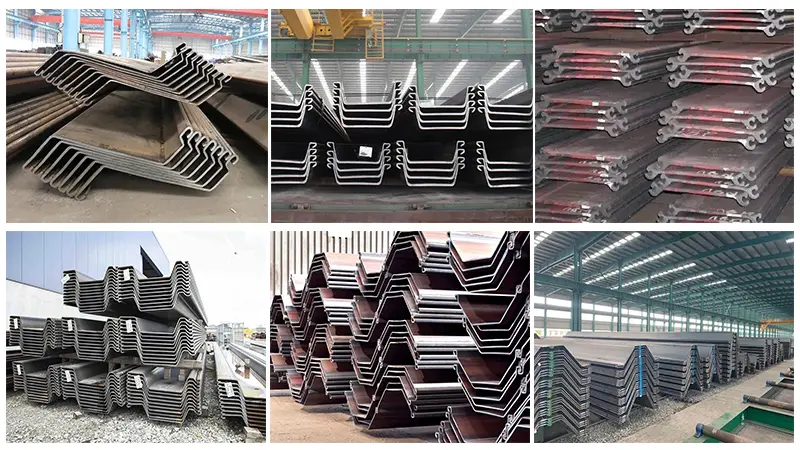
When customers contact me about steel sheet piles, they often know that sheet piles are used for retaining walls and excavation support. However, many customers are not familiar with the differences between different profiles.
I usually explain that every sheet pile type has its own advantages. Some profiles are designed for high bending resistance. Some profiles focus on easy installation. Some profiles are developed for special structures where normal sheet piles cannot meet engineering requirements.
Steel sheet piles are important products in modern foundation engineering. They help engineers solve problems related to soil movement, water pressure, and construction safety.
In my experience, selecting the correct sheet pile type can influence the entire project. The wrong profile may increase material costs or reduce structural efficiency. The right profile can improve installation speed and provide long-term stability.
What Are the Main Types of Steel Sheet Piles?
Different sheet pile profiles provide different structural characteristics. Engineers select profiles based on project requirements.
| Sheet Pile Type | Main Characteristics | Common Applications |
|---|---|---|
| U-Type Sheet Piles | Balanced structure and easy installation | River protection, retaining walls |
| Z-Type Sheet Piles | High bending efficiency | Ports, deep excavation, marine projects |
| Straight Web Sheet Piles | Strong interlocking connection | Circular structures, special walls |
| Ω-Shaped Sheet Piles | Special profile design | Customized engineering projects |
| Flat Plate Sheet Piles | Simple structure | Special retaining applications |
| Disc Type Sheet Piles | Unique connection design | Specific foundation systems |
| Cap Type Sheet Piles | Additional reinforcement | Special structural requirements |
| Straight Flange Sheet Piles | Strong connection performance | Complex retaining systems |
U-Type Steel Sheet Piles
U-type steel sheet piles are one of the most commonly used profiles in construction projects.
The U-shaped design provides balanced performance and practical installation advantages. Contractors often choose U-type sheet piles because they can handle many general engineering applications.
| Feature | Description |
|---|---|
| Profile Shape | U-shaped |
| Installation | Simple and flexible |
| Cost Performance | High |
| Common Applications | Retaining walls, riverbank protection, excavation support |
The interlocking system of U-type sheet piles allows individual piles to connect together and form a continuous wall.
This feature makes them suitable for projects that need soil retention and water control.
I supplied U-type steel sheet piles for a riverbank protection project in Southeast Asia. The customer needed a solution to reduce soil erosion and improve flood control performance.
The hot rolled U type steel sheet piles were installed along the riverbank to create a stable retaining wall system. The strong interlocking connection helped maintain structural stability and improve water control.
The contractor used vibratory piling equipment during installation. This method allowed the project team to complete the work efficiently while maintaining the construction schedule.
This experience showed me that U-type sheet piles are a practical solution when customers need reliable performance, flexible installation, and competitive project costs.
Z-Type Steel Sheet Piles
Z-type steel sheet piles are designed for projects that require higher structural performance.
The Z-shaped profile provides better steel distribution and improved bending resistance. Engineers often select Z-type sheet piles for large infrastructure projects.
| Feature | Description |
|---|---|
| Profile Shape | Z-shaped |
| Structural Advantage | High section modulus |
| Load Performance | Excellent bending resistance |
| Common Applications | Ports, marine structures, large excavation |
Z-type sheet piles are often used in projects where lateral earth pressure is high. Deep excavation projects and marine construction usually require stronger retaining systems.
According to principles of soil mechanics, engineers need to evaluate soil behavior before designing retaining structures.
Soil type, groundwater conditions, and excavation depth directly affect the required sheet pile performance.
Z-type sheet piles are popular because they provide efficient use of steel. The profile can achieve strong resistance without unnecessary material increase.
I often explain to customers that Z-type sheet piles are not selected simply because they are stronger. They are selected because their performance matches specific project requirements.
Straight Web Sheet Piles
Straight web sheet piles have a different design compared with U-type and Z-type profiles.
They are mainly used in applications where strong interlock connections are required.
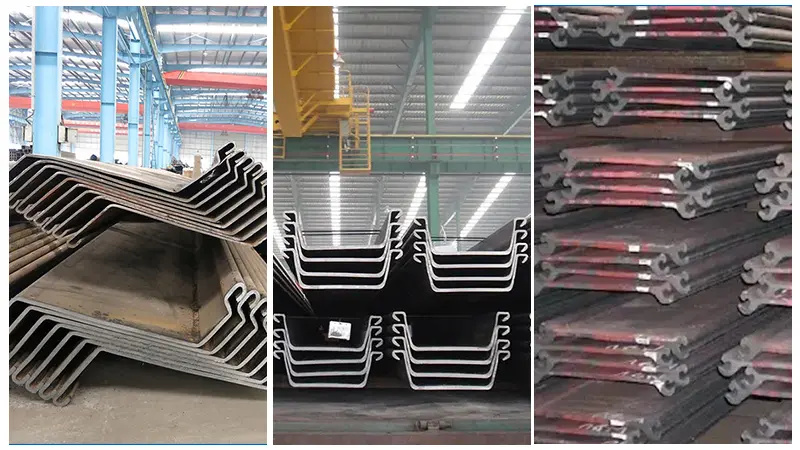
| Feature | Description |
|---|---|
| Profile | Straight web design |
| Main Advantage | Strong connection ability |
| Application | Circular structures and special retaining systems |
| Performance Focus | Connection strength |
Straight web sheet piles are often used for structures such as cofferdams and circular retaining walls.
The connection between piles is very important in these applications because the structure needs to maintain stability under special loading conditions.
I believe straight web sheet piles show the flexibility of steel sheet pile technology. They allow engineers to create solutions for projects that require special designs.
Special Types of Sheet Piles
Besides U-type, Z-type, and straight web sheet piles, some projects require special profiles.
These products provide additional options for engineers who need customized solutions.
| Special Profile | Main Purpose |
|---|---|
| Ω-Shaped Sheet Piles | Special retaining structures |
| Flat Plate Sheet Piles | Simple engineering applications |
| Disc Type Sheet Piles | Unique connection systems |
| Cap Type Sheet Piles | Additional structural support |
| Straight Flange Sheet Piles | Special retaining designs |
Ω-shaped sheet piles are designed for specific applications where standard profiles may not provide the required performance.
Flat plate sheet piles have a simple design and can be used in special situations where flexibility is important.
Disc type and cap type sheet piles are less common, but they provide additional options for unique engineering projects.
My company supplies different sheet pile profiles because international customers often have different project requirements. Some customers need standard products for regular construction. Other customers need OEM production based on engineering drawings.
How Do I Choose the Right Sheet Pile Type?
Choosing the correct sheet pile requires understanding the project conditions.
Engineers usually evaluate several factors before making a final decision.
| Factor | Influence on Selection |
|---|---|
| Wall Height | Determines required pile strength |
| Soil Pressure | Affects profile selection |
| Water Exposure | Influences corrosion protection |
| Installation Method | Determines suitable pile type |
| Service Life | Affects material requirements |
The first factor I usually discuss with customers is the project application.
A temporary excavation project may need a different solution compared with a permanent marine structure.
The second factor is the environment. Projects near seawater require stronger corrosion protection considerations.
The third factor is installation. Different piling equipment works better with different sheet pile profiles.
I always recommend that customers provide project information before ordering. Drawings, dimensions, soil conditions, and application details help us provide better recommendations.
From my experience, successful sheet pile projects start with correct product selection. Understanding the differences between profiles helps customers reduce risks and achieve better construction results.
Steel sheet piles are not only steel products. They are engineering solutions designed for different challenges in foundation and infrastructure projects.
What are the three types of piling?
Piling methods determine how piles are installed and how they perform in different soil conditions. Choosing the correct piling method helps engineers improve construction efficiency, reduce risks, and achieve better foundation stability.
The three main types of piling are driven piling, bored piling, and screw piling. Each method has different equipment requirements, construction processes, and suitable applications.
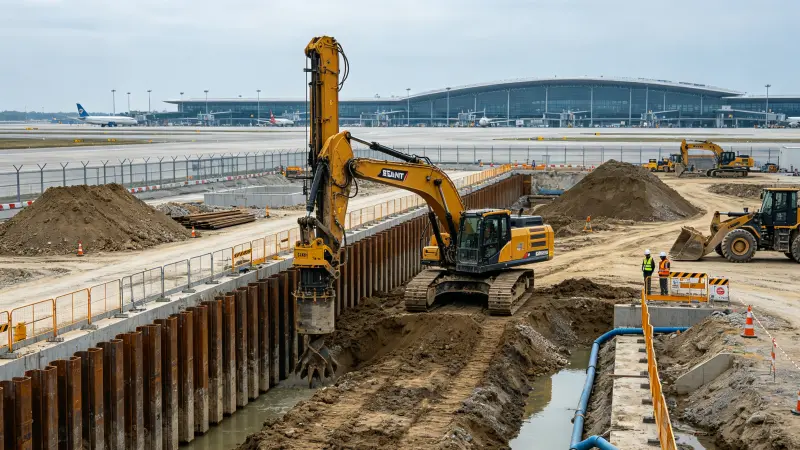
When I discuss piling solutions with customers, I often explain that the quality of the pile itself is only one part of a successful project. The installation method is equally important.
A high-quality steel product still needs the correct installation process to achieve the expected performance. Different soil conditions, project locations, and construction requirements determine which piling method is the most suitable.
For example, a port construction project may require strong driving equipment because the soil conditions and load requirements are different from a small building foundation project. A project near residential areas may need a low-noise method to reduce environmental impact.
I believe contractors should consider the entire construction process before selecting piling solutions. Material selection, equipment choice, and installation technology should work together.
Steel sheet piles are also closely related to piling methods. Although steel sheet piles mainly create retaining walls instead of carrying vertical building loads, their installation requires professional piling equipment and correct procedures.
Driven Piling
Driven piling is one of the most traditional and widely used piling methods. This method installs piles by applying force from a hammer or vibration system to push the pile into the ground.
Driven piling is commonly used for steel piles, concrete piles, and steel sheet piles.
| Feature | Description |
|---|---|
| Installation Method | Hammer driving or vibration driving |
| Main Advantage | Fast installation |
| Suitable Condition | Many soil environments |
| Common Application | Bridges, ports, retaining walls |
Driven piling provides immediate structural support because the pile is installed directly into the soil.
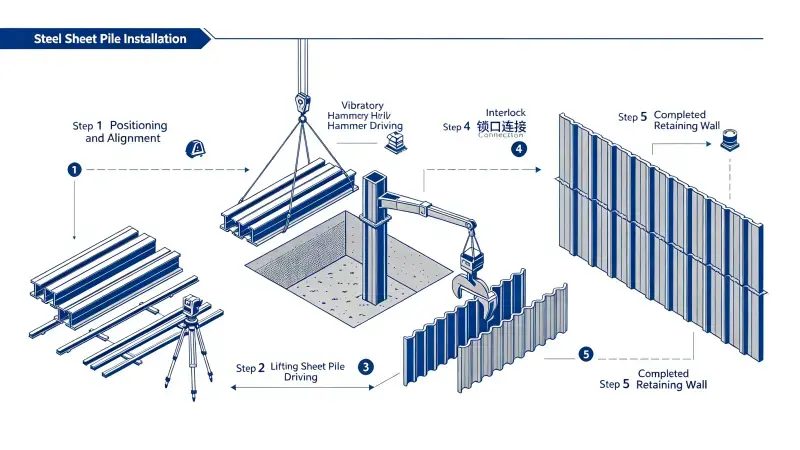
For steel sheet piles, vibratory installation is one of the common methods. The vibration equipment reduces soil resistance and allows the sheet pile to penetrate efficiently.
In our Southeast Asia riverbank protection project, the contractor used vibratory piling equipment to install hot rolled U type steel sheet piles.
The project required a continuous retaining wall along the riverbank. The contractor needed a solution that could prevent soil erosion and improve flood control performance.
The steel sheet piles were driven into the soil and connected through their interlocking system. The installation process created a stable barrier that improved riverbank protection.
This project showed me that the correct installation method can directly influence construction efficiency. The customer completed the project according to schedule because the piling equipment matched the product and site conditions.
However, driven piling also has some limitations. Traditional impact driving may create noise and vibration. Engineers need to consider nearby structures and environmental requirements.
Modern equipment has improved this situation. Vibratory hammers and advanced installation systems help reduce disturbance while maintaining efficiency.
Bored Piling
Bored piling uses drilling equipment to create holes in the ground. After drilling, workers place reinforcement and concrete into the hole to form the pile.
This method is common in urban construction projects because it creates less vibration compared with driven piling.
| Feature | Description |
|---|---|
| Installation Method | Drilling and concrete filling |
| Main Advantage | Low vibration |
| Load Capacity | High |
| Common Applications | Buildings, bridges, heavy structures |
Bored piling allows engineers to create large diameter piles with high load capacity.
This method is often selected for projects where surrounding buildings, roads, or underground facilities may be affected by vibration.
However, bored piling requires more preparation and construction control. The quality of the final pile depends on drilling accuracy, reinforcement installation, and concrete quality.
Engineers also need to manage soil conditions carefully. Groundwater, unstable soil, and underground obstacles can affect the construction process.
I often explain to customers that every piling method has advantages and limitations. A method that works well for one project may not be suitable for another.
For example, a large commercial building may benefit from bored piles because the structure requires high vertical load support. A river protection project may require steel sheet piles because the main challenge is controlling soil movement and water pressure.
Screw Piling
Screw piling uses piles with helical blades that are rotated into the ground.
This method has become popular for projects that need quick installation and lower environmental impact.
| Feature | Description |
|---|---|
| Installation Method | Rotational installation |
| Main Advantage | Fast and flexible |
| Equipment Requirement | Smaller installation machines |
| Common Applications | Solar systems, temporary structures |
Screw piles are often used for lightweight structures and projects with limited access.
The installation process creates less vibration and noise compared with some traditional methods. This makes screw piling suitable for sensitive locations.
However, screw piles are usually selected based on specific load requirements. Engineers need to evaluate soil conditions and expected loads before choosing this method.
How Do Piling Methods Affect Steel Sheet Pile Performance?
Steel sheet pile performance depends on more than the steel material itself. The installation process affects alignment, connection quality, and final structural behavior.
| Installation Factor | Impact on Performance |
|---|---|
| Driving Accuracy | Affects wall alignment |
| Installation Speed | Influences project schedule |
| Equipment Selection | Determines penetration efficiency |
| Soil Condition | Affects installation difficulty |
Proper installation helps the interlocking system work effectively. Poor alignment can create problems between individual piles and reduce wall performance.
I always recommend that customers work with experienced installation teams. Professional equipment operators understand how to control driving speed, vibration levels, and pile position.
For international projects, I also help customers understand product specifications before shipment. Knowing the required pile length, thickness, and profile allows contractors to prepare suitable installation equipment.
My Insight: How I Choose Between U-Type and Z-Type Steel Sheet Piles
From my experience working with global customers, I believe the most important factor is not choosing the strongest product. It is choosing the product that fits the project.
U-type steel sheet piles are often a practical choice for riverbank protection, flood control, and general retaining projects. They provide reliable performance and good cost efficiency.
Z-type steel sheet piles are often suitable for larger projects that require higher bending resistance, such as ports, marine structures, and deep excavation systems.
I have learned that every project has different challenges. Soil conditions, water environment, construction schedule, and budget all affect the final decision.
My company focuses on helping customers find suitable steel sheet pile solutions instead of only supplying products. We provide different profiles, OEM services, quality inspection support, and flexible purchasing options for international buyers.
Conclusion
U-type and Z-type steel sheet piles have different advantages. Understanding their differences helps engineers select safer and more efficient foundation solutions.