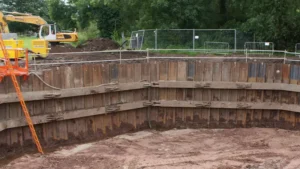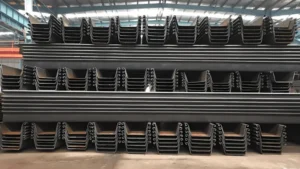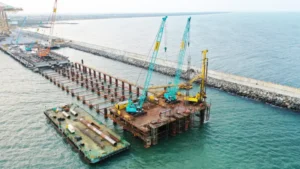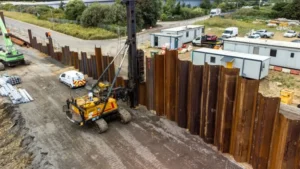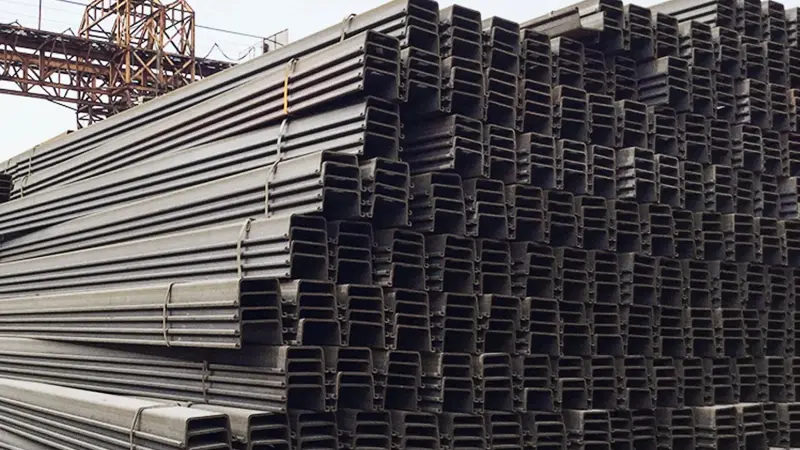
Water leakage through a steel sheet pile wall can delay construction, weaken soil stability, and increase project costs. Based on practical site experience and engineering standards such as U.S. Army Corps of Engineers sheet pile wall guidance, waterproofing should be considered during design and installation—not only after leakage appears.
I improve steel sheet pile wall waterproofing by selecting high-quality sheet piles, sealing interlocks, controlling installation accuracy, and applying suitable waterproof systems based on site conditions. Together, these methods significantly reduce water seepage and improve long-term wall performance.
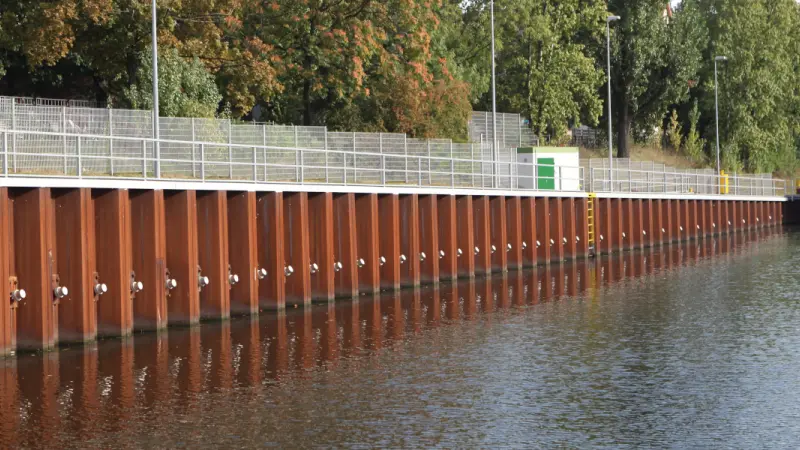
Steel sheet piles manufactured under ASTM A328/A328M provide reliable structural performance, but waterproofing depends on multiple factors including interlock sealing, installation accuracy, and groundwater conditions.
How to seal a sheet pile?
Water leakage most commonly occurs through interlocks rather than the steel itself. According to geotechnical engineering practice and FHWA retaining structure guidelines, joint treatment is critical for seepage control.
Steel sheet piles are sealed by filling the interlocks with waterproof sealants, bituminous compounds, polyurethane products, or hydrophilic materials before or during installation.
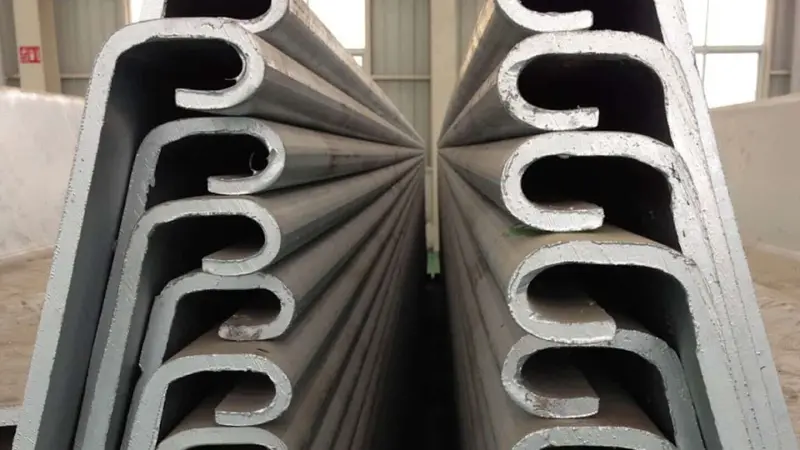
Why the interlock is the weakest point
The steel plate itself is impermeable. Leakage occurs at interlock joints due to small clearances after installation.
Even minimal gaps can allow seepage under groundwater pressure. This is why waterproofing must start before installation.
| Leakage Area | Main Cause |
|---|---|
| Interlock joints | Installation gaps |
| Damaged interlocks | Handling or driving damage |
| Welded connections | Poor welding quality |
| Corner connections | Misalignment |
| Cut sections | Missing sealing |
Common sealing materials
Material selection should match project conditions and service life. Many sealing materials comply with durability and chemical resistance principles outlined in ISO 12944 for protective systems.
| Sealing Material | Feature | Application |
|---|---|---|
| Bituminous sealant | Economical | Temporary works |
| Polyurethane | Flexible, durable | Permanent walls |
| Hydrophilic sealant | Expands with water | High groundwater |
| Bentonite | Natural swelling | Underground |
| Rubber gasket | Strong sealing | Special projects |
For high-pressure groundwater, I usually recommend polyurethane or hydrophilic sealants due to their adaptability to movement.
Installation quality affects waterproofing
Even the best sealant cannot compensate for poor installation.
Key controls include:
| Control | Benefit |
|---|---|
| Vertical alignment | Tight interlock fit |
| Driving speed | Prevents damage |
| Equipment selection | Reduces deformation |
| Continuous monitoring | Maintains integrity |
Modern vibratory hammers often provide better alignment control compared to excessive impact driving.
Waterproof design must match project conditions
I always evaluate:
- Groundwater level.
- Service life.
- Marine exposure.
- Soil type.
- Required leakage control.
For example, marine structures require both waterproofing and corrosion protection, often following standards like ASTM A690/A690M for marine steel.
Are sheet piles watertight?
Steel sheet piles are water-resistant but not completely watertight without sealing and proper installation.
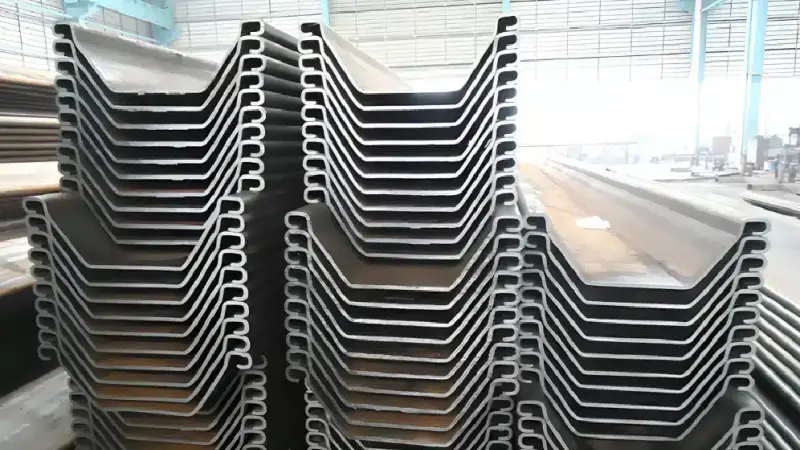
Why they are not fully watertight
Steel itself is impermeable, but interlocks allow minor seepage.
| Location | Leakage Risk |
|---|---|
| Steel plate | Very Low |
| Interlock | High |
| Corners | Medium |
| Welds | Medium |
Factors affecting waterproofing
| Factor | Effect |
|---|---|
| Interlock quality | Critical |
| Installation accuracy | Prevents gaps |
| Water pressure | Drives leakage |
| Soil type | Influences seepage |
| Sealant quality | Improves sealing |
Even high-quality sheet piles can leak if installation is poor.
Different waterproof requirements
| Project | Requirement |
|---|---|
| Temporary excavation | Moderate |
| Basement | High |
| Riverbank | High |
| Flood wall | Very High |
| Cofferdam | Extremely High |
In high-risk projects, engineers may combine sealing with grouting or dewatering systems.
What is the lifespan of a steel sheet pile?
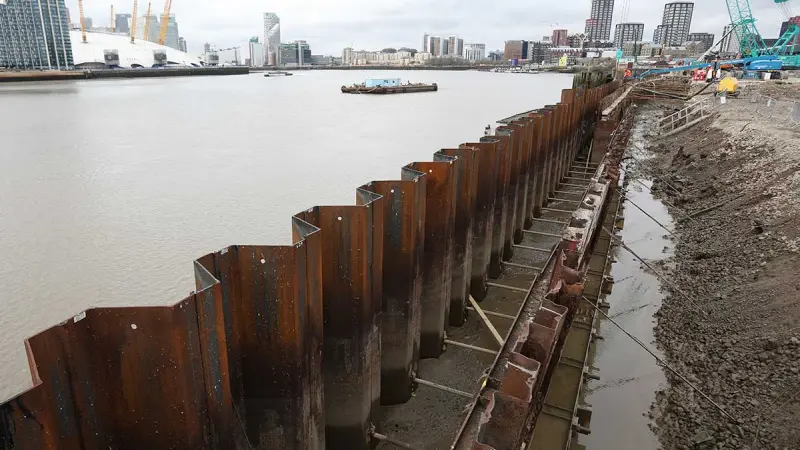
Steel sheet piles can last 50–100+ years when proper corrosion protection and maintenance are applied.
Key influencing factors
Corrosion behavior is strongly influenced by environmental exposure, as recognized by ISO corrosion protection standards such as ISO 12944.
| Factor | Impact |
|---|---|
| Soil chemistry | Affects corrosion rate |
| Groundwater | Increases exposure |
| Seawater | Accelerates corrosion |
| Thickness | Extends lifespan |
| Coating | Protects steel |
| Maintenance | Prevents failure |
Temporary vs permanent structures
Permanent structures require corrosion allowance and protective coatings.
| Application | Life |
|---|---|
| Temporary | Months–years |
| Riverbank | 50+ years |
| Ports | 50–100 years |
Maintenance importance
Routine inspection helps identify:
- Coating damage.
- Corrosion.
- Leakage.
- Deformation.
Early repair reduces lifecycle cost.
What is the problem with using steel sheet piles in sea defence work?
The main issue is chloride-induced corrosion in marine environments.
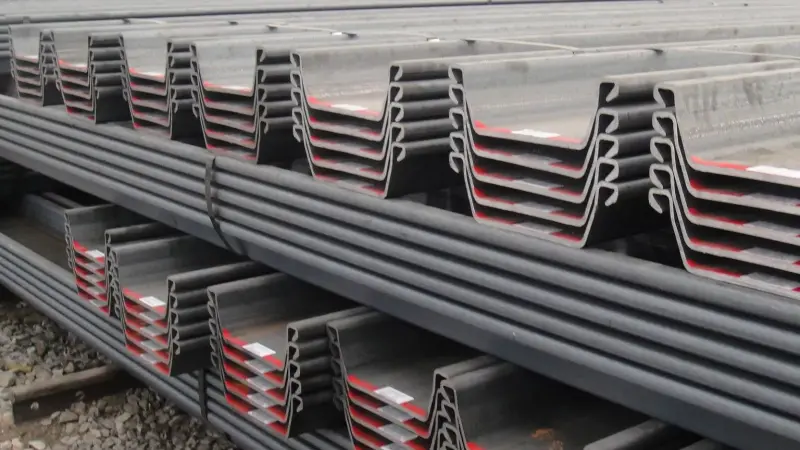
Marine durability challenges are well documented in ISO corrosion standards and coastal engineering research.
Marine corrosion zones
| Zone | Risk |
|---|---|
| Splash zone | Very High |
| Tidal | High |
| Submerged | Moderate |
The splash zone is typically the most aggressive due to oxygen and salt exposure.
Reinforced concrete challenges
Chloride penetration can corrode reinforcement steel, as described in ACI durability guidance.
This leads to:
- Cracking.
- Spalling.
- Strength loss.
Protection strategies
| Method | Benefit |
|---|---|
| Coatings (ISO 12944) | Corrosion protection |
| Cathodic protection (ISO 15589) | Slows corrosion |
| Corrosion allowance | Extends life |
| Inspection | Early detection |
FAQ (Optimized for Google Featured Snippets)
How do you make sheet piles waterproof?
Seal interlocks using polyurethane or hydrophilic materials, ensure proper installation alignment, and apply additional waterproof systems when required.
Are steel sheet piles naturally watertight?
No, they are water-resistant but require sealing and proper installation to achieve effective waterproofing.
What is the best sealant for sheet pile interlocks?
Polyurethane and hydrophilic sealants are commonly preferred for high-performance waterproofing due to flexibility and expansion properties.
Why do sheet pile walls leak?
Leakage usually occurs at interlocks due to gaps, poor alignment, or damaged connections.
How can I improve sheet pile wall waterproofing performance?
Use high-quality sheet piles, apply interlock sealing, ensure precise installation, and design according to site conditions.
Conclusion
I believe waterproof performance is achieved through a combination of material quality, interlock sealing, precise installation, corrosion protection, and long-term maintenance—not a single solution.