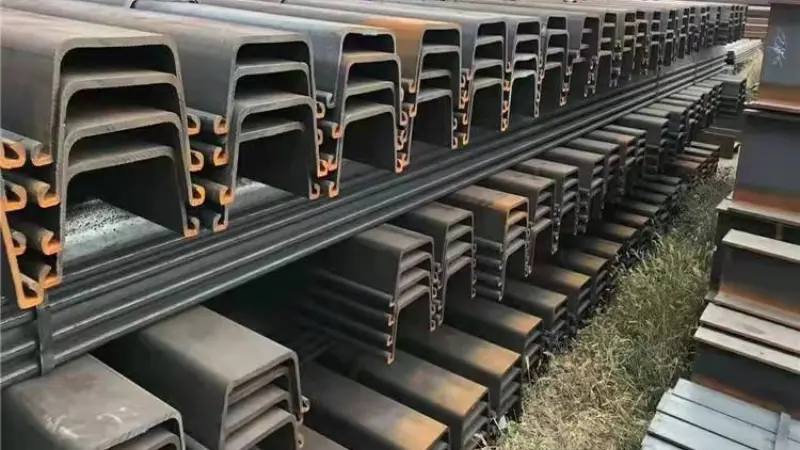
A damaged steel sheet pile can delay construction, increase costs, and threaten site safety. Based on practical project experience and standard engineering practices, quick inspection and selecting the correct repair method are critical to maintaining structural integrity and construction schedules.
Steel sheet piles can often be repaired by inspecting the damage, straightening bent sections, repairing interlocks, welding cracks when allowed, or replacing piles with severe structural damage. The best repair method depends on the type and extent of the damage.
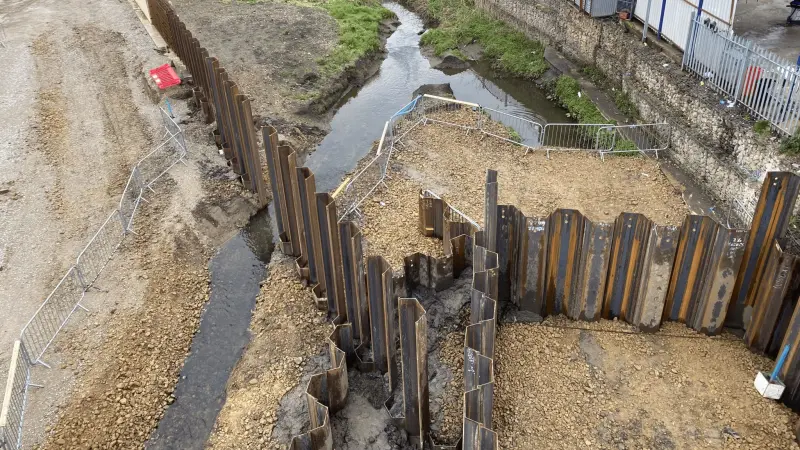
Steel sheet piles are widely governed by international standards such as ASTM A328/A328M , which defines requirements for steel sheet piling, and are commonly used in excavation support, marine works, and foundation engineering. I have worked with contractors and buyers across multiple regions, and I find that understanding repair methods significantly reduces lifecycle cost and project risk.
How do you repair a broken pile?
Ignoring a damaged sheet pile can create safety risks and increase repair costs. Industry guidelines such as the U.S. Army Corps of Engineers sheet pile manual emphasize inspection before any repair decision.
A broken steel sheet pile is repaired by identifying the damage, checking its structural capacity, repairing minor defects, or replacing the pile if the damage affects its strength or interlocking performance.
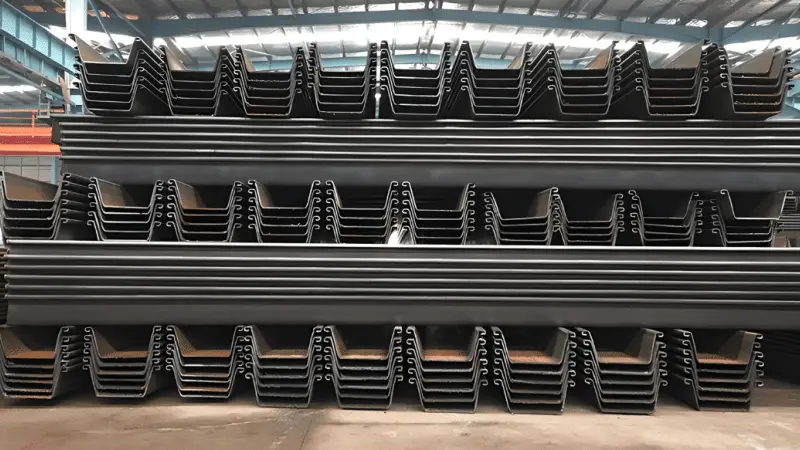
Inspect the damage before starting repairs
Every damaged pile is different. Some piles only have surface scratches, while others may have bent flanges, cracked welds, or interlock damage.
The first step is a complete inspection. In addition to visual checks, non-destructive testing methods such as ultrasonic testing and magnetic particle inspection—commonly referenced in ASTM E165 —can detect hidden defects.
| Damage Type | Typical Cause | Recommended Action |
|---|---|---|
| Surface scratches | Transportation or handling | Clean and apply protective coating |
| Bent section | Driving resistance or impact | Straighten if within tolerance |
| Damaged interlock | Incorrect driving alignment | Repair or reshape interlock |
| Cracked or torn steel | Heavy impact or overload | Weld repair or replacement |
Accurate inspection ensures that repairs do not compromise structural performance.
Choose the correct repair method
After inspection, the repair method should match the damage severity and comply with welding and structural standards such as AWS D1.1.
- Hydraulic straightening can restore minor bends but must be controlled to avoid microcracks.
- Interlock reshaping ensures wall continuity and water tightness.
- Welding repairs must follow qualified procedures and post-weld inspection.
| Damage | Repair Method | Can Continue Using? |
|---|---|---|
| Light corrosion | Surface cleaning and coating | Yes |
| Small bend | Hydraulic straightening | Yes |
| Interlock damage | Mechanical reshaping | Yes |
| Minor crack | Qualified welding repair | Usually Yes |
| Severe deformation | Replace pile | No |
When replacement is the better choice
Replacement is recommended when structural capacity is compromised. According to engineering best practices and FHWA retaining structure guidance, structural safety must always take priority.
Replace the pile if:
- Large cracks exist
- Permanent deformation is visible
- Interlock cannot be restored
- Section thickness is significantly reduced
- Design requirements are no longer met
Prevent damage before it happens
Preventive measures reduce repair costs and improve project efficiency.
| Prevention Measure | Benefit |
|---|---|
| Proper lifting equipment | Prevents bending |
| Soft slings | Protects edges |
| Correct storage | Avoids deformation |
| Suitable driving equipment | Reduces installation damage |
| Regular inspection | Early detection |
From my experience, early inspection before installation is one of the most cost-effective strategies in sheet pile construction.
What is the lifespan of a steel sheet pile?
Many buyers assume steel sheet piles rust quickly. In reality, service life depends on environment, protection, and design standards such as ISO 12944 for corrosion protection systems.
A steel sheet pile can last 50 to over 100 years when properly designed, protected, and maintained.
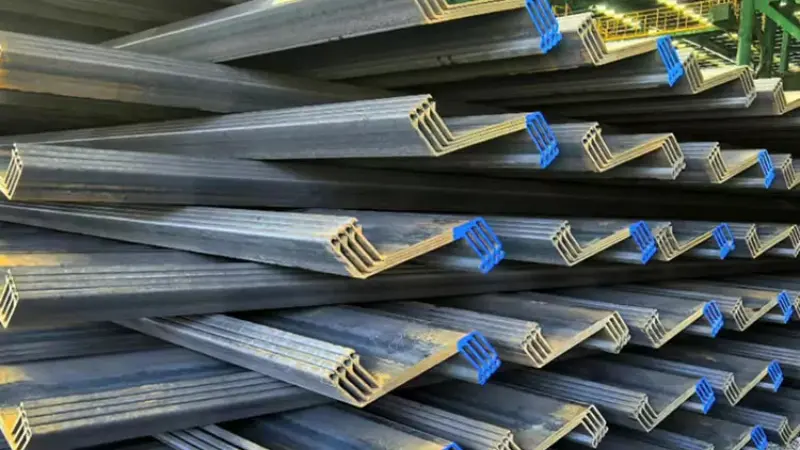
What determines lifespan?
Key factors include:
| Factor | Effect |
|---|---|
| Soil conditions | Influences corrosion rate |
| Water exposure | Accelerates corrosion |
| Chloride (seawater) | Highly aggressive |
| Steel thickness | Extends durability |
| Coating system | Major protection factor |
| Maintenance | Prevents failure |
According to durability research from institutions like the World Steel Association , corrosion behavior varies significantly by environment.
Temporary vs permanent use
| Application | Service Life |
|---|---|
| Temporary works | Months to years |
| Riverbanks | 50+ years |
| Ports | 50–100 years |
| Flood protection | Decades |
Permanent structures require corrosion allowance and coating systems.
Maintenance importance
Regular inspection helps detect:
- Coating damage
- Corrosion zones
- Structural deformation
- Leakage
Preventive maintenance significantly extends service life.
What is the problem with using steel sheet piles in sea defence work?
The main problem is chloride-induced corrosion, which accelerates steel deterioration in marine environments.

According to ISO 12944 and marine durability research, the splash zone is the most aggressive corrosion environment.
| Zone | Corrosion Risk |
|---|---|
| Splash zone | Very High |
| Tidal | High |
| Submerged | Moderate |
Corrosion control methods
Engineers typically apply:
- Corrosion allowance
- Protective coatings
- Cathodic protection (ISO 15589)
- Regular inspection
Reinforced concrete challenges
Chloride penetration can also corrode reinforcement steel, as described in ACI 222R.
This may cause:
- Cracking
- Spalling
- Structural weakening
What steel are sheet piles made of?
Steel sheet piles are manufactured from structural carbon steel or high-strength low-alloy steel meeting standards such as EN 10248, ASTM A572, ASTM A690, and JIS A5528.
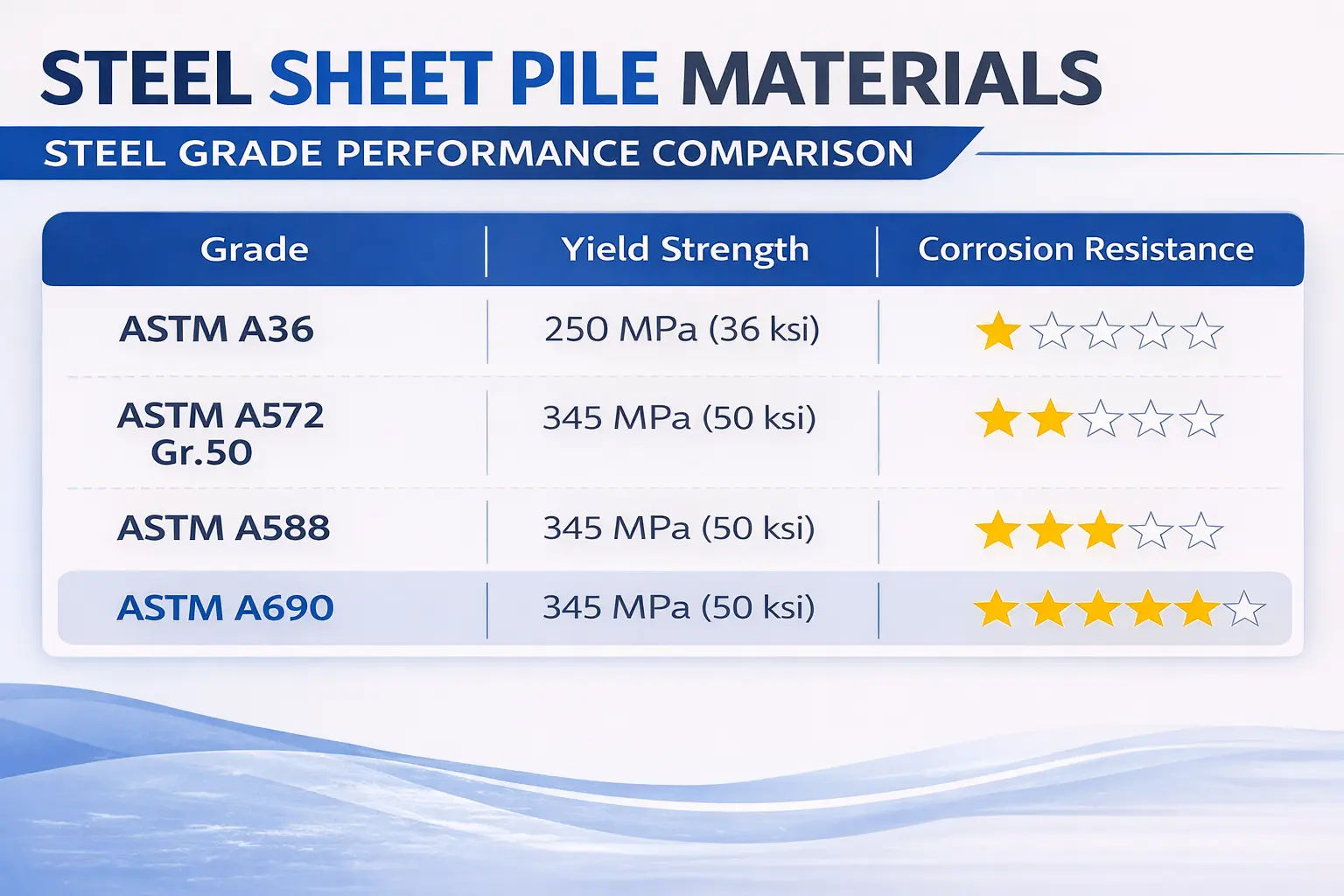
Relevant standards include:
Hot rolled piles provide:
- Higher strength
- Better interlocking
- Improved durability
- Stable section properties
FAQ (Optimized for Google Featured Snippets)
How do you fix a damaged sheet pile?
Inspect the damage, determine structural impact, and apply appropriate repair methods such as straightening, welding, or replacement.
Can bent sheet piles be repaired?
Yes, minor bends can be repaired using controlled hydraulic straightening if the steel has not exceeded its yield limit.
When should a sheet pile be replaced instead of repaired?
When there is severe deformation, cracking, interlock failure, or loss of structural capacity.
How long do steel sheet piles last?
Typically 50–100 years with proper corrosion protection and maintenance.
What causes sheet pile damage?
Common causes include improper handling, driving resistance, corrosion, and installation misalignment.
Conclusion
Damaged steel sheet piles can often be repaired, but the best strategy is prevention through proper design, correct material selection, early inspection, and ongoing maintenance.