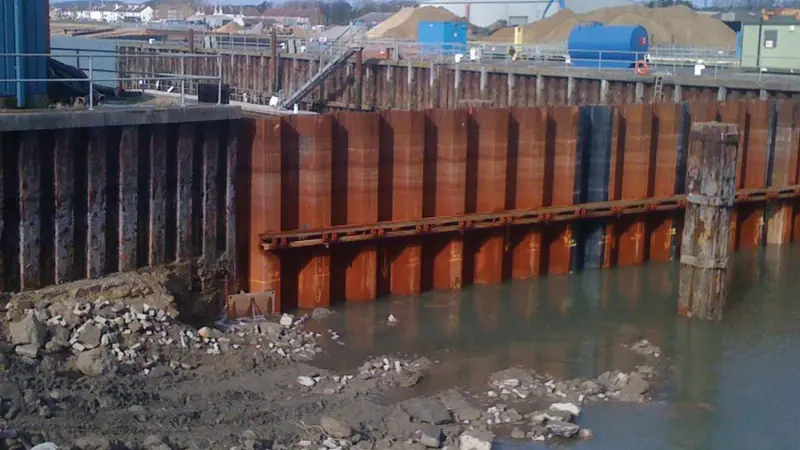
I have seen many project managers ask this question. They are planning a deep excavation or a riverbank wall. They want to know if a sheet pile wall can handle the height they need. The answer depends on many factors.
The maximum height of a cantilever sheet pile wall is usually between 3 and 6 meters (10 to 20 feet) depending on the soil conditions and the pile section. For anchored walls with tie rods, you can go much higher, up to 10.5 meters (35 feet) or more. For design guidance, see Design of Sheet Pile Walls and Steel Sheet Piling.
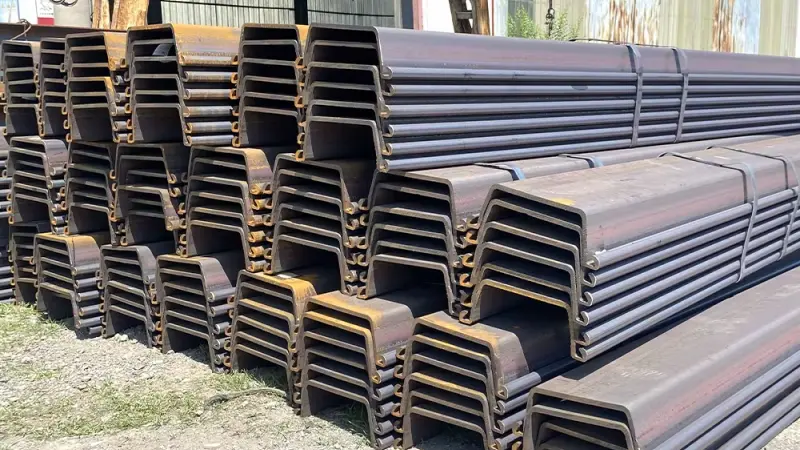
I have worked with steel sheet piles for years. I have supplied them for riverbank protection, port construction, and deep excavation support. The height of a sheet pile wall is one of the first things a designer considers. Let me walk you through the limits and how to exceed them.
What is the maximum height of the wall?
This is a very common question. People want to know if sheet piles can work for their project. The answer is not a single number. It depends on the type of wall you are building.
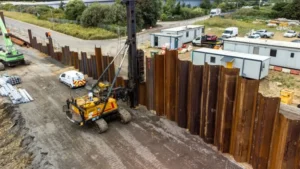
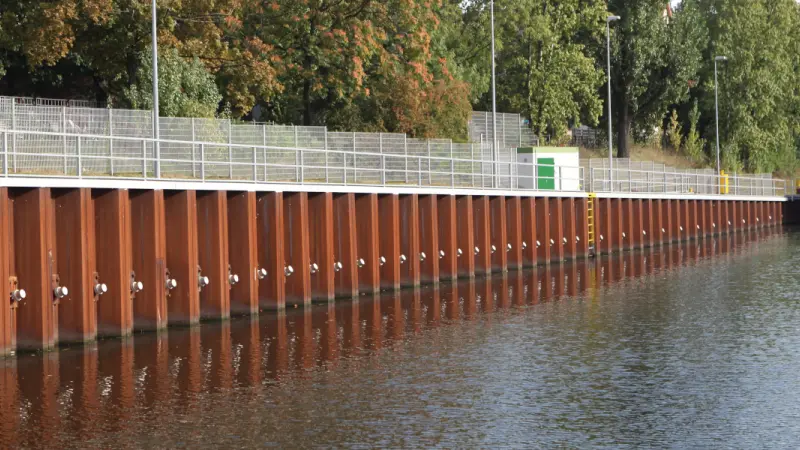
The maximum height of a cantilever sheet pile wall is about 3 to 6 meters (10 to 20 feet). If you need a taller wall, you must use anchors or tie rods. Anchored sheet pile walls can reach heights of 10.5 meters (35 feet) or more. For a practical project example and a design overview, see Technical Guidance download and Sheet Pile Wall Design.
Breaking Down the Height Limits
Let me explain the different height limits for different wall types.
Cantilever Walls
A cantilever wall relies only on the soil embedment for support. It acts like a big beam sticking out of the ground. The wall height is limited because the soil pressure increases with depth. At some point, the pile section is not strong enough to resist the bending moment.
- USACE Manual: Cantilever wall design depends strongly on wall height, embedment, and soil parameters. See Design of Sheet Pile Walls.
- FDOT Guidance: If cantilever pile length exceeds the standard limits, tie-backs should be considered. See FDOT Sheet Pile Wall Standard.
- Engineering Course Notes: Cantilever sheet pile walls are commonly used for limited heights. See Steel Sheet Piling
Anchored Walls
An anchored wall has tie rods or ground anchors. These provide additional support near the top of the wall. This allows the wall to be much taller.
- FDOT: When cantilever limits are exceeded, use tie-backs. See FDOT Sheet Pile Wall Standard.
- KSP Technical Guidance: Anchored sheet pile systems are used for deeper or more demanding wall conditions. See Technical Guidance download.
- USACE: Anchored wall design is covered in the sheet pile wall manual.
Cellular Walls
Cellular sheet pile walls are a special type. They are used in marine applications. The piles form cells that are filled with granular material.
- Industry references discuss cellular and marine retaining structures as a higher-capacity option for waterfront works. See Sheet Pile Wall Design.
A Quick Reference Table
| Wall Type | Typical Maximum Height | Key Limitation |
|---|---|---|
| Cantilever | 3 to 6 meters (10-20 ft) | Bending moment and soil passive resistance |
| Anchored | Up to 10.5 meters (35 ft) | Anchor capacity and tie rod strength |
| Cellular | 18 to 20 meters (60-66 ft) | Interlock tensile strength and bursting pressure |
How deep can sheet piles go?
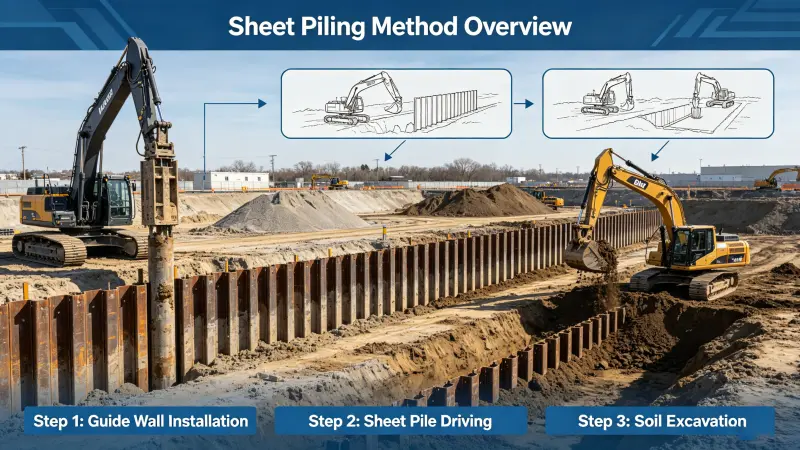
This is related to the wall height question. The depth of the sheet pile is the total length driven into the ground. It includes the wall height above the ground plus the embedment depth below.
Sheet piles can be driven to depths of 12 meters (40 feet) or more. The total length depends on the wall height and the required embedment. For a cantilever wall, the embedment depth is often about 30% of the wall height. For anchored walls, the embedment depth is part of the design to resist the lateral forces. See Design of Sheet Pile Walls and Steel Sheet Piling. [web:31][web:29]
How Deep Is "Deep Enough"?
The embedment depth is a critical design value. It must be enough to provide passive resistance against the wall’s movement.
The Embedment Rule of Thumb
For a cantilever wall, the embedment depth is often about 30% of the clear wall height. For example, if the wall height is 5 meters, the embedment depth might be 1.5 meters. The total pile length would be 6.5 meters.
Factors That Affect Embedment Depth
The embedment depth depends on:
- The soil type and its strength.
- The wall height and the earth pressure.
- The presence of water and groundwater.
- The factor of safety you use.
Real-World Examples
In a railway project in London, the sheet piles were driven to a depth of 12 meters. The wall height was about 4.7 meters in the temporary condition. The embedment depth was about 7.3 meters. This is much more than 30% because of the high soil strength requirements.
My Experience
In my experience, the total pile length is often the limiting factor. The piling equipment must be able to drive the piles to the required depth. In some soil types, like stiff clay, it can be hard to drive piles very deep. For difficult soil conditions, you may need to use a pile press or vibratory hammer.
How tall can a retaining wall go?
This is a more general question. People often ask this when they are considering different types of retaining walls. The answer depends on the wall type and the design.
A retaining wall can be very tall, but the type of wall changes with height. For walls under 3 meters, you can use a simple cantilever wall. For walls up to about 6 meters, a cantilever sheet pile or reinforced concrete wall can work. For walls over 6 meters, you usually need an anchored system, a gravity wall, or a mechanically stabilized earth wall. For retaining-wall fundamentals, see Sheet Pile Wall Design and Design of Sheet Pile Walls. [web:24][web:31]
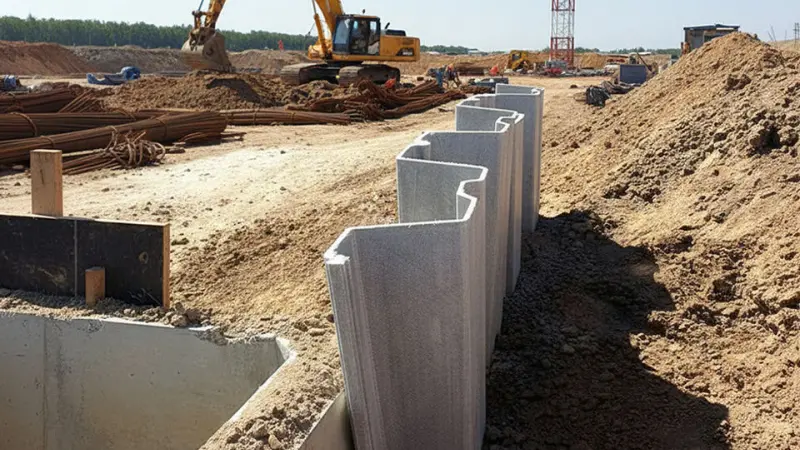
The Height Limits of Different Retaining Walls
Let me compare the height limits of different retaining wall types.
Gravity Walls
These walls rely on their own weight to hold back the soil. They are often made of concrete or stone. They are suitable for heights up to about 3 to 4 meters. Above that, they become very thick and heavy.
Cantilever Walls
These walls are L-shaped or T-shaped. They use the weight of the soil on the heel to provide stability. They can be used for heights up to about 6 to 8 meters. This includes cantilever sheet pile walls and reinforced concrete walls.
Anchored Walls
These walls use tie rods or ground anchors. They can be much taller. Sheet pile anchored walls can reach 10.5 meters or more.
Cellular Walls
These are used for waterfront structures. They can reach heights of 18 to 20 meters.
My Advice
If you are planning a retaining wall, start by considering the height. For a wall under 3 meters, a cantilever sheet pile or a simple gravity wall is often the best choice. For a wall between 3 and 6 meters, you can use a cantilever sheet pile wall but you should check the design carefully. For a wall over 6 meters, you should plan to use anchors or a different wall type.
What is the maximum height of a boundary wall?
This question is often about walls on property lines. These are not usually sheet pile walls. They are often masonry or concrete walls. But the question comes up, so let me address it.
The maximum height of a boundary wall depends on the local building codes and zoning regulations. In many areas, the maximum height is between 1.8 and 2.4 meters (6 to 8 feet). For taller walls, you may need a permit and a structural engineer’s design.
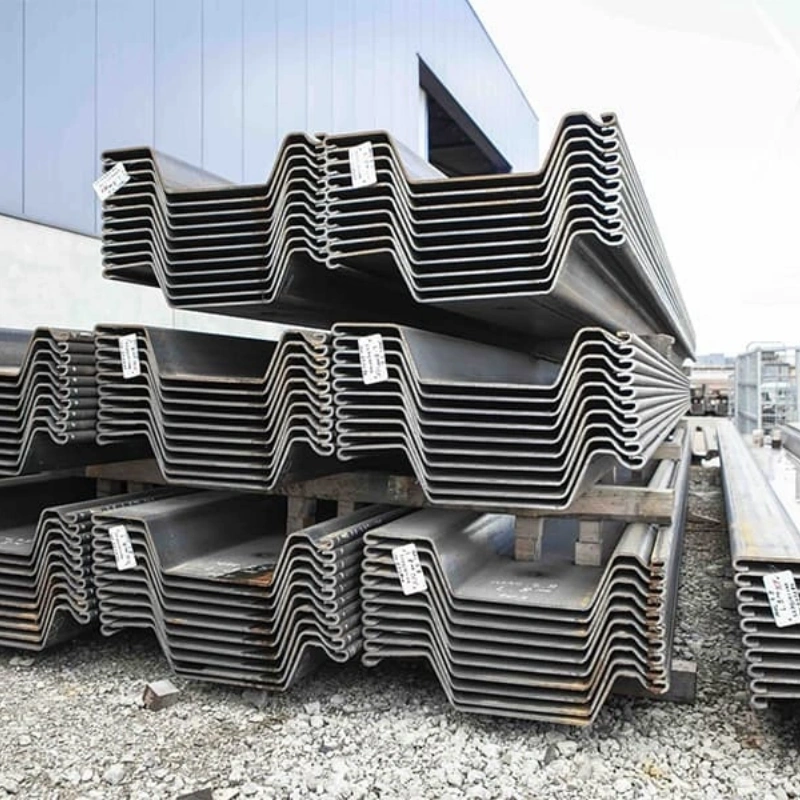
Boundary Wall vs. Sheet Pile Wall
It is important to understand the difference.
- Boundary Wall: This is a wall on a property line. It is often a brick or block wall. It is not a retaining wall. It is a "fence" wall.
- Sheet Pile Wall: This is a retaining wall. It is used to hold back soil or water.
Code Limits for Boundary Walls
Many local codes limit the height of boundary walls. The limit is often to prevent the wall from blocking light or air to neighboring properties. It can also be a safety issue. A very tall wall can be unstable and could collapse.
What If You Need a Tall Boundary Wall?
If you need a boundary wall that is taller than the code limit, you can often get a variance. You will need to show that the wall is necessary and that it is safe. You will likely need a structural design. In some cases, you can use a stepped wall or a wall with openings to reduce the visual impact.
Conclusion
The maximum height of a sheet pile wall depends on its type. Cantilever walls are limited to about 3 to 6 meters. Anchored walls can reach 10.5 meters or more. For taller structures, consider cellular walls or other retaining wall types.
For a deeper technical reference, consult the USACE design manual, PDH Online sheet piling notes, and Geoengineer.org’s sheet pile wall guide. [web:31][web:29][web:24]