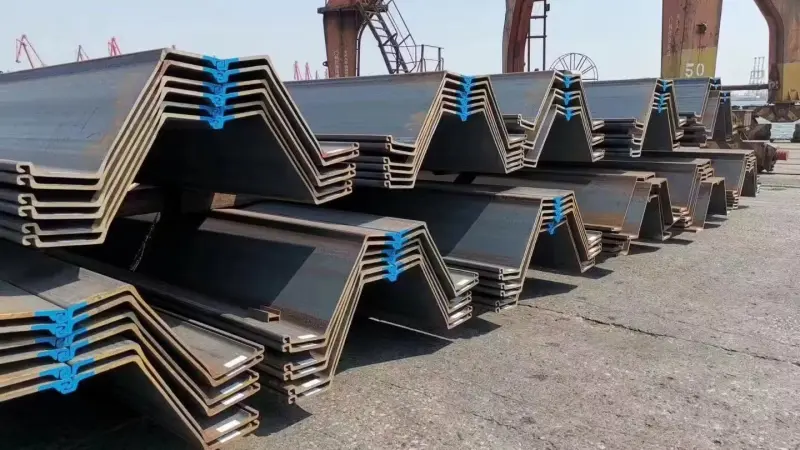
A sheet pile wall can look easy in a drawing, but the actual driving speed can change fast when soil, equipment, alignment, or crew decisions go wrong on site.
Sheet pile driving speed depends on soil conditions, pile section and length, driving method, equipment power, site access, alignment control, interlock condition, and the skill of the contractor. In my experience, the fastest projects are not just about stronger hammers. They come from the right match between the pile, the ground, the rig, and the installation plan.
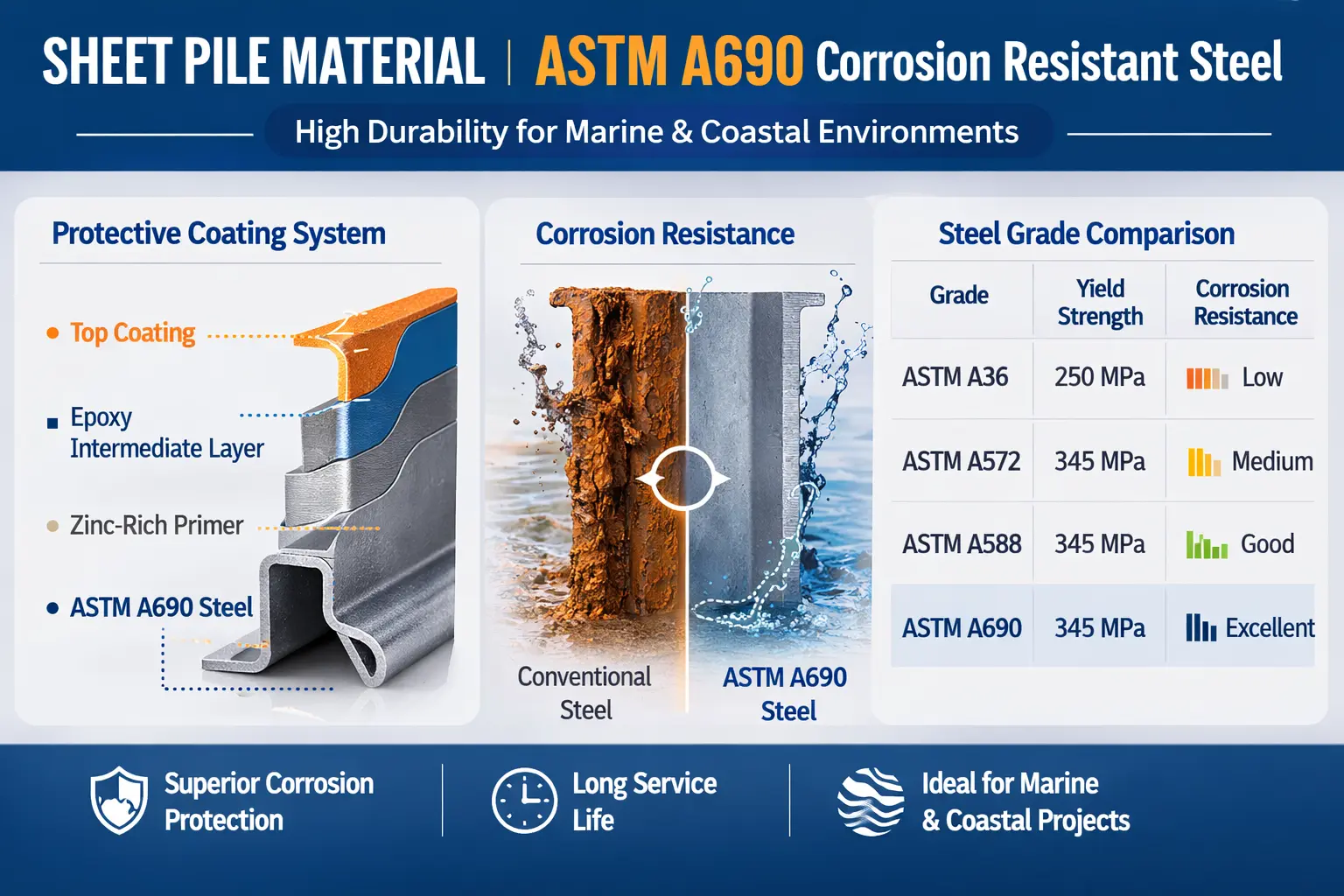
When a buyer asks me how fast sheet piles can be driven, I do not answer with one number right away. I first ask about the soil report, the pile profile, the required depth, the wall type, the installation method, and the site limits. I do that because sheet pile driving speed is not a fixed factory figure. It is a site result. Two projects can buy the same steel sheet piles from the same supplier and still end up with very different installation speeds.
I have seen short U piles go into soft ground very smoothly with a vibratory hammer, and I have also seen a simple-looking wall lose days because the site had hidden obstructions, bad alignment control, or the wrong hammer setup. I have also seen contractors blame the sheet piles when the real problem was the soil investigation or the installation sequence. That is why I think this topic deserves a practical answer, not a generic one.
From my side, as someone supplying steel sheet piles for contractors, civil engineering companies, and steel distributors, I always care about the same question: will this section drive efficiently in the real ground conditions? A sheet pile that works well in structural design but creates driving problems in the field can still cost the buyer time and money. In B2B work, that matters a lot more than a simple ton price.
According to ArcelorMittal’s installation guidance, installation speed depends mainly on ground conditions, sheet pile length, and driving equipment, and standard execution speed can range from 6 pairs to 30 pairs per day for standard sheet piles. I think that is a useful benchmark, but it is only a starting point. In real projects, driving speed is shaped by a much wider group of factors.
In this article, I will answer the speed question through four common sub-questions that buyers and contractors often ask. First, I will look at common pile driving mistakes, because a lot of “slow driving” is actually “avoidable delay.” Then I will explain how sheet piles are driven, since the method itself is one of the biggest schedule drivers. After that, I will look at what causes pile damage during driving, because damaged piles and damaged interlocks can slow a project badly. Last, I will talk about the factors used when selecting the type of pile, because good speed usually starts with good selection before the steel even reaches the site.
I will also add my own view throughout. I think speed is one of the most misunderstood topics in sheet piling. People often focus on the hammer, but I think the real answer is much broader. A fast sheet piling project is usually the result of good preparation, not just aggressive driving.
What are common pile driving mistakes?
A sheet piling job can lose speed very quickly when the team makes basic installation mistakes that force rework, stoppages, or pile corrections.
Common pile driving mistakes include poor soil investigation, choosing the wrong hammer or pile section, weak guide control, misaligned interlocks, driving piles out of plumb, using damaged clamps or caps, and ignoring obstructions or vibration limits. In my experience, many “slow” projects are not truly slow because of the ground. They are slow because early mistakes break the installation flow.
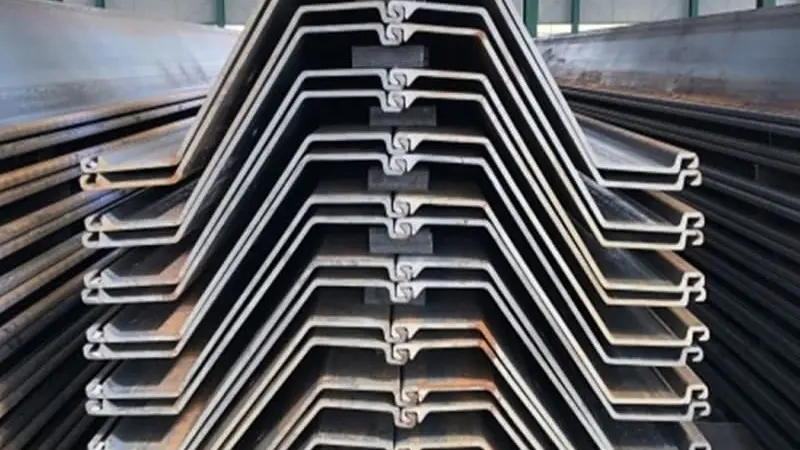
I think most speed problems start before the first pile is pitched
When contractors talk about slow driving, they often describe it as a field problem. Sometimes it is. But I have learned that many speed losses actually start in planning. The crew arrives on site, the piles are there, the crane is ready, and only then does the project discover that the wall line is tight, the soil report is weak, the hammer is underpowered, or the pile length is too optimistic for the real embedment resistance.
That is why I do not treat “pile driving mistakes” as only operator mistakes. I see them as system mistakes. A sheet pile wall is not just steel plus a hammer. It is the pile, the soil, the guide, the machine, the sequence, and the site restrictions all working together.
Mistake 1: Starting with a poor soil investigation
This is the first mistake I look for. ArcelorMittal’s engineering guidance makes it very clear that a successful piling job depends on a detailed soil investigation, and I fully agree. If the soil data is weak, every later decision becomes less reliable:
- the pile section may be too light or too heavy
- the installation method may be wrong
- the hammer may be underpowered
- obstructions may be missed
- the contractor may underestimate refusal risk or alignment drift
I have seen projects where the contractor expected mostly soft to medium soils, but the actual site had dense granular layers or old concrete remnants. The result was not just slower driving. The result was stop-start installation, hammer changes, pile refusal, and expensive guessing in the middle of the project.
Mistake 2: Choosing the wrong driving equipment
Another common mistake is assuming that any vibratory hammer or impact hammer will do the job. In reality, the equipment has to match the pile and the ground. ArcelorMittal’s installation equipment guide explains that the choice of driving equipment must consider the whole system: sheet pile, soil, driving template, driving assistance, and nuisance limits like noise and vibration.
I think this is one of the most important points in the whole article. A hammer is not “strong” or “weak” in isolation. It is strong or weak for a specific pile in a specific ground condition.
If the hammer is too small, the driving speed drops and the crew may never reach the target depth efficiently. If the hammer is too aggressive without proper cap and clamp setup, the pile head or interlock may be damaged. Both outcomes cost time.
Mistake 3: Poor guide frame and alignment control
I have seen many jobs lose speed because the team wanted to save time on guides and then lost much more time correcting pile position later. If the first piles are not vertical, the wall can drift. Once drift starts, the interlocks stop running smoothly, the wall line becomes harder to control, and the driving resistance can increase because the pile is fighting both soil and geometry.
For permanent walls, sealed walls, or deep walls, I strongly prefer proper guide frames. ESC’s quality control guidance also stresses the value of rigid guiding systems and careful verticality control during sheet pile installation. I agree with that because speed without alignment is false speed. The crew may move quickly for the first few piles, then lose half a day fixing the line.
Mistake 4: Not checking interlocks before driving
This mistake is easy to overlook. If interlocks are dirty, bent, or damaged in transport, the piles may not engage smoothly. Then the crane spends extra time pitching the pile, the crew fights the interlock, and the driving rhythm breaks.
In my own work, I care a lot about interlock condition because it affects both installation speed and wall quality. A pile that cannot interlock smoothly is not just annoying. It can create real schedule loss.
Mistake 5: Ignoring site restrictions
Sometimes the technical pile plan is fine, but the site itself is the hidden problem. If the project is next to existing buildings, rail lines, utilities, or marine structures, the contractor may face noise limits, vibration limits, restricted crane movement, or short working windows. If those restrictions are ignored during planning, the installation speed forecast becomes unrealistic.
Common mistakes and their effect on speed
| Mistake | What happens on site | Effect on driving speed |
|---|---|---|
| Weak soil investigation | Wrong equipment or wrong pile choice | Rework, refusals, slow progress |
| Wrong hammer selection | Low penetration or excessive pile stress | Delays and possible pile damage |
| No proper guide control | Wall drift and poor verticality | Slower interlocking and correction work |
| Dirty or damaged interlocks | Hard pitching and binding during driving | Stop-start installation |
| Ignoring access or vibration limits | Equipment changes or working restrictions | Lost productivity and schedule gaps |
| Poor pile sequencing | Crane waits, wrong pile order, handling waste | Lower daily output |
My own view: the most expensive pile driving mistakes are the ones that look small at first
I say that because the biggest delays are not always dramatic failures. Sometimes the problem starts with one slightly leaning pile, one damaged clamp, one skipped interlock check, or one soil assumption that was never verified. On paper those look minor. On site they multiply. The crew slows down, the wall line drifts, the next piles become harder to pitch, and suddenly a project that should have felt routine turns into a sequence of corrections. For me, that is why driving speed is really a quality issue as much as a production issue.
How are sheet piles driven?
A contractor cannot improve driving speed until the installation method itself is clear, because the method controls how piles are pitched, aligned, penetrated, and corrected in the ground.
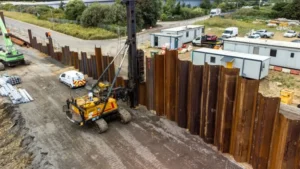
Sheet piles are driven by lifting each pile into position, interlocking it with the previous pile, aligning it in a guide frame or template, and then pushing it into the ground using a vibratory hammer, impact hammer, or hydraulic press. In many projects, the actual driving speed depends not only on the machine type but also on whether the piles are installed one by one, in pairs, or in panels, and whether driving assistance such as pre-drilling or water jetting is needed.
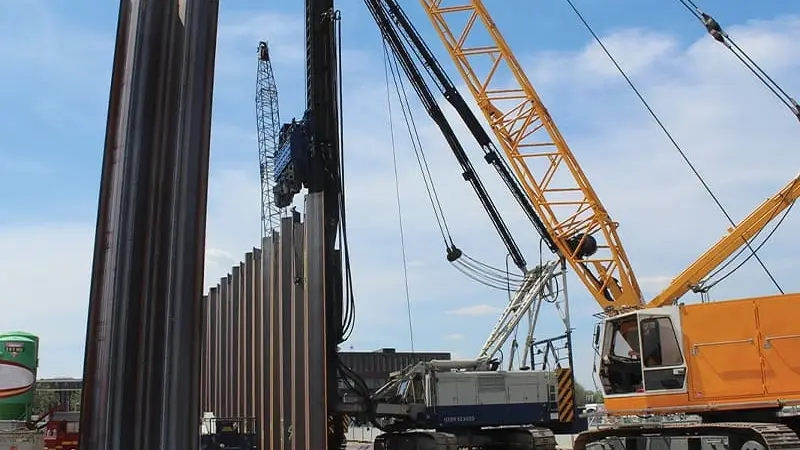
I like to explain sheet pile driving as a process, not as a single action
When people say “driving sheet piles,” they often imagine the moment when the hammer starts working. But the real process begins before that. I usually break it into six stages:
- prepare the working platform and pile storage
- set out the wall line and guide frame
- lift and pitch the first pile carefully
- engage the next pile through the interlock
- drive or press the pile to the planned level
- check alignment, plumb, and wall line continuously
This matters because driving speed depends on the whole sequence, not only on penetration resistance. A crew can have a strong hammer and still move slowly if the piles are not staged correctly, if the guide frame is weak, or if the interlocks are not engaging smoothly.
The main installation methods used for steel sheet piles
According to ArcelorMittal’s installation pages, the standard methods are:
- vibratory hammers
- impact hammers
- hydraulic presses
Each method affects speed differently.
Vibratory driving
Vibratory hammers are one of the most common methods for steel sheet piles. The vibration reduces friction between the pile and the surrounding soil, which helps the pile move downward. In sands and gravels, this can be a very efficient method. I have seen vibratory driving work especially well in riverbank support, temporary retaining walls, and many standard civil projects.
The benefit of vibratory driving is often speed. But I do not think buyers should treat it as a universal answer. Dense soils, obstructions, and deep embedment can still slow progress. ArcelorMittal notes that impact hammers may still be required to reach final depth in difficult layers, and that matches what I have seen in practice.
Impact hammer driving
Impact hammers are usually chosen when the ground is denser, when a vibratory hammer cannot achieve the final depth efficiently, or when the project needs stronger penetration energy. Hydraulic and diesel hammers are both used in the market. These systems are often slower in visible rhythm than a vibratory setup, but they can be more effective in stiff or resistant soils.
I often see a combined approach where the contractor uses vibratory driving for the upper depth and switches to impact driving for final penetration.
Hydraulic pressing
Hydraulic pressing is very useful in urban or sensitive sites where noise and vibration must be limited. The piles are pressed into the ground rather than driven by repeated blows. This method can be a very smart solution near existing structures, railways, or utilities, but it must be evaluated in the context of site restrictions and soil resistance.
Driving sequence also changes speed
This is something I think buyers often miss. Even with the same hammer, the installation sequence can change productivity.
Pitch-and-drive
Each pile is pitched and driven directly to final depth. This can be fast and simple in temporary works, short piles, and moderate soils.
Panel driving
Several piles are placed together in a panel before being driven in a planned sequence. ArcelorMittal’s installation method guidance explains that panel driving is often recommended for permanent walls and jobs with strict tolerances or sealing systems. I agree because panel driving can improve alignment, though it may require more setup and control.
Driving in pairs
Some sections, especially certain Z piles, are often handled in pairs for alignment and efficiency reasons, depending on the section and site method.
Driving assistance can speed up difficult projects
ArcelorMittal also lists pre-drilling, pre-augering, and water-jetting as forms of driving assistance in difficult ground. I think this is a very practical point. Some contractors try to force speed by using more hammer energy, when the smarter answer is to reduce resistance in a controlled way.
What I watch during driving
| Driving element | Why it matters for speed | My view |
|---|---|---|
| First pile position | Sets the wall line for everything after it | A bad first pile can slow the whole job |
| Interlock engagement | A smooth lock saves time on every pile | Dirty or misaligned interlocks waste time fast |
| Guide frame quality | Controls plumb and wall alignment | Good guides protect both speed and accuracy |
| Driving method | Changes penetration efficiency and site impact | Method choice is a schedule decision |
| Driving assistance | Helps in dense or obstructed soils | Sometimes it saves more time than a bigger hammer |
| Crew coordination | Crane, hammer, and ground crew must stay in rhythm | Flow matters as much as raw power |
My own view: the fastest driving method is the one that reduces interruptions, not the one that looks most aggressive
This is a point I believe strongly. A method that looks fast for the first few piles is not always the fastest over the whole wall. If the method creates alignment problems, interlock binding, or pile head damage, it will slow the project later. I prefer a method that gives steady, repeatable progress with fewer corrections. In sheet piling, smooth flow is often more valuable than dramatic force.
Which of the following is a common cause of pile damage during driving?
A project can lose time very fast when pile heads deform, interlocks bind, or sections twist during installation, because damaged piles interrupt the whole driving sequence.
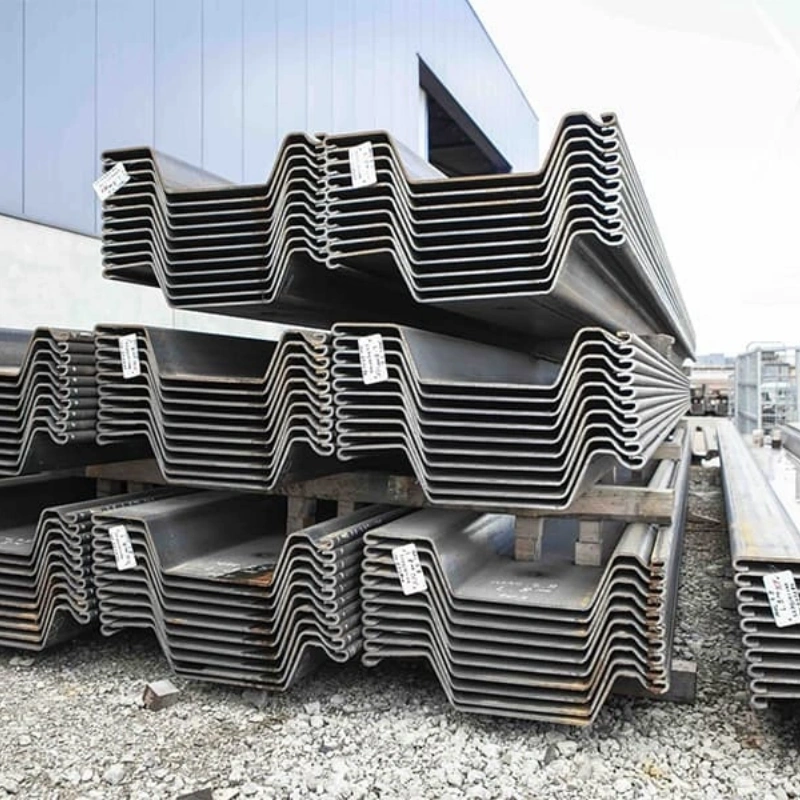
A common cause of pile damage during driving is using the wrong driving equipment or poor driving setup, especially an undersized or badly fitted driving cap, worn clamps, poor alignment, excessive driving stress, or trying to force the pile through unsuitable ground without proper assistance. In my experience, pile damage rarely comes from one single reason. It usually comes from a mismatch between the pile, the hammer, the guide system, and the ground resistance.
I separate “material defect” from “driving damage”
When a pile gets damaged on site, people sometimes ask whether the steel quality was the problem. That can happen in rare cases, but in normal projects I think the better first question is this: what happened during installation?
Most pile damage I hear about is not random. It usually relates to one of these conditions:
- wrong hammer setup
- bad driving cap
- insufficient clamping force
- poor verticality and side loading
- refusal in dense ground or obstructions
- damaged interlocks before installation
- excessive correction work during driving
Cause 1: Wrong or badly fitted driving cap
This is a classic cause of pile head damage. ArcelorMittal’s installation guideline stresses that the driving cap must be correctly sized and sufficiently rigid to transfer impact energy safely into the pile. I agree completely. If the cap does not distribute the energy correctly, the pile head can deform, and once the head is damaged, handling and further driving become harder.
Cause 2: Worn or weak clamping during vibratory driving
For vibratory installation, the connection between the hammer and the pile matters a lot. ArcelorMittal notes that the clamping force should exceed 1.2 times the centrifugal force of the vibratory hammer, and the clamp surface must be large enough and not worn off, otherwise pile head damage can occur. This is a very practical point. If the clamp slips or grips poorly, the energy transfer becomes inconsistent and the pile head can suffer.
Cause 3: Driving out of plumb
If the pile is not vertical and the guide control is poor, the pile may be loaded unevenly during driving. That can increase friction, distort the interlock, or create bending stresses that the installation team did not expect. In permanent walls or deep walls, even a small verticality issue can grow into a bigger problem later in the line.
Cause 4: Trying to force the pile through unsuitable ground
This is a big one. If the pile hits dense layers, cobbles, buried concrete, or other obstructions, and the contractor keeps pushing without changing the method, the pile can twist, refuse, or deform. In those cases, I think the right answer is not always “hit harder.” It may be pre-drilling, water-jetting, changing the hammer, or reassessing the embedment path.
Cause 5: Interlock damage and plugging
Interlock problems do not always look dramatic at first, but they can lead to major delays. If the interlock is damaged or clogged, the next pile may not engage properly. Then the crew may try to force the connection, which can create further damage. ArcelorMittal’s watertightness guidance also notes that sealing systems can help prevent soil from clogging the interlocks, which in some soils can even make driving easier. I think that is an underrated point. Interlock condition is not just a quality issue. It is a speed issue too.
Common damage causes and what they affect
| Cause of damage | Typical result | Effect on speed |
|---|---|---|
| Wrong driving cap | Deformed pile head | Slower handling and possible rejection |
| Worn or weak clamp | Slip, local damage, poor energy transfer | Unstable driving and lost productivity |
| Poor verticality | Side loading, wall drift, interlock stress | More correction work and slower penetration |
| Obstructions or dense layers | Refusal, twisting, local deformation | Stops, rework, method change |
| Damaged interlocks | Hard pitching and poor engagement | Delay on every following pile |
| Excessive impact without assistance | Overstress and distortion | More pile damage and lower progress |
My own view: pile damage is often a warning sign that the project is trying to win a planning problem with brute force
I have seen this many times. The soil is harder than expected, the pile is drifting, the guide is weak, or the interlock is not clean. Instead of stopping and fixing the cause, the team tries to push through with more force. Sometimes that works for one pile. But over a whole wall, it usually creates more damage, more delay, and more cost. I think good contractors know when to stop forcing the pile and start fixing the setup.
What are the factors which are considered while selecting the type of pile?
Driving speed often depends on decisions made long before the rig arrives, because the wrong pile type can create handling issues, drivability problems, or unnecessary cost on site.
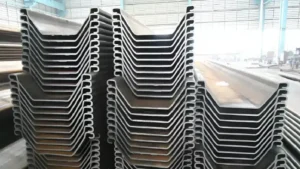
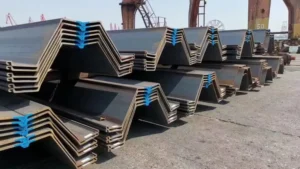
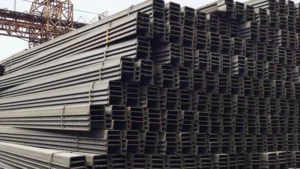
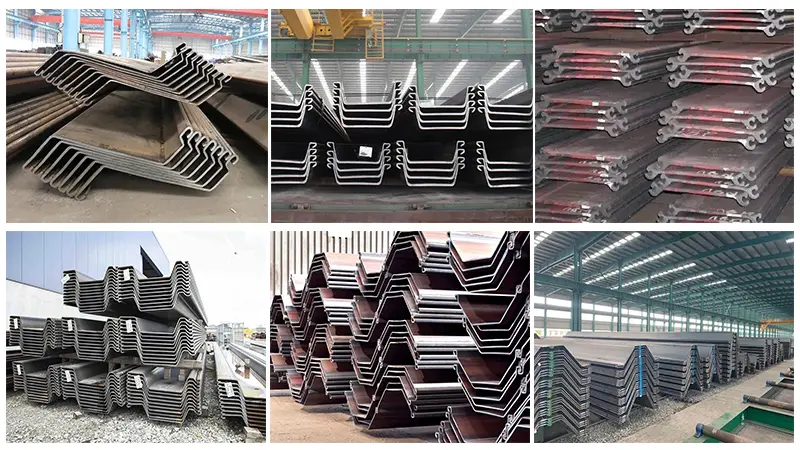
The main factors considered when selecting the type of sheet pile include soil conditions, required section modulus, wall depth, bending moment, temporary or permanent use, corrosion exposure, interlock performance, installation method, availability, and drivability. In my experience, the best pile choice is not only the one that works structurally. It is the one that balances structural demand, installation efficiency, and total project risk.
I never separate design choice from drivability choice
This is one of my strongest views in sheet piling. A pile section can look perfect in structural calculation and still be a poor choice for the actual site if it is difficult to drive, difficult to seal, or badly matched to the contractor’s equipment. That is why I always think about design plus execution, not design alone.
ArcelorMittal’s installation equipment guidance says that the selection of the sheet pile size must be based on static design and driveability in the given geological conditions. I agree with that completely. For me, that sentence captures the whole logic of smart sheet pile selection.
Factor 1: Soil conditions and drivability
This is usually the first practical filter. The same section can behave very differently in soft clay, loose sand, dense gravel, mixed fill, or obstruction-heavy urban ground. If the soil is dense or unpredictable, I want to know whether the chosen pile can still be driven with available equipment and acceptable risk.
ArcelorMittal’s AZ installation guideline even gives a practical rule of thumb that recommended sheet pile length in centimeters broadly corresponds to the section modulus in cubic centimeters per meter, while also stressing that soil conditions must be checked carefully. I think this is useful as an execution-oriented rule, not as a replacement for design.
Factor 2: Required structural performance
The wall still has to work as a structure. That means the section must match the bending moment, earth pressure, water pressure, and service conditions of the project. In practice, I usually look at:
- section modulus
- moment capacity
- wall depth and embedment
- interlock resistance where relevant
- deflection limits if the wall is permanent or exposed
Factor 3: Temporary or permanent use
This question changes a lot. If the wall is temporary, the contractor may prioritize reuse, availability, and easy extraction. If the wall is permanent, corrosion allowance, appearance, watertightness, and long-term durability become more important.
I think this is one reason steel sheet piles are such a flexible product. The same broad family of products can serve very different project goals, but only if the section choice matches the use case.
Factor 4: Installation method and equipment availability
A section that is theoretically fine may still be a bad fit if the contractor’s equipment cannot handle it efficiently. Some sections are easier to drive in singles, some in pairs, and some require more careful handling or templates. If the project is in a city with strict vibration limits, the contractor may need to use pressing or special low-vibration methods. That can influence which pile section is practical.
Factor 5: Interlock performance and water control
If the project needs a high level of water control, the interlock performance becomes more important. Some walls also need sealing systems, and those systems may influence installation tolerances and driving sequence.
Factor 6: Logistics and supply reality
I work in B2B supply, so I cannot ignore this point. A technically ideal pile that has a long lead time, poor local availability, or unnecessary transport cost may not be the best commercial answer. At CN Steel Plant, we often work with contractors who need a practical balance between section performance, certified mill supply, fast delivery from Liaocheng, and the actual project schedule. In many export markets, availability and lead time matter almost as much as design optimization.
My selection framework
| Selection factor | Why it matters | My practical view |
|---|---|---|
| Soil conditions | Controls drivability and refusal risk | Always check driveability, not just design |
| Structural demand | Determines section strength and stiffness | The pile must still satisfy the engineer first |
| Temporary or permanent use | Changes corrosion, reuse, and extraction logic | This should be decided early |
| Installation method | Affects whether the pile can be driven efficiently | Section and method must fit together |
| Interlock / watertightness needs | Influences sealing and alignment tolerance | Water control can slow installation if ignored |
| Availability and delivery | Impacts project schedule and procurement risk | A good section is useless if it arrives too late |
My own view: the best sheet pile is usually not the “strongest” one, but the one that fits the project with the fewest surprises
I think this is where experience matters. Buyers sometimes ask for the heaviest section because it feels safer. Sometimes that is correct. But sometimes a lighter or different profile would do the job better because it is easier to drive, easier to source, or easier to reuse. My job is not just to quote steel by weight. My job is to help the buyer avoid surprises in installation, schedule, and total cost. In my experience, speed problems often start with a pile selection that looked fine in one dimension and weak in all the others.
My view from real supply work: speed is created by compatibility
After looking at mistakes, methods, damage causes, and pile selection, I think the main answer becomes clear. Sheet pile driving speed is created by compatibility. The pile must fit the soil. The hammer must fit the pile. The guide must fit the wall tolerance. The method must fit the site restrictions. And the project team must understand what kind of wall they are actually building.
I saw this very clearly in our Riverbank Protection Project in Southeast Asia. In that project, hot rolled U type steel sheet piles were used for a retaining wall along the riverbank. The interlocks gave the wall continuity, and the piles were installed efficiently with vibratory equipment. From the outside, it may look like a simple success story about good steel. But I do not think that is the real lesson. The real lesson is that the section, the site conditions, the installation method, and the contractor’s workflow matched well enough to keep the project moving.
That is also how I think about B2B sheet pile supply today. A contractor does not only buy a profile. They buy a piece of the installation strategy. If I supply the wrong section for the actual ground and method, I am not helping the project, even if the mill price looks attractive. If I supply a section with reliable interlocks, suitable drivability, certified production, and realistic delivery timing, I am helping the contractor protect both schedule and quality.
Conclusion
For me, sheet pile driving speed is never just about hammer power. It comes from the right pile, the right soil understanding, the right method, and fewer mistakes during installation.