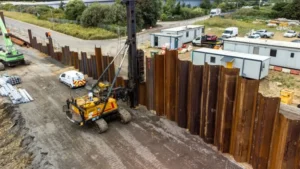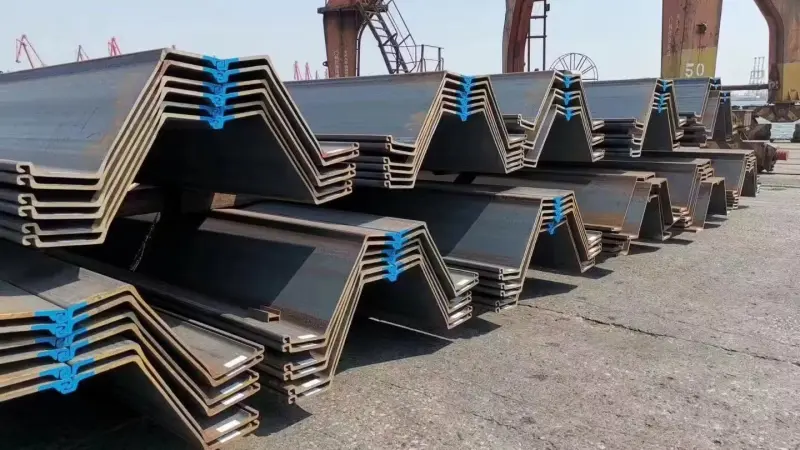
Many heavy-duty projects fail because the selected sheet pile profile cannot handle the required load. This often leads to excessive wall movement, redesign costs, and construction delays.
For high-load applications, Z-type sheet piles are often the best choice because they provide higher section modulus, greater bending resistance, and better structural efficiency than many U-type sections. The final selection depends on soil conditions, load requirements, and project design.
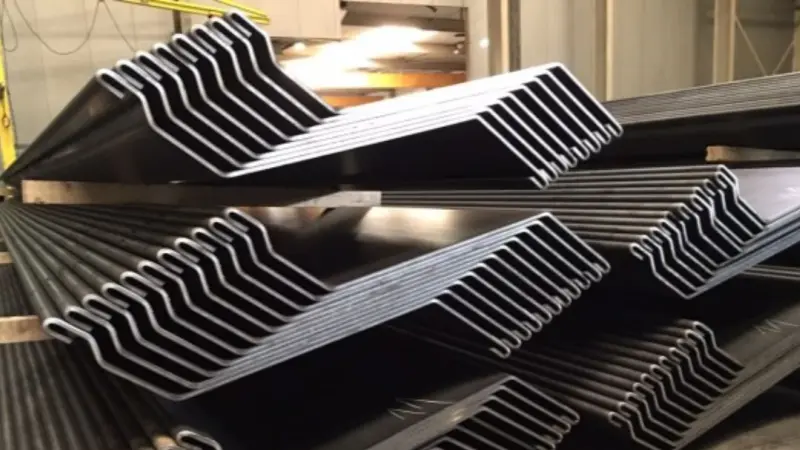
I often receive inquiries from contractors who only compare steel grades. In reality, the sheet pile profile can have a bigger impact on wall performance than the steel grade itself. Understanding profile geometry, section modulus, and installation requirements helps engineers make better decisions for demanding projects.
For high-load retaining wall design, refer to the ArcelorMittal sheet piling handbook and the ArcelorMittal Z sections overview.
Are sheet piles water proof?
Groundwater can become a serious challenge during excavation and marine construction. Many project owners expect sheet piles to completely block water.
Sheet piles are not completely waterproof. Their interlocking system significantly reduces water flow, but small seepage may still occur. Sealants, welding, and grouting can improve water tightness when stricter control is required.
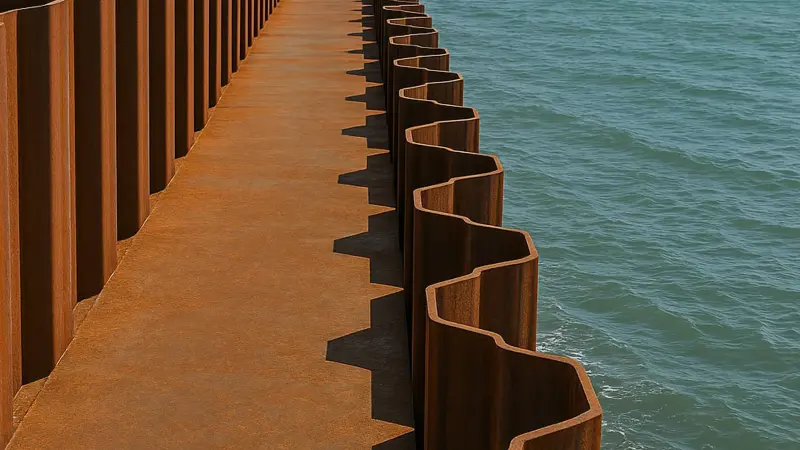
How Sheet Pile Interlocks Work
Steel sheet piles connect through specially designed interlocks. These connections create a continuous wall that limits water movement through soil.
The interlocks help:
- Reduce groundwater seepage
- Improve excavation stability
- Support dewatering systems
- Control soil erosion
Factors That Affect Water Resistance
Several conditions influence water performance.
| Factor | Influence |
|---|---|
| Interlock quality | High |
| Installation accuracy | High |
| Water pressure | High |
| Soil permeability | Medium |
| Sealant application | High |
Even well-installed walls may experience minor seepage under high hydrostatic pressure.
Improving Water Tightness
For demanding applications, engineers often specify:
- Bituminous sealants
- Polyurethane sealants
- Welded joints
- Grout curtains
These methods can significantly improve performance.
High-Load Marine Applications
Ports and seawalls often use sheet piles as both structural and water-control elements. The wall resists soil pressure while reducing water infiltration.
For marine durability and corrosion design, see the Steel Piling Group durability guidance and the ArcelorMittal piling handbook.
My View
I usually explain to clients that sheet piles should be considered water-resistant rather than fully waterproof. Most projects achieve excellent results when sheet piles are combined with proper drainage and pumping systems.
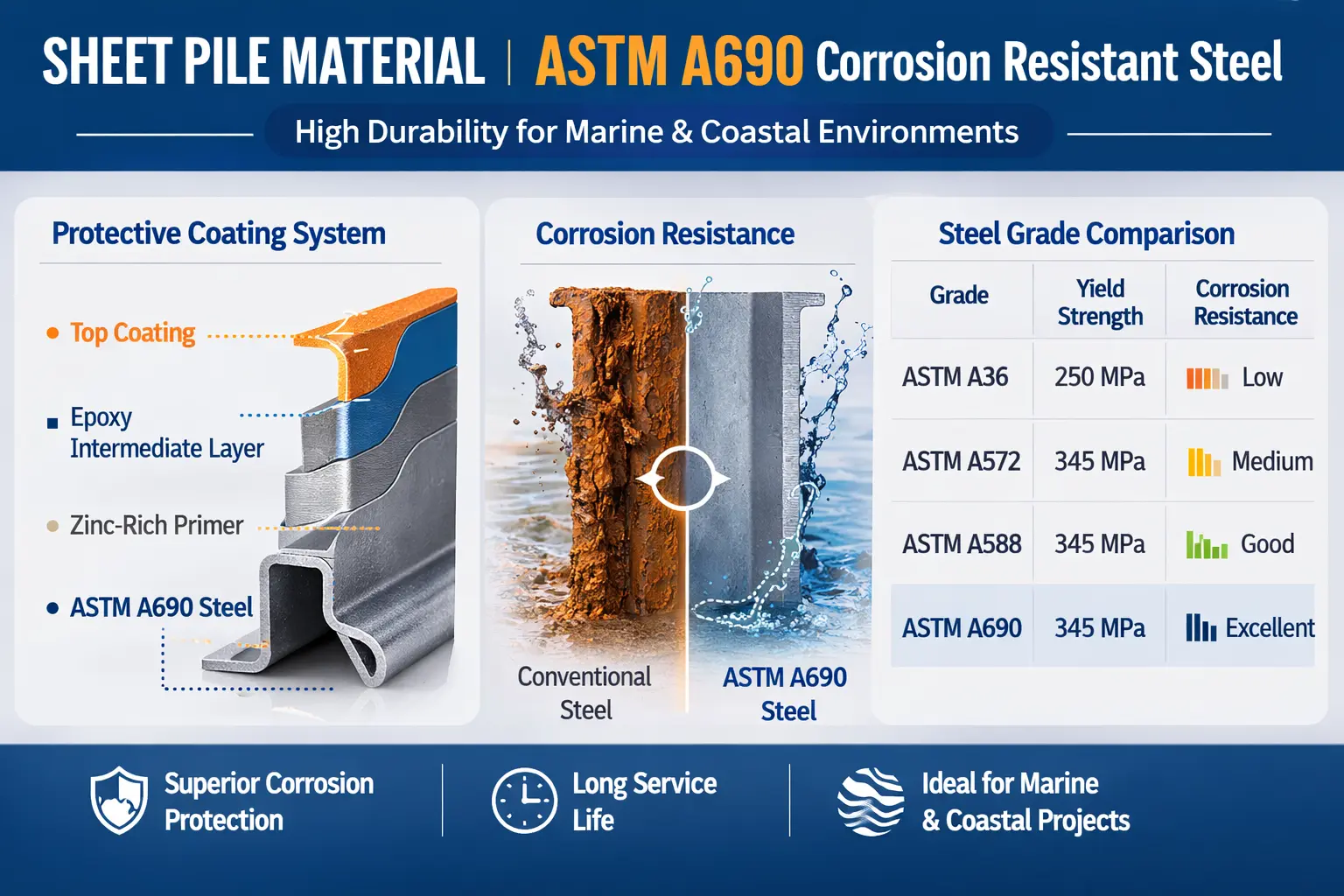
What is the best material for a sea wall?
Sea walls face constant attack from waves, saltwater, and corrosion. Material selection directly affects long-term durability.
Steel sheet piles made from marine-grade steels such as ASTM A690 or S355 are among the best materials for sea walls because they combine high strength, good durability, and efficient installation.
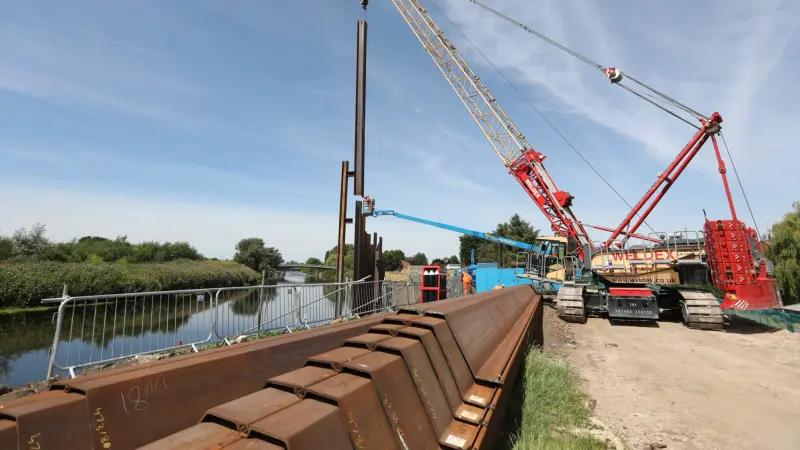
Key Requirements for Sea Wall Materials
Sea wall structures require:
- High structural strength
- Corrosion resistance
- Long service life
- Impact resistance
The material must perform under continuous environmental stress.
Common Sea Wall Materials
| Material | Strength | Durability | Installation |
|---|---|---|---|
| Steel Sheet Piles | High | High | Fast |
| Reinforced Concrete | High | High | Slow |
| Vinyl Sheet Piles | Moderate | High | Fast |
| Composite Materials | Moderate | High | Moderate |
Why Steel Remains Popular
Steel sheet piles offer several advantages:
- High load capacity
- Flexible design options
- Easy transportation
- Proven performance
Many modern ports and coastal projects continue to rely on steel sheet pile systems.
Corrosion Protection Methods
Common protection methods include:
- Protective coatings
- Cathodic protection
- Corrosion allowance
Useful corrosion guidance is available from the American Galvanizers Association and the Steel Piling Group durability page.
My Experience
Many of our customers in the Middle East select hot rolled steel sheet piles for marine projects because they balance cost, performance, and service life.
My Perspective
I believe steel sheet piles remain the most practical solution for most sea wall projects when corrosion protection is properly designed.
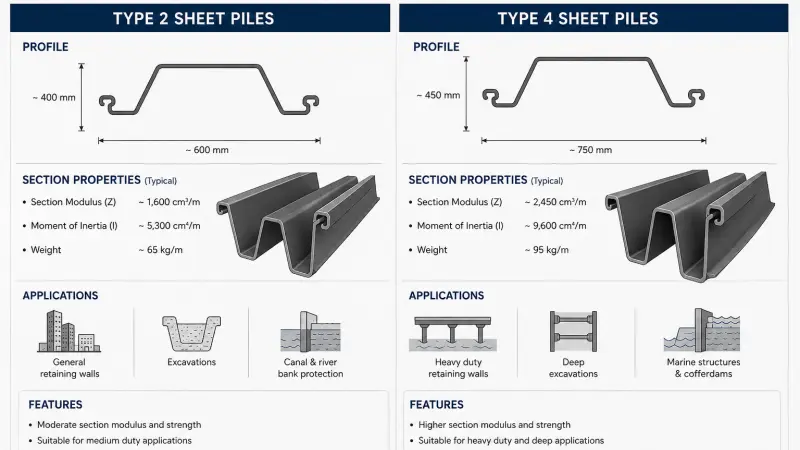
What is the difference between Type 2 and Type 4 sheet piles?
Contractors frequently compare Type 2 and Type 4 sheet piles when evaluating project costs and load requirements.
Type 4 sheet piles provide higher section modulus and greater bending resistance than Type 2 sections, making them more suitable for high-load applications and deeper excavations.
Understanding Section Modulus
Section modulus is one of the most important factors in sheet pile design.
Higher section modulus provides:
- Greater bending strength
- Better wall stability
- Reduced deflection
Comparison Table
| Property | Type 2 | Type 4 |
|---|---|---|
| Weight | Lower | Higher |
| Section Modulus | Lower | Higher |
| Excavation Depth | Moderate | Deep |
| Load Capacity | Moderate | High |
Suitable Applications
Type 2 is commonly used for:
- Utility trenches
- Small excavations
- Temporary support walls
Type 4 is commonly used for:
- Deep basements
- Marine structures
- Port construction
- Heavy retaining walls
Cost Considerations
Type 4 piles cost more initially. However, they often reduce overall project costs because fewer sections may be needed.
My View
For high-load projects, I generally recommend Type 4 sections because the additional structural capacity often provides better value than lighter alternatives.
For a technical basis on section efficiency and high-modulus design, see the ArcelorMittal AZ sections page and the high-modulus Z sheet pile wall guidance.
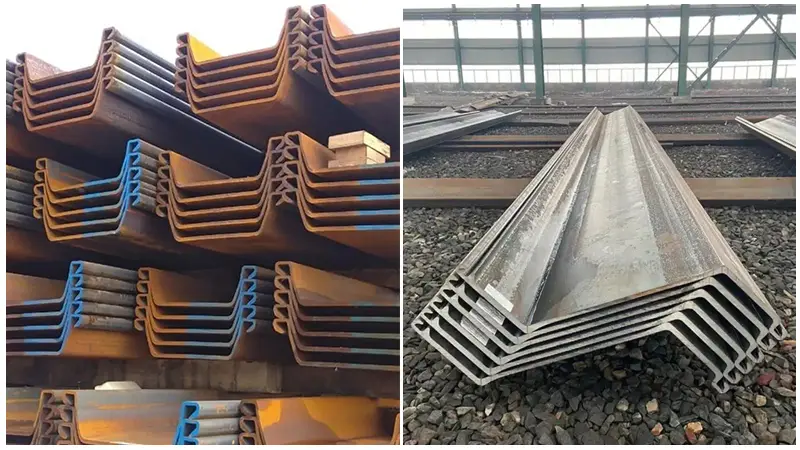
What is the difference between U type and Z type sheet piles?
The choice between U-type and Z-type profiles is critical for high-load applications.
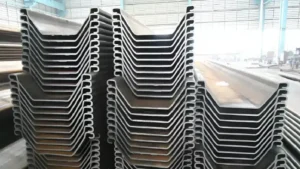
Z-type sheet piles generally provide higher strength-to-weight efficiency and greater section modulus, while U-type sheet piles offer easier handling and excellent interlock performance.
Structural Design Differences
U-type piles have:
- Symmetrical sections
- Continuous interlocks
- Simple installation
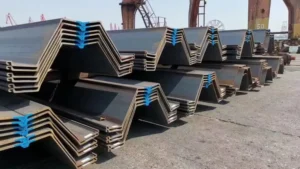
Z-type piles have:
- Wider effective width
- Higher section modulus
- Better bending performance
Comparison Table
| Feature | U-Type | Z-Type |
|---|---|---|
| Installation | Easier | Moderate |
| Section Modulus | Good | Excellent |
| Weight Efficiency | Good | Excellent |
| High Load Performance | Good | Excellent |
Why Z-Type Profiles Excel
The interlocks of Z-type piles are positioned away from the neutral axis.
This design:
- Improves structural efficiency
- Increases bending resistance
- Reduces steel consumption
Riverbank Protection Example
In our Southeast Asia riverbank protection project, hot rolled U-type sheet piles provided excellent performance because the project emphasized installation efficiency and interlock reliability.
My Perspective
For most heavy-duty projects, I prefer Z-type sheet piles. For temporary works and moderate loads, U-type profiles often provide the best balance between cost and performance.
For more on profile efficiency, see the ArcelorMittal AZ sections page, the ArcelorMittal sheet piling handbook, and the high modulus Z sheet pile wall guidance.
How deep should sheet piles be?
Even the strongest sheet pile profile will fail if embedment depth is inadequate.
Sheet piles should extend deep enough to resist soil pressure, overturning forces, and groundwater effects. Typical high-load projects often require sheet pile lengths ranging from 10 to 20 meters or more.
Factors Affecting Depth
Engineers consider:
- Soil strength
- Water table
- Excavation depth
- Surcharge loads
Each factor influences stability.
Typical Depth Guidelines
| Application | Typical Length |
|---|---|
| Utility Trench | 6–8 m |
| Basement Excavation | 8–12 m |
| Cofferdam | 10–18 m |
| Port Structures | 15–25 m |
Importance of Geotechnical Data
Soil investigations help determine:
- Bearing capacity
- Lateral earth pressure
- Groundwater conditions
Without accurate data, pile depth estimates become unreliable.
High-Load Structures
Ports, seawalls, and bridge foundations often require deeper embedment because they experience larger forces.
My View
I often see buyers focus on profile selection while ignoring embedment depth. In many cases, depth has a greater impact on performance than profile size alone.
For design-life, durability, and embedment-related checks, see the Steel Piling Group durability guidance and the ArcelorMittal piling handbook.
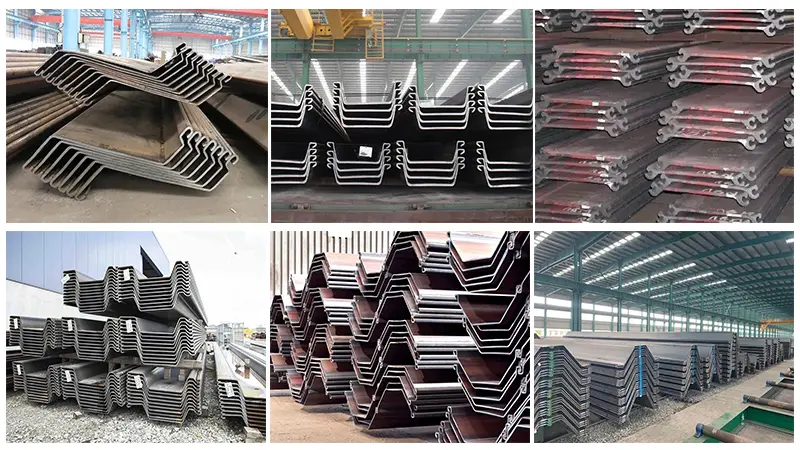
What are the three types of piling?
Different piling systems serve different engineering functions. Understanding these differences helps engineers choose the right solution.
The three main types of piling are driven piles, bored piles, and sheet piles. Each type serves different structural purposes depending on soil conditions and project requirements.
Driven Piles
Driven piles are installed using:
- Impact hammers
- Vibratory hammers
Advantages include:
- High load capacity
- Immediate use after installation
Bored Piles
Bored piles are constructed by drilling and filling with concrete.
Advantages include:
- Low vibration
- Large diameter options
Sheet Piles
Sheet piles function primarily as retaining structures.
Common applications include:
- Excavation support
- Cofferdams
- Flood protection
- Riverbank stabilization
Comparison Table
| Pile Type | Main Function |
|---|---|
| Driven Pile | Foundation Support |
| Bored Pile | Foundation Support |
| Sheet Pile | Earth Retention |
How High-Load Projects Use Multiple Systems
Large infrastructure projects often combine piling methods.
For example:
- Driven piles support vertical loads
- Sheet piles resist lateral pressure
This combination provides a complete structural solution.
My Insight
Many engineers compare these piling systems as competitors. I see them as complementary tools. Each system solves a different engineering challenge.
For a broader technical reference, see the ArcelorMittal piling handbook.
My Professional Opinion on High-Load Sheet Pile Profiles
After supplying sheet piles to contractors, civil engineering firms, and distributors across the Middle East, Asia, Africa, and other regions, I have found that profile geometry often matters more than steel grade alone.
For high-load projects such as ports, bridge foundations, deep excavations, and marine retaining walls, I usually recommend high-modulus Z-type sheet piles because they deliver excellent structural efficiency. For projects that require fast installation and reliable interlocks, hot rolled U-type sheet piles remain a strong option.
The best profile is never selected by load alone. Soil conditions, groundwater, wall height, project duration, and installation equipment must all be evaluated together.
Conclusion
High-load sheet pile projects require the right balance of profile geometry, section modulus, embedment depth, and soil conditions. Z-type piles often provide the highest structural efficiency.