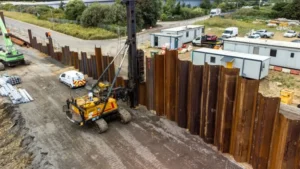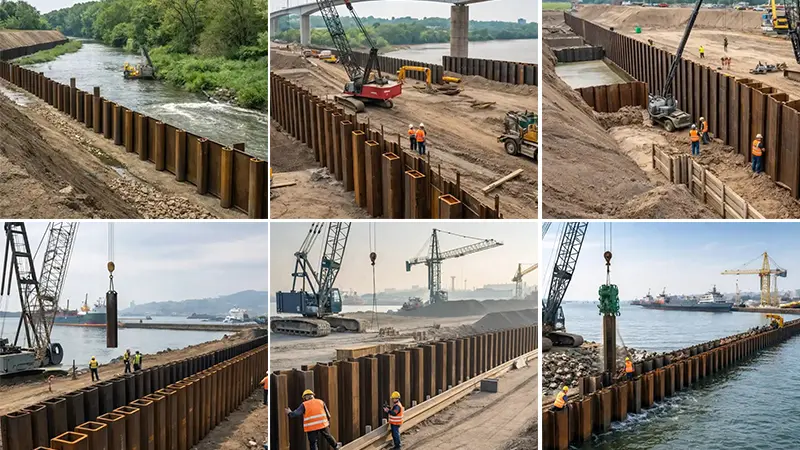
A sheet piling job can look routine from far away, but one wrong lift, one unstable excavation edge, or one poorly controlled rig movement can turn it into a serious accident within seconds.
The safety measures required for sheet piling include a site-specific risk assessment, lift planning, exclusion zones, trained operators, excavation and ground stability checks, safe lifting gear, traffic control, PPE, equipment inspections, and a clear method statement for pile handling, pitching, driving, and extraction. In my view, sheet piling safety is not one single rule. It is a system that starts before the first pile arrives on site.
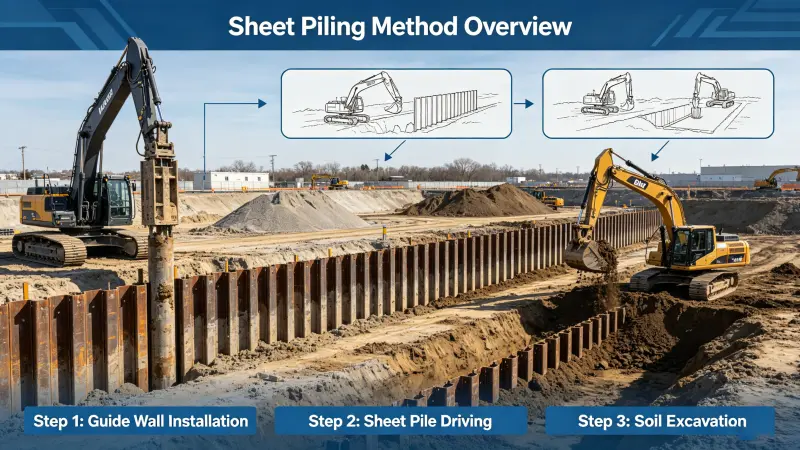
When people ask me about sheet piling safety, I do not think only about hard hats and gloves. I think about the whole sequence of the job. I think about how the piles are unloaded, where they are stored, how the crane lifts them, how the guide frame is set, what happens at the excavation edge, how the hammer is connected, where pedestrians stand, and what the crew will do if the pile jams, leans, or hits an obstruction. I also think about the part many buyers do not see: the planning stage. A safe sheet piling job usually starts with good engineering, realistic sequencing, and honest discussion about site conditions.
In my experience, sheet piling is one of those construction activities where different risks stack on top of each other. It is not just a lifting job. It is not just an excavation job. It is not just a steel installation job. It is all three at once, and sometimes more. A contractor may be working beside a road, next to water, over underground services, inside a deep excavation, or near an existing building that cannot tolerate movement or vibration. That is why I do not like simple safety checklists that only talk about PPE. PPE matters, but PPE is the last layer. Real safety in sheet piling comes from design choices, work sequencing, competent people, and strict control of plant and movement.
In this article, I will break the topic into four practical questions: the main safety considerations for piling, how I think about risk assessment for sheet piling, what equipment is actually needed for a safe sheet piling operation, and what safety measures must be followed on a construction site around piling works. I will also add my own view throughout, because I think too many safety articles repeat rules without explaining how those rules connect to real sheet pile work.
What are the safety considerations for piling?
The main safety considerations for piling include lifting safety, ground stability, exclusion zones, excavation edge safety, equipment condition, operator competence, overhead and underground service checks, and control of noise, vibration, and falling materials.
For sheet piling, I see the biggest safety considerations as safe lifting of long steel sections, keeping people out of the pile driving zone, checking ground and excavation stability, controlling plant movement, inspecting hammers and lifting gear, and making sure the crew follows a clear method statement. A piling job becomes unsafe very quickly when lifting, excavation, and vehicle movement are not controlled together.
I treat sheet piling as a multi-risk operation, not a single task
When I review a sheet piling job, I do not look at it as “just driving steel into the ground.” I break it into several connected activities:
- unloading and storing the piles
- lifting and pitching the piles
- setting the guide frame or line
- connecting the hammer or pressing system
- driving, pressing, or extracting the piles
- working around excavations, water, traffic, and other trades
Each step has its own hazards, and the hazard picture changes with the site. A riverbank job is not the same as a basement support project in a city. A temporary trench sheet job is not the same as a permanent quay wall. That is why I think “safety considerations for piling” should always be read in context, not as a generic list.
The core piling safety issues I always check first
1. Lifting operations and suspended loads
Steel sheet piles are long, heavy, and awkward to control in the air. If lifting points are wrong, if tag lines are missing, or if the crane path is not controlled, the pile can swing, strike workers, hit nearby structures, or drop. The UK HSE lifting operations guidance is very clear that lifting operations must be properly planned by a competent person, appropriately supervised, and carried out safely. I fully agree with that because a large part of sheet piling risk begins before the pile even touches the ground.
2. Plant movement and exclusion zones
A piling rig, crawler crane, excavator, and delivery truck all create moving plant hazards. The HSE excavator guidance stresses pedestrian segregation, visibility, trained drivers, and protected working zones. I apply the same thinking to sheet piling. Nobody should stand close to a swinging crane, beneath a suspended pile, or inside the immediate working radius of a pile driving rig unless their role requires it and the operation is controlled.
3. Excavation and edge stability
Sheet piles are often used next to excavations, cofferdams, or unsupported edges. That means the ground itself can be part of the hazard. Soft edges, surcharge loads from stored steel, and poorly planned working platforms can all lead to collapse or plant instability. If the crane or rig is too close to an unsupported edge, the problem is not only structural. It becomes a life safety issue.
4. Falling objects and struck-by hazards
Pile helmets, clamps, shackles, hoses, bolts, and small tools can all fall from height. Long piles can also whip or rotate during pitching. I do not allow people to stand in the line of fall or beneath work unless there is a controlled reason and the system has been designed for it.
5. Vibration, noise, and nearby assets
Vibratory hammers create obvious noise and vibration exposure. But the bigger issue in some projects is what that vibration does to nearby buildings, buried services, retaining walls, or old masonry structures. Safety is not only about the piling crew. It also includes the people and structures around the site.
My safety focus by work stage
| Work stage | Main hazard | What I focus on |
|---|---|---|
| Unloading sheet piles | Load shift, crush injury, unstable stacking | Level storage area, lifting plan, no one in the drop zone |
| Pitching piles | Swinging pile, pinch points, struck-by risk | Tag lines, exclusion zone, clear signalling |
| Driving or pressing | Rig movement, hammer failure, noise, vibration | Competent operator, daily checks, stable platform |
| Working beside excavation | Edge collapse, fall risk, ground failure | Setback distances, platform checks, access control |
| Extraction of piles | Sudden release, unstable pile movement | Controlled sequence, lifting capacity check, clear area |
My own view: the biggest piling safety mistake is treating long steel like ordinary site material
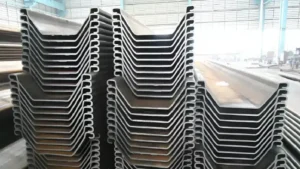
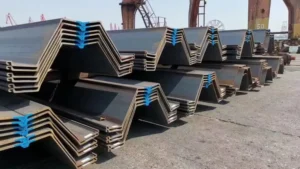
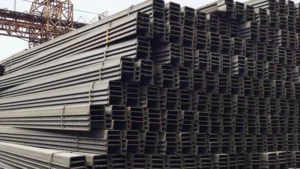
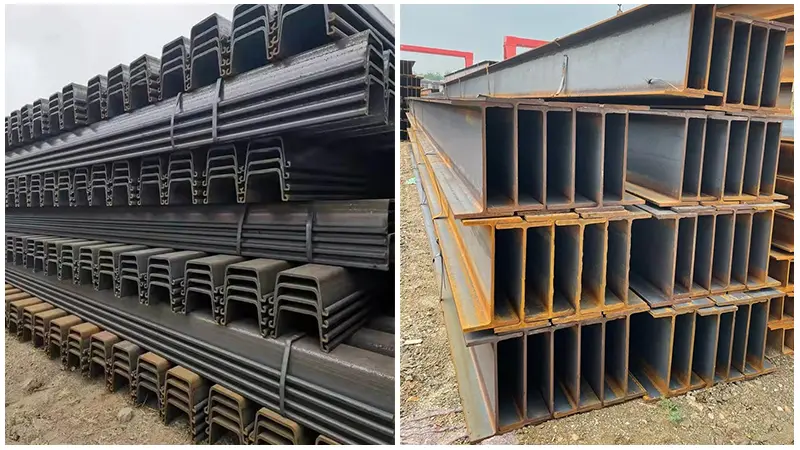
I think this is where many avoidable incidents start. A sheet pile is not a pallet of blocks or a short beam. It is a long steel section with its own balance, flexibility, interlocks, and handling behavior. Once it is in the air, it can swing, twist, rotate, and hit things very fast. Once it is partly in the ground, it can bind or kick sideways if the setup is poor. So when I talk about piling safety, I always come back to one basic point: respect the geometry of the pile, not only the weight of the pile. In my view, crews that understand that point usually work much more safely.
What are the risk assessment for sheet piling?
A risk assessment for sheet piling should identify the hazards at each stage of the piling operation, evaluate who may be harmed and how, and define the control measures, responsibilities, and emergency actions before work starts.
A proper sheet piling risk assessment should cover lifting operations, plant movement, excavation collapse, working near water or utilities, noise and vibration, falling objects, manual handling, access and egress, weather, and emergency rescue. I do not see risk assessment as paperwork for the file. I see it as the working map that tells the crew how the job can go wrong and what controls must be in place before they start.
I prefer to assess sheet piling by sequence, not by broad category
A weak risk assessment usually lists generic hazards like “struck by plant” or “manual handling” and stops there. I do not find that very useful. For sheet piling, I prefer a sequence-based assessment because the risk changes as the operation moves forward.
For example, the risk profile during delivery and unloading is different from the risk profile during pitching and vibro driving. The hazards during pile extraction beside water are not the same as those during temporary trench sheeting inside a dry inland site. So I like to break the job into steps and ask one question at each step: what can go wrong here, and what control actually prevents it?
The risk assessment topics I always want to see
1. Site conditions and ground information
I want to know the ground bearing capacity for cranes and rigs, the slope condition, any voids or buried structures, and whether the work is close to an excavation edge or waterfront. A piling rig is only as safe as the platform under it.
2. Underground and overhead services
This is non-negotiable for me. If sheet piles are driven near buried services, drainage, gas, electric, or telecom lines, the risk assessment must show how these are identified, protected, or avoided. The same applies to overhead power lines and restricted headroom.
3. Lifting plan and load control
The risk assessment should connect directly to the lifting plan. It should identify the crane type, pile weight, lifting accessories, pick points, travel route, laydown area, and exclusion zone.
4. Working near excavations, water, or unstable ground
If the piling is beside a trench, cofferdam, riverbank, quay, or flooded area, I want the assessment to include fall risk, rescue planning, edge protection, and platform stability.
5. Plant-pedestrian segregation
The HSE construction safety guidance and excavator safety guidance both stress safe site organisation and separation of pedestrians from plant. I think this matters even more in piling zones because the work area often includes cranes, excavators, delivery trucks, banksmen, and ground crew in the same space.
6. Noise, vibration, and public interface
If the site is near houses, roads, old structures, or active facilities, the risk assessment should address noise and vibration monitoring, working hours, and the effect of piling on surrounding assets.
My practical sheet piling risk assessment structure
A. Pre-start hazards
- wrong pile section or wrong pile length delivered
- unstable storage area
- missing lifting certificates or damaged slings
- no clear traffic route for delivery vehicles
- poor weather or high wind forecast
B. Installation hazards
- suspended load strikes a worker
- pile slips from clamp or lifting gear
- crane overturns due to poor ground or edge loading
- hammer hose or connection failure
- worker enters exclusion zone during driving
- interlock jams and the pile kicks or twists unexpectedly
C. Excavation and surrounding hazards
- collapse of trench edge or platform edge
- fall into excavation or water
- damage to nearby building or buried service from vibration
- public access into the piling area
D. Emergency hazards
- person struck by load or trapped by moving plant
- person falls into excavation or water
- hydraulic leak, fire, or equipment failure
- severe weather during lifting or driving
Example risk assessment table I would expect to see
| Hazard | Who may be harmed | Typical consequence | Control measure |
|---|---|---|---|
| Suspended sheet pile during lifting | Slingers, banksmen, nearby workers | Crush injury or fatality | Lift plan, exclusion zone, certified lifting gear, trained slinger/signaller |
| Rig or crane near excavation edge | Operator, nearby crew | Overturning, collapse, multiple injuries | Ground assessment, setback distance, working platform check |
| Pile driving near pedestrians | Site workers, visitors | Struck-by injury | Fencing, barriers, traffic plan, dedicated banksman |
| Vibration near existing structure | Adjacent occupants, structure | Damage, instability, unsafe environment | Pre-condition survey, monitoring, method selection |
| Pile extraction with sudden release | Crane crew, banksmen | Swinging load, dropped pile | Controlled extraction sequence, clear exclusion area, capacity check |
My own view: a risk assessment that does not change with the site is not a real risk assessment
I say this often because I see too many copied documents in construction. A sheet piling risk assessment should not be a recycled file with the project name changed. If the site changes, the risk changes. If the wall changes from a riverbank to a city basement, the risk changes. If the method changes from vibratory driving to silent press-in, the risk changes. In my opinion, a good risk assessment is one that a site supervisor can actually use in a morning briefing and say, “These are the three things that will hurt us today if we get careless.” If it cannot do that, it is not doing its job.
What equipment is needed for sheet piling?
The equipment needed for sheet piling usually includes lifting plant, a pile driving or pressing system, lifting accessories, guide frames, temporary supports, survey tools, and inspection and safety equipment. The exact setup depends on pile size, soil conditions, wall alignment, and whether the piles are being installed or extracted.
Typical sheet piling equipment includes a crawler crane or excavator-based rig, vibratory hammer or impact hammer or press-in machine, pile clamps, shackles, slings, guide frames, alignment tools, cutting tools if needed, access equipment, and PPE. From a safety point of view, the most important issue is not only having the equipment. It is making sure the equipment matches the pile length, pile weight, ground conditions, and lifting sequence.
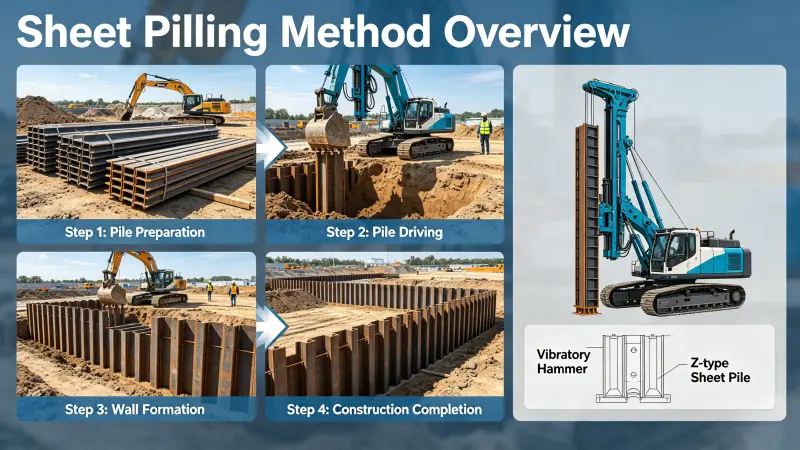
I split sheet piling equipment into four groups
When clients ask me what equipment is needed, I usually separate it like this:
- main installation equipment
- lifting and handling equipment
- guiding, measuring, and support equipment
- safety and inspection equipment
This helps because some people only think about the hammer and the crane, but a safe piling job depends on more than that.
1. Main installation equipment
Vibratory hammer
This is one of the most common tools for driving steel sheet piles. It is fast and effective in many soils. But it also creates noise, vibration, and hose-related hazards, so I want daily checks and correct connection procedures.
Impact hammer
This may be used where harder driving is needed or where the vibratory hammer alone cannot achieve depth. Impact systems add their own risks from energy transfer, noise, and pile head protection.
Hydraulic press-in machine
This is useful where vibration and noise need to be reduced. It can be a good choice in urban work or near sensitive structures, but it still requires careful planning for lifting, sequencing, and reaction force.
2. Lifting and handling equipment
Crane or excavator-based lifting rig
The lifting machine must be sized for the pile weight, hammer weight, lifting radius, and extraction loads if removal is planned. The HSE lifting operations guidance is directly relevant here because sheet piles are regularly handled as long suspended loads.
Slings, shackles, chains, and pile clamps
These are safety-critical items. I want them inspected, tagged, and suitable for the real load case, not only the theoretical self-weight of the pile. A long pile may behave differently during pitching than during flat lifting from storage.
Tag lines and handling ropes
I see these as simple but very important tools. They help control rotation and reduce the chance of workers stepping too close to the load.
3. Guiding and support equipment
Guide frame or driving frame
This keeps the pile line and verticality under control. From a safety angle, it also reduces unexpected pile movement and repeated correction attempts.
Survey and alignment tools
Laser level, total station, spirit level, and line control tools all help the crew avoid bad positioning and rework.
Temporary working platform or crane mat
If the piling rig sits on weak ground, the safest hammer in the world will not save the job. Platform design and maintenance matter.
4. Safety and inspection equipment
PPE
Standard PPE may include helmet, boots, gloves, eye protection, hearing protection, high-visibility clothing, and sometimes life jackets, fall protection, or respiratory protection depending on the site.
Barriers, fencing, and signs
These are essential for creating a real exclusion zone, not just a verbal one.
Inspection tools and maintenance kit
Hydraulic hose checks, hammer connection checks, shackle inspections, and daily machine walkarounds should be part of the routine.
Lighting and communication tools
Poor visibility causes bad signalling, bad lifting, and bad judgement. Radios, agreed hand signals, and adequate lighting are basic safety tools in my view.
My practical sheet piling equipment list
| Equipment | Main purpose | Safety point I care about |
|---|---|---|
| Crawler crane / piling rig | Lift and position piles, support hammer | Capacity, ground stability, operator competence |
| Vibratory hammer / impact hammer / press-in machine | Install or extract piles | Inspection, secure connections, correct use |
| Slings, shackles, pile clamps | Lift and handle piles | Certification, wear checks, correct load rating |
| Guide frame | Keep piles aligned during driving | Better control, less sudden movement |
| Working platform / crane mats | Support plant and access | Prevent settlement and overturning |
| Survey tools | Check line, level, and verticality | Reduces rework and unsafe correction attempts |
| Barriers and signage | Protect people from work zone | Makes exclusion zones real and visible |
| PPE | Personal protection | Last layer, not first layer |
My own view: the safest equipment setup is usually the one that reduces improvisation
I have a simple rule in my head when I look at a piling setup: how many things here depend on people improvising under pressure? If the answer is “too many,” I start worrying. If the crew has to invent lifting points on the spot, adjust storage because the laydown area is poor, or pitch long piles without a proper guide frame, the job becomes more dependent on luck than control. I do not like that. I would rather spend more time setting up the right equipment and a clean working sequence than ask a crew to solve equipment problems with experience alone.
What safety measures must be followed on a construction site?
Construction sites must follow core safety measures such as induction, traffic management, lifting control, PPE, site segregation, emergency planning, equipment inspection, safe access, and competent supervision. For sheet piling, these general site rules must also be adapted to the risks of long steel handling, excavation edges, vibration, and piling plant.
On a sheet piling construction site, the safety measures that must be followed include site induction, permit and method statement compliance, exclusion zones, safe lifting practice, plant-pedestrian separation, excavation edge protection, inspection of equipment, competent supervision, emergency rescue planning, and strict control of access around the piling area. I think the best site safety rule is simple: nobody enters the piling zone unless the site team knows why they are there and how they will stay safe.
I start with site rules, but I do not stop there
Every construction site should already have basic safety controls. The HSE construction safety topics page covers core themes like site organisation, working at height, structural stability, mobile plant, and lifting operations. Those are the baseline. But a piling site needs another layer of control because the work combines heavy lifting, moving plant, long steel, noise, vibration, and often excavation or waterfront hazards.
The site safety measures I expect on every sheet piling job
1. Site induction and task briefing
Everyone entering the piling zone should know the site traffic routes, exclusion areas, emergency arrangements, communication method, and the specific hazards of the day’s operation. I like short daily briefings because piling risk changes with the sequence.
2. Controlled access and exclusion zones
This is one of the most important site controls. The area around lifting, pitching, and driving should be physically marked and enforced. A “soft” exclusion zone that workers casually cross is not a real control.
3. Safe traffic management
Delivery trucks, cranes, excavators, and dumpers must not share uncontrolled space with pedestrians. The HSE guidance on dumpers and excavators shows why segregation matters so much.
4. Inspection and maintenance of equipment
Lifting gear, hammers, hydraulic hoses, clamps, and plant must be inspected before use. A piling operation puts repeated load and vibration into equipment. Small defects do not stay small for long.
5. Safe load handling and storage
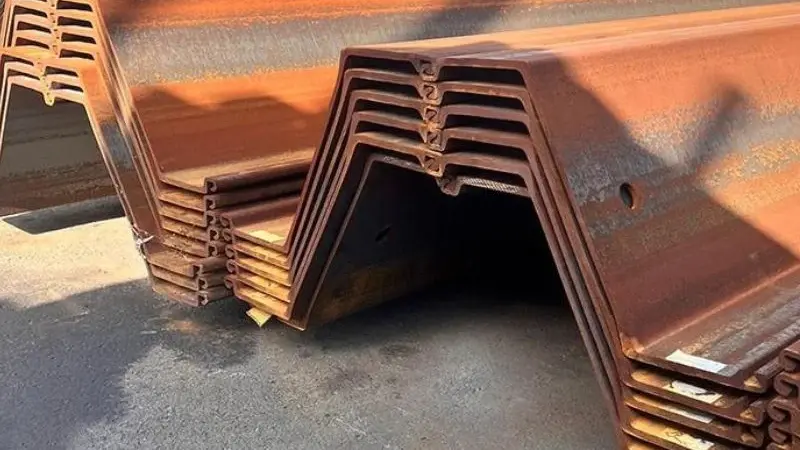
Sheet piles should be stored on stable ground with proper support and access. I do not want workers climbing unstable stacks, standing between piles, or trying to free jammed steel without a safe method.
6. Work at height and edge protection where needed
Sheet piling sometimes includes working from platforms, cofferdams, pontoon edges, or adjacent structures. If there is a fall risk, the control needs to be clear: guardrails, safe access, harness systems where appropriate, and rescue planning.
7. Emergency arrangements
If a worker is injured by plant, falls into water, becomes trapped near an excavation, or is struck by a swinging pile, the site must know what to do immediately. Emergency planning is not a formality.
My site control checklist for sheet piling work
| Site measure | Why it matters in sheet piling | What I expect to see |
|---|---|---|
| Induction and daily briefing | The work sequence changes hazards quickly | Clear task briefing, emergency contacts, route plan |
| Exclusion zone | Protects people from swinging piles and moving plant | Barriers, signs, banksman control |
| Traffic management | Cranes, trucks, excavators and pedestrians share space | Marked routes, spotters, controlled entry |
| Equipment inspection | Vibration and lifting loads stress the equipment | Daily checks, maintenance records, defect reporting |
| Stable storage and laydown | Long steel can roll, shift, or trap workers | Level supports, spacing, controlled unloading |
| Rescue and emergency plan | Incidents can escalate fast near excavations or water | First aid, rescue equipment, communication plan |
My own view: the safest piling site is the one where stopping the job is normal
This is probably my strongest opinion in this article. I do not trust a site that treats stopping work as a failure. In piling, conditions change. The weather shifts. A buried obstruction appears. A hose leaks. The pile starts twisting. The crane mat settles. The guide frame is not lining up. In those moments, the safest site is not the one with the best poster on the fence. It is the site where a supervisor, operator, or banksman can stop the operation without being pressured to “just finish this one pile.” I have seen enough construction work to believe that this culture point matters as much as any written rule.
My practical safety sequence for a sheet piling project
To tie everything together, this is the sequence I personally like to see on a real project before and during sheet piling works:
Before piles arrive on site
- confirm the pile type, length, weight, and handling points
- review the geotechnical data and working platform condition
- complete the method statement, lift plan, and risk assessment
- mark delivery routes, laydown areas, and exclusion zones
- verify utility surveys, access routes, and emergency arrangements
When piles are delivered
- unload on level ground with a clear lifting plan
- keep workers away from the fall zone
- stack piles in a stable layout with access space for later lifting
- inspect visible damage, especially at the interlocks and lifting areas
Before driving starts
- inspect the hammer, clamps, slings, and hydraulic connections
- set the guide frame and verify alignment control
- brief the crew on signals, sequence, and no-go zones
- confirm weather conditions, especially wind if long piles are being lifted
During installation
- enforce the exclusion zone every time, not only when visitors are watching
- keep communication simple and consistent
- stop if the pile binds, leans excessively, or the equipment behaves abnormally
- monitor nearby structures, water conditions, and excavation edge stability if relevant
During extraction
- check extraction loads and crane capacity again
- expect sudden release or movement when a pile breaks free
- keep the drop zone clear and the route back to storage controlled
Conclusion
For me, sheet piling safety is not one item on a checklist. It is a chain of controls that starts with planning, continues through lifting and driving, and only works when the site team is willing to stop unsafe work.