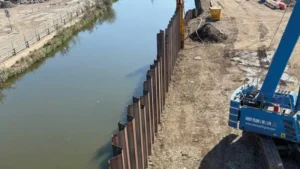
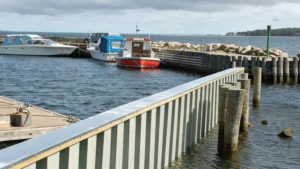
You are designing a sewage treatment plant or a wastewater facility. The environment is aggressive—sulfides, acids, and constant moisture attack the steel. The sheet piles must last for decades.
The best coatings for steel sheet piles in sewage plants are fusion-bonded epoxy (FBE)1, polyurethane, and high-build epoxy systems2. For the most aggressive conditions, FBE with an additional polyurethane topcoat provides the highest durability. Coal tar epoxy, once common, is now restricted in many regions due to environmental concerns.
](https://cnsteelplant.com/wp-content/uploads/2026/03/Comparison-Table-of-Article-Information-10.webp)
I remember a project in the Middle East where the client used standard carbon steel sheet piles without coating at a sewage plant. Within five years, hydrogen sulfide from the wastewater had corroded the piles so badly they had to be replaced. That experience taught me that the right coating is not optional in these environments—it is essential.
What is the most durable coating for steel?
In the harsh environment of a sewage plant, durability is everything. You need a coating that can withstand chemical attack, abrasion, and moisture.
The most durable coating for steel in sewage environments is fusion-bonded epoxy (FBE)1. FBE is a thermoset powder coating that is applied by heating the steel and spraying the powder, which melts and chemically bonds to the surface. It provides excellent resistance to hydrogen sulfide, acids, and abrasion, and typically lasts 50 years or more in wastewater applications.
](https://cnsteelplant.com/wp-content/uploads/2026/03/Comparison-Table-of-Article-Information-8.webp)
Why FBE Is the Standard for Sewage
Let me explain what makes FBE so effective.
How FBE Works
FBE is a one-part, heat-cured epoxy powder. The steel is heated to about 230°C (450°F). The powder is sprayed onto the hot steel, where it melts, flows, and chemically cross-links into a continuous film. This creates a bond that is essentially part of the steel, not just a layer on top.
The resulting coating is:
- Chemically resistant to acids, alkalis, and sulfides
- Highly resistant to cathodic disbondment
- Abrasion resistant for handling and driving
- Able to withstand the heat of welding
- Free of solvents (no VOCs)
Performance in Sewage Environments
Sewage plants produce hydrogen sulfide (H₂S) from anaerobic decomposition. This gas combines with moisture to form sulfuric acid, which attacks steel aggressively. FBE is specifically formulated to resist this type of attack.
Standard coating tests for sewage applications:
- Cathodic disbondment resistance: FBE typically has 1-3 mm of disbondment after 28 days, compared to 10-20 mm for other coatings
- Chemical immersion: FBE withstands immersion in acids and bases
- Abrasion resistance: FBE can survive the driving process with proper handling
Longevity
FBE coatings are used on water pipelines and wastewater facilities with design lives of 50-100 years. Many water authorities specify FBE as their standard coating for buried steel.
Other Durable Options
If FBE is not available or practical, alternatives include:
- Polyurethane coatings: Excellent chemical resistance, good abrasion resistance2
- High-build epoxies: Thick films, good for field application
- Glass-flake reinforced polyester: Excellent chemical resistance, used in Europe
But for sewage plants, FBE remains the gold standard.
What are the 4 types of coatings?
When specifying coatings for sheet piles, you need to understand the main types and their applications.
The four main types of coatings for steel sheet piles are organic coatings (epoxy, polyurethane, coal tar), metallic coatings (zinc, aluminum), inorganic coatings (cement mortar, glass flake), and combination systems (FBE with polyurethane topcoat). Each has advantages depending on the environment and application method.
](https://cnsteelplant.com/wp-content/uploads/2026/03/Comparison-Table-of-Article-Information-9.webp)
Detailed Breakdown of Coating Types
Let me explain each type and where it fits.
1. Organic Coatings1
Organic coatings are the most common for sheet piles. They form a barrier between the steel and the environment.
| Coating Type | Characteristics | Best Use | Limitations |
|---|---|---|---|
| Fusion-Bonded Epoxy (FBE) | Thermoset powder, chemically bonded | Sewage, water, buried service | Requires factory application |
| Polyurethane | Excellent chemical resistance, abrasion resistant | Splash zones, chemical exposure | UV degradation in sunlight |
| High-Build Epoxy | Thick film, good adhesion | Field application, repair | Lower abrasion resistance |
| Coal Tar Epoxy | Excellent water resistance | Buried steel | Restricted in many regions |
2. Metallic Coatings2
Metallic coatings provide sacrificial protection. The coating corrodes instead of the steel.
| Coating Type | Characteristics | Best Use | Limitations |
|---|---|---|---|
| Hot-Dip Galvanizing (zinc) | Sacrificial protection | Atmospheric exposure, moderate conditions | Limited abrasion resistance, not for immersion |
| Thermal Spray Aluminum (TSA) | Long-life sacrificial coating | Marine immersion, offshore | High cost, specialized application |
3. Inorganic Coatings3
Inorganic coatings are used for specialized applications where organic coatings are not suitable.
| Coating Type | Characteristics | Best Use | Limitations |
|---|---|---|---|
| Cement Mortar | Thick, alkaline environment | Water pipelines | Heavy, brittle |
| Glass-Flake Reinforced Polyester | Excellent chemical resistance | Chemical plants, wastewater | High cost, specialized application |
4. Combination Systems4
Combination systems use multiple layers to get the benefits of each.
| System | Layers | Best Use |
|---|---|---|
| FBE + Polyurethane | FBE barrier + polyurethane topcoat | Abrasion resistance plus chemical resistance |
| Zinc + Epoxy | Zinc primer + epoxy topcoat | Atmospheric exposure, marine splash |
| TSA + Sealer | Aluminum + sealer | Long-life marine immersion |
Which for Sewage Plants?
For sheet piles in sewage plants, the most common specification is:
- Factory-applied FBE (minimum 400 microns / 16 mils)
- Optional polyurethane topcoat for additional abrasion resistance
- Touch-up coating for field welds and damage
What is the most effective corrosion inhibiting coating?
Corrosion inhibitors work differently than barrier coatings. They actively prevent corrosion rather than just blocking the environment.
The most effective corrosion inhibiting coating for steel is a combination of zinc-rich primer1 and epoxy topcoat. The zinc provides sacrificial cathodic protection, while the epoxy provides a barrier. For immersion service in sewage, fusion-bonded epoxy (FBE)2 is the most effective single coating due to its combination of barrier properties and chemical resistance.
](https://cnsteelplant.com/wp-content/uploads/2026/03/Comparison-Table-of-Article-Information-5.webp)
How Corrosion Inhibiting Coatings Work
Let me explain the mechanisms.
Barrier Coatings
Most coatings work by creating a barrier between the steel and the environment. If the barrier is perfect, no corrosion occurs. But coatings get damaged during handling, driving, and service. Once breached, corrosion can start under the coating and spread.
Sacrificial Coatings
Zinc-rich primers work differently. Zinc is more electrochemically active than steel. When the coating is damaged, the zinc corrodes instead of the steel. This sacrificial protection3 continues even if the coating has small defects.
Zinc-rich primers are typically used as a base layer, with an epoxy or polyurethane topcoat for additional barrier protection.
Inhibitive Pigments
Some coatings contain pigments that release corrosion inhibitors when moisture penetrates. These inhibitors passivate the steel surface, stopping corrosion. Examples include:
- Zinc phosphate
- Calcium exchange silica
- Molybdate pigments
These are often used in primers for atmospheric exposure.
FBE as an Inhibitor
FBE works primarily as a barrier, but it also has excellent adhesion that prevents under-film corrosion. If the coating is damaged, the high adhesion prevents water from wicking under the coating and spreading.
Effectiveness Comparison
| Coating Type | Mechanism | Effectiveness in Sewage |
|---|---|---|
| FBE | Barrier + adhesion | Excellent |
| Zinc-rich epoxy | Sacrificial + barrier | Good for atmospheric, limited for immersion |
| Polyurethane | Barrier | Good |
| Coal tar epoxy | Barrier | Good (but restricted) |
| TSA | Sacrificial | Excellent (high cost) |
My Experience
For sewage plant applications, I have seen the best results with FBE. The combination of factory application, high adhesion, and chemical resistance gives the longest service life. Field-applied systems, no matter how good, always have weak points at seams and edges.
What is the best coating for structural steel?
The best coating depends on the environment. For sewage plants, the requirements are specific.
The best coating for structural steel in sewage plants is a three-coat system1: zinc-rich primer2, high-build epoxy3 intermediate, and polyurethane topcoat. For sheet piles that will be driven, factory-applied fusion-bonded epoxy4 (FBE) with a polyurethane topcoat is the most durable option.
](https://cnsteelplant.com/wp-content/uploads/2026/03/Comparison-Table-of-Article-Information-2.webp)
Coating Systems for Different Steel Components
Let me explain the options for different parts of a sewage plant.
Sheet Piles (Driven, Buried, Immersed)
Sheet piles face the harshest conditions. They are driven through soil, often immersed in wastewater, and exposed to sulfides.
- Recommended: Factory-applied FBE, minimum 400 microns (16 mils)
- Alternative: Hot-dip galvanizing with epoxy topcoat
- Field repair: Two-part epoxy for damaged areas
- Service life: 50+ years with proper application
Above-Ground Structural Steel
Steel exposed to the atmosphere but not immersed needs different protection.
- Recommended: Zinc-rich primer + epoxy intermediate + polyurethane topcoat
- Typical thickness: 250-300 microns (10-12 mils)
- Service life: 20-30 years
- Color: Often specified for appearance and safety
Tanks and Vessels
Steel tanks and vessels have specific requirements depending on contents.
- Water tanks: FBE or ceramic epoxy
- Chemical tanks: Glass-flake reinforced polyester
- Sludge tanks: High-build epoxy
Piping
Pipes have different requirements inside and outside.
- Internal: FBE, cement mortar, or polyurethane depending on contents
- External: FBE for buried, polyurethane for above-ground
Coating Application Methods
| Application | Method | Best For |
|---|---|---|
| Factory | Automated spray, FBE, galvanizing | Sheet piles, pipe |
| Field spray | Airless spray | Above-ground structures |
| Field brush/roller | Manual application | Touch-up, small areas |
My Experience
For a large sewage plant project in the Middle East, we supplied sheet piles with factory-applied FBE coating. The piles were driven successfully, and the coating survived with only minor damage at the pile tips. The contractor used a two-part epoxy to touch up the damaged areas. The plant has been in operation for eight years with no corrosion issues.
Conclusion
For sewage plants, fusion-bonded epoxy (FBE)1 is the best coating for sheet piles, offering 50+ years of protection2 against hydrogen sulfide and acids. Factory application ensures consistent quality. Always specify field touch-up for welds and driving damage.
-
Explore this link to understand how FBE can enhance the longevity and durability of sewage plant infrastructure. ↩ ↩ ↩ ↩ ↩ ↩
-
Discover the science behind FBE’s long-lasting protection against harsh environmental conditions. ↩ ↩ ↩ ↩ ↩ ↩
-
Find out how high-build epoxy enhances the longevity and performance of coatings in various applications. ↩ ↩ ↩
-
Learn about factory-applied fusion-bonded epoxy and its advantages for durability in harsh environments. ↩ ↩