How Do Steel Sheet Piles Reduce Construction Time and Labor Costs?
Every day a retaining wall or cofferdam sits unfinished, the contractor pays for idle crews, rented equipment, and site overhead that nobody planned for.
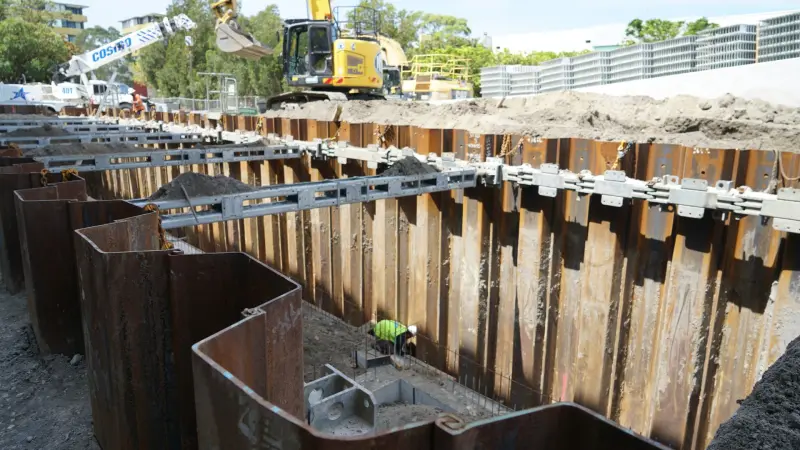
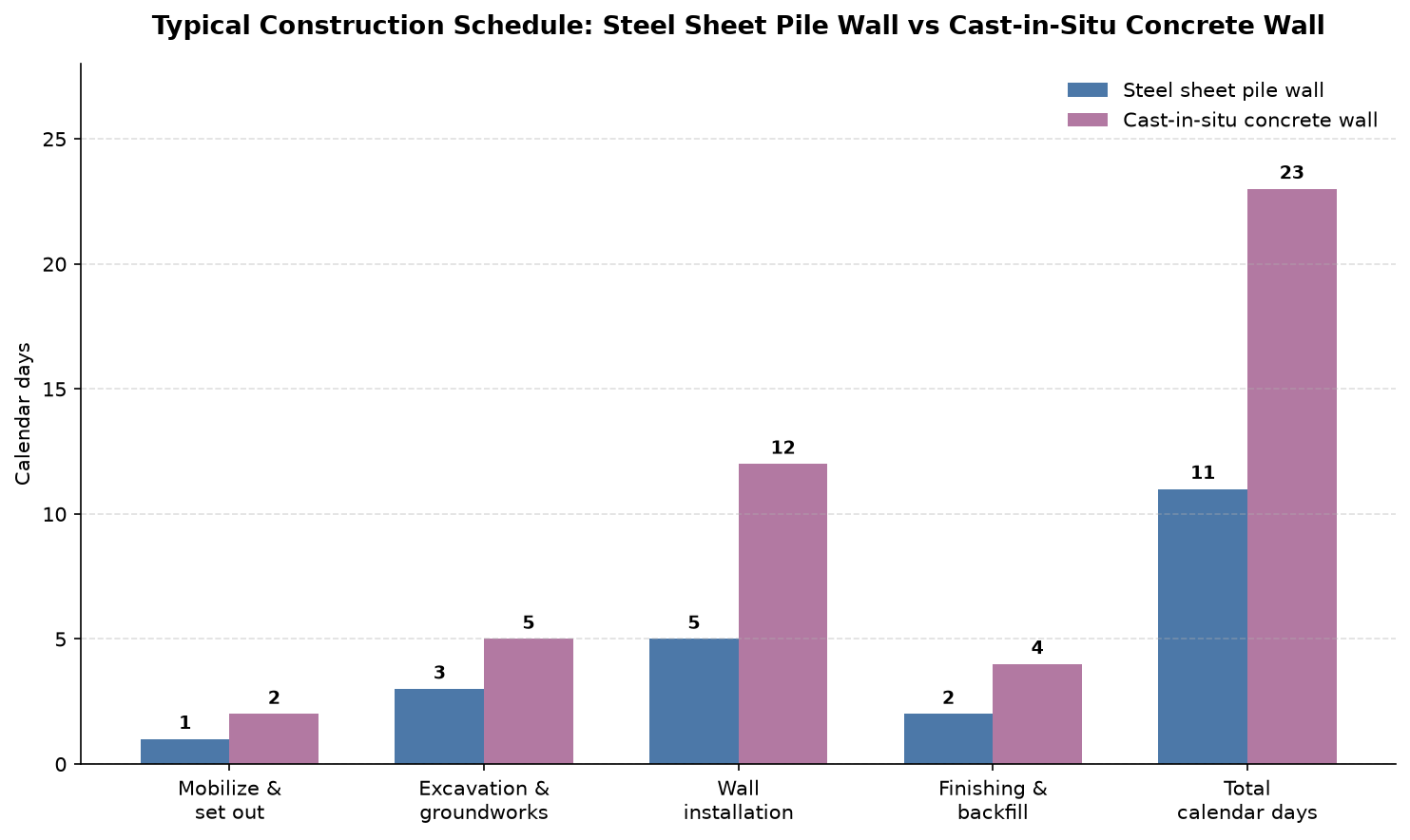
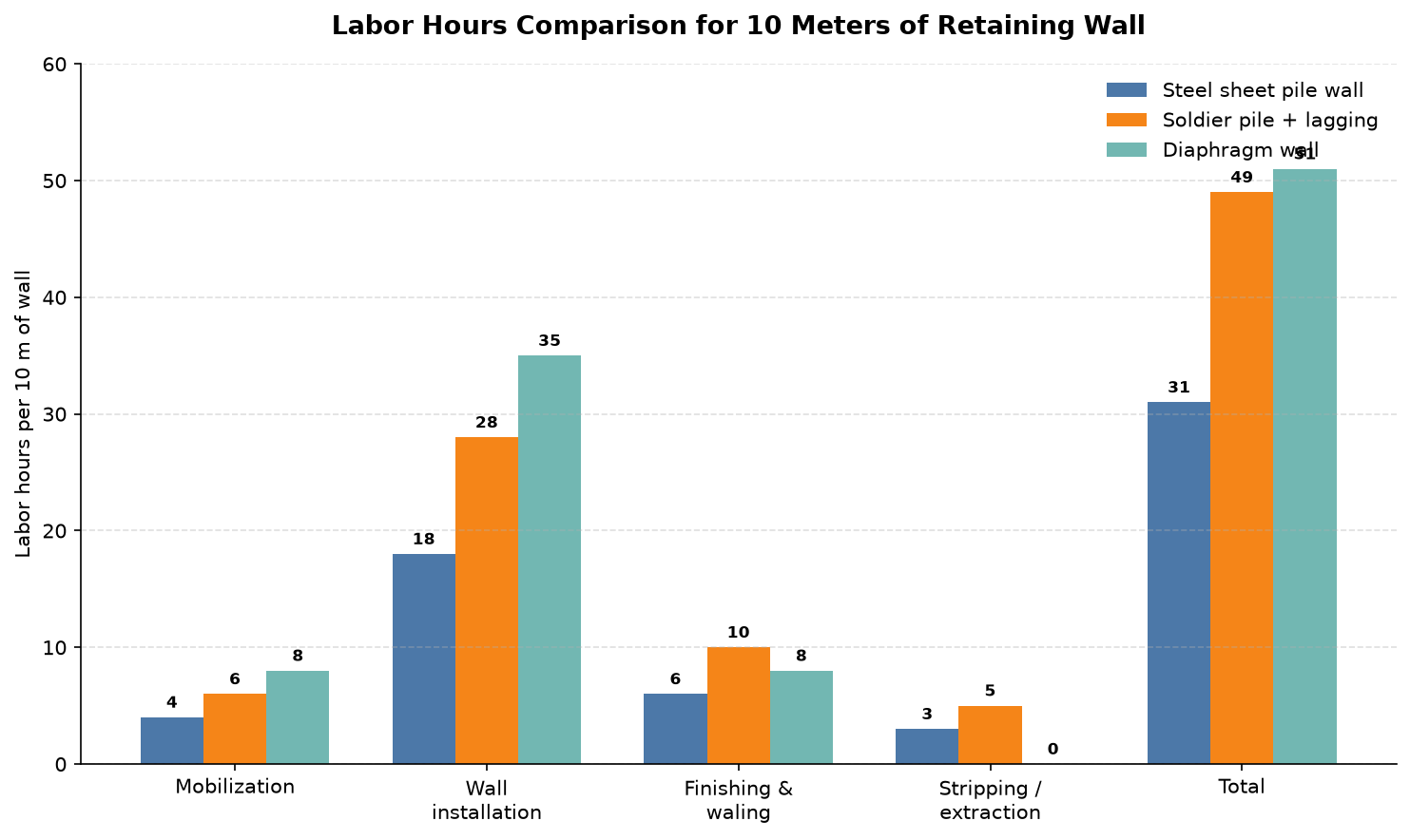
Steel sheet piles cut construction time and labor costs because they arrive ready to drive, interlock into a continuous wall in a single operation, and need no formwork or curing. A typical crew can install 20 to 40 meters of wall per day, while a cast-in-situ concrete wall of the same length often needs a week or more.
I have watched this story repeat on job sites from the Middle East to Southeast Asia. The project team compares the steel sheet pile quote against a concrete wall quote and focuses on the material price. They forget that the real comparison is not steel versus concrete; it is days on site versus weeks on site. At our factory in Liaocheng, Shandong, we ship U-type, Z-type, and straight-web sheet piles to contractors and distributors in Iraq, Pakistan, Saudi Arabia, Australia, Africa, and South America. Most of them come back for the next project because the first one finished faster than the program. In this article, I will explain where the time savings come from and how they translate into lower labor costs.
Why Is Installation Time the Biggest Hidden Cost?
A week of delay on a deep excavation can cost more than the steel itself, yet many buyers only compare material prices.
The real cost of a retaining system is not the wall you see; it is the calendar time the site spends waiting for it. Sheet piles turn a multi-week concrete operation into a few days of driving.
The Daily Burn Adds Up Faster Than Steel Prices
When I sit with a contractor and look at the program, I always ask one question first: what is the daily cost of being on site? The answer usually surprises people. A typical piling crew includes a foreman, two operators, two riggers, and a banksman. Add the vibratory or impact hammer rental, the crawler crane, fuel, site dewatering pumps, and temporary lighting. That crew can easily cost several thousand dollars per day before anyone installs a single pile. If the retaining wall takes ten days longer than planned, the extra cost is not a line item on the steel invoice; it is buried in the site overhead.
Now compare the two approaches for a 100-meter quay wall. A cast-in-situ concrete wall needs excavation, formwork, reinforcement fixing, concrete placement, curing, stripping, and backfilling. Even on a good site, that sequence is measured in weeks. A steel sheet pile wall, once the guide frame is set, can be driven and finished in a fraction of that time. The wall is the formwork, the reinforcement, and the structural member all at once. There is no curing period and no waiting for concrete strength before the next trade can move in.
The time saving gets even larger on marine or water-front jobs. A cofferdam built from steel sheet piles can be driven, interlocked, and braced in a few days. The same structure built with concrete secant piles or diaphragm walls needs multiple rigs, bentonite plants, and long curing windows. I have seen cofferdam programs compressed from six weeks to ten days simply by switching to a sheet pile solution. The labor saving comes from fewer trades, fewer mobilizations, and less standby time.
| Cost item | Typical daily burn | Impact of a one-week delay |
|---|---|---|
| Crew wages and supervision | $800 – $1,500 | Direct extra labor cost |
| Piling rig / crane rental | $600 – $1,200 | Rental extension + fuel |
| Site dewatering and pumps | $200 – $400 | Extended pumping hours |
| Site overhead and security | $300 – $700 | Overrun on preliminaries |
| Follow-on trades waiting | variable | Delayed start for excavation or structure |
This table is why I tell clients to look at the installed cost per meter per week, not just the steel price per ton. A slightly more expensive pile that drives faster is often the cheaper option when the full program is counted.
How Does Interlocking Steel Sheet Piles Speed Up Driving?
Each sheet pile locks into the next one like a zipper, so the wall grows continuously instead of piece by piece.
The interlock system lets a crew build a full-length wall while moving in one direction. There is no stopping to place reinforcement cages, no form panels to move, and no curing between sections.
One Pass Builds the Wall
The key is that a sheet pile is both a structural element and a panel. When the first pile is pitched and driven, the second pile is threaded through the interlock and driven in the same pass. The same crew repeats the action down the line. Compare that with a soldier pile and lagging wall: the H-beams are driven or drilled at centers, then timber or precast lagging is cut and fitted between each pair. Every lagging panel is a separate handling and fixing operation. On a long wall, those small steps multiply into days of extra labor.
I have supplied U-type Larssen interlocks for riverbank projects where the contractor was used to timber lagging. The first thing they notice is that the sheet pile wall needs no cutting or fitting on site. The piles come from the mill with the interlocks already formed. The second thing they notice is the seal. A properly driven sheet pile wall forms a continuous barrier that controls seepage without a separate waterproofing operation. On a cofferdam, that can remove the need for an extra grout curtain or wellpoint system, saving both labor and equipment.
Profile choice also affects speed. Z-type piles have a high section modulus per unit weight and can be driven in wider pairs or panels, so the wall goes up with fewer individual handling cycles. U-type piles are more forgiving in mixed ground and easier to pitch in tight spaces. In hard driving conditions, we sometimes recommend a heavier section so the pile refuses less often. Every refusal costs time: the rig stops, the operator investigates, and the production rate drops. Choosing the right profile and grade for the soil avoids those interruptions.
| Interlock feature | What it saves on site |
|---|---|
| Factory-formed interlock | No field welding or bolting of joints |
| Continuous panel driving | One crew, one rig, one direction |
| Sealed interlock | Reduced dewatering and grouting labor |
| Reusable piles | Less demolition and disposal on temporary works |
When I plan a shipment, I make sure the interlocks are clean and lightly greased if the client requests it. A damaged or dirty interlock can slow driving and even cause the pile to jam. Small preparation details like this protect the time saving that the system is designed to deliver.
What Role Does Prefabrication and Bundling Play?
Most of the work happens before the truck reaches the site, and that is where sheet piles win again.
Sheet piles arrive as finished structural members. They do not need formwork, rebar cages, or on-site welding before they can be installed.
Factory Work Beats Field Work
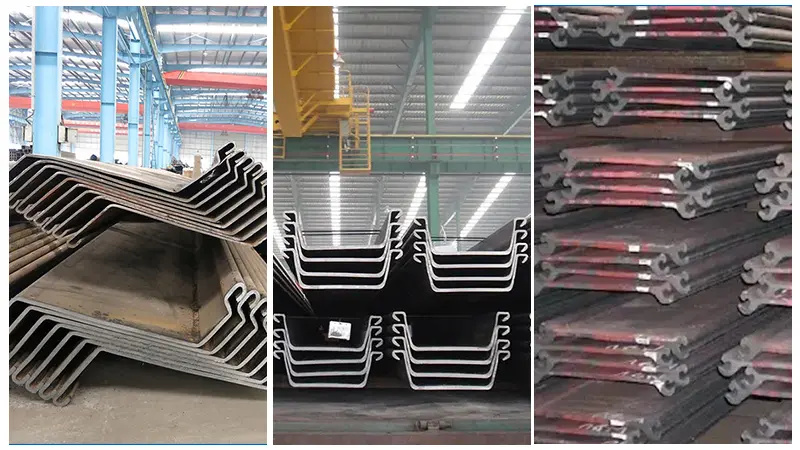
At our mill in Liaocheng, the piles are rolled, cooled, straightened, and bundled in the same sequence. Corners, junctions, and waling beams can be cut to length and shipped in the same container. When the bundle arrives on site, the only steps left are lift, pitch, drive, and interlock. That is a huge contrast with concrete walls, where reinforcement must be cut and bent, form panels built, concrete ordered, and curing managed.
Bundling also speeds up logistics. We normally pack sheet piles in bundles that match the site crane capacity and the container weight limit. A 40-foot open-top container can hold 50 tons or more of common sections. The contractor unloads a bundle in one lift and moves it directly to the pitching area. Compare that with loose H-beams or timber lagging, which are handled one piece at a time and need more crane time and more labor on the ground.
I usually advise clients to order the piles, corner sections, tie rods, and waling beams from one supplier. When we bundle them together, the site team does not have to chase missing parts or measure and cut tie rods on the ground. Our factory can thread the tie rods, weld lugs, and prepare lifting points before shipment. That coordination removes one of the biggest sources of delay on site: waiting for a subcontractor to deliver a small accessory.
| Prefabrication benefit | On-site labor saved |
|---|---|
| Pre-cut corner and junction pieces | No site cutting or fit-up |
| Pre-threaded tie rods and waling | Fewer field welding hours |
| Bundled by driving sequence | Less sorting and double handling |
| Mill-certificate package ready | No extra inspection scheduling |
For large export orders to the Middle East or Africa, we also prepare the SGS inspection and mill certificates before loading. That avoids customs delays on arrival, which can add days of demurrage and labor waiting time. Prefabrication is not just about the steel; it is about keeping the whole program moving.
How Does Equipment Choice Affect Labor Hours?
The right hammer and guide frame can turn a slow job into a fast one.
A vibratory hammer can install sheet piles two to three times faster than impact driving in loose sand or silt, while a hydraulic press is slower but essential next to sensitive buildings.
Match the Rig to the Ground
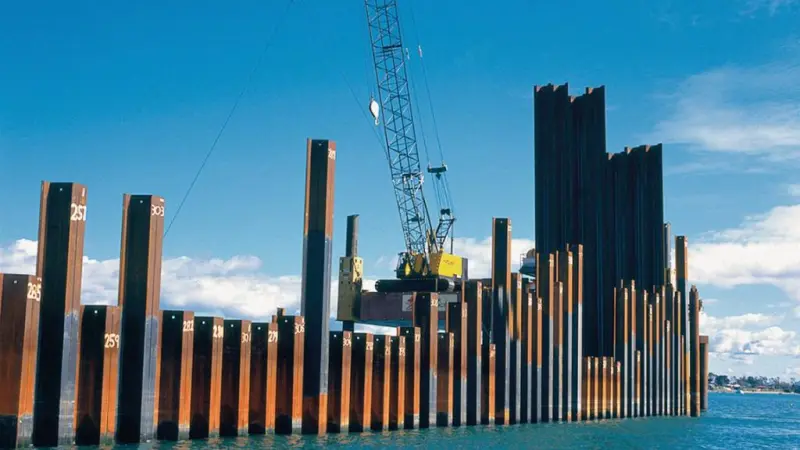
The equipment decision has a direct effect on labor hours. A vibratory hammer in clean sand can drive 20 to 30 piles per day with a small crew. The same wall in stiff clay or gravel may drop to 8 to 12 piles per day, and the crew may need an impact hammer or a stronger rig. When the daily burn is fixed, the production rate is what separates a profitable job from an over-budget one.
I remember a project in Southeast Asia where the contractor started with an excavator-mounted vibrator to save on crane rental. The ground was stiff clay with boulders. After the first day, the production rate was so low that the follow-on excavation crew was standing idle. They switched to a crane-mounted impact hammer and finished the wall in four days instead of twelve. The larger rig cost more per day, but the total labor and overhead saving was far greater.
Access is another factor. A wide quay or riverbank allows a large crawler crane to track alongside the wall. A narrow urban street may need a smaller rig on a temporary platform, or even a silent hydraulic press to avoid vibration. Each choice has a labor implication. Narrow sites often need more time for rig positioning and material handling, so the program must be planned around that reality.
| Driving equipment | Best ground | Typical daily output | Labor impact |
|---|---|---|---|
| Vibratory hammer | Sand, silt, loose fill | 20 – 30 piles | Low crew count, high speed |
| Impact hammer | Dense clay, gravel, boulders | 10 – 18 piles | More fuel and monitoring |
| Hydraulic press | Soft ground, noise-sensitive | 8 – 14 piles | Low vibration, steady progress |
| Excavator-mounted | Small jobs, tight access | 6 – 12 piles | Flexible but limited power |
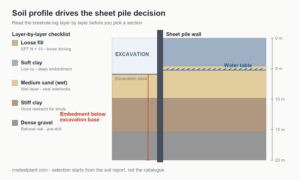
I always recommend a soil investigation before choosing the rig. Guessing the ground conditions is a common cause of low production and high labor costs. A simple borehole or cone penetration test can tell you whether to send a vibratory rig or an impact rig, and that choice shapes the whole program.
Can Reuse and Standardization Cut Labor on the Next Job?
Temporary sheet piles are an asset, not a one-off material cost.
Reusable temporary sheet piles can reduce the material and labor cost of the next project by 40 % to 60 %, because the same panels can be extracted, inspected, and redriven with only a small refurbishment cost.
Design for Extraction From Day One
A wall that is designed for reuse saves labor twice. First, the initial installation is fast because the sheet pile system is quick to drive. Second, the extraction is planned from the start, so the piles come out cleanly and can be stored for the next job. Compare that with a concrete wall, which must be demolished and hauled away. Demolition labor, disposal trucks, and landfill costs add up quickly.
Standardization helps even more. A contractor who uses the same U-type or Z-type section on many jobs can keep a stockpile and move piles between sites. That reduces ordering lead time and cuts the mobilization period on each new project. Our factory supports this by offering flexible minimum order quantities and keeping common sections in stock. For repeat buyers, we can also mark bundles by project and sequence so the site crew spends less time sorting.
I have seen contractors in the Middle East build a series of temporary cofferdams for pump stations using the same pile inventory. After the first job, they knew exactly how many piles they needed, which corner pieces to order, and how long the driving program would take. Each subsequent job started faster and needed less engineering input. The labor saving became a competitive advantage in their tenders.
| Reuse strategy | Labor saved on next project |
|---|---|
| Extract and redrive same piles | No new material handling or inspection beyond visual check |
| Standardize on one profile | Less design time, faster procurement |
| Pre-bundle accessories | Faster mobilization and fewer missing parts |
| Track pile history | Predictable performance, fewer surprises |
The environmental benefit is worth mentioning too. Reusing steel sheet piles cuts the embodied carbon of each project. We covered that in our article on the environmental advantages of reusable steel sheet piles. In some markets, a lower carbon footprint helps contractors win public-sector bids, which adds commercial value to the labor saving.
My View: Time Savings Start in the Design Office
After supplying sheet piles to contractors on five continents, my view is simple: the fastest projects are the ones where the design team chose the right retaining system early. If the engineer defaults to a concrete wall because that is what they have always used, the contractor inherits a long program before the first cubic meter is poured. If the engineer asks whether a steel sheet pile wall can do the same job faster, the whole project timeline changes.
The biggest mistake I see is treating steel sheet piles as a last resort. Contractors call us when the concrete wall is running late and they need a quick fix. In those cases, sheet piles still save the program, but the saving is smaller than it would have been if they had been the first choice. I encourage clients to compare sheet piles at the tender stage, not at the crisis stage.
Another point is coordination. When a client orders piles, corners, tie rods, and waling beams from our team in Liaocheng, we can pre-fit and bundle them for the exact driving sequence. That reduces the number of subcontractors on site and the number of interfaces that can cause delay. Our SGS inspection and mill certificate support also smooths customs and inspection, which protects the program on international jobs.
Finally, do not underestimate the value of repeatability. A contractor who builds a sheet pile inventory can price the next job with confidence. The labor hours are known, the equipment is known, and the risk is lower. That predictability is worth as much as the direct time saving.
Conclusion
Steel sheet piles reduce construction time and labor costs by replacing multi-trade concrete work with a single, fast driving operation and by offering reuse and prefabrication benefits that compound across projects.
Tags: steel sheet pile construction time, sheet pile labor cost, fast retaining wall installation, steel sheet pile reuse, construction productivity