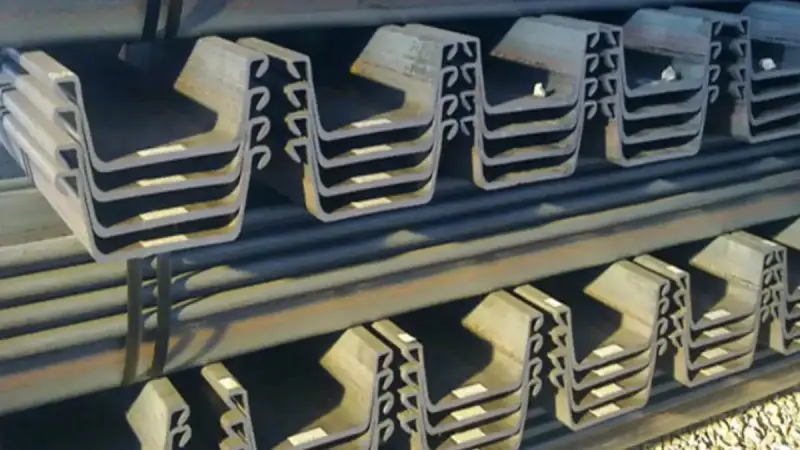
Retaining wall failure can cause serious project risks, including soil movement, construction delays, and safety problems. Many engineers focus on strength but ignore sheet pile buckling during design and installation.
Steel sheet pile buckling can be prevented by selecting the correct sheet pile section, controlling the driving process, checking soil conditions, and designing a stable retaining structure based on actual project requirements. For engineering reference, standards such as ASTM A328/A328M for steel sheet piling and ASTM A690/A690M for marine environments are widely used. In addition, the U.S. Army Corps of Engineers manual EM 1110-2-2504 provides detailed guidance for sheet pile wall design.
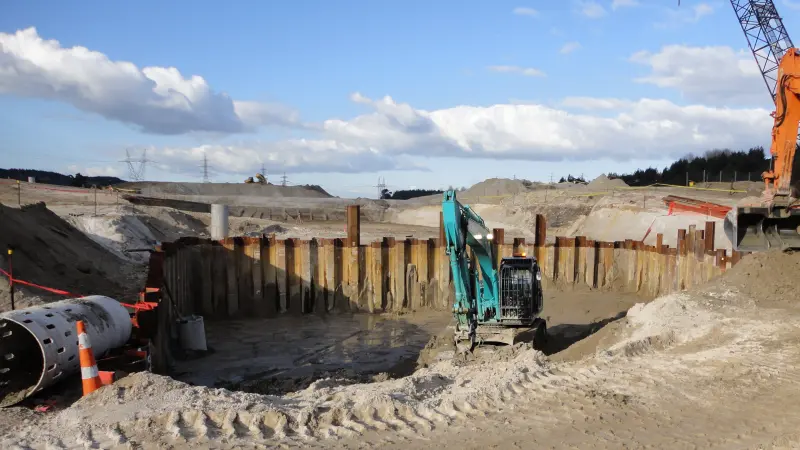
Steel sheet piles are widely used in excavation support, river protection, port construction, and foundation projects. Based on my experience working with contractors and buyers, buckling prevention is one of the key factors that determines long-term retaining wall performance and safety.
What is the rule of thumb for sheet piling?
A common rule of thumb is that the embedded depth must be sufficient to resist lateral earth pressure and prevent overturning or excessive movement. However, this should always be verified through geotechnical analysis. According to the FHWA Earth Retaining Structures Guide, retaining systems must be designed based on site-specific soil parameters rather than simplified assumptions.
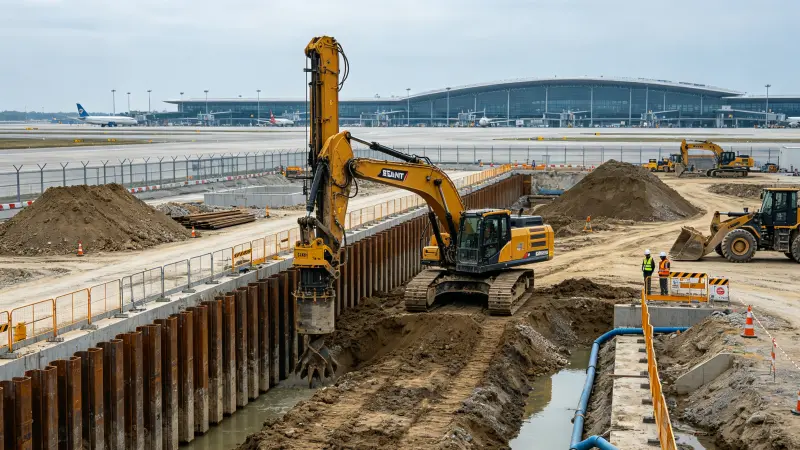
The basic principle is to ensure both adequate embedment depth and sufficient bending resistance to maintain stability under all loading conditions.
Understanding the basic design principle of sheet piles
A sheet pile retaining structure works through soil-structure interaction. The retained soil exerts lateral pressure on the exposed wall, while the embedded portion provides passive resistance.
If embedment is insufficient:
- Rotation may occur
- Bending stress increases
- Buckling risk rises
Key design factors include:
| Design Factor | Influence on Sheet Pile Stability |
|---|---|
| Soil Type | Soft soils require deeper embedment |
| Wall Height | Higher walls increase pressure |
| Water Level | Adds hydrostatic load |
| External Loads | Traffic or buildings increase stress |
| Section Modulus | Controls bending resistance |
The bending capacity of sheet piles should comply with structural steel standards such as ASTM A6/A6M.
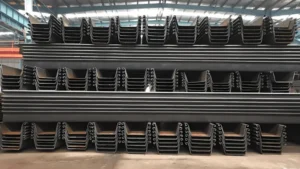
Z-type and U-type sheet piles are commonly used because of their efficient section modulus and strong interlocks. Proper selection must be based on engineering calculations, not assumptions.
Installation quality is equally critical. According to USACE guidelines, improper driving or misalignment can significantly reduce wall performance.
Common mistakes when applying sheet pile rules
| Mistake | Result |
|---|---|
| Shallow embedment | Wall instability |
| Ignoring groundwater | Unexpected deformation |
| Choosing thin sections | Buckling risk |
| Poor alignment | Weak wall continuity |
| No soil investigation | Design failure |
What is the main limitation of using steel sheet pile walls?
The main limitation is that performance depends heavily on soil conditions and installation quality.
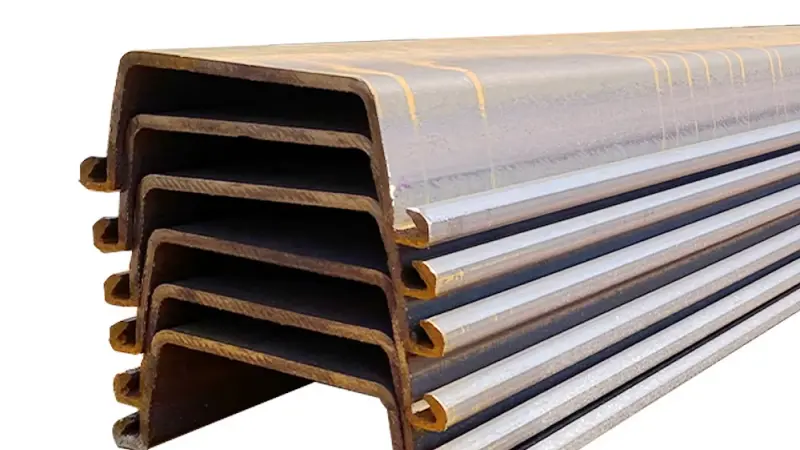
Steel sheet piles are strong and flexible, but engineers must consider corrosion, soil strength, and long-term durability. In marine environments, ASTM A690/A690M is recommended due to improved corrosion resistance.
Soil condition and structural limitations
Steel sheet piles rely on surrounding soil for stability. In weak soils, additional systems such as anchors or tie rods may be required. This aligns with recommendations from FHWA and geotechnical engineering practices.
Corrosion is another key limitation. According to ISO corrosion standards such as ISO 12944, protective coatings and corrosion allowances are essential for long-term durability.
| Limitation | Impact |
|---|---|
| Soft soil | Reduced support |
| Water pressure | Increased load |
| Corrosion | Reduced lifespan |
| Poor installation | Weak interlocks |
| Heavy loads | Higher stress |
Can sheet piles be used as retaining walls?
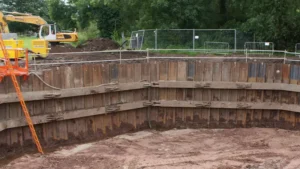
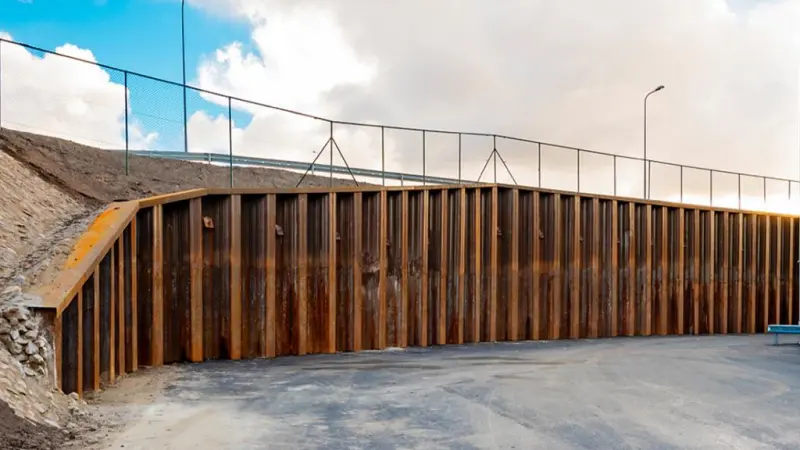
Yes, steel sheet piles are widely used as retaining walls in both temporary and permanent structures. The USACE manual confirms their application in floodwalls, cofferdams, and waterfront structures.
How sheet piles function
A continuous wall is formed through interlocking steel sections. The system works through:
- Structural resistance (steel section)
- Continuity (interlocks)
- Soil resistance (embedment)
Compared with concrete walls, sheet piles:
- Install faster
- Require less excavation
- Can be reused
Applications
| Application | Purpose |
|---|---|
| Excavation support | Temporary stability |
| Riverbanks | Erosion control |
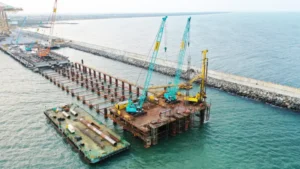
| Ports | Marine structures |
| Bridges | Foundation support |
| Basements | Soil retention |
Permanent vs temporary use
Permanent walls require:
- Corrosion protection
- Higher steel grade
- Long-term design verification
Temporary walls focus on speed and reusability.
What are the disadvantages of sheet piles?
Key disadvantages include corrosion, noise, equipment requirements, and design complexity.
Corrosion and maintenance
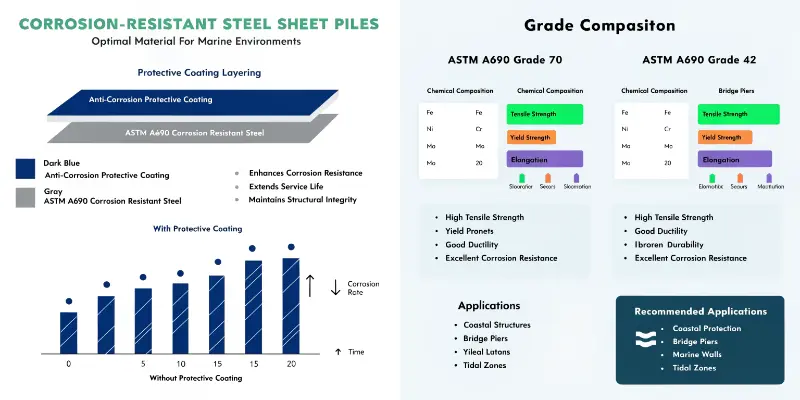
Marine corrosion is a major issue due to chloride exposure. Solutions include:
- Coatings (ISO 12944)
- Cathodic protection
- Corrosion allowance
Installation challenges
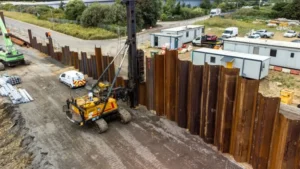
- Requires specialized equipment
- Generates vibration and noise
- Needs skilled operators
Cost considerations
Although initial cost may be higher than timber or simple systems, total lifecycle cost is often lower due to:
- Faster installation
- Reusability
- Lower maintenance
My Insight: How I Prevent Buckling in Real Projects
From my project experience, buckling prevention depends on four key elements:
- Correct section selection
- Accurate soil analysis
- Controlled installation
- Long-term durability planning
Buyer-focused checklist
Before purchasing sheet piles, I always recommend confirming:
- Soil report availability
- Required wall height
- Water conditions
- Design standards (ASTM / ISO / USACE)
- Service life (temporary vs permanent)
This helps avoid overdesign or underdesign, both of which increase project risk.
FAQ (Featured Snippet Optimized)
How do you prevent sheet pile buckling?
By selecting a sufficient section modulus, ensuring proper embedment depth, verifying soil conditions, and controlling installation alignment and driving methods.
What causes sheet pile failure?
Common causes include insufficient embedment, weak soil conditions, corrosion, poor installation, and under-designed steel sections.
What is the best sheet pile type for high loads?
Z-type sheet piles are generally preferred due to their higher bending efficiency and section modulus.
Are steel sheet piles suitable for permanent structures?
Yes, if proper corrosion protection, material selection, and engineering design standards (ASTM, ISO) are applied.
How do I choose the right sheet pile?
Consider soil conditions, wall height, load requirements, corrosion environment, and applicable standards such as ASTM A328 and USACE guidelines.
Conclusion
Steel sheet pile buckling can be effectively prevented through proper engineering design, correct product selection, controlled installation, and a clear understanding of project conditions.