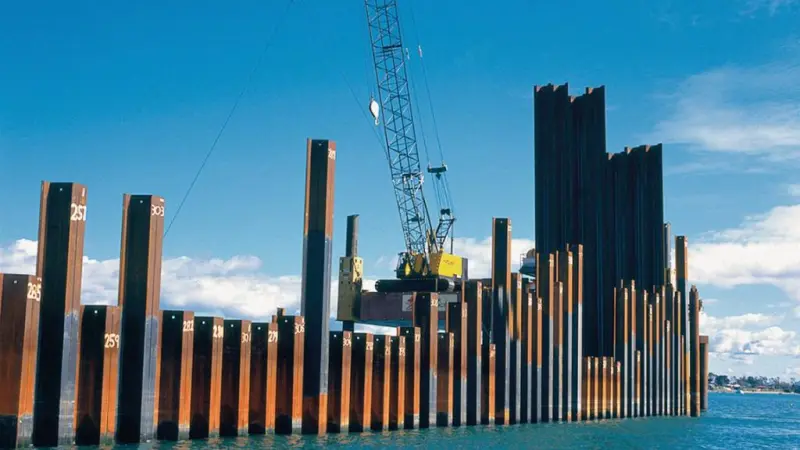
Offshore construction faces waves, tides, and unstable seabeds every day. I have seen many projects suffer delays because the retaining system could not handle these demanding conditions.
Steel sheet piles are widely used in offshore engineering because they provide strong earth retention, shoreline protection, and excavation support. They help engineers build ports, jetties, seawalls, and offshore terminals safely and efficiently.
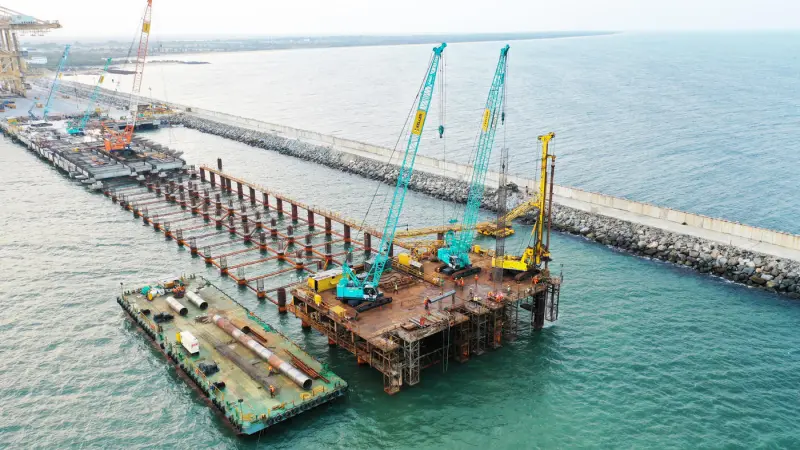
For steel sheet piling applications in marine works, see the Applications | ArcelorMittal Sheet Piling and the 2026 Buyer’s Guide: Steel Sheet Pile (Pile Buck).
Offshore engineering is one of the most demanding sectors in civil construction. Every project must deal with seawater, corrosion, changing tides, and soft marine soil. I often work with contractors who need retaining systems that perform well in these harsh environments. From my experience, steel sheet piles remain one of the most reliable solutions because they combine high strength, flexible installation, and long service life. In this article, I will explain how piles are used in offshore engineering and discuss the limitations of steel sheet piles so buyers can make informed decisions before purchasing.
What are piles in offshore?
Building in the sea is much more difficult than building on land. Without deep foundations and reliable retaining systems, offshore structures may become unstable under wave and current loads.
Offshore piles are structural members driven into the seabed to support marine structures, transfer loads to stable soil layers, and provide excavation or shoreline protection for ports, jetties, terminals, and offshore facilities.
Why offshore projects need piles
Marine structures carry heavy loads while resisting waves, tides, wind, and vessel impact. Natural seabed soils are often soft and weak. Engineers use piling systems to transfer structural loads to stronger soil or rock beneath the seabed.
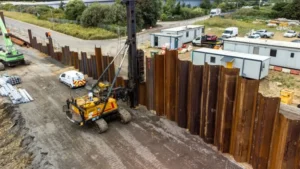
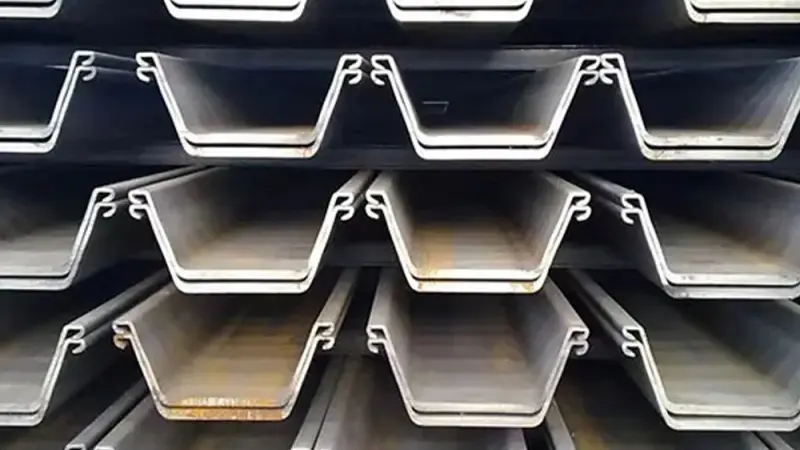
Steel sheet piles usually serve as retaining structures rather than primary load-bearing foundation piles. They create enclosed working areas and protect excavations from soil collapse and water intrusion.
Common offshore applications
| Application | Purpose |
|---|---|
| Port construction | Retaining walls and quay walls |
| Jetty construction | Shoreline stabilization |
| Offshore terminals | Excavation support |
| Dry docks | Water control |
| Cofferdams | Temporary work areas |
| Seawalls | Coastal protection |
Types of piles used offshore
Several piling systems are available for offshore engineering.
- Steel sheet piles
- Steel pipe piles
- H piles
- Concrete piles
- Composite piles
Each system has its own advantages. Engineers choose the most suitable option according to structural loads, soil conditions, water depth, and project budget.
Why steel sheet piles remain popular
Steel sheet piles offer several advantages for marine construction.
| Advantage | Benefit |
|---|---|
| Fast installation | Shortens project schedule |
| High strength | Handles lateral earth pressure |
| Strong interlocks | Improves wall continuity |
| Reusable | Reduces temporary construction cost |
| Flexible sections | Fits many project types |
| Easy transportation | Simplifies logistics |
Many marine projects require temporary retaining walls around excavation areas. Steel sheet piles can often be removed after construction and reused on future projects.
Corrosion protection
Seawater creates one of the most aggressive environments for steel.
Engineers normally improve durability by using:
- Protective coatings
- Sacrificial steel thickness
- Cathodic protection
- Regular inspection
- Proper maintenance plans
These methods greatly increase the service life of permanent marine structures.
My opinion
I often receive inquiries from contractors who only ask for steel weight or section size. I always ask about the project environment first. Offshore engineering is very different from ordinary excavation work. Water depth, tidal movement, corrosion, and wave action all influence product selection.
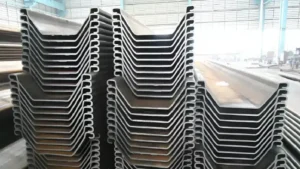
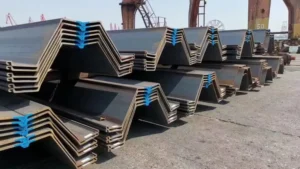
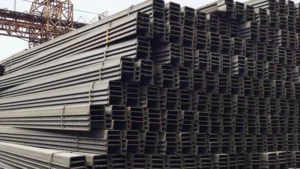
Our company supplies U-shaped, Z-shaped, Ω-shaped, flat plate, straight flange, cap type, and disc type steel sheet piles through long-term cooperation with certified Chinese mills. We support OEM production, SGS inspection, flexible MOQ, and fast delivery from Liaocheng, Shandong.
From my experience, engineering data should always come before price comparison. The correct pile profile creates better safety, lower maintenance costs, and longer service life.
What are the disadvantages of using sheet piles?
Every engineering solution has limitations. I believe understanding these limitations before construction helps contractors avoid unnecessary risks and costs.
Steel sheet piles may experience corrosion, installation vibration, water seepage through interlocks, and driving difficulties in hard seabed conditions. Proper engineering design and installation methods reduce these disadvantages significantly.
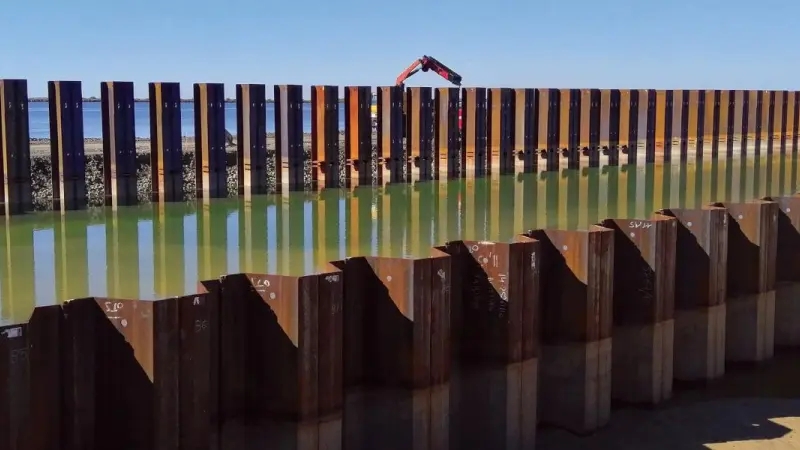
For marine corrosion protection, see the Eiffel 101: How to Protect Sheet Pile in Marine Construction, the From Prevention to Repair: Pile Buck’s Guide to Corrosion in Marine Projects, and the High-durability Corrosion Protection of Marine Steel Structures (Nippon Steel PDF).
No retaining system is perfect
Some suppliers only discuss the strengths of steel sheet piles.
I think customers deserve a balanced explanation.
Steel sheet piles perform very well in offshore engineering, but they are not suitable for every site without proper engineering evaluation.
Main disadvantages
| Issue | Possible Solution |
|---|---|
| Corrosion | Protective coating and corrosion allowance |
| Installation vibration | Hydraulic press-in equipment where possible |
| Hard seabed | Pre-drilling before driving |
| Water seepage | Interlock sealants or grouting |
| Noise | Modern low-noise equipment |
| Wall movement | Anchors or internal bracing |
Corrosion remains the biggest concern
Saltwater speeds up steel corrosion.
Many customers immediately worry about service life.
I explain that corrosion is predictable. Engineers calculate expected corrosion rates before construction. They then increase steel thickness or apply protective systems to achieve the required design life.
Many marine retaining walls remain in service for decades because corrosion protection was included during the design stage.
Difficult installation conditions
Not every offshore location has soft soil.
Some sites contain:
- Dense sand
- Gravel
- Coral
- Weathered rock
- Existing marine structures
Contractors may use pre-drilling or larger driving equipment to overcome these obstacles.
Water leakage
Steel sheet pile interlocks reduce water flow, but they are not naturally 100 percent waterproof.
Projects requiring high water tightness often use:
- Bituminous sealants
- Polyurethane sealants
- Grouting
- Welding
- Additional waterproof barriers
These methods improve overall performance.
Environmental requirements
Modern offshore projects often operate under strict environmental regulations.
Engineers must control:
- Underwater noise
- Sediment disturbance
- Marine habitat impact
- Water pollution
Equipment selection becomes just as important as pile selection.
My experience
One customer planned to build a marine terminal in the Middle East. Their biggest concern was long-term corrosion rather than installation cost.
Instead of recommending the cheapest section, I suggested increasing the corrosion allowance and reviewing protective coating options. The customer accepted a slightly higher material cost because it reduced long-term maintenance expenses.
Experiences like this remind me that successful offshore engineering depends on life-cycle cost instead of purchase price alone.
Our riverbank protection project in Southeast Asia also demonstrated the value of reliable interlocking performance. Hot rolled U type steel sheet piles created a continuous retaining wall that stabilized the riverbank and controlled erosion. Vibratory installation helped the contractor maintain the project schedule while achieving long-term structural stability.
In my opinion, the best suppliers do more than provide quotations. They help contractors choose products that fit the engineering requirements. That approach creates stronger partnerships and better project results.
Conclusion
I believe steel sheet piles remain one of the most dependable solutions for offshore engineering when engineers match the right profile with proper corrosion protection and installation methods.