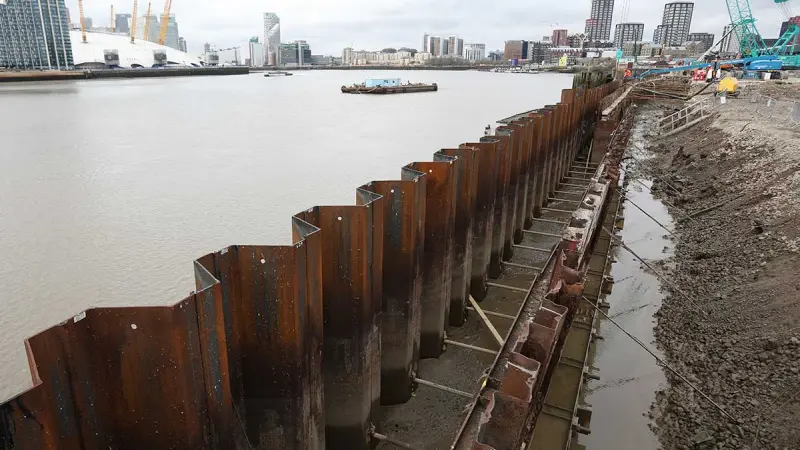
Many wastewater projects face unstable soil, groundwater, and tight construction schedules. I have seen these issues delay projects and increase costs when the wrong retaining system is selected.
Steel sheet piles are widely used in wastewater treatment plants because they provide reliable excavation support, groundwater control, and long service life. They are suitable for pump stations, treatment tanks, pipelines, and underground structures where soil stability is critical.
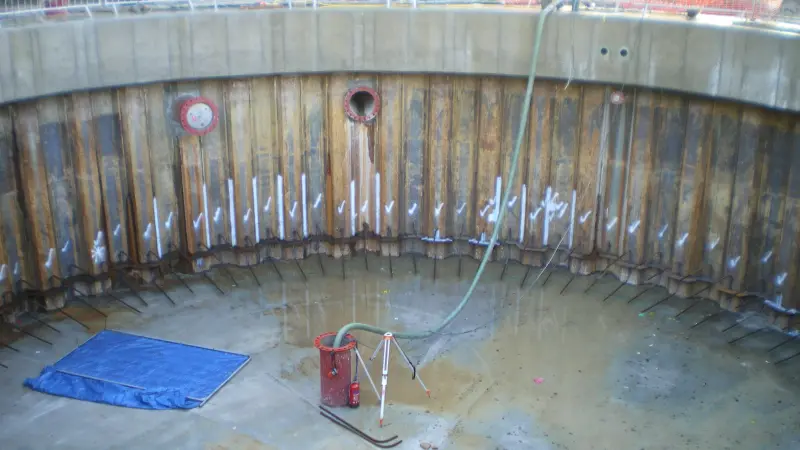
Wastewater treatment plants require more than strong concrete structures. Every underground tank, pumping station, and pipeline starts with a safe excavation. I have worked with contractors who needed retaining systems that could perform well in wet ground while keeping projects on schedule. In my experience, steel sheet piles continue to be one of the most practical solutions because they combine structural strength, fast installation, and excellent adaptability to different soil conditions. In this guide, I will explain their advantages, limitations, waterproof performance, costs, and how to choose the right pile type for wastewater projects.
What are the disadvantages of using sheet piles?
Many buyers only focus on the advantages of sheet piles. They may overlook some limitations until construction begins, which can increase both time and budget.
Steel sheet piles may experience corrosion, installation vibration, water seepage through interlocks, and driving difficulties in dense ground. Good engineering and proper installation can reduce most of these disadvantages.
Every retaining system has limitations
I always tell my customers that there is no perfect retaining system. Every solution has strengths and weaknesses. The key is choosing the right system for the site conditions instead of looking only at the purchase price.
Steel sheet piles perform very well in wastewater treatment plants because many structures require deep excavations below the groundwater table. Still, engineers should understand the possible challenges before making a final decision.
Common disadvantages
| Disadvantage | Possible Solution |
|---|---|
| Corrosion | Apply protective coating or increase steel thickness |
| Vibration during driving | Use hydraulic press-in equipment |
| Noise | Select low-noise installation methods |
| Difficult installation in rock | Pre-drill before driving piles |
| Water seepage | Use sealing materials in interlocks |
| Wall movement | Add anchors or internal bracing |
Corrosion in wastewater environments
Wastewater plants often expose steel to moisture, chemicals, and changing water levels.
Many people worry about corrosion. I understand that concern. I usually explain that corrosion is predictable. Engineers can estimate the corrosion rate during design. They can increase the steel thickness or apply protective coatings to achieve the required service life.
Some permanent retaining walls have remained in service for several decades because corrosion protection was considered during the design stage.
Installation challenges
Driving sheet piles into dense gravel or weathered rock can become difficult.
Contractors may choose:
- Pre-drilling
- Larger vibratory hammers
- Hydraulic impact hammers
- Alternate retaining systems in extremely hard ground
Good planning reduces unexpected delays.
Water leakage
Steel sheet piles are not always completely watertight.
Minor seepage may occur through the interlocks under high groundwater pressure. Many wastewater projects solve this by adding sealants or grouting after installation.
My opinion
I think honest technical advice builds stronger business relationships. I never recommend steel sheet piles simply because I sell them. I first ask for the soil report and project drawings. Sometimes another retaining system may fit better. Most of the time, however, properly designed steel sheet piles offer an excellent balance between safety, construction speed, and overall project cost.
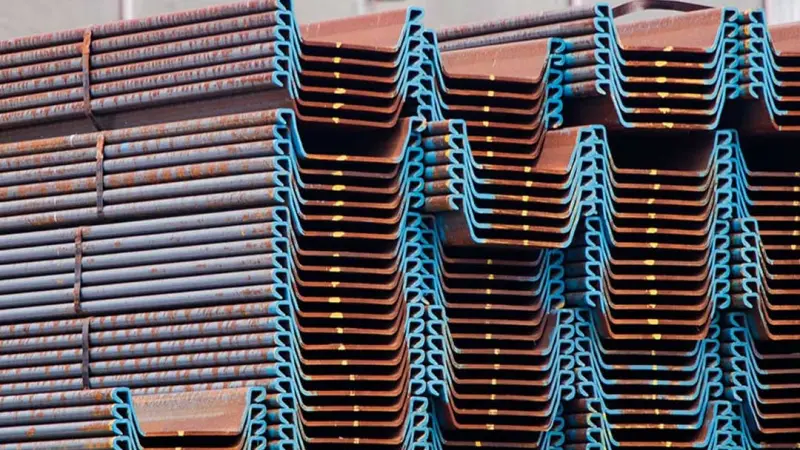
Our long-term cooperation with certified mills allows us to supply U-shaped, Z-shaped, Ω-shaped, flat plate, straight flange, disc type, and cap type steel sheet piles with SGS inspection support, flexible MOQ, OEM production, and fast delivery from Liaocheng, Shandong.
Are sheet piles water proof?
Groundwater is one of the biggest challenges during wastewater construction. Many contractors ask whether sheet piles can completely stop water.
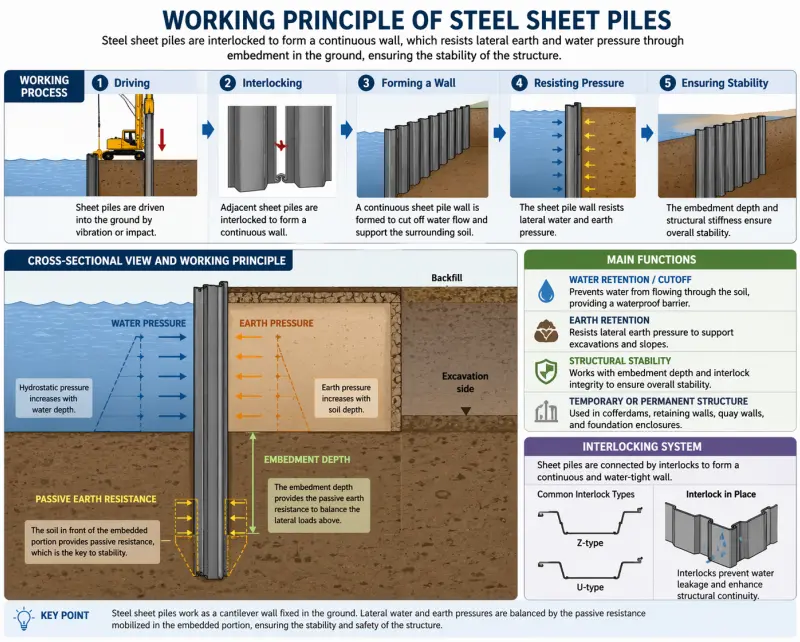
Steel sheet piles are water resistant but not naturally 100% waterproof. Their interlocking joints greatly reduce water flow, and additional sealing methods can provide very high water tightness when required.
Understanding water resistance
Many people confuse "water resistant" with "waterproof."
Steel itself is waterproof.
The interlocks between adjacent piles are where water may pass.
Most excavation support projects only require groundwater control instead of complete waterproofing.
Methods to improve water tightness
| Method | Effectiveness |
|---|---|
| Standard interlocks | Good groundwater control |
| Bituminous sealant | Better sealing |
| Polyurethane sealant | Excellent sealing |
| Welding joints | Near complete water barrier |
| Grouting | Reduces seepage significantly |
Wastewater treatment applications
Water control becomes especially important around:
- Clarifiers
- Pump stations
- Sludge tanks
- Underground pipelines
- Equalization basins
- Chemical storage areas
Each structure may require different waterproofing standards.
Installation quality matters
Even the best sheet piles cannot perform well if installation quality is poor.
Proper alignment ensures tight interlocking connections.
Experienced installation crews also reduce the risk of damaged interlocks.
My experience
One contractor asked me whether sheet piles alone could replace waterproof concrete walls.
My answer was simple.
They serve different purposes.
Sheet piles provide excavation support and groundwater control during construction. Permanent waterproof systems may still include membranes, concrete walls, or additional sealants depending on project requirements.
I believe contractors should evaluate the entire water management system instead of expecting one product to solve every challenge.
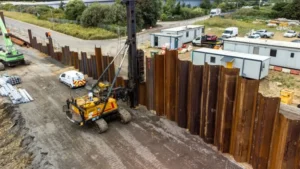
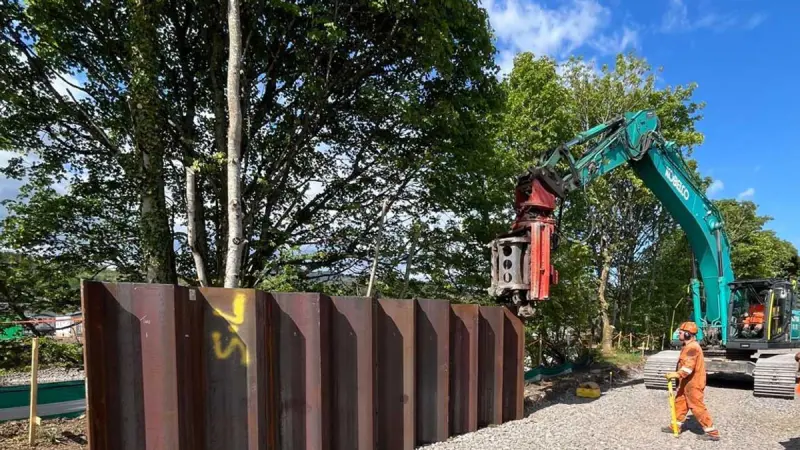
The riverbank protection project we supplied in Southeast Asia demonstrated how reliable interlocking performance controlled soil movement and limited water penetration. The contractor completed installation efficiently using vibratory equipment, and the retaining wall continues to provide stable protection against erosion and flooding.
How much does steel sheet piling cost?
Many buyers ask for a unit price immediately. I always explain that the final cost depends on much more than the steel itself.
Steel sheet piling costs depend on pile profile, steel grade, project quantity, length, transportation, installation method, and market steel prices. Large wholesale orders usually reduce the unit cost significantly.
What affects pricing?
No supplier can provide an accurate quotation using only the project name.
I usually request several project details before preparing an offer.
Main pricing factors
| Factor | Impact on Cost |
|---|---|
| Steel grade | Higher grades increase price |
| Pile section | Larger sections cost more |
| Length | Longer piles require more steel |
| Quantity | Bulk orders lower unit cost |
| Delivery location | Freight changes total cost |
| Surface treatment | Coating adds cost |
Installation costs
Material price is only one part of the budget.
Contractors should also consider:
- Equipment rental
- Crane operation
- Vibratory hammer
- Hydraulic press-in machine
- Welding
- Transportation
- Site preparation
Sometimes a higher-quality pile reduces total project cost because installation becomes faster.
Permanent versus temporary use
Temporary sheet piles may be removed and reused.
Permanent walls remain in place.
The choice affects total project economics.
My pricing advice
Many customers ask me for the cheapest sheet pile.
Instead, I ask them how much they want to spend on the entire project.
Saving a small amount on steel may increase labor costs or construction delays.
I prefer helping contractors optimize the whole solution instead of competing only on price.
As a wholesale supplier, we work directly with certified Chinese mills. We support OEM production, SGS inspection, flexible MOQ, and competitive factory pricing. We regularly export to Iraq, Iran, Jordan, Saudi Arabia, UAE, Bahrain, Kuwait, Pakistan, Australia, Africa, North America, South America, and many other regions.
I believe long-term cooperation comes from helping customers lower total project costs instead of simply offering the lowest quotation.
What is the difference between Type 2 and Type 4 sheet piles?
Many engineers compare Type 2 and Type 4 sheet piles during project planning. Choosing the wrong section may increase material cost or reduce structural safety.
Type 2 sheet piles are lighter sections for moderate excavation loads, while Type 4 sheet piles provide greater section modulus and bending strength for deeper excavations and higher lateral pressures.

Understanding pile classifications
The terms Type 2 and Type 4 usually describe different section sizes within one manufacturer’s product range.
As the section number increases, the pile generally becomes:
- Heavier
- Stronger
- More resistant to bending
- Better suited for deeper excavations
Comparison table
| Property | Type 2 | Type 4 |
|---|---|---|
| Steel weight | Lower | Higher |
| Section modulus | Medium | Large |
| Bending resistance | Moderate | High |
| Material cost | Lower | Higher |
| Best application | Medium excavations | Deep excavations |
| Wastewater projects | Small tanks | Large treatment basins |
Selecting the correct pile
I never recommend selecting a pile based only on section number.
The design should consider:
- Soil conditions
- Excavation depth
- Groundwater level
- Adjacent buildings
- Internal bracing
- Anchor system
- Safety requirements
Profile selection
Besides Type 2 and Type 4, buyers should also consider profile geometry.
| Profile | Typical Advantage |
|---|---|
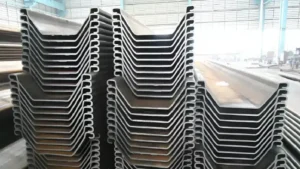
| U-shaped | Strong interlocks and easy installation |
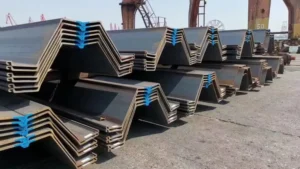
| Z-shaped | High bending efficiency |
| Ω-shaped | Special engineering applications |
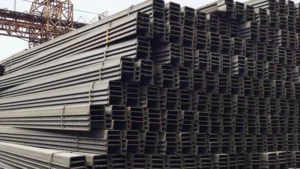
| Straight flange | Cellular structures |
| Flat plate | Closure sections |
Each profile serves different engineering purposes.
My recommendation
When contractors send me inquiries, I first ask for their excavation drawings, soil report, required delivery date, and project location.
These documents allow me to recommend the most suitable section instead of simply offering the largest profile.
In my opinion, this engineering-first approach helps contractors reduce unnecessary material costs while maintaining structural safety. That is also why many construction companies, civil engineering contractors, and steel distributors continue working with us on wastewater treatment plants, bridge foundations, retaining walls, deep excavations, and port construction projects.
Conclusion
I believe steel sheet piles remain one of the most practical retaining solutions for wastewater treatment plants when engineers match the right profile with the right project conditions.