Steel sheet piles look simple, but many projects fail because of wrong understanding. I have seen delays, leaks, and cost growth caused by small early mistakes.
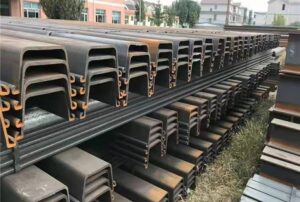
Steel sheet piles are interlocking steel sections used to retain soil and water. Their structure, function, and engineering value make them essential in marine and civil works.
I write this article based on daily work with project buyers and engineers. Many people read short answers online, but real projects need deeper thinking. I want to explain how steel sheet piles really work, in simple words, from my own view.
Steel sheet piles explained structure function and engineering benefits?
Many buyers focus only on price. They forget structure and function. This often leads to redesign or failure.
Steel sheet piles work by combining steel strength, interlock sealing, and vertical driving to resist soil and water pressure in a stable and repeatable way.
Structure of Steel Sheet Piles
Steel sheet piles have three key parts. Each part has a clear role.
Pile Body
The pile body carries bending stress. Thickness and profile shape control strength.
Interlock System
Interlocks connect piles. They stop soil loss and reduce water leakage.
Pile Toe and Head
The toe helps driving. The head connects to capping beams or anchors.
| Part | Main Role | Risk If Wrong |
|---|---|---|
| Body | Resist bending | Wall failure |
| Interlock | Seal and align | Leakage |
| Toe | Drive accuracy | Misalignment |
Function in Engineering
Steel sheet piles resist lateral pressure. They work against soil and water forces. They also support excavation safety.
Engineering Benefits
From my experience, these benefits matter most:
- Fast installation
- High reuse value
- Predictable strength
- Easy quality control
I always tell clients this: steel sheet piles are not just steel. They are a system. When one part is weak, the whole wall is weak.
Steel sheet pile specifications?
Many buyers ask for price before specs. This creates risk. Specs must come first.
Steel sheet pile specifications include profile type, thickness, width, length, steel grade, and coating, all of which affect performance and cost.
Key Specification Elements
I always confirm these points before quotation.
Profile Type
U-type, Z-type, or straight web.
Dimensions
Width and thickness define bending resistance.
Steel Grade
Common grades include Q235, Q355, S355.
Surface Treatment
Black, painted, or hot-dip galvanized.
| Item | Why It Matters |
|---|---|
| Thickness | Bending strength |
| Width | Wall stiffness |
| Grade | Yield strength |
| Coating | Service life |
My Practical View
Some clients request high grade steel but shallow excavation. This is waste. Others choose thin piles for deep water. This is dangerous. I always suggest matching specs to real site data, not habits.
Steel sheet piling retaining wall?
Many people confuse retaining walls with bearing walls. This confusion causes wrong designs.
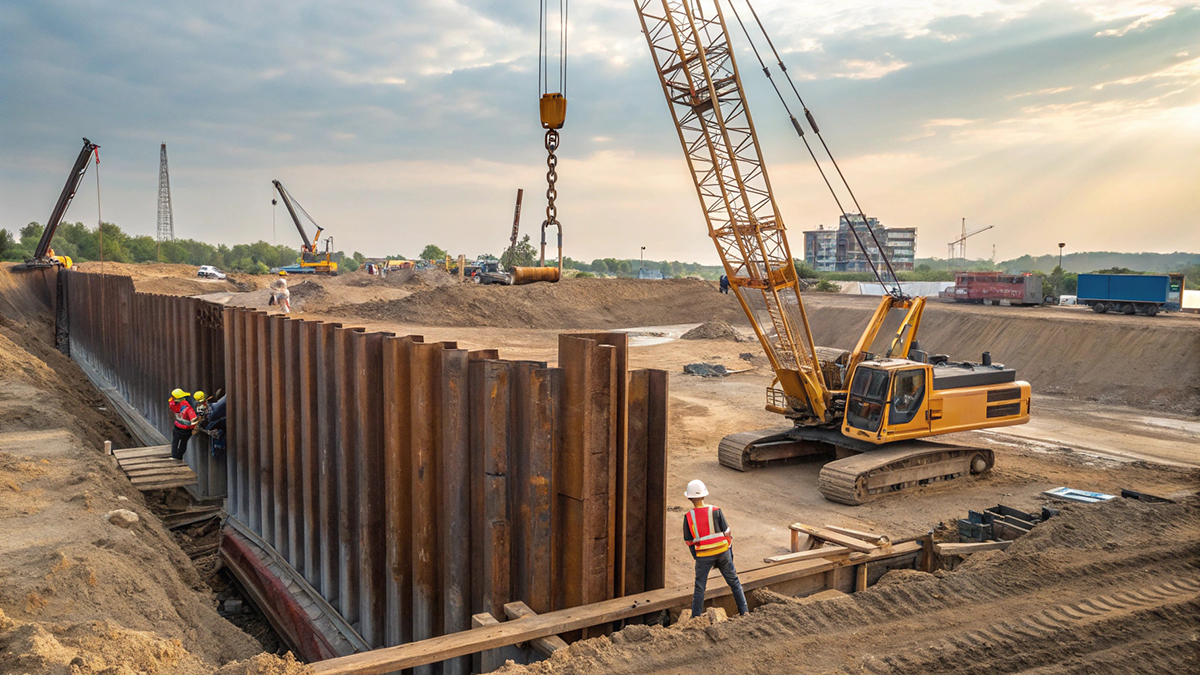
A steel sheet piling retaining wall is a vertical structure that holds soil or water by resisting lateral pressure through embedded steel sections.
How It Works
The wall uses embedment depth to balance soil pressure. Anchors may be added.
Wall Types
- Cantilever wall
- Anchored wall
- Combined wall
| Wall Type | Depth | Cost |
|---|---|---|
| Cantilever | Shallow | Lower |
| Anchored | Deep | Higher |
Engineering Insight
In UAE projects, anchored walls are common due to high groundwater. In river works, cantilever walls are often enough. I learned this difference from field feedback, not books.
Types of sheet piles?
Many buyers think all sheet piles are the same. This is a serious mistake.
Sheet piles are divided into U-type, Z-type, straight web, and cold-formed types based on shape and performance.
U-Type
Easy handling. Good for temporary works.
Z-Type
High section modulus. Used in ports and permanent walls.
Straight Web
Mainly for cut-off walls.
Cold-Formed
Lower cost. Lower interlock strength.
| Type | Strength | Typical Use |
|---|---|---|
| U | Medium | Temporary |
| Z | High | Permanent |
| Straight | Low | Sealing |
From my view, Z-type piles bring fewer disputes later. They cost more at first, but save time and risk.
Sheet piling method?
Installation method decides final wall quality. Many failures start here.
Sheet piling methods include vibratory driving, impact hammering, and press-in methods, chosen based on soil and environment.
Common Methods
Vibratory Driving
Fast and common. Good for sand.
Impact Hammer
Strong force. Used for hard soil.
Press-In
Low noise. Used in cities.
| Method | Noise | Speed |
|---|---|---|
| Vibratory | Medium | Fast |
| Impact | High | Medium |
| Press-In | Low | Slow |
Field Experience
I once saw a project delayed because local law banned impact hammers. Method choice should match local rules, not only soil.
Sheet pile wall?
A sheet pile wall is more than piles in a line. It is a full system.
A sheet pile wall includes piles, capping beams, anchors, and drainage to form a stable retaining structure.
System Components
- Sheet piles
- Capping beam
- Tie rods
- Anchor plates
Common Mistakes
Ignoring drainage causes water pressure build-up. I always suggest drainage checks in design stage.
Concrete sheet pile?
Some buyers ask if concrete can replace steel. The answer depends on use.
Concrete sheet piles exist, but they lack flexibility and reuse value compared to steel sheet piles.
Comparison
| Item | Steel | Concrete |
|---|---|---|
| Strength | High | Medium |
| Reuse | Yes | No |
| Installation | Fast | Slow |
My Opinion
Concrete piles fit low-budget permanent works. Steel piles fit projects that need speed and control.
Steel piles foundation?
Steel piles are not only sheet piles. This is often misunderstood.
Steel pile foundations include H-piles, pipe piles, and sheet piles, each serving different load functions.
Foundation Roles
- H-piles carry vertical loads
- Pipe piles support deep foundations
- Sheet piles retain soil
Real Project Insight
Many marine projects use pipe piles plus sheet piles. One carries load. One holds soil. This combined solution works best.
Conclusion
Steel sheet piles bring strength, speed, and control. Clear understanding of structure and function reduces risk and improves project results.
Tags:
Steel Sheet Piles Engineering
Sheet Pile Wall Systems
Marine and Infrastructure Construction
Steel Foundation Solutions