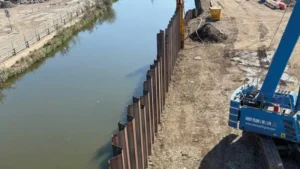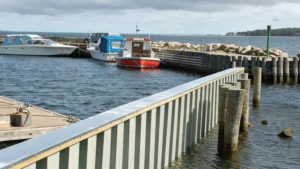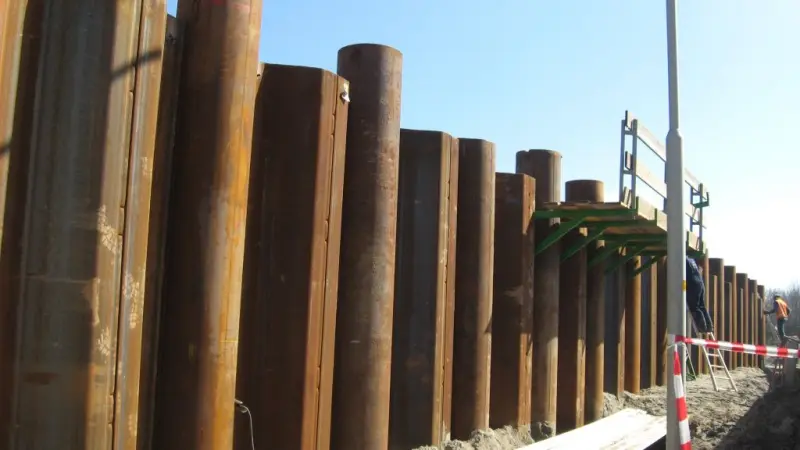
You are standing at the fabrication yard, looking at rows of steel pipe piles. The engineer’s drawing calls for a specific weld type. You need to know which one to order.
Spiral welded pipes (SSAW)1 and longitudinal welded pipes (LSAW)2 differ in manufacturing, strength characteristics, and cost. LSAW pipes have higher strength in the longitudinal direction and better resistance to bending. Spiral welded pipes are more economical for large diameters and can be made in longer lengths .
](https://cnsteelplant.com/wp-content/uploads/2026/03/Article-Application-Port-3-1.webp)
I remember a port project in the Middle East where the contractor ordered spiral welded pipes thinking they would save money. The piles failed during driving because the spiral welds opened up under the hammer impact. That was an expensive lesson. Let me share what I have learned about these two pipe types.
What are the disadvantages of spiral welded pipe?
Spiral welded pipes have several limitations that matter for piling applications. You need to know these before you choose.
The main disadvantages of spiral welded pipes for piling are lower strength in the longitudinal direction, longer weld length that increases defect risk, residual stresses from the spiral forming process, limited wall thickness capability, and potential for the spiral weld to open during hard driving .
](https://cnsteelplant.com/wp-content/uploads/2026/03/Article-application-2-1.webp)
Detailed Analysis of Limitations
Let me explain each disadvantage in detail.
Lower Longitudinal Strength1
In a spiral welded pipe, the weld runs at an angle of about 30 to 60 degrees to the pipe axis . This means the weld is not aligned with the direction of maximum stress during pile driving. When the hammer hits the pile top, the compressive stress travels down the pipe length. The spiral weld must resist this stress at an angle. The weld metal and the heat-affected zone have different properties than the base metal. This can create weak points.
For LSAW pipes, the weld runs parallel to the pipe axis. The driving stress aligns with the weld direction. This is a stronger configuration for compressive loading .
Longer Weld Length2
A spiral welded pipe has a much longer weld seam than a longitudinal welded pipe of the same diameter. The weld length is about 1.5 to 2 times the pipe length . For a 12-meter pipe, the spiral weld could be 18 to 24 meters long.
Longer weld length means more opportunities for defects. Each millimeter of weld is a potential failure point. Quality control becomes more critical and more difficult.
Residual Stresses3
The spiral forming process creates residual stresses in the pipe. The steel strip is bent into a helix and welded. This leaves locked-in stresses that can affect performance. During pile driving, these stresses combine with driving stresses. In some cases, this can lead to unexpected behavior or failure .
Limited Wall Thickness4
Spiral welded pipes are made from steel coils. Coils are typically limited to about 25 mm thickness . For heavy piling applications requiring 30 mm or thicker walls, LSAW is the only option. LSAW uses steel plates that can be 50 mm or more thick.
Weld Opening Risk5
During hard driving, the spiral weld can experience high stresses. If the weld quality is not perfect, or if the driving is particularly severe, the weld can open. I have seen this happen. The pile splits along the spiral seam and becomes useless.
Inspection Challenges6
The spiral weld geometry makes ultrasonic inspection more difficult. The angled seam requires specialized probes and techniques. Straight seams are easier to inspect thoroughly .
My Experience
On that Middle East port project, the contractor drove spiral welded piles into dense sand. After about 10 meters, several piles started to make unusual sounds. When they pulled one out, the spiral weld had opened for about 2 meters. They had to replace all the spiral piles with LSAW. The cost overrun was substantial.
What is the difference between longitudinal seam and spiral seam?
The seam orientation affects every aspect of pipe performance, especially for piling.
The longitudinal seam runs straight along the pipe axis. The spiral seam wraps around the pipe at an angle. This difference affects stress distribution, weld length1, manufacturing flexibility, and suitability for different applications .
](https://cnsteelplant.com/wp-content/uploads/2026/03/Article-Application-Subway-2.webp)
Comparing Seam Characteristics
Let me compare these two seam types in detail.
Longitudinal Seam2
A longitudinal seam is a single straight weld running the full length of the pipe. For large diameters, multiple longitudinal seams may be used if the plate width is insufficient . But typically, one seam per pipe.
The weld is parallel to the pipe axis. When the pipe is loaded in compression or tension along its length, the weld experiences stress in the same direction as the base metal. This is the strongest orientation.
Longitudinal seam pipes are made from discrete plates. Each pipe is a separate manufacturing operation. This limits production speed but allows for precise control.
Spiral Seam3
A spiral seam is a continuous helical weld. As the steel strip feeds into the forming machine, the weld runs at a constant angle. The weld length1 is much longer than the pipe length.
The weld is at an angle to the pipe axis. Under longitudinal loading, the weld experiences both shear and normal stresses. The strength in the longitudinal direction is lower than for a longitudinal seam.
Spiral seam pipes are made from continuous coils. This allows for very long pipes, but the process is continuous, and quality control must be maintained over the entire length.
Comparison Table
| Feature | Longitudinal Seam2 | Spiral Seam3 |
|---|---|---|
| Orientation | Parallel to axis | Helical angle |
| Weld length | 1 × pipe length | 1.5-2 × pipe length |
| Longitudinal strength | Higher | Lower |
| Manufacturing | Discrete plates | Continuous coil |
| Diameter range | Up to 60" typical | Up to 120"+ |
| Wall thickness | Up to 50 mm+ | Up to 25 mm typical |
| Inspection | Easier | More complex |
Which Is Better for Piling?
For most piling applications4, longitudinal seam is preferred. The driving stresses are longitudinal. Aligning the weld with the stress direction is safer. The shorter weld length1 reduces defect risk. And thicker walls are possible when needed.
Spiral seam pipes work for lighter piling applications4 with moderate driving conditions. They are economical and available in large diameters. But for hard driving or critical structures, longitudinal seam is the conservative choice.
What are the three types of steel pipes?
Steel pipes fall into three main categories based on how they are made. Understanding these helps you choose the right product.
The three main types of steel pipes are seamless pipes, welded pipes (including LSAW1 and SSAW2), and electric resistance welded (ERW) pipes. For piling applications3, welded pipes are most common, with LSAW1 and SSAW2 dominating the large-diameter market .
](https://cnsteelplant.com/wp-content/uploads/2026/03/Article-Application-River-Embankment-4.webp)
Complete Guide to Steel Pipe Types
Let me explain each type and where it fits.
1. Seamless Pipes4
Seamless pipes are made by piercing a solid steel billet and then rolling it into a tube. There is no weld seam at all.
- Manufacturing: Hot extrusion or rotary piercing
- Diameter range: Typically up to 24 inches
- Wall thickness: Various, can be very thick
- Advantages: No weld to fail, uniform properties
- Disadvantages: Expensive, size limited, dimensional variations
- Piling use: Rare, too expensive for most projects
Seamless pipes are used for critical applications like downhole casing in oil wells, where weld failure is unacceptable . For general piling, the cost is prohibitive.
2. Welded Pipes5
Welded pipes are made by forming steel plates or coils into a cylinder and welding the seam. This category includes both LSAW1 and SSAW2.
- Manufacturing: Plate or coil forming + submerged arc welding
- Diameter range: 16 inches to 120 inches+
- Wall thickness: Up to 50 mm for LSAW1, 25 mm for SSAW2
- Advantages: Large diameters, thick walls, economical
- Disadvantages: Weld seam is potential weak point
- Piling use: Most common choice for large-diameter piles
LSAW1 (longitudinal) and SSAW2 (spiral) are the two main welded pipe types for piling.
3. Electric Resistance Welded (ERW) Pipes6
ERW pipes are made by forming steel coil into a cylinder and welding the seam using electrical resistance. The weld is a forge weld without added filler metal.
- Manufacturing: Continuous forming + high-frequency welding
- Diameter range: Typically up to 24 inches
- Wall thickness: Limited by coil thickness
- Advantages: Fast production, economical, good dimensional control
- Disadvantages: Weld heat-affected zone can be brittle
- Piling use: Common for smaller-diameter piles and pipe piles in moderate conditions
ERW pipes are widely used for piling in sizes up to about 24 inches. They are economical and available in long lengths.
Which Type for Your Project?
| Application | Recommended Pipe Type |
|---|---|
| Large-diameter piles (>24") | LSAW1 or SSAW2 |
| Heavy driving, thick walls | LSAW1 |
| Moderate conditions, long lengths | SSAW2 or ERW |
| Small-diameter piles (40m) | Yes (long lengths available) |
| Large diameters (>60") | Yes (often only option) |
My Experience
For a river crossing project in Pakistan, we used spiral welded pipes for the casing. The soil was soft, and the pipes were not driven hard. They worked perfectly and saved significant cost over LSAW. The key was matching the product to the conditions.
Conclusion
Spiral welded pipes1 are economical and versatile but have limitations for hard driving. LSAW pipes2 are stronger and more reliable for demanding piling applications. Choose based on your specific soil conditions and loads.
-
Explore the benefits of Spiral welded pipes to understand their economical and versatile nature for various applications. ↩ ↩ ↩ ↩ ↩ ↩ ↩ ↩ ↩ ↩ ↩ ↩ ↩
-
Learn about LSAW pipes and their strength in demanding piling applications, making them a reliable choice for construction. ↩ ↩ ↩ ↩ ↩ ↩ ↩ ↩ ↩ ↩ ↩ ↩
-
Learn about Spiral Seam’s unique characteristics and how they impact pipe performance and manufacturing efficiency. ↩ ↩ ↩ ↩
-
Discover best practices for using different seam types in piling applications to ensure safety and efficiency. ↩ ↩ ↩ ↩
-
Exploring the causes of weld opening risk can help you mitigate potential failures in your projects. ↩ ↩
-
Gaining insights into inspection challenges can enhance your quality assurance processes and project reliability. ↩ ↩