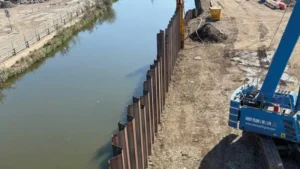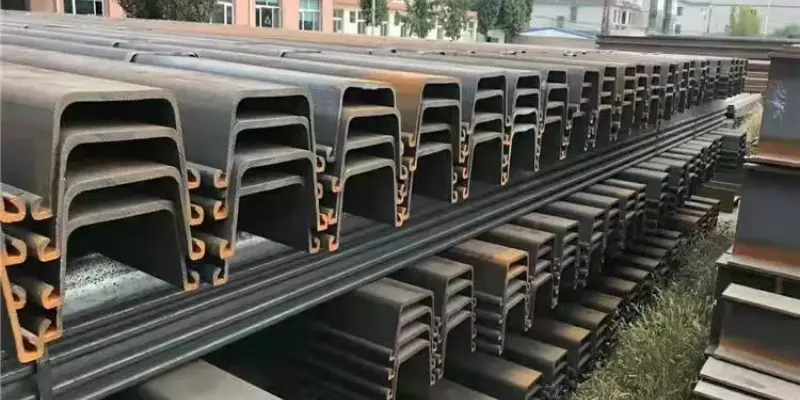
You are designing a port wall or a seawall in a coastal environment. The engineer tells you that corrosion is the enemy. You need to choose a steel grade that balances strength, durability, and cost. The most common steel grades for marine sheet piles are ASTM A328 for standard carbon steel, ASTM A572 Grade 50 for higher strength, and ASTM A690[^1] for improved corrosion resistance in seawater. Each grade has different properties that affect design, driving, and long-term performance. ](https://cnsteelplant.com/wp-content/uploads/2026/03/Article-Application-Port-4.webp) I remember a project in the Middle East where the client insisted on using standard carbon steel for a port wall. Ten years later, corrosion had thinned the piles significantly. They had to add cathodic protection[^2] at great expense. That experience taught me that choosing the right steel grade from the start saves money over the life of the project. — [^1]: Explore the advantages of ASTM A690, which offers improved corrosion resistance, crucial for long-lasting marine structures. [^2]: Learn about cathodic protection methods to prevent corrosion, ensuring the longevity and safety of marine constructions. ## What grade of steel is used in sheet piles? Steel sheet piles come in several grades. The right one depends on your project. The primary steel grades for sheet piles are carbon steel grades like ASTM A328, high-strength grades like ASTM A572 Grade 50, and marine grades like ASTM A690. European projects often use EN 10248 grades S270GP, S355GP, and S430GP. The number indicates the yield strength in megapascals.
I remember a project in the Middle East where the client insisted on using standard carbon steel for a port wall. Ten years later, corrosion had thinned the piles significantly. They had to add cathodic protection[^2] at great expense. That experience taught me that choosing the right steel grade from the start saves money over the life of the project. — [^1]: Explore the advantages of ASTM A690, which offers improved corrosion resistance, crucial for long-lasting marine structures. [^2]: Learn about cathodic protection methods to prevent corrosion, ensuring the longevity and safety of marine constructions. ## What grade of steel is used in sheet piles? Steel sheet piles come in several grades. The right one depends on your project. The primary steel grades for sheet piles are carbon steel grades like ASTM A328, high-strength grades like ASTM A572 Grade 50, and marine grades like ASTM A690. European projects often use EN 10248 grades S270GP, S355GP, and S430GP. The number indicates the yield strength in megapascals. ](https://cnsteelplant.com/wp-content/uploads/2026/03/Article-Application-Port-2.webp) ### Complete Guide to Sheet Pile Grades Let me walk you through the main grades and what they offer. ASTM A328 (Standard Carbon Steel)[^1] This is the workhorse grade for sheet piles in North America and many other markets. – Yield strength: 240 MPa (35 ksi) minimum – Tensile strength: 410 MPa (60 ksi) minimum – Typical use: General retaining walls, temporary excavations, river banks – Corrosion resistance: Standard carbon steel, requires protection in marine environments – Weldability: Excellent A328 is the most common grade for U-shaped sheet piles. It is economical and widely available. For the riverbank project in Southeast Asia, we used piles manufactured to A328. The wall was in fresh water, so the standard grade was sufficient. ASTM A572 Grade 50 (High-Strength Low-Alloy)[^2] This grade offers higher strength for deeper walls and heavier loads. – Yield strength: 345 MPa (50 ksi) minimum – Tensile strength: 450 MPa (65 ksi) minimum – Typical use: Deep excavations, high retaining walls, heavy loads – Corrosion resistance: Slightly better than A328 due to copper content – Weldability: Good A572 Grade 50 is often used for Z-shaped piles and for projects where weight savings justify the higher material cost. With 45% higher yield strength than A328, you can use thinner sections or handle deeper walls. ASTM A690 (Marine Grade)[^3] This grade is specifically designed for seawater environments. – Yield strength: 345 MPa (50 ksi) minimum – Tensile strength: 485 MPa (70 ksi) minimum – Typical use: Ports, harbors, seawalls, marine terminals – Corrosion resistance: Approximately 50% better than carbon steel in seawater – Weldability: Good, but requires special procedures A690 contains copper, nickel, and phosphorus that form a protective layer in seawater. It is the standard choice for permanent marine structures where cathodic protection is not practical. EN 10248 European Grades[^4] European projects use these standard grades: – S270GP: 270 MPa yield, equivalent to A328 – S355GP: 355 MPa yield, higher strength grade – S430GP: 430 MPa yield, high-strength grade for deep walls The GP stands for General Purpose. These grades are used for both U and Z piles in European and Asian markets. Higher Strength Options[^5] For extreme depths, some mills offer grades up to S460 or S500. These are not common but available for special projects. ### Comparison Table[^6] | Grade | Yield (MPa) | Tensile (MPa) | Best Use | Marine Corrosion | | :— | :— | :— | :— | :— | | ASTM A328 | 240 | 410 | General retaining | Poor | | ASTM A572 Gr50 | 345 | 450 | Heavy loads | Fair | | ASTM A690 | 345 | 485 | Marine structures | Good (50% better) | | S270GP | 270 | 410 | General retaining | Poor | | S355GP | 355 | 490 | Deep excavations | Fair | | S430GP | 430 | 550 | Very deep walls | Fair | — [^1]: Explore this link to understand the versatility and applications of ASTM A328, the most common grade for sheet piles. [^2]: Learn about the advantages of A572 Grade 50 for deep excavations and heavy loads, enhancing your project planning. [^3]: Discover why A690 is the go-to choice for marine structures, ensuring durability and corrosion resistance. [^4]: Gain insights into European sheet pile grades and their specific applications in construction projects. [^5]: Find out how higher strength options can optimize your construction projects, especially in extreme conditions. [^6]: Check this comparison table to quickly assess the strengths and weaknesses of various steel grades for your needs. ## Is 316 stainless steel[^1] good for marine use? Stainless steel sounds like the perfect solution for marine environments. But is it practical for sheet piling? 316 stainless steel[^1] has excellent corrosion resistance in seawater and is used for small components like fasteners and fittings. However, it is rarely used for sheet piles because it costs 3-5 times more than carbon steel, has lower yield strength than high-strength carbon steel grades, and can still suffer from crevice corrosion[^2] in splash zones .
### Complete Guide to Sheet Pile Grades Let me walk you through the main grades and what they offer. ASTM A328 (Standard Carbon Steel)[^1] This is the workhorse grade for sheet piles in North America and many other markets. – Yield strength: 240 MPa (35 ksi) minimum – Tensile strength: 410 MPa (60 ksi) minimum – Typical use: General retaining walls, temporary excavations, river banks – Corrosion resistance: Standard carbon steel, requires protection in marine environments – Weldability: Excellent A328 is the most common grade for U-shaped sheet piles. It is economical and widely available. For the riverbank project in Southeast Asia, we used piles manufactured to A328. The wall was in fresh water, so the standard grade was sufficient. ASTM A572 Grade 50 (High-Strength Low-Alloy)[^2] This grade offers higher strength for deeper walls and heavier loads. – Yield strength: 345 MPa (50 ksi) minimum – Tensile strength: 450 MPa (65 ksi) minimum – Typical use: Deep excavations, high retaining walls, heavy loads – Corrosion resistance: Slightly better than A328 due to copper content – Weldability: Good A572 Grade 50 is often used for Z-shaped piles and for projects where weight savings justify the higher material cost. With 45% higher yield strength than A328, you can use thinner sections or handle deeper walls. ASTM A690 (Marine Grade)[^3] This grade is specifically designed for seawater environments. – Yield strength: 345 MPa (50 ksi) minimum – Tensile strength: 485 MPa (70 ksi) minimum – Typical use: Ports, harbors, seawalls, marine terminals – Corrosion resistance: Approximately 50% better than carbon steel in seawater – Weldability: Good, but requires special procedures A690 contains copper, nickel, and phosphorus that form a protective layer in seawater. It is the standard choice for permanent marine structures where cathodic protection is not practical. EN 10248 European Grades[^4] European projects use these standard grades: – S270GP: 270 MPa yield, equivalent to A328 – S355GP: 355 MPa yield, higher strength grade – S430GP: 430 MPa yield, high-strength grade for deep walls The GP stands for General Purpose. These grades are used for both U and Z piles in European and Asian markets. Higher Strength Options[^5] For extreme depths, some mills offer grades up to S460 or S500. These are not common but available for special projects. ### Comparison Table[^6] | Grade | Yield (MPa) | Tensile (MPa) | Best Use | Marine Corrosion | | :— | :— | :— | :— | :— | | ASTM A328 | 240 | 410 | General retaining | Poor | | ASTM A572 Gr50 | 345 | 450 | Heavy loads | Fair | | ASTM A690 | 345 | 485 | Marine structures | Good (50% better) | | S270GP | 270 | 410 | General retaining | Poor | | S355GP | 355 | 490 | Deep excavations | Fair | | S430GP | 430 | 550 | Very deep walls | Fair | — [^1]: Explore this link to understand the versatility and applications of ASTM A328, the most common grade for sheet piles. [^2]: Learn about the advantages of A572 Grade 50 for deep excavations and heavy loads, enhancing your project planning. [^3]: Discover why A690 is the go-to choice for marine structures, ensuring durability and corrosion resistance. [^4]: Gain insights into European sheet pile grades and their specific applications in construction projects. [^5]: Find out how higher strength options can optimize your construction projects, especially in extreme conditions. [^6]: Check this comparison table to quickly assess the strengths and weaknesses of various steel grades for your needs. ## Is 316 stainless steel[^1] good for marine use? Stainless steel sounds like the perfect solution for marine environments. But is it practical for sheet piling? 316 stainless steel[^1] has excellent corrosion resistance in seawater and is used for small components like fasteners and fittings. However, it is rarely used for sheet piles because it costs 3-5 times more than carbon steel, has lower yield strength than high-strength carbon steel grades, and can still suffer from crevice corrosion[^2] in splash zones . ](https://cnsteelplant.com/wp-content/uploads/2026/03/Article-Application-Port-3-1.webp) ### Why Stainless Is Not Common Let me explain the practical reasons. Cost A 316 stainless steel[^1] sheet pile costs approximately $3,500 to $4,500 per ton. A carbon steel sheet pile[^3] costs $700 to $900 per ton. For a typical marine project requiring 500 tons of piles, the difference is $1.4 million to $1.8 million. Strength 316 stainless steel[^1] has a yield strength of about 205 to 240 MPa (30 to 35 ksi). This is comparable to standard carbon steel. Higher strength carbon grades like A572 Grade 50 have 345 MPa yield—50% stronger. To achieve the same wall strength, stainless piles would need to be thicker or closer spaced. Corrosion Limitations Stainless steel is not immune to corrosion in seawater. It suffers from crevice corrosion[^2] in tight spaces like the interlock. It also suffers from pitting and stress corrosion cracking in splash zones where oxygen is present. These are exactly the conditions sheet piles face. Proven Alternatives Carbon steel with cathodic protection[^4] is the proven, cost-effective solution for marine sheet piles. Thousands of port walls, seawalls, and marine structures use this combination with service lives of 50 years or more. When Stainless Is Used There are niche applications where stainless sheet piles make sense: – Projects where coatings and cathodic protection[^4] are prohibited – Architectural applications where appearance is critical – Very sensitive environmental zones – Small-scale projects where material cost is less important But for large-scale marine sheet piling, stainless is simply not economical. My Experience In my years of supplying sheet piles, I have never sold stainless steel piles. I have had clients ask about them. After discussing cost and the proven performance of carbon steel with protection, they always choose carbon steel. The savings go into other parts of the project. — [^1]: Explore the advantages of 316 stainless steel for marine use, including its corrosion resistance and applications. [^2]: Learn about crevice corrosion, its impact on stainless steel, and how to mitigate it in marine environments. [^3]: Discover why carbon steel sheet piles are the economical choice for marine projects and their long-term benefits. [^4]: Understand how cathodic protection enhances the durability of marine structures and prevents corrosion. ## How to choose steel grade? Choosing the right steel grade is a balancing act between strength, corrosion resistance[^1], and cost. To choose the right steel grade, consider wall height and loads, environmental conditions, design life, driving conditions, and budget. For most marine applications, ASTM A690[^2] or an equivalent marine grade[^3] is the standard choice for permanent structures. For temporary or freshwater projects, standard carbon steel[^4] is sufficient.
### Why Stainless Is Not Common Let me explain the practical reasons. Cost A 316 stainless steel[^1] sheet pile costs approximately $3,500 to $4,500 per ton. A carbon steel sheet pile[^3] costs $700 to $900 per ton. For a typical marine project requiring 500 tons of piles, the difference is $1.4 million to $1.8 million. Strength 316 stainless steel[^1] has a yield strength of about 205 to 240 MPa (30 to 35 ksi). This is comparable to standard carbon steel. Higher strength carbon grades like A572 Grade 50 have 345 MPa yield—50% stronger. To achieve the same wall strength, stainless piles would need to be thicker or closer spaced. Corrosion Limitations Stainless steel is not immune to corrosion in seawater. It suffers from crevice corrosion[^2] in tight spaces like the interlock. It also suffers from pitting and stress corrosion cracking in splash zones where oxygen is present. These are exactly the conditions sheet piles face. Proven Alternatives Carbon steel with cathodic protection[^4] is the proven, cost-effective solution for marine sheet piles. Thousands of port walls, seawalls, and marine structures use this combination with service lives of 50 years or more. When Stainless Is Used There are niche applications where stainless sheet piles make sense: – Projects where coatings and cathodic protection[^4] are prohibited – Architectural applications where appearance is critical – Very sensitive environmental zones – Small-scale projects where material cost is less important But for large-scale marine sheet piling, stainless is simply not economical. My Experience In my years of supplying sheet piles, I have never sold stainless steel piles. I have had clients ask about them. After discussing cost and the proven performance of carbon steel with protection, they always choose carbon steel. The savings go into other parts of the project. — [^1]: Explore the advantages of 316 stainless steel for marine use, including its corrosion resistance and applications. [^2]: Learn about crevice corrosion, its impact on stainless steel, and how to mitigate it in marine environments. [^3]: Discover why carbon steel sheet piles are the economical choice for marine projects and their long-term benefits. [^4]: Understand how cathodic protection enhances the durability of marine structures and prevents corrosion. ## How to choose steel grade? Choosing the right steel grade is a balancing act between strength, corrosion resistance[^1], and cost. To choose the right steel grade, consider wall height and loads, environmental conditions, design life, driving conditions, and budget. For most marine applications, ASTM A690[^2] or an equivalent marine grade[^3] is the standard choice for permanent structures. For temporary or freshwater projects, standard carbon steel[^4] is sufficient. ](https://cnsteelplant.com/wp-content/uploads/2026/03/Article-Application-Port-1.webp) ### Decision Framework Let me give you a practical way to decide. Step 1: Determine Wall Height and Loads – Walls under 10 meters: Standard grades (A328, S270GP) are usually sufficient – Walls 10-15 meters: Higher strength grades (A572 Gr50, S355GP) may be needed – Walls over 15 meters: High-strength grades (S430GP) or special sections Step 2: Assess Environment – Freshwater, non-corrosive soil: Standard carbon steel is fine – Brackish water, mild marine: Consider marine grade[^3] or cathodic protection – Seawater, splash zone: Marine grade (A690) plus cathodic protection – Aggressive industrial or chemical exposure: Special coatings or higher grade Step 3: Define Design Life – Temporary (less than 5 years): Standard carbon steel, minimal protection – Medium-term (5-20 years): Standard carbon steel with coating or corrosion allowance – Permanent (20-50+ years): Marine grade or standard carbon steel[^4] with cathodic protection Step 4: Evaluate Driving Conditions – Soft soils: Any grade works – Dense sands or gravels: Higher strength grades resist damage – Cobbles or rock: Thicker sections and higher strength grades needed Step 5: Consider Cost – Lowest initial cost: Standard carbon steel (A328) – Best value for moderate loads: A572 Gr50 – Best for marine permanent: A690 with cathodic protection ### Selection Matrix | Condition | Recommended Grade | Rationale | | :— | :— | :— | | Temporary excavation, good soil | A328 / S270GP | Lowest cost, sufficient strength | | Permanent wall, freshwater | A328 with coating | Adequate corrosion protection | | Port wall, seawater, 50-year life | A690 with cathodic protection | Marine grade plus proven protection | | Deep excavation, dense soil | A572 Gr50 / S355GP | Higher strength for hard driving | | Very deep wall, heavy loads | S430GP or custom | Maximum strength for extreme depths | My Experience For the riverbank project in Southeast Asia, we used standard carbon steel[^4] (A328 equivalent). The wall was in fresh water, and the design life was 25 years with a corrosion allowance. The client saved money by not over-specifying the grade. For a port project in the Middle East, we supplied A690 marine grade[^3] piles. The environment was extremely corrosive, and the client wanted a 50-year life without cathodic protection. The higher grade cost more upfront but saved maintenance costs later. — [^1]: Discover how corrosion resistance plays a crucial role in selecting the right steel for various environments. [^2]: Learn about ASTM A690\’s specifications and why it\’s a preferred choice for marine structures. [^3]: Explore this link to understand the unique properties of marine grade steel and its importance in marine applications. [^4]: Find out the advantages of standard carbon steel and when it\’s the best choice for construction projects. ## What grade is marine steel[^1]? When people say [marine steel](https://en.wikipedia.org/wiki/Marine_grade_stainless)[^1], they are usually referring to steel with enhanced corrosion resistance[^2] for seawater applications. Marine steel for sheet piles is typically ASTM A690[^3] or equivalent grades like EN 10248 S355GP with additional alloying elements. These steels contain copper, nickel, and phosphorus that form a protective rust layer in seawater, reducing corrosion rates by about 50% compared to standard carbon steel.
### Decision Framework Let me give you a practical way to decide. Step 1: Determine Wall Height and Loads – Walls under 10 meters: Standard grades (A328, S270GP) are usually sufficient – Walls 10-15 meters: Higher strength grades (A572 Gr50, S355GP) may be needed – Walls over 15 meters: High-strength grades (S430GP) or special sections Step 2: Assess Environment – Freshwater, non-corrosive soil: Standard carbon steel is fine – Brackish water, mild marine: Consider marine grade[^3] or cathodic protection – Seawater, splash zone: Marine grade (A690) plus cathodic protection – Aggressive industrial or chemical exposure: Special coatings or higher grade Step 3: Define Design Life – Temporary (less than 5 years): Standard carbon steel, minimal protection – Medium-term (5-20 years): Standard carbon steel with coating or corrosion allowance – Permanent (20-50+ years): Marine grade or standard carbon steel[^4] with cathodic protection Step 4: Evaluate Driving Conditions – Soft soils: Any grade works – Dense sands or gravels: Higher strength grades resist damage – Cobbles or rock: Thicker sections and higher strength grades needed Step 5: Consider Cost – Lowest initial cost: Standard carbon steel (A328) – Best value for moderate loads: A572 Gr50 – Best for marine permanent: A690 with cathodic protection ### Selection Matrix | Condition | Recommended Grade | Rationale | | :— | :— | :— | | Temporary excavation, good soil | A328 / S270GP | Lowest cost, sufficient strength | | Permanent wall, freshwater | A328 with coating | Adequate corrosion protection | | Port wall, seawater, 50-year life | A690 with cathodic protection | Marine grade plus proven protection | | Deep excavation, dense soil | A572 Gr50 / S355GP | Higher strength for hard driving | | Very deep wall, heavy loads | S430GP or custom | Maximum strength for extreme depths | My Experience For the riverbank project in Southeast Asia, we used standard carbon steel[^4] (A328 equivalent). The wall was in fresh water, and the design life was 25 years with a corrosion allowance. The client saved money by not over-specifying the grade. For a port project in the Middle East, we supplied A690 marine grade[^3] piles. The environment was extremely corrosive, and the client wanted a 50-year life without cathodic protection. The higher grade cost more upfront but saved maintenance costs later. — [^1]: Discover how corrosion resistance plays a crucial role in selecting the right steel for various environments. [^2]: Learn about ASTM A690\’s specifications and why it\’s a preferred choice for marine structures. [^3]: Explore this link to understand the unique properties of marine grade steel and its importance in marine applications. [^4]: Find out the advantages of standard carbon steel and when it\’s the best choice for construction projects. ## What grade is marine steel[^1]? When people say [marine steel](https://en.wikipedia.org/wiki/Marine_grade_stainless)[^1], they are usually referring to steel with enhanced corrosion resistance[^2] for seawater applications. Marine steel for sheet piles is typically ASTM A690[^3] or equivalent grades like EN 10248 S355GP with additional alloying elements. These steels contain copper, nickel, and phosphorus that form a protective rust layer in seawater, reducing corrosion rates by about 50% compared to standard carbon steel. [^1] sheet piles installed at port facility](https://placehold.co/600x400 Marine Steel Sheet Piles)](https://cnsteelplant.com/wp-content/uploads/2026/03/Article-Application-Port-3.webp) ### Understanding Marine Grades Let me explain what makes a steel marine. ASTM A690[^3] This is the standard marine grade for sheet piles in North America. The composition includes: – Copper: 0.20-0.50% – promotes formation of protective rust layer – Nickel: 0.20-0.50% – improves corrosion resistance[^2] – Phosphorus: 0.07-0.12% – enhances atmospheric corrosion resistance[^2] A690 has approximately 50% better corrosion resistance[^2] than carbon steel in seawater. It is the preferred choice for permanent marine structures. EN 10248 Marine Equivalent European mills offer S355GP with similar alloying for marine service. While not as standardized as A690, many mills produce marine versions of S355GP with enhanced copper and nickel content. How Marine Steel Works Marine steel does not prevent rust. Instead, it forms a dense, adherent rust layer that slows further corrosion. This layer is called a patina. In standard carbon steel, the rust layer is porous and flakes off, exposing fresh metal to continue corroding. In marine steel[^1], the alloying elements create a tight, protective layer that stays on the surface. This reduces the corrosion rate from about 0.1 mm per year to about 0.05 mm per year in seawater. Limitations Marine steel is not a substitute for cathodic protection[^4] in aggressive environments. For long-life marine structures, both marine grade steel and cathodic protection[^4] are often used together. Alternative: Standard Steel with Protection Many projects use standard carbon steel with cathodic protection[^4] instead of marine grade. This can be more economical because the steel is cheaper, and the cathodic protection[^4] system has a known cost. The choice depends on project specifics. Comparison | Material | Corrosion Rate in Seawater | Relative Cost | Best Use | | :— | :— | :— | :— | | ASTM A328 | 0.10 mm/year (typical) | 1.0 | Temporary, freshwater | | ASTM A690[^3] | 0.05 mm/year (typical) | 1.15 | Permanent marine | | A328 + Cathodic Protection | Negligible | 1.20 | Long-life marine | | A690 + Cathodic Protection | Negligible | 1.35 | Critical marine, extreme environment | My Experience For the port project in the Middle East, we supplied A690 piles without cathodic protection[^4]. The client chose this because the site had limited access for future maintenance. The higher cost was justified by the lower maintenance burden. — [^1]: Explore this link to understand the unique properties and applications of marine steel in various industries. [^2]: Discover how marine steel achieves enhanced corrosion resistance and its benefits in seawater environments. [^3]: Learn about ASTM A690, its composition, and why it\’s the preferred choice for marine structures. [^4]: Find out how cathodic protection complements marine steel for long-lasting durability in harsh conditions. ## Conclusion Choose steel grade based on wall height, environment, and design life. For most marine projects, ASTM A690[^1] provides the best balance of strength and corrosion resistance. Standard carbon steel[^2] works for freshwater and temporary applications. — [^1]: Explore this link to understand why ASTM A690 is preferred for marine projects due to its strength and corrosion resistance. [^2]: Learn about the advantages of carbon steel for freshwater and temporary applications, ensuring informed material choices.
### Understanding Marine Grades Let me explain what makes a steel marine. ASTM A690[^3] This is the standard marine grade for sheet piles in North America. The composition includes: – Copper: 0.20-0.50% – promotes formation of protective rust layer – Nickel: 0.20-0.50% – improves corrosion resistance[^2] – Phosphorus: 0.07-0.12% – enhances atmospheric corrosion resistance[^2] A690 has approximately 50% better corrosion resistance[^2] than carbon steel in seawater. It is the preferred choice for permanent marine structures. EN 10248 Marine Equivalent European mills offer S355GP with similar alloying for marine service. While not as standardized as A690, many mills produce marine versions of S355GP with enhanced copper and nickel content. How Marine Steel Works Marine steel does not prevent rust. Instead, it forms a dense, adherent rust layer that slows further corrosion. This layer is called a patina. In standard carbon steel, the rust layer is porous and flakes off, exposing fresh metal to continue corroding. In marine steel[^1], the alloying elements create a tight, protective layer that stays on the surface. This reduces the corrosion rate from about 0.1 mm per year to about 0.05 mm per year in seawater. Limitations Marine steel is not a substitute for cathodic protection[^4] in aggressive environments. For long-life marine structures, both marine grade steel and cathodic protection[^4] are often used together. Alternative: Standard Steel with Protection Many projects use standard carbon steel with cathodic protection[^4] instead of marine grade. This can be more economical because the steel is cheaper, and the cathodic protection[^4] system has a known cost. The choice depends on project specifics. Comparison | Material | Corrosion Rate in Seawater | Relative Cost | Best Use | | :— | :— | :— | :— | | ASTM A328 | 0.10 mm/year (typical) | 1.0 | Temporary, freshwater | | ASTM A690[^3] | 0.05 mm/year (typical) | 1.15 | Permanent marine | | A328 + Cathodic Protection | Negligible | 1.20 | Long-life marine | | A690 + Cathodic Protection | Negligible | 1.35 | Critical marine, extreme environment | My Experience For the port project in the Middle East, we supplied A690 piles without cathodic protection[^4]. The client chose this because the site had limited access for future maintenance. The higher cost was justified by the lower maintenance burden. — [^1]: Explore this link to understand the unique properties and applications of marine steel in various industries. [^2]: Discover how marine steel achieves enhanced corrosion resistance and its benefits in seawater environments. [^3]: Learn about ASTM A690, its composition, and why it\’s the preferred choice for marine structures. [^4]: Find out how cathodic protection complements marine steel for long-lasting durability in harsh conditions. ## Conclusion Choose steel grade based on wall height, environment, and design life. For most marine projects, ASTM A690[^1] provides the best balance of strength and corrosion resistance. Standard carbon steel[^2] works for freshwater and temporary applications. — [^1]: Explore this link to understand why ASTM A690 is preferred for marine projects due to its strength and corrosion resistance. [^2]: Learn about the advantages of carbon steel for freshwater and temporary applications, ensuring informed material choices.
Steel Sheet Piles for Metro and Underground Construction
You are building a n