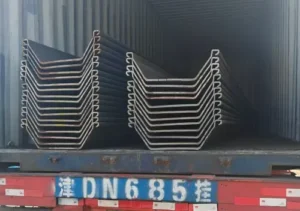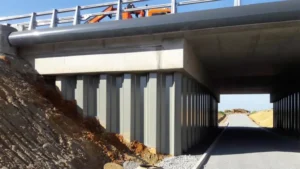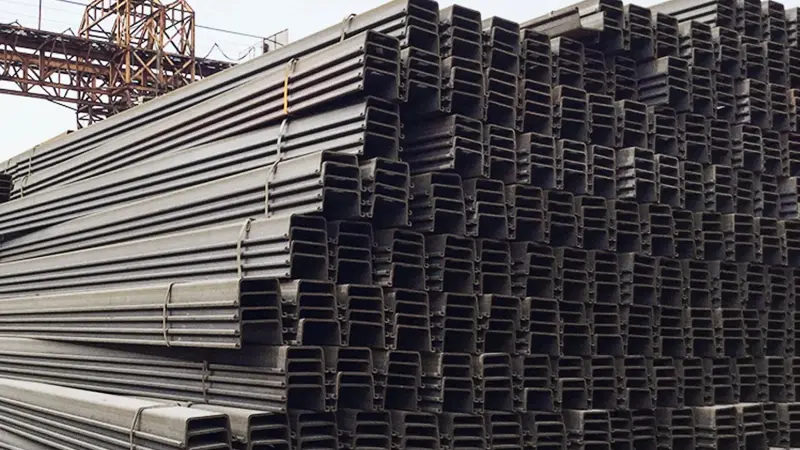
Choosing the wrong steel sheet pile production method can affect project strength, cost, and service life. Many buyers compare price but ignore manufacturing differences.
Hot rolled and cold formed steel sheet piles have different properties. Hot rolled sheet piles usually provide stronger interlocking performance, while cold formed sheet piles offer better production flexibility and dimensional control.
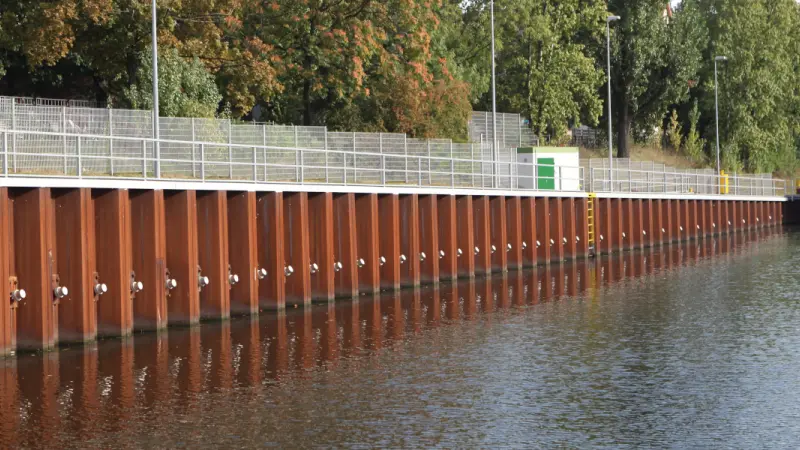
I have worked with many international contractors, civil engineering companies, and steel distributors who purchase steel sheet piles for different construction projects. One question I often receive is whether hot rolled or cold formed steel sheet piles are better.
Many customers focus only on steel grade and thickness. However, the manufacturing process also affects the final performance of the sheet pile. The rolling method changes the material structure, mechanical properties, interlocking quality, and application range.
My company supplies different types of steel sheet piles, including U-type, Z-type, Ω-shaped, flat plate type, disc type, cap type, and straight flange type sheet piles. I cooperate with certified mills and provide OEM production, SGS inspection support, and flexible MOQ solutions for global customers.
In my opinion, selecting sheet piles should start from project requirements instead of only comparing product prices. A suitable product can improve installation efficiency and reduce future maintenance problems.
Hot rolled and cold formed sheet piles are both used in construction projects. However, they are not exactly the same. Understanding their differences helps engineers and buyers make better decisions.
What is the main difference between hot rolled and cold formed steel?
Hot rolled and cold formed steel sheet piles are produced through different manufacturing processes. The main difference is the temperature used during production and how the steel shape is created.
Hot rolled steel is formed at high temperatures, while cold formed steel is shaped at room temperature through mechanical processing.
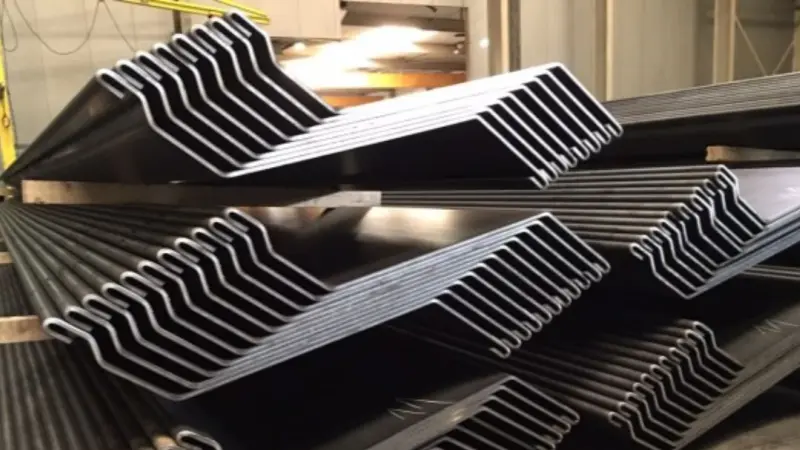
When I explain this difference to customers, I usually start with the manufacturing process because it directly affects the final product performance.
Hot rolled steel is produced by heating steel above its recrystallization temperature and passing it through rolling equipment. This process allows manufacturers to create large structural sections with strong mechanical properties.
Cold formed steel is produced by bending or forming steel sheets at room temperature. The process does not require high-temperature heating, which allows manufacturers to create precise shapes and thinner sections.
For steel sheet piles, the production method affects several important factors, including:
- Interlocking performance
- Dimensional accuracy
- Structural strength
- Installation behavior
- Project suitability
Comparison Between Hot Rolled and Cold Formed Steel Sheet Piles
| Comparison Factor | Hot Rolled Steel Sheet Piles | Cold Formed Steel Sheet Piles |
|---|---|---|
| Production Method | Rolled at high temperature | Formed at room temperature |
| Material Structure | More uniform internal structure | Different stress distribution |
| Interlock Quality | Strong and reliable | Depends on forming accuracy |
| Strength Performance | High structural reliability | Good for specific applications |
| Production Flexibility | Limited compared with cold forming | Higher customization ability |
| Common Applications | Marine projects, retaining walls | Temporary structures and light applications |
Hot rolled sheet piles are commonly selected for permanent structures because they provide strong connections and reliable performance.
Cold formed sheet piles are often selected when customers need customized sizes, lighter structures, or specific project requirements.
According to information from steel manufacturing technology, different steel production methods influence material properties and structural applications.
I often tell customers that the manufacturing method is not simply a production choice. It is an engineering decision. The correct method depends on where and how the sheet pile will be used.
Why Are Hot Rolled Steel Sheet Piles Popular?
Hot rolled steel sheet piles are widely used in large infrastructure projects because they provide strong structural performance.
The high-temperature rolling process creates a stable steel profile. This allows manufacturers to produce sheet piles with reliable dimensions and strong mechanical properties.
| Feature | Benefit |
|---|---|
| Strong Interlock | Improves wall stability |
| High Strength | Supports heavy loads |
| Durable Structure | Suitable for long-term projects |
| Reliable Connection | Reduces installation problems |
Hot rolled sheet piles are especially popular in marine construction, flood control, bridge foundations, and deep excavation support.
For example, in our Southeast Asia riverbank protection project, the contractor selected hot rolled U type steel sheet piles for flood control and soil protection.
The project required a retaining wall system along the riverbank. The sheet piles needed to resist soil pressure and water impact for long-term protection.
The contractor installed the piles using vibratory piling equipment. The strong interlocking system helped create a continuous barrier. The project team completed the installation efficiently and maintained the construction schedule.
This project showed me that hot rolled sheet piles are a reliable solution when customers need stable performance under difficult conditions.
Why Are Cold Formed Steel Sheet Piles Used?
Cold formed steel sheet piles also have their own advantages. They are produced by bending steel sheets at room temperature, which provides more flexibility in manufacturing.
Manufacturers can create different shapes and sizes based on project requirements.
| Feature | Benefit |
|---|---|
| Flexible Production | Suitable for customized designs |
| Accurate Dimensions | Good size control |
| Lightweight Options | Easier transportation |
| Efficient Manufacturing | Suitable for specific projects |
Cold formed sheet piles are often used for temporary retaining walls, small excavation projects, and applications where extreme structural loads are not required.
The production process allows manufacturers to adjust profiles more easily. This advantage can be useful when customers need special dimensions.
However, engineers need to evaluate the project conditions carefully. A lighter sheet pile may not provide enough performance for projects with high soil pressure or heavy water loads.
I believe cold formed sheet piles are not a replacement for hot rolled sheet piles. They are different solutions for different engineering needs.
How Does Manufacturing Process Affect Sheet Pile Performance?
The manufacturing process affects the internal structure and external performance of steel sheet piles.
Engineers usually consider several factors before selecting the right product.
| Performance Factor | Influence |
|---|---|
| Steel Structure | Affects strength and durability |
| Profile Design | Influences bending resistance |
| Interlocking Accuracy | Affects wall performance |
| Thickness | Determines service capability |
Hot rolled and cold formed sheet piles can both provide useful solutions. The key is matching the product with the project environment.
For example, a permanent seawall requires different performance compared with a temporary construction barrier.
Marine projects often require strong corrosion protection and reliable connections because the structure faces water pressure and environmental changes.
Deep excavation projects require good resistance against lateral earth pressure because the retaining wall must control soil movement.
My experience with international buyers has shown me that successful projects usually begin with correct product selection. When customers provide project details, I can help them choose a more suitable sheet pile solution.
Should I use cold rolled or hot rolled steel?
The choice between cold rolled and hot rolled steel depends on the project requirements, structural conditions, and expected service life. Both materials have advantages, but they are designed for different applications.
Hot rolled steel is usually a better choice for heavy construction projects because it provides strong structural performance. Cold rolled steel is often suitable for projects that need precise dimensions and lighter structures.
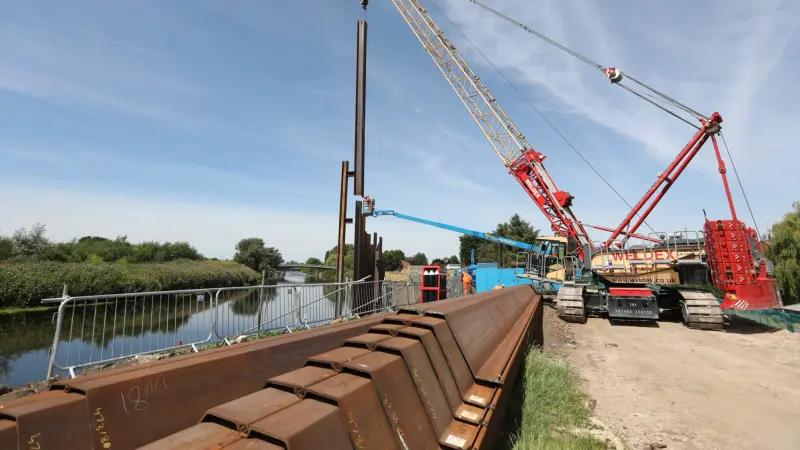
When customers ask me which steel sheet pile they should choose, I usually ask about the project environment first.
I do not recommend a product only because it has a lower price. I first check the application, soil condition, water exposure, installation method, and required service life.
A retaining wall for a small excavation project and a marine construction project have completely different requirements. The first project may focus on cost and installation speed. The second project may require maximum strength and long-term durability.
Hot rolled steel sheet piles are commonly selected for demanding applications such as ports, seawalls, bridge foundations, and flood protection systems. These projects require strong interlocking connections and high resistance against external forces.
Cold rolled steel sheet piles are often used in temporary structures or projects where the loading requirements are lower. They can provide good performance when engineers select the correct specifications.
Key Factors When Choosing Hot Rolled or Cold Rolled Steel
| Selection Factor | Hot Rolled Steel | Cold Rolled Steel |
|---|---|---|
| Structural Load | Suitable for heavy loads | Suitable for lighter loads |
| Project Duration | Permanent structures | Temporary or short-term structures |
| Installation Condition | Complex environments | Controlled environments |
| Profile Strength | Higher structural efficiency | Depends on design |
| Cost Consideration | Higher initial investment | Often lower initial cost |
The first factor I consider is the project type.
For example, a port construction project usually requires stronger sheet piles because the structure must resist water pressure, wave impact, and soil movement. In this case, hot rolled sheet piles are usually more suitable.
The second factor is soil condition.
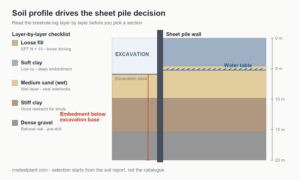
Different soils create different levels of pressure on retaining structures. Soft soil, clay soil, and sandy soil all create different engineering challenges. Engineers need to calculate the required strength before selecting sheet piles.
The third factor is service life.
Permanent structures need materials that can provide reliable performance for many years. Hot rolled sheet piles are often preferred because of their strong structural characteristics.
According to principles of structural engineering, engineers need to consider load conditions, material properties, and safety requirements together.
I often explain to customers that the cheapest material is not always the most economical choice. A suitable sheet pile can reduce repair costs and improve project reliability.
Advantages of Hot Rolled Steel Sheet Piles
Hot rolled steel sheet piles have several advantages that make them popular in large construction projects.
| Advantage | Explanation |
|---|---|
| Strong Interlock | Creates stable retaining walls |
| High Load Capacity | Suitable for demanding projects |
| Good Durability | Supports long-term applications |
| Reliable Performance | Reduces construction risks |
The strong interlocking system is one of the biggest reasons why many contractors choose hot rolled sheet piles.
During installation, individual piles connect together to form a continuous wall. A strong connection helps the entire structure work as one system.
For marine projects, this advantage is very important. Water pressure can create strong forces against retaining walls. A reliable interlocking system helps maintain structural stability.
I supplied hot rolled U type steel sheet piles for a riverbank protection project in Southeast Asia. The customer needed a solution to prevent erosion and improve flood protection.
The project team installed the sheet piles along the riverbank. The piles created a continuous barrier that controlled soil movement and improved the stability of the river edge.
The customer selected hot rolled sheet piles because the project required long-term reliability. The installation process was completed successfully with vibratory piling equipment.
This case helped me understand that product selection is not only about technical data. Real project conditions always influence the final decision.
When Should Customers Choose Cold Rolled Steel Sheet Piles?
Cold rolled steel sheet piles can be a suitable choice for specific applications.
They are often used when customers need flexible production, customized dimensions, or temporary retaining solutions.
| Application | Reason for Choosing Cold Formed Sheet Piles |
|---|---|
| Temporary Excavation | Lower project requirements |
| Small Retaining Walls | Suitable structural performance |
| Customized Projects | Flexible production options |
| Lightweight Structures | Easier transportation and handling |
Cold formed sheet piles are produced by shaping steel at room temperature. This method allows manufacturers to adjust the profile according to customer requirements.
For some projects, this flexibility creates advantages. Contractors may need special sizes because of limited construction space or unique design conditions.
However, customers need to understand that cold formed sheet piles are not suitable for every application.
Projects with high soil pressure, deep excavation, or strong water impact usually require stronger structural solutions.
I always suggest that customers provide engineering information before making a final decision. Details such as wall height, soil conditions, water level, and expected service life help determine the correct product.
How Do Hot Rolled and Cold Rolled Sheet Piles Affect Installation?
Installation performance is another important factor when selecting sheet piles.
The product design affects how easily contractors can install the piles and how well the final wall performs.
| Installation Factor | Hot Rolled Sheet Piles | Cold Formed Sheet Piles |
|---|---|---|
| Interlock Strength | High | Depends on design |
| Installation Stability | Excellent | Suitable for specific projects |
| Equipment Requirement | Professional equipment recommended | Flexible installation options |
| Large Projects | Highly suitable | Limited applications |
For large projects, installation efficiency directly affects construction schedules.
A reliable interlocking system helps reduce installation problems. It allows contractors to connect piles smoothly and create a stable retaining wall.
I often communicate with contractors before shipment to understand their installation plans. Knowing whether they use vibratory hammers, impact hammers, or other equipment helps us recommend suitable products.
My Experience Selecting Sheet Piles for International Projects
Through years of working with international customers, I have learned that every project has unique requirements.
Some customers from the Middle East need sheet piles for excavation support. Some customers from Southeast Asia need river protection solutions. Some customers require marine construction materials for ports and coastal projects.
Their requirements are different, but they all need reliable products and professional support.
My company provides steel sheet piles from certified mills in Liaocheng, Shandong, China. We support different profiles, including U-type, Z-type, straight web, and customized sheet pile solutions.
I believe good communication is an important part of international steel supply. When customers share project information, suppliers can provide better recommendations.
The correct choice between hot rolled and cold rolled steel depends on understanding the real application. Material selection should support the project goal, not only reduce the initial purchase cost.
What are the disadvantages of hot rolled steel?
Hot rolled steel sheet piles provide excellent structural performance, but they also have some limitations. Understanding these disadvantages helps engineers and buyers make more balanced decisions before selecting materials.
The main disadvantages of hot rolled steel include higher production costs, less dimensional accuracy compared with cold formed steel, surface oxidation after production, and limited flexibility for customized shapes.
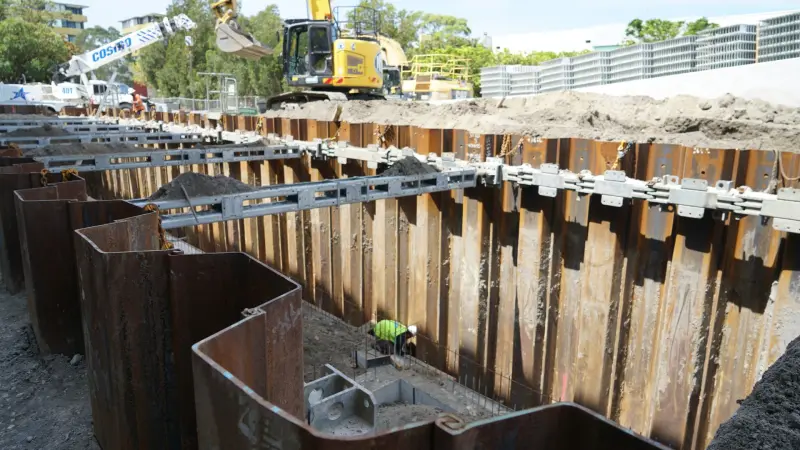
When I introduce hot rolled steel sheet piles to customers, I always explain both advantages and limitations. I believe professional suppliers should not only talk about product strengths. Customers also need to understand where a product may have limitations.
Hot rolled steel is widely used in demanding construction projects because it provides strong mechanical performance. However, the manufacturing process requires high temperatures and large production equipment. These factors increase production complexity and cost.
For many permanent engineering projects, these disadvantages are acceptable because the structural benefits are more important. However, some projects may require different solutions.
Main Disadvantages of Hot Rolled Steel Sheet Piles
| Disadvantage | Explanation |
|---|---|
| Higher Production Cost | Requires high-temperature rolling equipment |
| Lower Dimensional Precision | Less accurate than cold formed products |
| Surface Oxidation | Requires protection after production |
| Limited Customization | More difficult for special profiles |
| Heavier Weight | May increase transportation costs |
The first disadvantage is production cost.
Hot rolling requires heating steel to a high temperature before shaping. This process requires advanced equipment, energy consumption, and strict production control.
Because of this, hot rolled steel products may have higher initial prices compared with some cold formed alternatives.
However, I often explain to customers that price should not be considered separately from performance. A lower-cost product may create higher maintenance expenses if it cannot meet project requirements.
The second disadvantage is dimensional accuracy.
Cold formed steel is produced by bending steel sheets at room temperature. This process can provide very precise dimensions. Hot rolled steel focuses more on structural performance and large-scale production efficiency.
For steel sheet piles, dimensional accuracy is important because the piles need to connect through their interlocking system.
Surface Condition and Corrosion Considerations
Hot rolled steel surfaces usually have a layer of oxide scale after production.
This happens because the steel reacts with oxygen during high-temperature manufacturing.
| Surface Factor | Impact |
|---|---|
| Oxide Scale | Requires cleaning before some applications |
| Environmental Exposure | May require corrosion protection |
| Marine Conditions | Needs additional protection measures |
For projects in normal environments, surface treatment may be relatively simple.
However, marine construction and coastal projects require more attention because saltwater can accelerate corrosion.
Engineers may use additional solutions such as protective coatings, corrosion-resistant steel grades, or increased material thickness.
My company supplies steel sheet piles for projects in different countries, including coastal and river environments. I often discuss corrosion protection with customers before shipment because environmental conditions directly affect service life.
For example, a riverbank protection project may require different protection compared with an offshore marine structure.
Limited Shape Flexibility
Another limitation of hot rolled steel is that the production process is less flexible compared with cold forming.
Hot rolling requires specific rolling equipment and production molds. Creating new profiles may require additional investment and preparation.
| Production Method | Shape Flexibility |
|---|---|
| Hot Rolled Steel | Suitable for standard profiles |
| Cold Formed Steel | More flexible for customized shapes |
For standard steel sheet pile profiles, such as U-type and Z-type sheet piles, hot rolling provides excellent performance.
However, when customers need special sizes or unusual designs, cold formed products may provide more flexibility.
This does not mean hot rolled steel is unsuitable. It means engineers need to select the production method according to the project needs.
Weight and Transportation Considerations
Hot rolled steel sheet piles usually have strong structural capacity, but they can also be heavier.
The increased weight may affect transportation and handling requirements.
| Factor | Possible Impact |
|---|---|
| Heavy Weight | Higher transportation cost |
| Large Size | Requires suitable lifting equipment |
| Long Length | Needs proper logistics planning |
International projects often require careful transportation planning.
My company exports steel sheet piles to different regions, including the Middle East, Southeast Asia, Africa, and other international markets. We help customers consider packaging, loading methods, and shipping arrangements.
I believe transportation planning is an important part of steel supply. A good product solution should include not only manufacturing but also delivery efficiency.
What bends better, hot rolled or cold rolled steel?
The bending performance of steel depends on material properties, manufacturing process, thickness, and application requirements. Hot rolled steel and cold rolled steel behave differently when they experience bending forces.
Generally, hot rolled steel provides better performance for heavy structural bending applications, while cold rolled steel can provide higher surface accuracy and shape control.
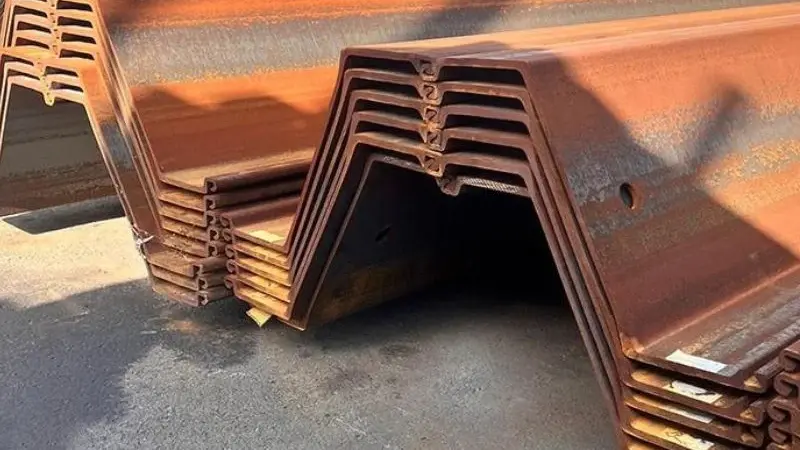
When customers ask me which steel bends better, I explain that the answer depends on the type of bending.
A construction engineer may focus on structural bending resistance. A manufacturer may focus on forming accuracy. These are different requirements.
For steel sheet piles, bending resistance is a key factor because retaining walls must resist soil pressure and water pressure.
Bending Performance Comparison
| Factor | Hot Rolled Steel | Cold Rolled Steel |
|---|---|---|
| Structural Bending Resistance | Excellent | Good |
| Surface Accuracy | Moderate | Higher |
| Shape Forming | Limited | Better |
| Heavy Load Applications | Suitable | Less common |
Hot rolled steel is often preferred for structural applications because it maintains good strength and toughness.
Steel sheet piles used in retaining walls, ports, and deep excavation projects need strong resistance against bending forces.
According to structural steel standards, steel performance depends on chemical composition, mechanical properties, and manufacturing requirements.
Why Does Hot Rolled Steel Perform Well Under Heavy Loads?
Hot rolled steel has a production process that allows manufacturers to create strong structural sections.
The steel is shaped while it is heated, which helps create products suitable for large engineering applications.
| Performance Feature | Benefit |
|---|---|
| High Strength | Supports large forces |
| Good Toughness | Handles demanding conditions |
| Structural Stability | Suitable for permanent projects |
For steel sheet piles, bending resistance directly affects wall stability.
When soil pushes against a retaining wall, the sheet pile needs enough strength to resist deformation.
Z-type steel sheet piles are a good example. Their profile design provides high section efficiency, which helps improve bending resistance.
U-type steel sheet piles also provide reliable performance for many applications, especially river protection and general retaining walls.
Why Is Cold Rolled Steel Better in Some Bending Applications?
Cold rolled steel has advantages when precise forming is important.
The production process allows manufacturers to create accurate shapes and controlled dimensions.
| Advantage | Application |
|---|---|
| Precise Dimensions | Manufacturing components |
| Smooth Surface | Visible structures |
| Thin Sections | Lightweight products |
For some applications, cold rolled steel can provide better results because the project requires accurate shape control rather than maximum structural strength.
However, for large foundation and retaining projects, engineers usually focus more on load capacity and durability.
My experience with steel sheet pile projects has shown me that bending performance should always match the engineering requirement.
A stronger material is not always necessary. The correct material is the one that provides enough performance for the project while maintaining reasonable cost efficiency.
My Insight: How Do I Choose Between Hot Rolled and Cold Formed Steel Sheet Piles?
After working with international customers for many years, I have learned that choosing between hot rolled and cold formed steel sheet piles is not only a technical decision. It is also a project management decision.
Many buyers first compare prices because they want to control construction costs. However, I believe the most important factor is whether the product can meet the actual project requirements.
Hot rolled steel sheet piles are usually my recommendation for permanent structures, marine projects, flood control systems, and deep excavation support. These applications require strong interlocking performance, high bending resistance, and long-term reliability.
Cold formed steel sheet piles can be a suitable choice for temporary projects or applications that require customized dimensions and flexible production.
I often tell customers that there is no universally perfect sheet pile. The best product depends on the environment where it will be installed.
For example, a riverbank protection project requires different performance compared with a temporary construction barrier. A port project faces different challenges compared with an underground excavation project.
In my experience, successful projects usually begin with good communication. When customers provide information about soil conditions, project drawings, required length, thickness, and installation equipment, I can recommend a more suitable solution.
My company supplies U-type, Z-type, Ω-shaped, flat plate type, disc type, cap type, and straight flange type steel sheet piles. We cooperate with certified mills and support OEM production, SGS inspection, and flexible order quantities.
I believe a professional supplier should provide more than steel products. A supplier should help customers select the right solution for their engineering challenges.
Conclusion
Hot rolled and cold formed steel sheet piles have different advantages. The correct choice depends on project requirements, structural conditions, and application environment.